TheJournal.ie uses cookies. By continuing to browse this site you are agreeing to our use of cookies. Click here to find out more »
Dublin: 15 °C Wednesday 19 June, 2013

Banking Crisis

# banking-crisis - Wednesday 9 March, 2011

From Business ETC MEPs back plans for tax on financial transactions Tobin Tax

MEPs back plans for tax on financial transactions

The European Parliament gives its backing to a ‘Tobin Tax’ on all transactions, asking Brussels to investigate the €200bn plan.

# banking-crisis - Wednesday 16 February, 2011

From Business ETC Bernie Madoff gives first prison interview Madoff

Bernie Madoff gives first prison interview

Man sentenced to 150 years for major financial fraud for operating a massive Ponzi scheme claims banks knew what he was doing.

# banking-crisis - Tuesday 11 January, 2011

Rumours of heave persist as Taoiseach prepares Dáil statement

Ahead of a Dáil statement on the nature of his contact with former Anglo chairman Sean FitzPatrick, confidence in Brian Cowen’s position seems to be fading.

# banking-crisis - Sunday 9 January, 2011

Taoiseach must come clean on all dealings with FitzPatrick: Burton

Sean FitzPatrick has told the Sunday Times that he played golf and had dinner with Brian Cowen just two months before the state introduced the bank guarantee in 2008.

# banking-crisis - Thursday 9 December, 2010

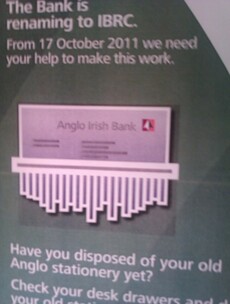
Five Anglo Irish staff were awarded bonuses in 2010

AIB senior bankers not the only happy ‘key staff’ renumerated this year…

From Business ETC Ireland’s credit rating slashed by three grades to BBB+ Downgraded

Ireland’s credit rating slashed by three grades to BBB+

We are now just two levels above Greece as Fitch downgrade us for the cost of supporting banking system.

July 2010: Brian Lenihan calls end to “mad bonuses”. Dec 2010: AIB bankers get €40m bonus. AIB

July 2010: Brian Lenihan calls end to “mad bonuses”. Dec 2010: AIB bankers get €40m bonus.

Bank bailed out by taxpayers says it is contractually obliged to pay bonuses from 2008 – the year the banking crisis hit.

# banking-crisis - Monday 15 November, 2010

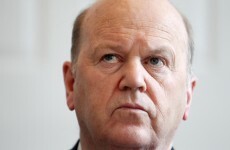
Michael Noonan: European intervention in Irish crisis ‘is underway’

Markets source tells TheJournal.ie that Government is in “intense negotiations” with ECB while FG finance spokesman Noonan says “things will come to a head in the next 24 hours”.

# banking-crisis - Wednesday 29 September, 2010

Iceland votes to refer ex-PM to special court over financial crisis

Geir Haarde may be the first world leader to stand trial over the global financial crisis.

# banking-crisis - Wednesday 15 September, 2010

State spends €24bn on banking crisis

… €34m of which was for legal advice on how to deal with being broke.

# banking-crisis - Sunday 12 September, 2010

Iceland could prosecute former cabinet over banking crisis

A special investigation into the collapse of the country’s biggest banks concludes: the government’s negligence was criminal.

# banking-crisis - Tuesday 3 August, 2010

NATIONALISED UK BANK Northern Rock lost over £142m, from January to June 2010.

The bank has also reported it lost over £2bn in deposits over the period as the UK government lifed a savings guarantee at the bank. Retail deposits dropped to £17.6bn from £19.5bn, after the guarantee expired in May. The bank said it continues to prepare for its return to the private sector and will do so when the time is right.

The bank was the only one to experience a ‘run on it’ during the banking crisis. Before its collapse at had offered mortgages for up to 125% of a hose’s value.

Meanwhile Northern Rock’s ‘bad bank’ - Northern Rock Asset Management (NRAM) reported a return to profit. NRAM made £349.7m in the first half of 2010, compared to a loss of over £724m during the same period in 2009.

# banking-crisis - Friday 30 July, 2010

THE UK has expanded its restrictions on bankers pay and bonuses.

The Financial Services Authority (FSA) have expended the number of companies who are subject to restrictions from 27 larger banks to over 2,500 financial institutions.

The move will take place from January 1, 2011 and will mean the UK is the first company to comply with the EU’s legislation on bank bonuses. It will see 40-60% of bonuses over £500,000 deferred for three years. The new code also states that at least 50 per cent of the total package must be paid in shares or share-linked instruments according to the Financial Times.

Regulators worldwide have been scrutinizing executive pay after it was blamed for the excessive risk-taking that led to the recent banking crisis.

European Union governments agreed on June 30 that directors of banks who received public money will be forced to justify their bonuses and lenders will have to report the number of people earning more than €1m to regulators according to Bloomberg.

Efforts in the US to curb excessive pay in Banking haven’t gone quite as far as moves in the EU.

Meanwhile, Metro Bank launched in the UK yesterday, the first new bank to launch in the UK in more than 100 years.

# banking-crisis - Wednesday 21 July, 2010

THE FINANCIAL TIMES has said “Ireland  has a problem few other countries have – an utterly ruined banking sector.”

The remarks were written in the prestigious LEX column, which sets the agenda in London’s financial district. The paper wrote the “austerity measures [Ireland] has taken are sufficient… [and] offer a model for other eurozone countries to follow”.

The paper remarked that Moody’s downgrade of Ireland’s debt on Monday “is a reminder of how far the country is from a sustained recovery even after it has implemented a brutal austerity package.”

The paper also highlights that “the spread over German bunds is now higher than it was at the peak of the crisis in early 2009.”

It says that bailing out the banking sector is estimated to cost €25bn, not to mention any money spent by NAMA. It is also concerned about the high level of non-performing loans in NAMA.

# banking-crisis - Sunday 18 July, 2010

FINE GAEL finance spokesman Michael Noonan has declared that Brian Cowen was “asleep on the job” when he was in charge at the Department of Finance.

Speaking on the This Week show on RTÉ Radio 1, Noonan said Cowen had been given ample warning of the impending banking crisis when he was finance minister, but had failed to act decisively.

He said the government’s excuse was that the banking crisis “was bounced on them and they had to act within hours and did the best with the information they had” wasn’t true.

Noonan pointed to reports that Merrill Lynch had advised the government against the blanket bank guarantee, and to newspaper reports that even current finance minister Brian Lenihan acknowledged the department had lost influence.

He added that the Department of Finance had previously advocated legal mechanisms to allow banks be put into examinership, and that a senior department official had expressed concern over ‘black holes’ appearing in Anglo Irish Bank and Irish Nationwide.

Commenting that none of the ample warning had been pursued, he concluded that Cowen must simply have been “asleep in the job”.

BRIAN LENIHAN has complained that the Department of Finance lost power and influence in the run-up to the credit crunch that fuelled the current banking crisis – when it was run by Brian Cowen.

“The powers of the Department of Finance were substantially reduced during that long lead-up period to the actual economic difficulty,” the minister said.

The comments – to be broadcast on Today FM’s Sunday with Sam Smyth show this morning – have caused a stir in government circles with a source being forced last night to defend them.

“I think [Lenihan] was referring to the fact that a lot of power was transferred to the Taoiseach’s department,” the source told The Sunday Times.

“When you’re in an overblown economy there is huge pressure to spend more and more money and it’s politically very difficult to say ‘no’ to demand on hospitals or schools.”

Lenihan did not solely reserve criticism for the role of his own department, however. In the interview, he also slams officials from the Central Bank, who backed up the ultimately incorrect views of former Central Bank governor Patrick Neary about Anglo Irish Bank.

He denied, however, that he was trying to make excuses for decisions made at the time, drawing a peculiarly aquatic analogy:

Money was freely available for a long period of time… it’s only when the water went out of the lake, if you like, that various islands became exposed as not having a proper foundation.