TheJournal.ie uses cookies. By continuing to browse this site you are agreeing to our use of cookies. Click here to find out more »
Dublin: 16 °C Tuesday 21 May, 2013

Bottled water ‘safer’ – but industry still needs improvement

Microbiological tests of bottled water shows that standards have improved in the past number of years – however, two per cent of samples are still classed as “unsafe”.

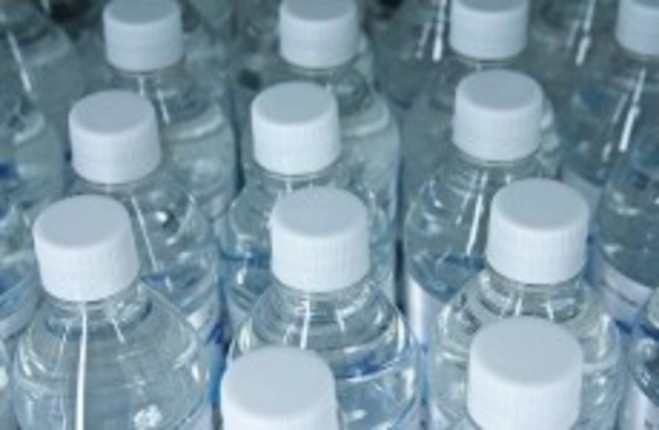
Image: Steven Depolo via Creative Commons/Flickr

THE SAFETY AND quality of bottled water in Ireland has significantly improved in the past number of years – however a small proportion of bottled water is still deemed unsafe, according a new Food Safety Authority of Ireland survey.

The survey showed that two per cent of samples failed microbiological standards last year, in comparison to 7 per cent in 2007. However, researchers warn the industry is still in need of improvement as four of the 748 samples taken were marked as unsafe for human consumption due to the presence of E.coli and/or Enterococci, and subsequently removed from the market.

The FSAI said that in all cases where non-compliance was noted manufacturers were required to take immediate corrective actions, and in the cases where safety was breached the manufacturers recalled the affected batches from the market and the FSAI issued alert notices on its website.

“Bottled water receives no further treatment by the consumer before consumption so its safety and quality are of paramount importance,” said Dr Wayne Anderson, Director of Food Science and Standards, FSAI. “The FSAI welcomes the significant improvements in the microbiological safety and quality of bottled water but there is still work to be done to ensure that no harmful bacteria make it into water and we would urge manufacturers to review their food safety management systems.”

The samples were taken from a range of retail outlets and bottled water manufacturers throughout the country between September and December 2010.

The main findings included:

  • Nineteen of 748 bottled water samples collected were unsatisfactory on at least one microbiological safety standard
  • Four samples were found to contain E.coli and/or Enterococci
  • Four (separate) samples were found to contain P.aeruginosa which, while not a health risk to the general population can be considered a risk for severely immunocompromised people in hospital
  • Eleven samples tested positive for coliforms which indicate possible poor hygiene during the bottling process or poor quality of the source water
  • Three unsatisfactory samples (two positive for E.coli and one for P.aeruginosa) were part of batches of bottled water distributed outside of Ireland

The FSAI informed hospitals regarding the water which contained P.aeruginosa, and also notified the European Commission rapid alert system in relation the batches that had been distributed to other countries.

Labelling

The survey also showed that improvement was required in relation to labelling standards, as 55 per cent of samples labelled as natural mineral water or spring water were not compliant with existing legislation.

Certain bottled water requires the name of the spring, as well as the location at which the spring is exploited, to be printed on the label – but just 45 per cent of the 323 water samples labelled as natural mineral water carried both of these statements.

Anderson commenting that labelling was clearly an area for improvement, saying: “Labelling must be compliant with all requirements in the legislation so that consumers are informed correctly about the nature of the product they are consuming”.

Read next:

Comments (26 Comments)

  • 748 is not a large sample group, however they should carry out a more comprehensive test and publish the brands who are non compliant. Market forces will quickly make them pull their socks up.

    Reply
  • Bottled water is expensive. It’s a discrase that e coli can be found it even one sample. E coli is a indicator that the water is contaminated with sewage !

    Reply
  • How does this article manage to contain so many words and yet fail to report which brands were unsafe?

    Just as general advice, it is my understanding that 1) willow water, 2) that Luxembourg Lidl brand (which is about 60c for a 2L bottle) and evian are the purest waters on sale in ireland. Avoid river rock and ballygowan. In fact most irish bottled water brands are not good quality.

    Reply
    • I don’t suppose that you have evidence to back those claims up by any chance?

      Reply
    • None at all, and I am not trained in food nutrition or medically in any way. I should have stated that in my original message. Thanks for reminding me Brian.

      Reply
    • The only reason that I asked Mark is because I used to work for a leading water company (not the one’s you mentioned) and so I have an insight into the business. The water that we sold was both spring and mineral water and the H&S process that the product had to go through we very stringent. The company that I worked for won numerous awards for the quality of their water and still does. there is actually a difference in taste and quality in bottled water depending on the brand depending on the product and whether it is still or sparkling etc. Where the problem arises is small start ups that try to get into the market and don’t follow the proper health procedures. My parents have a well on their land so technically they could bottle their water and sell it as “spring water”. In fact anybody with a spring on their land can so it. That fact that most of these operations would mirror Del Boy and Rodney’s attempt at bottling “Peckham Spring Water” is what hurt more responsible producers.

      The FSAI should print the names of the companies involved for flagrant breaches of the legislation especially this mislabelling of waters. The can be a big price difference as well as quality between a spring water and a mineral water.

      Reply
    • Thanks for your insights Brian. It’s difficult to find concrete information about the water industry. Even the mineral content of various different brands are reported at different levels on the brands’ labels from online databases about these brands. And I agree completely with you that the FSAI should have some balls and publish the names of the offending water companies.

      On a similar note, Brian do you know which, if any, of the water bottling companies in Ireland (or elsewhere) add fluoride to their water? I know that it’s added by some councils to tap water to apparently aid dental hygiene but I don’t appreciate its other effects.

      Once again, thanks for your informed advice.

      Reply
  • I despair at this obsessive preoccupation with living in a sterlie, 100% safe, risk and responsibility-free environment.
    Check out the hygiene hypothesis:
    http://en.wikipedia.org/wiki/Hygiene_hypothesis

    Reply
    • Right you are. Our immune system needs to be challenged all the time or it won’t be able to react when exposed to a pathogen. Allergies and Asthma are very likely the result of a society that is dangerously obsessed with hygiene. The use of antibacterial cleaners and hand sanitizers also is a springboard for pathogens to evolve into high resistance strains.

      Reply
    • Agree with both of you,we shouldn’t be using so many products and being so squeaky clean. I also agree that a certain amount of dirt is good for the immune system. However,being pregnant I do get ‘paranoid’ about what goes into my body and our water tastes damn awful from the tap so we filter it. I buy water bottled when I’m out for the same reason so this is a little annoying as I am paying for the cleanliness,just feels a little nasty or something

      Reply
  • Keep the people scared and they’ll buy the shitty bottled water. What happens when you drink e-coli contaminated water? Right, you get the s***s. There is a 0.08% chance that you might die from an infection. Big deal. I rather get the s***s than falling for this cheap propaganda.

    Besides:
    “Could the plastic in water bottles pose a health risk?

    Recent research suggests that there could be cause for concern, and that the issue should be studied closely. Studies have shown that chemicals called phthalates, which are known to disrupt testosterone and other hormones, can leach into bottled water over time. One study found that water that had been stored for 10 weeks in plastic and in glass bottles contained phthalates, suggesting that the chemicals could be coming from the plastic cap or liner. Although there are regulatory standards limiting phthalates in tap water, there are no legal limits for phthalates in bottled water — the bottled water industry waged a successful campaign opposing the FDA proposal to set a legal limit for these chemicals.”
    (http://www.nrdc.org/water/drinking/qbw.asp)

    So sticking to tap water at least I don’t have to pay for the contaminants..

    Reply
  • Sean C 17/12/11 #

    Reading the comments on here I can’t help thinking this is the recession Ireland had to have.

    Reply
  • Sean C 16/12/11 #

    Recession, what recession…when people are still buying ship-loads of bottled water ? Why is the government hiking taxing on essential cost of living items when bucket loads of money is still being spent on bottled water.

    Reply
    • We buy water when our tap water goes brown or has a weird smell…. It is for the baby’s bottles.

      Reply
    • I buy it when I’m out and especially now when pregnant,though reading this is a worry.also we use a filter at home but as p said,sometimes that just won’t work either

      Reply
    • Sean C 16/12/11 #

      Hmmm…so in Ireland when we complain about cost of living pressures we’re really talking about cost of lifestyle which is not the sane thing.

      Reply
    • P Wurple 16/12/11 #

      If you really think feeding a baby water that smells of sewage is a “lifestyle choice” you must not have any children.

      Reply
    • Yes Sean,spending €3 a week on water for the health of my toddler and unborn baby is just so extravagant. You must live in a puddle for that to be a luxury. Luckily we can afford to be healthy which is becoming difficult for a lot of people in this friggin climate. This is completely off the point though,the point here is that if you pay for water,you are paying for it to be clean and safe,otherwise you’d just pour it straight from the tap

      Reply
    • Sean C 17/12/11 #

      P Wurple, I have three children but none of them grew up in the third world.

      Reply
    • Sean C 17/12/11 #

      With respect Emsy, if you live in Ireland I don’t understand your acquiescence to third world standards, I’m still seeing cost if lifestyle being presented as cost of living

      Reply
    • You don’t have to live in the third world to have dirty water Sean. If you were a pregnant woman you might understand the need to be very careful with what you ingest as you would want to keep your unborn as healthy and safe as possible. Being cautious is not extravagant. You really are missing the point here. If you pay for a loaf of bread and there’s green bits on it, you’ll bring it back right?? This is kind of the same thing. If I pay for a bottle of water I expect it to be clean. I also don’t eat cold meats or soft cheeses. If I have an egg it’s well cooked. This again,is not being extravagant,it’s being sensible. Also,do you drink?? That’s alot more expensive than a bottle of water and you’d be very hypocritical saying anything about how we must not be struggling if I can afford a bottle of friggin water!

      Reply

Add New Comment