TheJournal.ie uses cookies. By continuing to browse this site you are agreeing to our use of cookies. Click here to find out more »
Dublin: 17 °C Thursday 20 June, 2013

Chernobyl

# chernobyl - Sunday 22 July, 2012

Japan probes alleged cover-up at nuclear plant

It’s claimed workers were forced to underreport the amount of radiation they were exposed to so they could stay on the job longer.

# chernobyl - Thursday 26 April, 2012

26th anniversary of Chernobyl disaster marked in Ukraine

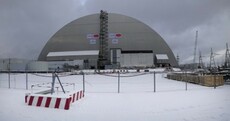
People lay flowers and lit candles to mark the occasion. Ukraine’s president vowed today that his country is committed to building a new, safer shelter over the damaged Chernobyl reactor.

# chernobyl - Sunday 22 April, 2012

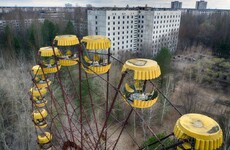
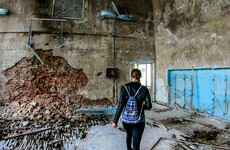
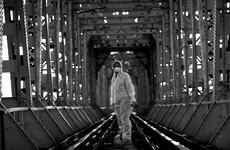
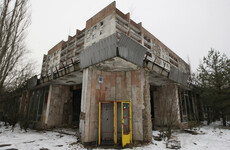
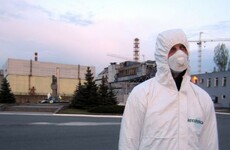
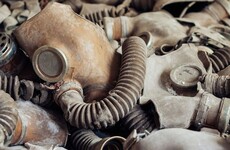
In pictures: an amazing return to Chernobyl

Incredible images of the “ground zero” of the 1986 accident.

# chernobyl - Sunday 11 March, 2012

Adi Roche in Fukushima: Only way to secure nuclear plants is to close them down

“If the atomic world has nine lives, five of them have already been used” – the Chernobyl Children International founder is in Japan for the first anniversary of the 11 March 2011 disaster.

# chernobyl - Friday 17 February, 2012

Ex-PM: Japan was unprepared for nuclear crisis

The former Prime Minister acknowledged there were flaws in how authorities handled the Fukushima crisis last year.

# chernobyl - Sunday 25 December, 2011

It wasn’t all bad: 13 ‘good news’ stories from 2011 Review 2011 This post contains videos

# chernobyl - Wednesday 24 August, 2011

Column: ‘The very mention of nuclear power sends people into a flutter’

After Fukushima, nuclear power has become a bogeyman – but we shouldn’t dismiss it out of hand, writes physicist David Robert Grimes.

# chernobyl - Tuesday 2 August, 2011

Fatal radiation levels at Fukushima now ‘off the scale’

Levels of radiation in some areas of the plant are so high they would be lethal within one hour.

# chernobyl - Tuesday 26 April, 2011

Slideshow: The world remembers Chernobyl Chernobyl This post contains images

Slideshow: The world remembers Chernobyl

People from Ukraine to South Korea gathered today at memorial services to mark the 25th anniversary of the world’s worst nuclear accident.

The Daily Fix: Tuesday

Our collection of the day’s news, developments and random tidbits.

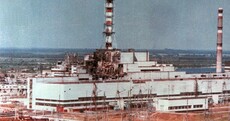
What happened inside Chernobyl’s Reactor 4 on 26 April 1986? Chernobyl This post contains videos This post contains images

What happened inside Chernobyl’s Reactor 4 on 26 April 1986?

Today marks the 25th anniversary of the meltdown at Chernobyl, which contaminated some 150,000 sq km of land.

The 9 at 9: Tuesday

Nine things to know: Irish toddler to undergo pioneering surgery; Afghan police search for over 450 escaped prisoners; and a ‘human canonball’ stuntman has been killed in Kent.

# chernobyl - Wednesday 20 April, 2011

Nuclear energy needs a ‘global rethink’: UN chief

UN Secretary General Ban Ki-moon has said that the approach to nuclear power needs to be reconsidered following the disasters at Chernobyl and Fukushima.

# chernobyl - Monday 4 April, 2011

Take 5: Monday

5 minutes, 5 stories, 5 o’clock.

Greenpeace says Chernobyl food radiation persists

A quarter of a century after the world’s worst nuclear accident in Ukraine, food there is still contaminated by unacceptably high levels of radiation, according to the environmental group.

# chernobyl - Friday 18 March, 2011

Japan raises nuclear crisis rating to Level 5

The raising of the incident’s rating puts the crisis on a par with the Three Mile Island incident in the United States.

# chernobyl - Thursday 10 March, 2011

Expert calls on government to consider nuclear power

A professor of applied physics has championed the case of Ireland turning towards nuclear energy, saying that it offers a cheap and clean source of fuel.

# chernobyl - Thursday 12 August, 2010

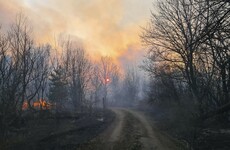
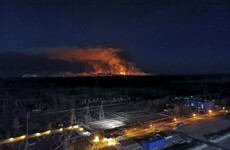
FEARS ARE growing across Russia as some say that the wildfires blazing across the country may cause radioactive particles to be blown from the nuclear fallout zone in Chernobyl as far as Moscow.

Russian emergency workers have increased forest patrols in a western region in response to the warnings.

Almost 300 new fires have ignited in the country in the last 48 hours alone.

According to Greenpeace, 20 fires – including three in a highly contaminated forest area – have broken out in the Bryansk region, which is about halfway between Chernobyl and Moscow on the northern Ukrainian border with Russia.

When the Chernobyl power plant’s fourth reactor exploded in 1986, Bryansk was sprayed with radioactive isotopes.

Neighbouring Belarus was also contaminated in the blast.

Alexei Yablokov, a member of the Academy of Sciences, has said that if the fires reach contaminated trees and plants in the areas then  radioactive particles could be carried in the wind.

Vladimir Chuprov, head of the energy program at Greenpeace Russia, agreed: “Fires on these territories will without a doubt lead to an increase in radiation,” he said in an interview with The New York Times, “The smoke will spread and the radioactive traces will spread.”

Radiation experts in Europe and Russia are attempting to quell panic, saying that any possible radioactive fallout from the fires burning up contaminated vegetation would be mild.

Exposure to radioactive isotopes caesium-137 and strontium-90 causes an increase in the risk of developing cancer.

Ulrich Abram, a professor in the chemistry department and radiation expert at the Free University of Berlin, in an interview with Deutsche Welle that the chances of inhaling nuclear material are low as the isotopes are relatively heavy and would fall to the ground quickly is swept up by winds.

Abram said that unless people were in the immediate vicinity of the fires there is an extremely remote chance of breathing in nuclear material. For residents of the area, he said that the “overall radiation dosage will not increase significantly”.

# chernobyl - Wednesday 11 August, 2010

RUSSIAN PRIME MINISTER Vladimir Putin has taken to the skies to personally help Russia tackle the 600 wildfires still burning across the country after an unprecedented heat wave.

Putin had taken flight as part of an inspection of the efforts to address the fires, but jumped into the co-pilot’s seat shortly after takeoff and personally pressed a button that saw 24 tonnes of water dumped on top of two fires, 120 miles from Moscow.

Glancing at the pilot after pushing the button – as part of a carefully-managed photo op – Putin, who is not known to have any formal aviation training, asked,

Was that OK?

His pilot definitively answered:

A direct hit!


The stunt may have been designed to address the prime minister’s falling popularity in opinion polls, as support for both Putin and president Dmitry Medvedev heads towards 40%.

His appearance is not the first time that the two-term former president has tried to present himself as a modern-day strongman. In 2007 he posed topless in photographs depicting him fishing and horse-riding.

Meanwhile, fears are growing that fires on the nation’s wheat crops – which are causing a global shortage and could even end up making Guinness dearer – could be burning remnant radioactive fallout material from Chernobyl.

Greenpeace Russia believe the fires are now heavily encroaching upon areas hit by the explosion of the nuclear reactor in 1986, causing masses of radioactive smoke to be sent back into the atmosphere over the country.

International environmental group Bellona said:

The Chernobyl catastrophe occurred and these areas were littered with radioactive fallout. This contaminated the trees and the grass.

Now, when there is a fire and when all of this burns, all of this radioactivity, together with smoke, comes out and spreads to other territories, including populated areas where people breathe it in as smog.

The damage caused by the fires is now estimated to have exceeded $15bn (€11.5bn) – or almost 1% of the country’s entire GDP – as Russia’s hottest summer since records began ravages the country’s wheat stocks and leads it to ban some exports.