We need your help now

Support from readers like you keeps The Journal open.

You are visiting us because we have something you value. Independent, unbiased news that tells the truth. Advertising revenue goes some way to support our mission, but this year it has not been enough.

If you've seen value in our reporting, please contribute what you can, so we can continue to produce accurate and meaningful journalism. For everyone who needs it.

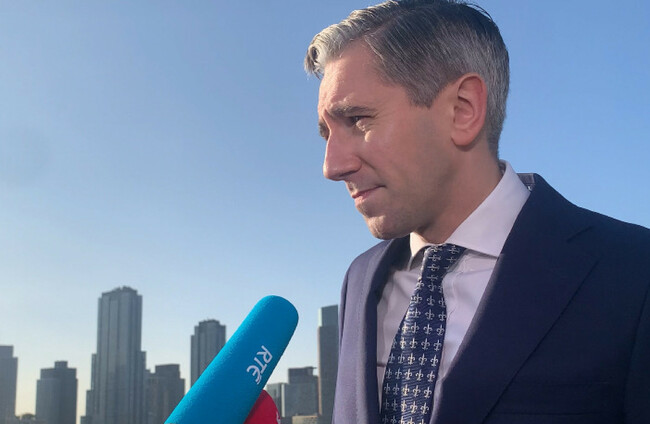
Tánaiste Simon Harris in New York today The Journal

Eurovision boycott 'very impactful' way of making Israel aware of international opinion, says Harris

The Tánaiste says UN agencies have told him of children having their limbs amputated in Gaza without anesthetic.

THREATS TO BOYCOTT the Eurovision by a number of countries if Israel is allowed to take part is being seen as a “very impactful” way of making the Israeli people aware of international opinion around their government’s actions in Gaza, according to Tánaiste Simon Harris. 

The Journal / YouTube

Spain confirmed last week that it plans to withdraw from next year’s Eurovision Song Contest.

The move follows similar statements last week by RTÉ and the Dutch public broadcaster AVROTROS. Contest organisers are now assessing the “potential impacts and consequences of either decision”.

Speaking to reporters outside the United Nations Building in New York this morning, where he is attending the 80th General Assembly this week, Harris outlined how he has heard from a number of countries that the boycott could make a difference. 

He said at a working dinner on the Middle East last night, a number of representatives from different countries raised the boycott.

“There’s a view that that could actually be very, very impactful in terms of, I suppose, making more people in Israel aware of the fact that their government is engaging in horrific policies that are risking isolating their country globally,” he said. 

Boycotting Israeli products

When asked about trade unions telling its members it will support any efforts to boycott the handling of Israeli goods and services in their places of work and whether now is the time for the government to encourage members of the public to boycott Israeli goods, Harris said:

“I think we have to look at all of the range of things that can be done.”

He told The Journal that “it’s probably something that people are becoming more aware of now. And I know everybody, in their own way, is trying to take actions, certainly in Ireland, I believe, to try and help end the genocide”.

“I think often we can feel so powerless and people are saying, ‘what can I do?’” he said.

When asked if he is cognisant of making decisions around the products he buys in his weekly shop, the Tánaiste said he hasn’t been to date but added that he would “give some reflection to it now”.

Asked the same question today, Taoiseach Micheál Martin said he shops in the English market “when I get a chance to”, adding that he tried to buy Irish when he shops. 

The amount of goods coming in from the occupied territories is “very, very low”, said the Taoiseach stating that Ireland has not considered a boycott of Israel “as of yet”. 

He added that Ireland has pursued multilateralism in terms of pursuing to change opinions stating that the country has “retained a diplomatic credibility” within the wider world, which he said is important.

Harris told the media today that he respect individuals who are “trying to do their bit” but said he wants to be clear that Ireland is part of the European Union and quick action must be forthcoming from member states. 

Sanctions

“There’s 60 million of us. We have a massive trading relationship with Israel,” he said, stating that countries should vote to back the sanctions against Israel proposed last week.

The European Commission, led by President Ursula von der Leyen, officially proposed the suspension of parts of the EU-Israel trade agreement that gives Israel special trade concessions in the EU market, although that measure’s adoption will still come down to a vote among member states.

Harris said he will push for countries to back the proposals at a meeting of European foreign ministers today.

“Even in the few hours that I’ve been here, I’m far more horrified at the stories that I’m hearing coming out from Gaza. I heard last night from a UN agency of children having their limbs amputated in Gaza without anesthetic, because Israel won’t let the anesthetic to Gaza.

“I heard from former President Mary Robinson of warehouses, literally warehouses, with wheelchairs, with crutches, with children’s books, with medicine, with an anesthetic, with food, that could be in Gaza now today, and the only reason it’s not in Gaza is because the Israeli government won’t let it in,” said the Tánaiste. 

When asked if he believes countries like France and Italy, two larger players in the European Union, will back the sanctions, Harris said he should have a better sense of that later today. 

He said he wants an vote sooner rather than later on the proposals, stating:

“I don’t wish to be part of a coalition of inaction, and I want to have an opportunity to democratically vote at a council of foreign affairs ministers on behalf of the people of Ireland.

“And I think it could be quite fascinating if those proposals are actually put on the table and member states have to say yay or nay, because I think the populations of a lot of these countries want their governments to work to end the genocide.”

He said there is a risk now that terms used like genocide are just seen as technical terms and just becoming more normalised to use when it means that there’s efforts underway to wipe out civilian populations.

“It means children are being left to starve today. It means that children are having their limbs amputated without anesthetics, as I was told last night.

“So in my view, it’s great that more countries are here recognising Palestine. I don’t in any way want to dismiss that. I’m a huge supporter of Palestinian recognition. It’s really good. It’s good that other countries are now doing what Ireland did over a year ago, but it’s nowhere near enough.

“I mean, it is nowhere near enough. What could be really helpful, really, really helpful now, is if European countries actually voted to take economic action against Israel,” he concluded. 

Readers like you are keeping these stories free for everyone...
A mix of advertising and supporting contributions helps keep paywalls away from valuable information like this article. Over 5,000 readers like you have already stepped up and support us with a monthly payment or a once-off donation.

Close
JournalTv
News in 60 seconds