TheJournal.ie uses cookies. By continuing to browse this site you are agreeing to our use of cookies. Click here to find out more »
Dublin: 9 °C Friday 24 May, 2013

HSE defends hospital food

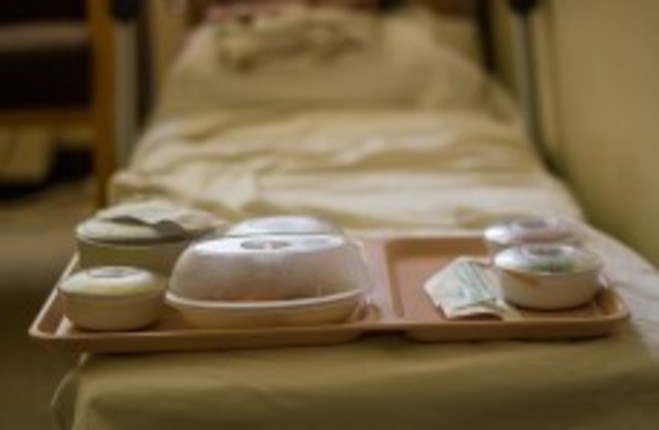
The HSE has criticised a newspaper for comparing hospital food with ‘Happy Meals’.

File photo
File photo
Image: ejorpin via Flickr/Creative Commons

THE HEALTH SERVICE Executive has defended the food it serves to patients across Irish hospitals following media reports yesterday which claimed that it spent as little as €2 on meals.

In a statement issued as a response to the Irish Examiner article, the HSE said the average cost of a meal provided in hospitals is between €8 and €9. The prices vary from hospital to hospital, it added, depending on the range of services offered, the number of high-dependency patients and individual dietary requirements.

Commenting on the specifics included by the reporter, the agency said:

The article concerned makes a comparison between the spend on a hospital meal and the cost of a ‘Happy Meal’. The approach taken to determine the costs of hospital food used in the article does not provide the reader with a fair understanding of the real cost of meals in hospitals.

The HSE conceded that it had made cuts of €9 million relating to food over the past two years but said these came from various agreements and efficiencies. It said it has moved from a series of contracts and local arrangements to more effective national purchasing arrangements to achieve economies of scale.

A National Advisory Group of dieticians, nutritionists, catering managers and procurement works to set out the standards in relation to food in hospitals, according to the HSE which says greater value for money has been achieved without compromising on quality.

“For example, a high salt intake is detrimental to good heart health. In an effort to reduce salt intake for patients, the HSE undertook to negotiate directly with bread manufacturers. Given the scale (approx 1 million sliced pans per annum) of the bread consumed across the health services, the manufacturer was able to commit to producing bread with reduced salt, for all hospitals in a manner that is cost effective. This is healthier for patients and achieves value for money for the tax payer.”

Hitting out at the article in question, the spokesperson said that the comparison of the cost of ingredients to those used by a global fast food provider is not “like with like” as they are “two totally different and unrelated industry sectors operating on very different scales”.

At the weekend, the Sunday Independent also published details of its investigation into the price of hospital food and found that some hospitals were spending up to €41 on a single meal.

The HSE is currently running a €280 million deficit but expects that to increase to half a billion euro by the end of the year. The issue is due to be debated in the Dáil this week.

More: Howlin insists HSE will reach savings target despite €280m overspend>

Read next:

Comments (43 Comments)

  • I can believe it. Being in hospital, trying to breastfeed newborn twins on what cannot have been more than 900 calories a day of clearly substandard food (mostly a cup of rice with 1/2 cup of whatever mystery-meat of the day), I was perpetually starving, and had to have my husband “smuggle in” food to me every day so I could get adequate calories and better nutrition. There was barely a vegetable in sight, the food was almost always a sickly grey colour, and portions were ultimately less than a side plate’s worth for every mother on the floor. I don’t believe it’s a question of cost, I regularly cook for a family of 5 on a tight budget, but manage to throw together high quality, nutritious meals from only fresh produce for less than a tenner. @Bryan – I’d have given my left arm for rashers and beans, however small, but breakfast was usually 1/2 cup’s worth of stale cereal and skim milk! Overall, my experience of the hospital was wonderful, and the staff were brilliant, but the food situation in our hospitals is simply atrocious. To be honest, I’d rather have had a happy meal, if there were the option!

    Reply
  • You go into hospital to get better yet come out more malnourished than when you went in. They feed cancer patients white bread and jelly. It really is a disgrace and they’re doing a huge disservice to the public by not considering the benefits of good nutrition on the body’s healing mechanism.

    Reply
  • I have to admit that I was somewhat alarmed when I was in a major hospital the night before a triple by pass and was offerred a meal of fried bacon eggs and chips, on the cardiac ward!

    Reply
  • Bryan 10/07/12 #

    Was in Vincent’s recently and the food was a joke. A teen going around deciding what to offer you not actually giving you the full options! 2 rashers a spoon of beans I got regularly. I food the food to be incredibly unhealthy, fatty and not nutritious. Also bread was out of date. I ended up living on sandwiches brought in from home for the week.

    Reply
  • Ben ….. they were trying to cut costs. A meal was cheaper than the operation ……………… No laughing matter I know but …. ONLY IN IRELAND…………

    Reply
  • Or Jamie, didn’t he do the school dinners in the UK! I agree with Bryan, the food in Vincent’s is positively unhealthy!!!! I spent a large part of my childhood in hospital, Harcourt Street, Crumlin and then Vincent’s. Food was vile then and it ain’t changed, always remember they’d say in the children’s hospitals, if you don’t eat up you wont get better and wont be able to go home, and being a kid I believed them, I used to give my sister the food in a bag to dump in a bin on way home! I work in a private hospital now, food is lovely for patients.

    Reply
  • Now that we know what is spent on patients meals I’d love to know how much the same government spends on prisoners meals… Something tells me there is a huge difference in the cost & also the nutritional value.

    Reply
  • A good feed of cabbage & bacon or maybe some tripe & onions, what about a feed of liver, sausages & proper gravy…All with the Spuds.
    It would be better than the muck the HSE serve up, dried everything, with tasteless sauce or gravy, and whats with the freaking Jelly, Good heary tart & cream or a nice jam spongecake for dessert….Get it into you son…!!!!

    Reply
  • The story is from the Sunday Independent, enough said.

    If it was from The Sun or Daily Sport it would have more credibility behind it.

    Reply
  • Bryan 10/07/12 #

    Last thing was at about 5, I thought you used to get a cuppa in the evening?

    Reply
  • Resel 10/07/12 #

    They do nice toast and butter. I remember it after my daughter was born. I was so tired it taste great.- oh it was my wife’s. She was tired too. Lol.

    Reply
    • Damien 11/07/12 #

      Lucky you Resel, i was in hospital for a month last november and the food was terrible, especially the toast, it was browned, and left under tin foil for an hour while it went round all the wards, by the time it came, it was cold, wet from the condensation and rubbery, So no, even the toast is tragic!

      Reply
  • I remember visiting my uncle in the Mater, his meal was some battered fish and white bread. I looked at the slip that came with it which had different options, this one having been ticked off.

    Didn’t see any vegetables on the menu. I saw too much protein, too much refined carbohydrates, too much deep fried / fried food, too much processed food, and very little in terms of nutritive value.

    Then he had a fortisip – filled with synthetic vitamin isolates and mineral salts rather than actual vitamins and amino acid chelated minerals (eg – what’s in FOOD).
    Now those things are costly, and the amount of nutritive value thats actually in one you would get from serving a half decent meal with a range of vegetables and less meat. And it would probably STILL be cheaper than the fortisips when you buy the raw materials in bulk. I mean, if they’re gonna put you on supplements they could at least research their bioavailability, or better yet – SERVE SOME DECENT FOOD..

    Reply
  • I used to live in asia and in Malaysia the hospital restaraunts served the same type of food you would get in health food restaraunts here.
    I used to sometimes go to the hospital to eat the food was so good. Loads of raw or steamed veggies, brown rice and fresh fruit drinks.

    Reply
  • after having my last two babies i only stayed in hospital for less than 24hrs after they were born, i am a strict vegetarian. It was a joke what I was being offered and i was breastfeeding as well, for my dinner i was been given beans on toast , when they were going around asking what i wanted for dinner i said i was a vegetarian i was asked did i want fish, i politely said no i don’t eat fish i am a vegetarian, all i got was oh amm i’ll see what we can do for you, and i got a wonderful filling meal of beans on toast . i had to get food brought into me and on the last baby i brought in my own food as i knew they would not have anything suitable for me to eat. i dread to think if i was very sick what would be handed up to me

    Reply
    • Ha! If you thought that was bad you’d wanna try be a breastfeeding coeliac….sorry love but the they didn’t tell us in the kitchen…..rice crackers after childbirth? My sugar levels are dropping just thinking of it!

      Reply
    • @ Eimear god love you, that is horrible, i am vegetarian out of choice, the taste of meat has never agreed with me even as a child, I just could never get used to it, as a teenager I became a veggie, all my children are meat eaters and i have no problems cooking it, I just don’t eat it. I was thinking if it was bad for me, it must be terrible if anyone with dietary needs, I think it is madness that the people they have serving food don’t understand what a coeliac dietary needs are, fair dues to you being a b/f mum with coeliac you must have been exhausted.

      Reply
    • @ Norse Thor Ah I survived on the love buzz alone! Regardless of whether your diet is by choice or necessity there should be provision for all types of diets. This is not the fifties!! How hard would it be to have a few slices of gluten free bread or a couple of boxes of Qourn burgers in the freezer?! But that would take box thinking outside!

      Reply
  • I’ve had various experiences of hospital food. A few years ago my father was in the Mater Hospital when a well known heart surgeon took a look at his dinner, he said to my father “if you don’t mind me asking, what the fcuk is that, they don’t expect you to eat THAT do they?” My father was seriously ill at the time and they just left his meals inside the door of his foom, he couldn’t leave his bed so never got them. One day he tried, my brother found him unconscious on the floor.
    My son is coeliac and has had several spells in hospital, we have always had to watch what he gets and be very careful as, while a dietician would be familiar with the condition, they never communicate very well with the rest of the staff.
    I have also been in hospital myself quite a bit in recent years, the same hospital I work in and, no I don’t get treated any differently than anyone else. I quite like the food. In our hospital all the food is prepared on site, everyone is given a choice and there is a decent range of meals. I may not like everything but I wouldn’t hate everything either. At the end of the day its a hospital not a restaurant.
    The article in the Indo compared a hospital meal to a restaurant meal, but I’ve yet to see a restaurant that will come to a sick person. They may have to wear personal protective equipment, masks, gloves and a gown if the person is in isolation, that ONE person will begin with breakfast, then clean up. They may then bring fresh water to all the patients, after that a morning cup of tea and a biscuit. Clean up again. Then a bowl of soup, made on site, and take the orders for tomorrows meals breakfast, dinner and tea. Clean up. Then dinner and dessert. Clean up again. in the afternoon a cup of tea and a biscuit, clean up. Then tea time, clean up again. Finally another cup of tea and a biscuit in the evening and clean up before going home. One person does this, and more of course, on a hospital ward of course it costs.

    Reply
    • I agree with you that there is a hell of a lot of work to be done, and by no means could the staff bringing the meals to the patients be held responsible for the quality of the food (unless they don’t put it anywhere near the patient of course, that’s shocking!)..

      The people in charge of buying in the ingredients etc should have someone qualified in nutrition running the show. Someone who’s thinking about presenting a good nutritious meal wont be buying salty sugary bread, or chips. They’ll be buying vegetables and making decent food. All hospitals should have a kitchen on site – ordering in food from outside makes no sense whatsoever, that implies it has to be reheated and that’s gonna destroy whatever goodness was left in it after cooking..

      Although, it would be interesting to see what would happen if you got a raw hospital.. As in, they served the living food diet, vegetable and fruit smoothies for those having trouble chewing.. Far more nutritious than a fortisip and cheaper too, no need for stoves etc, just preparation space..

      Reply
    • I agree about the purchasing Shanti and it would be nice to see patients presented with a choice of appealing healthy meals. While all meals are cooked on site in the hospital where I work I understand this is not the case in all hospitals but it is a requirement that all hot meals have to be reheated to a high temperature for a certain time, this is always checked with random audits and is to ensure everyone can be confident of all the food. It’s a necessary evil.
      While you and I may like the idea of smoothies, and there are patients who have difficulty chewing or swallowing, smoothies may not be for them. A balanced diet is always the best idea but for some patients drinks like Fortisip are necessary and can provide them with what they need at that time.

      Reply
    • I’m afraid I’d have to disagree. Those fortisip things are overpriced sugar, like the Danone actimels..

      They use the least bioavailable forms of each vitamin / mineral, and in very tiny amounts – the same amount you could easily get from a juiced selection of fresh vegetables. When I said smoothie I wasn’t talking the stuff you buy in bars – I meant vegetable and fruit combinations – they can be tailored so well and have other things like grains, wheatgrass, nuts, seeds, beans etc ground up and added..
      It would not be as sugary as the fortisip (which isn’t really a bad thing), although you could add Manuka honey or more fruit for the same effect – this would add enzyme content and the Manuka honey has its own benefits.. You could add coconut oil for MCTs, flax and walnut oil for EFAs..
      Vitamin D3 would need to be supplemented while stuck indoors however. When well enough patients should be encouraged to get a few minutes (whatever amount their skin requires) UVB exposure per day (without sunscreen).

      I only suggest it because when done correctly the living food diet is one of the most healthy diets out there. However, correctly involves having someone who knows what they are at sorting out the menus, I realise it isn’t really feasible though!

      Reply
    • Shanti I’m not a dietician but I know many elderly patients who have difficulty swallowing cannot tolerate things like grains, nuts, seeds, beans. While I can see your point, these patients have a delicate disposition and a smoothie like you suggest would, err, well… go straight through them. A Fortisip drink and an Actimel are two very different things and shouldn’t be compared, Actimel has absolutely no health benefits, despite their claims while Fortisip has. It has a carefully balanced amount of minerals, vitamins, electrolytes and calories needed to help a patient recuperate and there are different types for for different needs. You can’t buy it in the local dairy isle so it isn’t a consumer product.
      I’ll take your word about the living food diet but the vast majority of the patients who we’re talking about are elderly, very ill and/or very weak, they just wouldn’t be able to tolerate such a diet. If they ever were to tolerate it they would first need to be built back up to their former self and that requires Fortisip, or products like it.

      Reply
    • Brian, if you would care to look back there, I had said that nuts / seeds / beans / grains would be ground up.
      You can make flour, milk and butters from most of them, so you would actually use them to bulk up a vegetable / fruit juice to the same consistency as these replacements.
      Think baby food. It’s very simple to make these foods easy to swallow without chewing and not have them too thin for someone who has trouble swallowing.. One of my residents who has MND uses this approach, and she can’t swallow thin fluids without choking.

      Because nuts and seeds have a high fat content they would naturally have a much higher calorie content (fats provide 4 times the calories of carbohydrate – which is the primary constituent of these yoghurt type foods, fats are also a source of vitamins and essential fatty acids, not to mention they are a nutritional requirement and MCTs as found in coconut oil are the brains preferred source of energy).
      Add to that they would be a better source of fibre than fortisips – while still maintaining the same consitency, purely as a result of their cellulose content. This would improve intestinal health – by nourishing the probiotic bacteria in the gut, thereby increasing immunity.

      But the main issue I have with them is their “nutritional” ingredients..
      Did you know that for each nutrient deemed essential to the diet there are at *least* 20 different synthetic patented forms in addition to the form found in nature?
      You cannot patent natural molecules so it follows through that of all those different forms, only one of them is the actual molecule or compound that your body requires. The other forms are not in fact vitamins or dietary minerals, they are synthetic vitamin isolates and for the most part, salt bound minerals. And they’re the ones used in these things (and most commercial vitamin supplements).

      The reason they are termed “isolates” is because they are the part of the vitamin determined to be the active part by the company securing the patent. The problem is that your body needs the whole thing.
      For example, if you eat rose hips you will get ascorbates and citrus bioflavinoids, which are required to build collagen. Ascorbic acid is the vitamin isolate, when you take it, it requires bioflavinoids like rutin and hespedrin in order to be used. This will either come from the food you eat or whatever is in the body already. If there’s no bioflavinoids, then the ascorbic acid is excreted – this is where the “expensive urine” idea came from. Isolates are not complete, they can’t do the job effectively.

      Then there’s the actual level of nutrients in the things, considering you want to increase the persons intake, giving them what they would get from half a carrot or 1/3 of a brazil nut is very little. A raw food version would provide substantially more nutritive value, and it would be real food with real nutrients.

      Surely when someone is having difficulty eating and is also in poor health, what they need is good nutrient dense FOOD in the easiest form to digest, as opposed to chemicals that are similar to nutrients in sugary set yoghurts?

      Reply
    • Shanti I’m sory I didn’t notice you said the nuts, seeds etc could be ground up. These products are provided to patients who cannot get their bodys daily nutritional needs by eating ordinary food, usually as a result of illness, my own son had to supplement his diet with some of these products as a child. At the end of the day these products work. I see them do so.
      I was thinking about a young patient, a lad in his 20′s who was quite ill and had to take these pproducts. I remember talking to him at the time and asking him if he wouldn’t prefer anything else, I’d arrange it. He simply couldn’t eat anything. Weeks later he gradually could and began to eat. This was a young, previously fit man restorred to health. Could smoothies have done the same thing? Maybe but in his condition would they be palatable? They would also have to be prepared freshly every day at least and at at time when the price of hospital food is coming under the spotlight I bet a 100ml of Fortisip, which we know works, is still cheaper than 100 ml of a smoothie which will require someone to make it, deliver the ingredients daily and adjust them for each patient whereas Fortisip has wide range.
      I think products like fortisip do the job of restoring an ill person back to health very well, the smoothies you’re describing keep them there.

      Reply
  • Well Bring your own home cooked food in.wold never eat that hospital tripe.

    Reply
  • Have to say the food in the regional hospital in Limerick wasn’t all that bad, not fantastic but not crap either.

    Reply
  • Food prices are on the rise and the HSE is cutting its spend. Then have the cheek to ‘defend’ its stance without investigating.
    Is it any wonder the country is stuffed?

    Reply
  • my mom and my daughter have been in hospital in tralee and i think the food they were given was fine, my also was in cork and loved the food served, and when she was to sick and could not eat they made her custard and sent up little bottles of somesort of yogurt, i find when your sick you dont want to eat to much and laying around in bed your def not burning calories, found the food was good and the staff could not be more helpful, porridge for breakfast nothing wrong with that, and tea and toast, meat , veg and pot with a bowl of soup at lunch, and in the evening either a sandwich or grilled bacon and sausage sandwich, with a scone, my family happy and of course if they were not i would have brought it in from home, think people expect 4 star dinner , i stayed in the hospital for 2 weeks with my mom and ate in the canteen who provided the same food as was given to patients and i cant complain, so fare plays to tralee general and cork for doing a very good service

    Reply
    • Jackie, bet all the bread was that white shite, just colonclogger, as for bacon sandwich, say its months or more since I had that (though I do indulge), what a bad diet for hospital food. Just cos it’s edible don’t mean it’s good for you!

      Reply
    • White bread = refined carbohydrate = sugar
      Bacon, pumped full of nitrates which are carcinogenic
      Custard = sugar and dairy – the second most common food allergy / intolerance in the world, promotes mucous build up too..
      Those yoghurt things? Likely the fortisips I mentioned above, sodium bound minerals which your body cannot use (and some are slightly toxic eg sodium selenite), synthetic vitamin isolates which interfere with your bodies ability to use real vitamins (eg DL-alpha-tocopherol) and of course, more sugar..

      Yes.. It may have tasted alright, stuff that’s nearly all sugar or fat will. But the nutrient value is on par with a happy meal, it’s good that you got the option of vegetables – but I’m guessing they either boiled or steamed the bejaysus out of them thus drastically reducing their nutrient value (most vitamins are destroyed by heat and minerals leach out into cooking water).

      It’s a long shot from being good nutritious food, and seeing as vitamins, minerals, essential fatty acids etc are by definition essential to your health, you’d be forgiven for thinking that a hospital would be mindful of that!!

      Reply
  • I know of a hospital where there is a purchasing manager who buys the food. The chef has just to make meals out of what is bought. Crazy !

    Reply
  • They should get Corrigan to go in and sort it out.

    Reply

Add New Comment