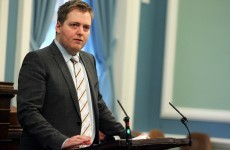
Sigmundur David Gunnlaugsson says he will ignore the IMF’s criticism of his government’s plans to reduce household debt following the country’s economic collapse.
Politicians are too busy trying to point-score with the electorate on social issue to address the real danger to our way of life – our tanking economy. A new party, focused on economic policy, is vital for Ireland, writes Aaron McKenna
MPs voted in favour of a national solidarity fund meaning the nationalisation of public and private sector pensions and of capital controls to prevent a run on banks.
In a leaked document, the Troika suggests a number of radical measures to address the health service overspend including hiring specialists from abroad, cutting doctors’ pay and making savings on the cost of drugs.
The former head of the International Monetary Fund says that he is the subject of a “media assault that some days resembles a manhunt” amid allegations of sexual assault and pimping.
The Irish Times publishes details of letters the ECB sent to Brian Lenihan in the lead-up to Ireland seeking a bailout two years ago leading to more calls for the letters to published in full.
Europe’s financial crisis and a potential budget crisis in the United States could slow world growth even further, according to the International Monetary Fund’s latest forecast.
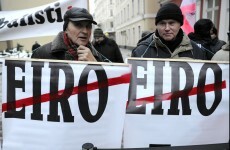
Christine Lagarde calls for bailout funds to be given to banks directly rather than countries being saddled with the debt – while Italy’s prime minister warns leaders have one week to save the eurozone.
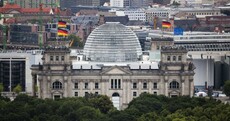
Dealers cheered the Greek result, which saw the New Democracy party win about 30 percent of the vote – while bond yields in Spain and Italy fell sharply.
The Public Expenditure and Reform Minister said that negotiations with the Troika had yielded such an agreement with the other half of the money being leveraged for further stimulus measures.
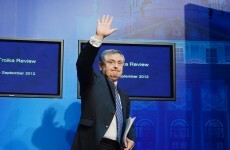
The Troika has completed the sixth review of Ireland’s bailout programme and the Minister for Finance and Minister for Public Expenditure and Reform briefed the press earlier today.
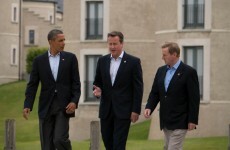
A DEEP DIVIDE has been revealed among the leaders at the G8 summit over how to deal with the ongoing conflict in Syria.
The US has indicated it wants to arm Syria’s rebels, while Russia remains in staunch opposition to the plan. Others, including Britain and France, are reluctant to make a decision just yet. However, President Francois Hollande asked:
How can you allow Russia to continue to send weapons to the regime of Bashar al-Assad while the opposition gets so few weapons?
At least 93,000 people have been killed in the two-year civil war as rebels struggle to overtake Bashar Assad’s forces who are strengthened by support from Hezbollah, Iran and Russia.
On Sunday, Putin argued his position: “One hardly should back those who kill their enemies and, you know, eat their organs,” referencing a video purportedly showing a rebel commander committing an act of cannibalism. “Do we want to support these people? Do we want to supply arms to these people?”
Today we ask: Should international powers arm Syria’s rebels?