TheJournal.ie uses cookies. By continuing to browse this site you are agreeing to our use of cookies. Click here to find out more »
Dublin: 10 °C Monday 20 May, 2013

Mixed results for Irish fishermen after “difficult and complex negotiations”

Talks on Ireland’s fishing quotas for 2013 ended in the early hours of this morning, with Minister Coveney saying that the agreed quotas would “support our fishing industry over the coming year”.

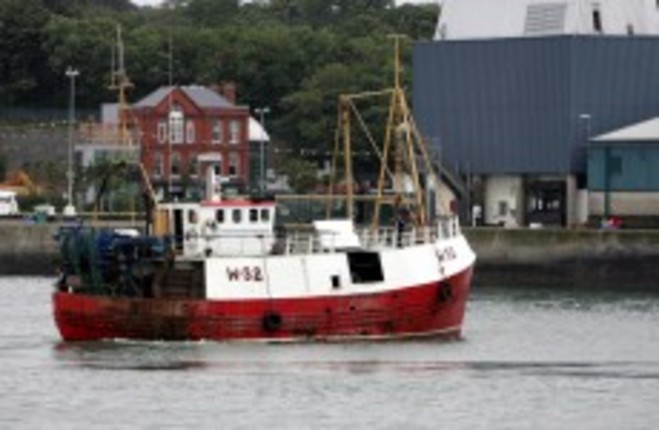
File photo
File photo
Image: Eamonn Farrell/Photocall Ireland

EU MINISTERS HAVE this morning concluded their talks on fish quotas for 2013, with Minister for Agriculture, Food and the Marine Simon Coveney “pleased that we have secured a good deal”.

After two days of talks, it was agreed that there will be 216,300 tonnes of fish quotas for Irish fishermen in 2013.

This included a six per cent increase in the amount of prawns which could be caught, while quotas for whitefish were maintained at 2012 levels.

Speaking following the conclusion of talks at 7am this morning, Coveney said that the “result achieved is a good deal for the Irish fishing industry”.

We have secured increases from last year for key stocks including increased prawn quota in all areas totalling 8,733 tonnes and an increased whiting quota in the Celtic Sea amounting to 6,812 tonnes. The package of quotas secured today will support the economies of those coastal communities which are dependent on the resulting employment created both at sea and in onshore related industries.

The news wasn’t all positive for Irish fishermen, however. The quotas for cod and sole dropped, along with a reduction in the haddock quota of 15 per cent.

While a 63 per cent increase in the quota for blue whiting was agreed (a new total of 13,105 tonnes), final numbers for this, along with mackerel and horse mackerel will not be known until the New Year, after the EU/Norway Fisheries Agreement is completed.

The main changes, by geographical location, were as follows:

The Irish Sea

  • Six per cent rise in the prawn quota.
  • Cod and sole quotas reduced “because of serious concerns about the state of these stocks”.

The Celtic Sea

  • 29 per cent increase for the whiting quota (an additional 1,500 tonnes).
  • A “modest” increase in the cod quota.
  • No change in the quotas for hake, megrim and monkfish.
  • A reduction in the haddock stock “in accordance with the scientific advice”.

The North West

  • The pre-existing quota for boarfish remains the same.
  • 63 per cent increase in the blue whiting quota (a total of  13,105 tonnes). As mentioned above, the final quota for this, along with mackerel and horse mackerel, will be finalised early next year. The mackerel quota is expected to drop, however.

Responding to this morning’s announcement, the CEO of the Irish Fish Producers’ Organisation (IFPO), Francis O’Donnell, told TheJournal.ie that the “difficult and protracted” talks had produced a mixed bag for Irish fishermen, the impact of which would largely depend on their fishing area and catch type.

In relation to concerns related to over-fishing, O’Donnell said that it was “in no-ones best interests to over-fish” and that fishermen had, for example, “reduced the levels of juvenile cod being caught to just five per cent, at a huge expense to themselves.”

Read: Calls made to reverse over-fishing trends and ban trawling >

Read next:

Comments (8 Comments)

  • Responsible Irish Fish is a new scheme that promotes Irish fish and jobs and only a handful of Irish companies are bothering with it, the rest are buying mostly from abroad.

    Reply
    • Agreed, sustainability is n’t all about reducing catches its as much about ensuring that the supply chain is as short as possible. I have noticed over the last few years that Sea Bass has risen in popularity particularly in our resturants. This is a fish for which no quota exists and is not fished for by Irish Fishermen. Its demand is fully met by imports. Another fish hake, which is caught by Irish Fishermen it has gone from a prime earner to a less economic fish as vast quanties of the fish are being shipped into the EU from the South Atlantic.

      The pressure on fishing in EU waters is as much about economics as anything else. The real price of fish at the quay side as opposed to at the shop counter has not increased in over 30 years but the other input costs most particularly Fuel have increased dramatically. Net of costs earnings have fallen which have resulted in a drift away from the industry by many who would historically being employed in this industry. These factors rather than quota issues which are more a consequence of these factors have led to huge challenges for the fishing industry over the last 20 years.

      Reply
  • A job well done in Europe on our behalf…thank you Simon.

    Reply
  • the whole by catch scenario needs to he sorted out also.throwing back dead fish is a disgrace

    Reply
  • Jayziz. It used to be a way of life. Now it’s an industry. An industry that is hell-bent on its own destruction.

    Reply
    • Its still a way of life for people as well as an industry. And 1 of the few industries in this nation that can supply steady jobs. I was abusing convey the other day but he didnt do to bad. And unlike farmers, the fishing industry doesnt go looking for grants and handouts for everything, its capable of surviving on its own

      Reply
  • No matter what deal thats negociated, the fact remains that the seas are being dramatically overfished. If there is to be a long term future for the fishing communities, then in the short term harsher quoatas need to be imposed. Fish breeding grounds need to be identified and complete fishing bans need to be put in place in those areas.

    Reply
    • Spot on conor…the seas need managing on a post-national, sustainable basis; before we do any more irreversible damage with our primitive coporate tribalisms.
      After the war maybe. Another four or five million years should see a viable life form emerging. You gotta stay optimistic.

      Reply

Add New Comment