TheJournal.ie uses cookies. By continuing to browse this site you are agreeing to our use of cookies. Click here to find out more »
Dublin: 2 °C Saturday 25 May, 2013

Japan wants to revisit WWII apology

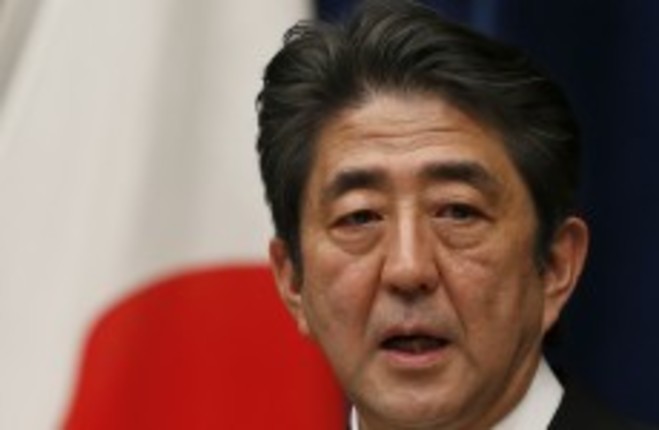
New PM Shinzo Abe wants to take it back…and give it again.

Image: Shizuo Kambayashi/AP/Press Association Images

JAPAN’S NEW PRIME Minister has voiced his wish to revisit the 1995 apology made by his country for the suffering caused during World War II.

In an interview with the Sankei newspaper, Shinzo Abe said he wants to issue a “forward-looking statement that is appropriate for the 21st century”.

According to the LA Times, the leader noted that the previous statement, announced on the 50th anniversary of the end of the war, was made by socialist party PM Tomiichi Murayama.

The 1995 apology admitted that Japan’s “mistaken national policy” led to “tremendous damage and suffering to people of many countries, particularly to those of Asian natures”.

In full:

The world has seen fifty years elapse since the war came to an end. Now, when I remember the many people both at home and abroad who fell victim to war, my heart is overwhelmed by a flood of emotions.
The peace and prosperity of today were built as Japan overcame great difficulty to arise from a devastated land after defeat in the war. That achievement is something of which we are proud, and let me herein express my heartfelt admiration for the wisdom and untiring effort of each and every one of our citizens. Let me also express once again my profound gratitude for the indispensable support and assistance extended to Japan by the countries of the world, beginning with the United States of America. I am also delighted that we have been able to build the friendly relations which we enjoy today with the neighbouring countries of the Asia-Pacific region, the United States and the countries of Europe.
Now that Japan has come to enjoy peace and abundance, we tend to overlook the pricelessness and blessings of peace. Our task is to convey to younger generations the horrors of war, so that we never repeat the errors in our history. I believe that, as we join hands, especially with the peoples of neighbouring countries, to ensure true peace in the Asia-Pacific region -indeed, in the entire world- it is necessary, more than anything else, that we foster relations with all countries based on deep understanding and trust. Guided by this conviction, the Government has launched the Peace, Friendship and Exchange Initiative, which consists of two parts promoting: support for historical research into relations in the modern era between Japan and the neighbouring countries of Asia and elsewhere; and rapid expansion of exchanges with those countries. Furthermore, I will continue in all sincerity to do my utmost in efforts being made on the issues arisen from the war, in order to further strengthen the relations of trust between Japan and those countries.
Now, upon this historic occasion of the 50th anniversary of the war’s end, we should bear in mind that we must look into the past to learn from the lessons of history, and ensure that we do not stray from the path to the peace and prosperity of human society in the future.
During a certain period in the not too distant past, Japan, following a mistaken national policy, advanced along the road to war, only to ensnare the Japanese people in a fateful crisis, and, through its colonial rule and aggression, caused tremendous damage and suffering to the people of many countries, particularly to those of Asian nations. In the hope that no such mistake be made in the future, I regard, in a spirit of humility, these irrefutable facts of history, and express here once again my feelings of deep remorse and state my heartfelt apology. Allow me also to express my feelings of profound mourning for all victims, both at home and abroad, of that history.
Building from our deep remorse on this occasion of the 50th anniversary of the end of the war, Japan must eliminate self-righteous nationalism, promote international coordination as a responsible member of the international community and, thereby, advance the principles of peace and democracy. At the same time, as the only country to have experienced the devastation of atomic bombing, Japan, with a view to the ultimate elimination of nuclear weapons, must actively strive to further global disarmament in areas such as the strengthening of the nuclear non-proliferation regime. It is my conviction that in this way alone can Japan atone for its past and lay to rest the spirits of those who perished.
It is said that one can rely on good faith. And so, at this time of remembrance, I declare to the people of Japan and abroad my intention to make good faith the foundation of our Government policy, and this is my vow.

Abe became Prime Minister for the second time last week after a clear victory in the recent election.

Another apology, made in 1993 and addressed the issue of so-called comfort women, might also be revisited, according to officials.

According to the LA Times, Abe has denied that comfort women who serviced Japanese troops during the war were forced into sexual servitude.

PICS: Surviving Christmas during World War II

Read next:

Comments (46 Comments)

  • To be clear, that statement that Sinead produces in full was made by Japanese Prime Minister, Tomichi Murayama, in 1995, not the present Japanese Prime Minister, Shinzo Abe. The present Japanese Prime Minister, Shinzo Abe, apparently objects to Murayama’s describing Japan’s pre-1945 policy as a “mistaken national policy”.

    Reply
  • From my time in Japan, I would say that the Japanese people’s aversion to war is far greater than any other nation I know. The Japanese public fervently believe in their country’s pacifist constitution and most favour good relations with Japan’s Asian neighbours.

    American Historian John W. Dower has superbly explored the issue of war guilt in Japan and convincingly argues that while in Germany guilt involved the outward acknowledgement of victimisation, in Japan the atom bombs, the American Occupation’s policy towards “Red China” and that fact that Imperial Japan’s atrocities happened for the most part outside of the homeland have created a sense of “Internal Victimisation”; a universal condemnation of conflict which in the minds of most postwar Japanese is manifested primarily in the suffering Japan itself underwent.

    This makes sense in many ways. The Japanese public had no equivalent of the Nazi death camps in their own backyard as the Germans had. When everyday life was in itself a struggle to survive, the average Japanese on the street had little time to spend lamenting over the atrocities the Imperial Army had inflicted upon Japan’s fellow Asians hundreds of miles away. I’m not saying they were not understood, just that feeding yourself and your family was more important to most. There was never any official attempt to ignore these savage acts, but they were simply less tangible in the mind of ordinary Japanese than the piles of corpses in Dachau had been to ordinary Germans.

    It is far too simplistic to say that the Japanese have not acknowledged their past. Most ordinary Japanese I know, are very aware of their country’s past aggressions and would love to see their country take whatever steps would be necessary to help heal relations with China and the Koreas. It is the extreme nationalists and certain elements within the LDP who have prevented this for decades.

    Reply
  • I may be incorrect, but I think it really refers to the Anzacs and the fact that they were treated horrifically by the Japanese, and as far as I know they never got an official apology. So many Anzac soldiers that did survive took their likes and even families and friends were not invited to the Anzac memorial every year as they did not want them to see them so upset. This has changed thank god, but it must have been terrible for men to be so mentally scared the way they were.

    Reply
  • Great bunch of lads.

    Reply
  • We know what Japan did and most Japanse people know about it too and accept it. We will never understand people like Abe if we simply look at him from the mindset of WW2.

    Look at what has happened to Japan-In 1945 its proud military was destroyed and humiliated. One of the most under-reported stories about WW2 was the number of Japanese soldiers who instead of surrendering committed suicide because they believed that they had failed to their homeland. So how did they compensate for this in the following years? By becoming one of the most envyed economies in the world and by far the leader of Asia (then China had an economy the size of Holland and South Korea was a basketcase).

    Fast forward to 2013- They have been on the slide now for 13 years. Most people who went to Japan in the early 90s and have gone back in more recent times say that it is a defeated country in terms of its economic problems. Surpassed by China in 2011 as the biggest economy and now being outmaneoured by South Korea as they have overtaken Japan in shipbuilding, Internet etc. Brands like LG and Samsung are overtaking Japanese brands.

    What all this is about is Abe’s economic trouble and the fact he has no idea on how to solve it.

    Reply
  • Should America not be apologizing to them?

    Reply
    • For the bombs yes

      Reply
    • For stopping them from raping and pillaging half of Asia?

      Reply
    • great article sinead

      Reply
    • Japan where on the retreat when America dropped those bombs.

      Reply
    • True enough the Americans were beating back the Japanese but Japan had over a million soldiers plus a civilian militia who would have fought to the last man and woman for the emperor.

      It could be argued that the bombings saved lives (on both sides considering the estimates of casualties of invading the Japanese mainland) but that doesn’t entirely defend the USA for dropping the bombs.

      Reply
    • Read any reports from survivors of Hiroshima or Nagasaki and come back and talk about America having any justification for dropping them on civilians.

      Only eclipsed by Hitler’s Concentration Camps for the most disgusting act of the 20th century

      Reply
    • @Niall Noonan so you conveniently ignore the Rape of Nanking and all the other vile crimes committed by the Japanese in the 1930s and 40s. Nanking alone has a death toll of 200,000. The dropping of the bombs was without doubt a horrific event however; they were highly effective in bringing the war in the Pacific to an end. You cannot compare the industrial slaughter of approx 12,000,000 people with the dropping of the bombs, it does not add up.

      Reply
    • I don’t conveniently ignore Nanking, Stalin’s Labour Camps, the Khmer Rouge or anything else. I simply think melting people into the ground and masquerading it as some glorious act of freedom fighting is worse.

      Reply
    • @Niall Noonan I will leave you in your naive ignorance along with Kevin.

      Reply
    • That is Kevin Higgins I mean.

      Reply
    • Jason 01/01/13 #

      Japan killed 3 or 4000 in Pearl Harbour. The US killed 150,000 Japanese in Hiroshima and Nagasaki. I think it’s fair to say that the punishment didn’t fit the crime.

      Reply
    • Cut and pasted.

      Reply
    • Another factor in the dropping of the atom bombs was the need to end the war quickly. The war in Europe had ended months previously and Stalin had begun to shift forces to the pacific theatre and was beginning to occupy territory. Took over a few Japanese islands that are still disputed today. US knew at that point that Russia was the new threat so they needed a quick Japanese surrender to remove any pretext for a Russian expansion in the east as they had done in Europe.

      Reply
    • Gavin it is important to remember that the “Racing the Enemy” thesis put forward by historian Tsuyoshi Hasegawa is far from universally accepted by the academic world.

      The reason Stalin was shifting forces to East Asia was to meet the USSR’s obligation’s to its Allies. It had been agreed at Yalta that the USSR would enter the war against Japan no later than three months after Germany’s defeat. It is also vital to remember that no Soviet troops set foot in Manchuria, South Sakhalin or the Kurile Islands until August 9th, after Hiroshima had been bombed.

      What Hasegawa’s thesis does demonstrate is the way in which the US misinterpreted Soviet postwar intentions. The latest evidence from the Russian archives demonstrate that Stalin was very much of the opinion that the wartime alliance would continue to ensure the containment of Germany and Japan. Stalin was much aggrieved that the West let the alliance break down because he rightly predicted that both Japan and Germany would re-emerge as powerful nations.

      Reply
  • Surprised everyone has ignored the most important part of the statement(or did anyone read it?).

    His finishing with a commitment to work for nuclear disarmament should be immediately seconded by our own government and a beginning made again on this central issue that has dropped below the horizons of our dozy world leaders.

    Once upon a (pre-Nato/PfP) time we would have been to the forefront on this issue.

    Reply
  • Japan had the atomic bombs drop on them not only to end the war but to stop Stalin who had very quickly moved most of his armies from Europe over to the back door of Japan. It was at this stage that the high command of the allied forces finally dawn on them what Stalin was and had to end the war so as to stop the spread of communism unfortunately women and children suffered, (but also think of a world without the Toyota car)

    Reply
  • Wonder will America will America follow suit and issue an apology for the single greatest act of terrorism in history?

    Reply
  • Wait . They have not say how many people they killed in Nanking in ww2 that not even in their history book. So how could you believe what he say. Also please google 731 army of Japan. They did put this in their history book is well.

    Reply
  • Me so solly !!!!

    Reply
  • Now where’s Germans

    Reply
    • Germans had nobody left to apologise after the war, all the top nazi dogs are MIA, KIA or suicide.

      Besides the allies shaped the Germany that it is today so no apology needed.

      Surprised Japan are doing this again seen as they got nuked at the end.

      Reply
    • Germany has apologized. Look it up.

      Reply
    • Declan I’m not saying they haven’t I’m saying they shouldn’t again. Think about it who’s alive from WW2 that can apologise?

      Reply
    • @Kevin Higgins the truth is you do not have a clue what you are talking about at the best of times. As for your comments on WW2 “All the top nazi dogs are MIA or suicide” where did you learn that one, a comic book or a friend maybe. Ever heard of the Nuremberg Trials, who were the accused in the dock? obviously not. You are submitting uneducated opinions on WW2, and other subjects that you know nothing about. Keep it up its good for your reputation.

      Reply
    • What Andy said. Seriously Kevin, don’t comment if you don’t know what you’re talking about.

      Reply
    • Mjhint 01/01/13 #

      Kevin the US shaped Japan more than it shaped Germany after the war. The cold war shaped Germany until 1989. The US even shaped the constitution in Japan.

      Reply
    • That why I’m asking why should they apologise again?

      Reply
    • @Kevin Higgins maybe if you did a little bit of simple research (you have access to the net) its not so hard, you would realise that the issue of apology (or non apology) is still a sore point in the region. These issues are never straightforward so uncomplicated assumptions do not suffice when making comments on an issue that may seem at first glance to be clear cut . It is good to see that you have an interest in the subject and you will be surprised by doing a bit of research how much you will learn.

      Reply
  • Good story

    Reply

Add New Comment