TheJournal.ie uses cookies. By continuing to browse this site you are agreeing to our use of cookies. Click here to find out more »
Dublin: 17 °C Sunday 19 May, 2013

Lusitania’s ‘dark secrets’ unveiled in new documentary

The National Geographic channel will air a documentary on the ill-fated ocean liner on July 15.

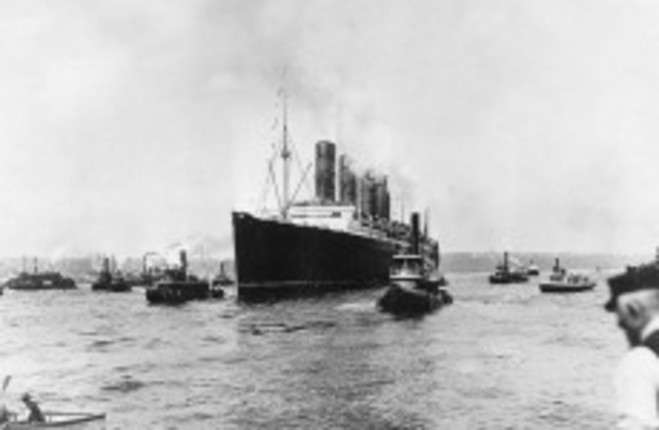
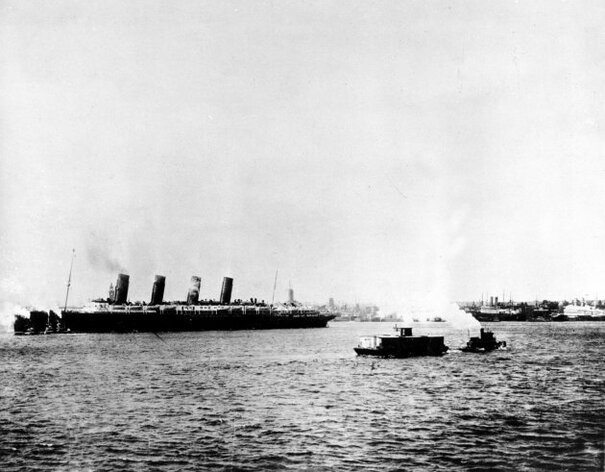
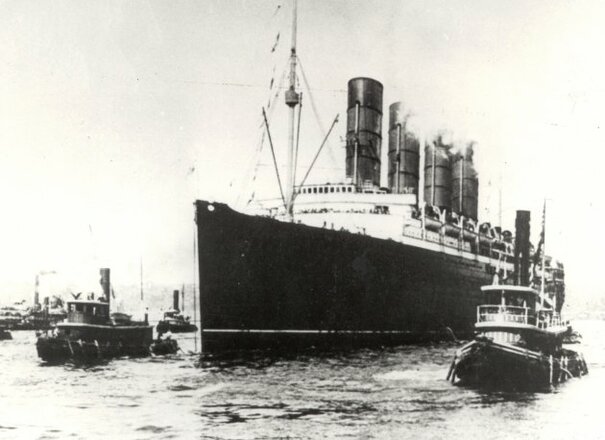
The Lusitania sailing from New York on 1st May 1915 on her last voyage
Image: Tophams/Topham Picturepoint/Press Association Images

A NEW NATIONAL Geographic documentary will explore what led to the sinking of the Lusitania ocean liner in 1915.

Dark Secrets of the Lusitania is due to be shown on Sunday 15 July at 7pm on the National Geographic Channel.

It will explore the reports of an illegal cargo of weapons that were alleged to have been on board the liner – did they cause a second blast on board?

Sinking of the Lusitania

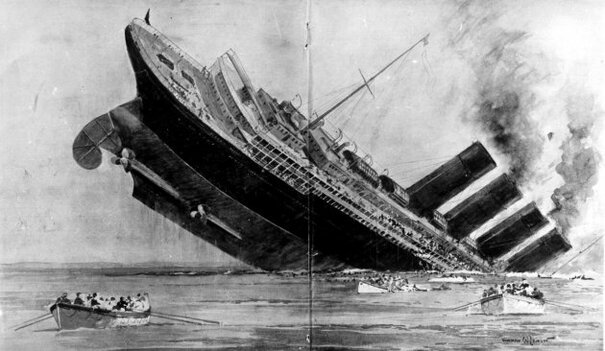
The Lusitania sank 11 miles off the Old Head of Kinsale on the 7 May 1915 after being attacked and struck by a torpedo fired by a German submarine U-20. After a second explosion, it took just 18 minutes for the vessel to sink, causing the deaths of 1,198 people.

According to Tralee-based maritime archaeologist Laurence Dunne, mystery surrounds the second explosion:

The British claimed that it was due to a second torpedo while Germany in refuting the claim maintained that the cause was due to the explosion of gun-cotton and or other explosive material that the liner was clandestinely carrying.

Germany regarded the Lusitania as a legitimate target as the ship was on the British navy list and carried millions of rounds of .303 ammunition.

The death of the 128 American passengers in the tragedy is regarded by many as one of the major reasons why the US entered World War I.

Documentary

The documentary uses lab research into explosive theories, dives in high seas and the recorded testimony of survivors to take another look at the sinking. According to the National Geographic, the divers risked their lives by exploring the ghostly wreck.

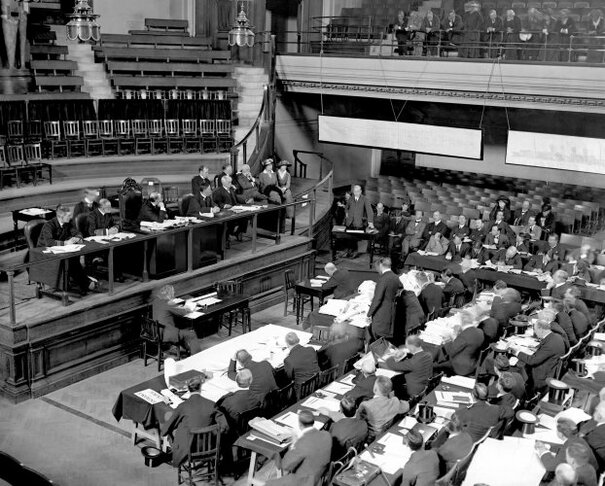
An inquest was held into the sinking just three days after the incident, during which it was claimed that all ships in the area had been made aware of the threat of torpedoes, but the captain William Turner did not follow the warning.

Today, the ship lies 90 metres below the water, 25 nautical miles from the Old Head of Kinsale.

Lusitania’s ‘dark secrets’ unveiled in new documentary
1 / 13
  • RMS Lusitania

    The Transatlantic Liner 'Lusitania' moored in the Mersey, Christmas 1911. The loss of life among American passengers is thought to have had a direct influence on the decision by the United States to enter the First World War on the Allied side. Pic; PA/PA Archive/Press Association Images
  • Side view

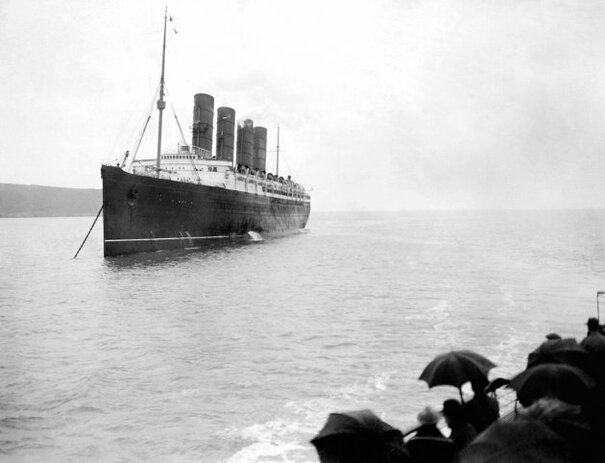
    The ocean liner Lusitania, under British registration, leaves New York on its last voyage on May 1, 1915. Pic: AP Photo
  • Lusitania

    This is a general view of the British cargo and passenger ship Lusitania as it sets out for England on its last voyage from New York City on May 1, 1915. Pic: AP Photo
  • Leaving New York

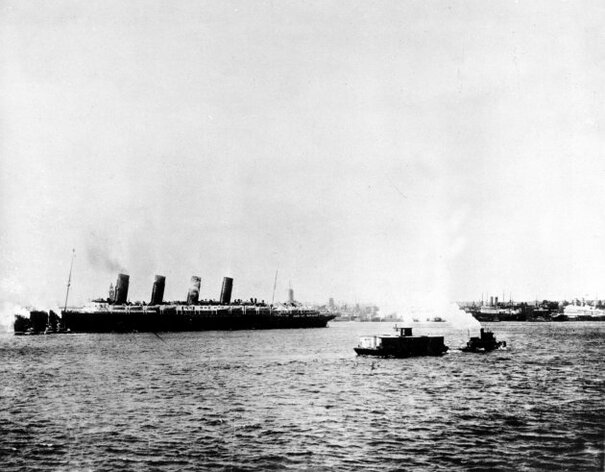
    In this May 1, 1915 black-and-white file photo, the ocean liner Lusitania, under British registration, leaves New York on its last voyage. Pic: AP Photo, File
  • Sinking of the Lusitania

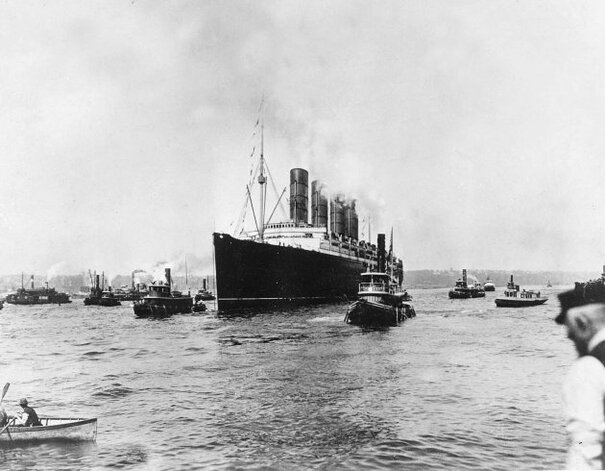
    The Lusitania sailing from New York on 1st May 1915 on her last voyage before being sunk by a German U-Boat of the coast of Ireland on 7th May 1915. Nearly 1200 lives were lost. Pic: Tophams/Topham Picturepoint/Press Association Images
  • Artist's impression

    Artist's impression of the sinking of the Lusitania. She was torpedoed by the SM U-20, a German U-boat and sank off the Old Head of Kinsale, killing 1,198 of the 1,959 people aboard. Pic: Tophams/Topham Picturepoint/Press Association Images
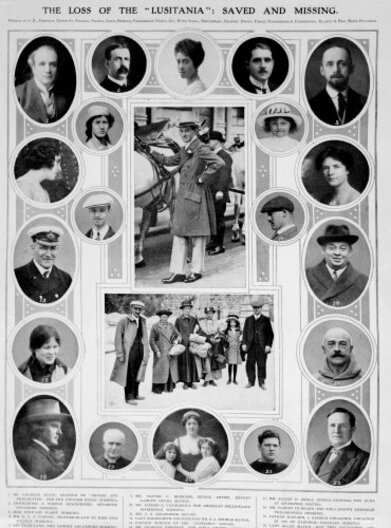
  • Passengers

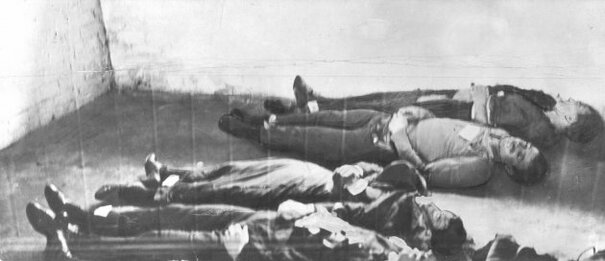
    Some of the passengers who died after the Lusitania was sunk off the coast of Ireland by a German U-Boat torpedo. Pic: Tophams/Topham Picturepoint/Press Association Images
  • Missing and survivors

    Survivors and missing from the Lusitania. Pic: Tophams/Topham Picturepoint/Press Association Images
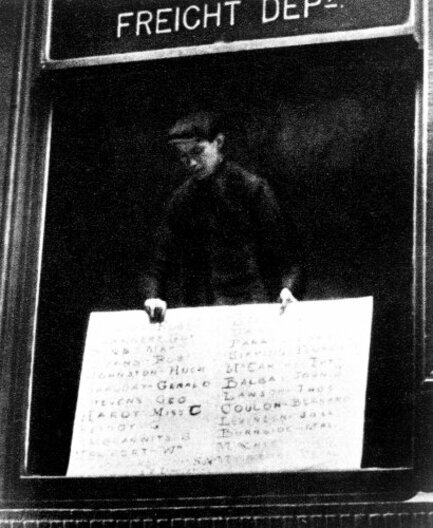
  • Sinking of the Lusitania

    The first roll of survivors of the sinking of the Lusitania being posted in Liverpool. Pic: Tophams/Topham Picturepoint/Press Association Images
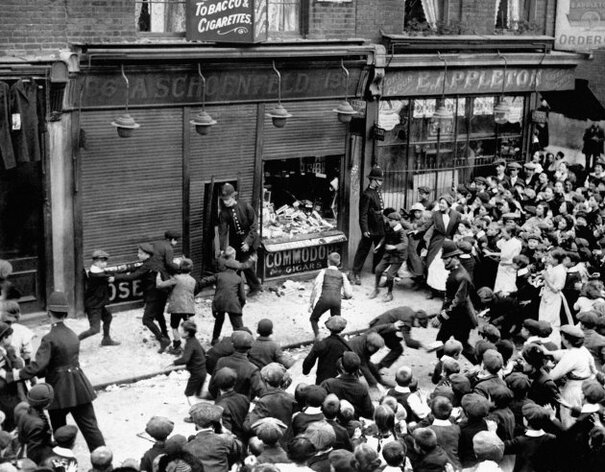
  • Anti-German demonstrations

    Anti-German demonstrations in Crisp Street, Poplar, London. Anti-German demonstrations in Chrisp Street, Poplar, London in response to the sinking, on 7 May of the liner 'RMS Lusitania' by a German submarine. Pic: PA Archive/Press Association Images
  • Accidents & Disasters - The Sinking of RMS Lusitainia - 1915

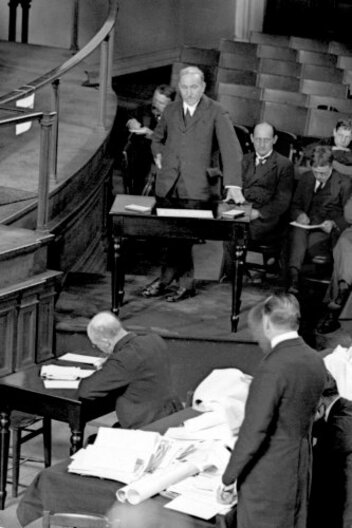
    The Master of the Lusitania, Captain William Turner giving evidence at the Lusitania Inquiry. Pic: PA Archive/Press Association Images
  • Lusitania and submarine

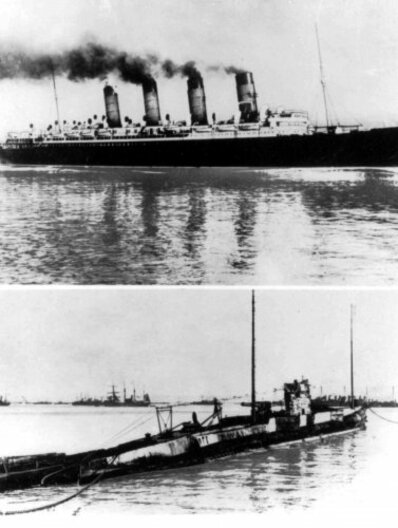
    Undated photos of top, the British liner Lusitania, and bottom the German submarine U-139 which sank it.
  • Lusitania Inquiry

    Captain William Turner giving evidence at the Lusitania Inquiry. Pic: PA/PA Archive/Press Association Images

Read: Ireland to receive ‘important artefacts’ from Lusitania wreck>

http://www.thejournal.ie/ireland-to-receive-important-artefacts-from-lusitania-wreck-432075-Apr2012/

Read next:

Comments (12 Comments)

  • Peter 05/07/12 #

    Typically Churchill blamed he unfortunate captain, but at this time all ships were taking the same risk not knowing how to manoeuvre out of danger , however she did carry large amounts of ammunition and war supplies so justifiably she was sunk..

    Reply
  • “the divers risked their life’s diving the ghostly wreck”… or is that just the people ashore who didn’t want anyone diving the wreck… there was stories years ago of dive robots being damaged to prevent persons diving on it.

    Reply
  • An inquest was held into the sinking just three days after the incident, during which it was claimed that all ships in the area had been made aware of the threat of tornadoes, but the captain William Turner did not follow the warning.

    Dem tornadoes in Cork must be wicked bad!

    Reply
    • That was quick correction Aoife! Almost got away with it.

      Reply
    • That autocorrect is a dangerous thing, a misspelling could easily turn into a misunderstanding. A friend of mine shot off a thank you email to a female business connection he was trying to do business with- “thank you for the meeting today it was very worthwhile, I look forward to further copulation with you” perhaps Aoife could compile most embarrassing misuse of words. Heard the Ombudsman described yesterday as the Omnibusman.

      Reply
    • The mind boggles. A Freudian slip by the author was spotted and cut an pasted into a comment. So far the comment has 11 thumbs down and the other comment on the speed of her correction has eighth thumbs down. Would any one care to explain what’s the craic!

      Reply
    • OU812 05/07/12 #

      The “g” & “t” keys are much to close together, one accidental insult years ago is why I never sign off an email “Regards”…

      Reply
    • If we were all as pedantic as you Miles, you’d get an e-mail a minute telling you that your surname should be “Ar An gCapallin” and that you’re annoying.

      Reply
  • Sounds like a really interesting program thank god from sky plus defo one to record .. just one thing the pictures say that the ship was struck by a torpedo from the U 139 yet the article says it was struck by one from the U 20.

    Reply

Add New Comment