TheJournal.ie uses cookies. By continuing to browse this site you are agreeing to our use of cookies. Click here to find out more »
Dublin: 8 °C Thursday 20 June, 2013

The 10 most important numbers in the world

Avogadro, Planck, Boltzmann… the whole gang is here.

THE DISCOVERIES OF certain constant numbers have pushed the world forward as much as the the light bulb or the assembly line.

These constants have led to bridges being built, finances being accounted for, and th completion of many other significant and necessary tasks throughout history.

There are many important numbers that have made this world what it currently is.  But the following 10 are the most important numbers, or constants, in the entire world.

The 10 most important numbers in the world
1 / 10
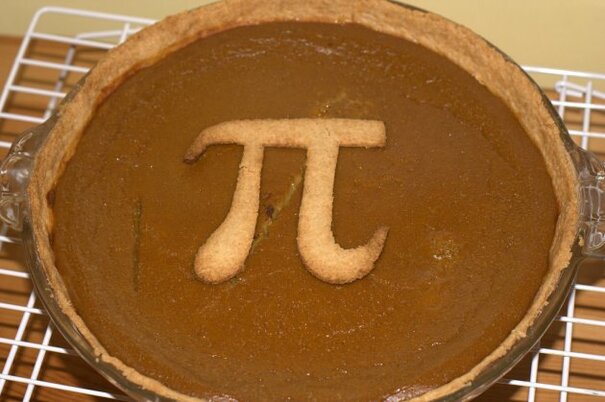
  • Pi

    Archimedes' constant, or 'pi' is the name given to the ratio of the circumference of a circle to the diameter, but it's actually so much more than that. Pi is the key constant in any equation that involves circular or harmonic motion. It's one of the most essential relationships in mathematics. Greet mathematician Archimedes is credited with the first theoretical calculation of pi, which he estimated was between 310/71 and 3 1/7 or 223/71. Pi: 3.141592.... Image: Paul Smith via Flickr/Creative Commons
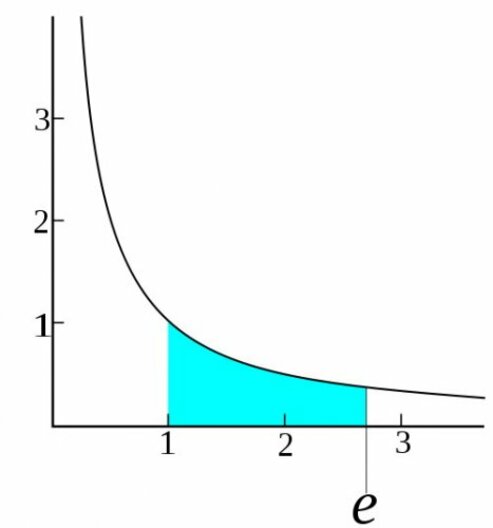
  • Euler's number

    Euler's number is also known as the exponential growth constant. It is the base for natural logarithms and is found in many areas of mathematics. In finance, Euler's number is used to determine compound interest, which is extremely vital in understanding the time value of money - the backbone of finance. Euler's number is crucial when describing any decaying relationship - think Carbon 14 dating. Euler's number: 2.7182.... Image: Wikimedia Commons
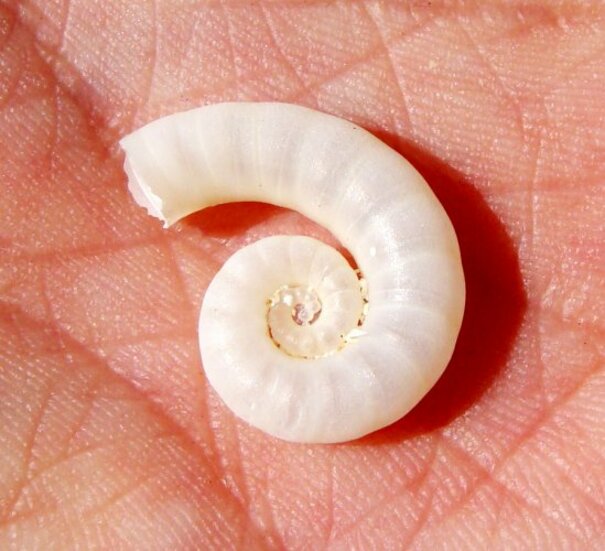
  • Golden ratio

    The golden ration is a number often encountered when taking the ratios of distances in geometric figures. The golden ratio is often used in financial technical analysis to attemot to determine when a market will continue its path or reverse. It's also observed very frequently in nature, especially in the way that some naturally occurring spirals expand outward. Golden ratio: 1.6180... Image: C. Romo via Flickr/Creative Commons
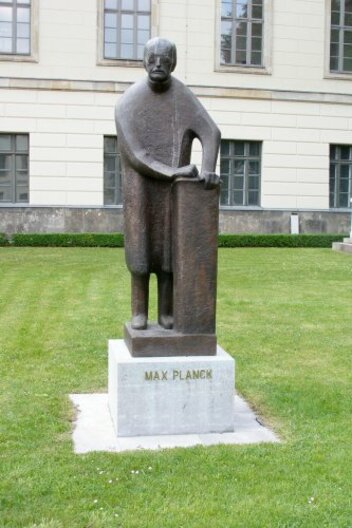
  • Planck's constant

    The constant is named after Max Planck, one of the fathers of quantum theory. Planck's constant reflects the size and energy quanta in quantum mechanics. Werner Heisenberg used it to help determine the Uncertainty Principle. Some writers speculate that this Uncertainty Priniciple can be used to determine stability and sustainability of a financial instrument. But of you want a real-world application, you'll have to wait a few years. The quantum computer is still in theoretical phases, but if it becomes a reality - if engineers are able to design a computer that stores information not in electrical ones and zeros but in sex quantum orientation of bits - it could have a bigger impact on the world than the semiconductor. Image: Thomas Quine via Flickr/Creative Commons
  • Avogadro's constant

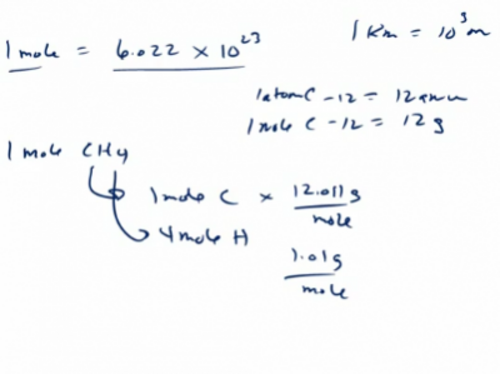
    Avogadro's constant is a number used to explain to atoms, molecules, ions and electrons. For elements, the relative atomic mass expressed in grams contains the Avogadro Constant of atoms. Avogadro's constant is an interesting relationship between a multitude of different chemical properties. A chemical engineer might need to use the application of that knowledge - called stoichiometry - every single day of his life. It's in many way a real life "sweet spot," when you have precisely the number of atoms in a pile such that that pile of atoms weighs, in grams, the atomic weight of the substance on the periodic table. That pile is called one "mole" of atoms. So, a mole of Carbon contains exactly 6.022 x 10²³ atoms of carbon, and if you weigh it, it would weigh 12.011 grams, carbon's atomic weight. Avogadro's constant: 6.0221515 x 10^23
  • Speed of light

    The speed of light is 186,282 miles per second, or 299,792,458 meters per second. A meter is defined from this constant. Understanding the speed of light is both one of physics' proudest accomplishments, and understanding what it really implies is one of its most dizzying questions. The speed of light is used in many different mathematical formulas and in analyzing space travel. It's part of Einstein's famous equation of relativity by which we understand the relationship of mass and energy. It's the "c" in E=mc2. Image Chris Loxton via Flickr/Creative Commons
  • Gravitational constant

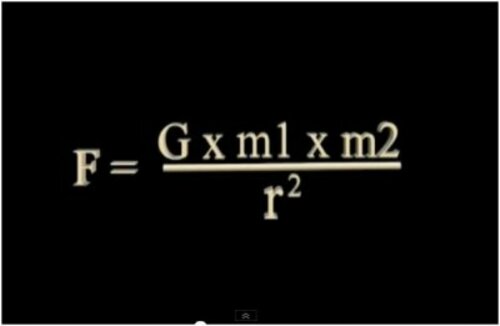
    The gravitational constant appears in Newton's law of gravitation, and is known as the constant G. Additionally, G also appears in Albert Einstein's theory of general relativity. G helps determine the force between two masses. Knowledge of G is crucial for any civil, mechanical, or aerospace engineer. Making sure that a bridge can work against both the weight of the cars pushing down on it as well as the impact of the gravitational constant's pull down is one of the, understandably, more essential aspects of bridge construction. Gravitational constant: 6.67300 x 10^-11 m^3 kg^-1 s^-2
  • Boltzmann constant

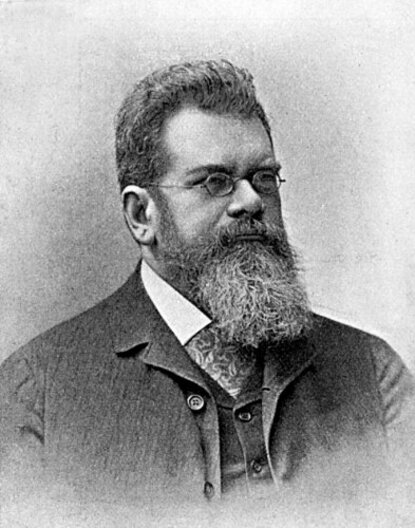
    The Boltzmann constant is a fundamental constant of physics that occurs in nearly every statistical formulation in classical and quantum physics. Boltzman constant explains why ice cubes melt in warm water, but are not spontaneously created in tepid water, among other uses. Boltzmann constant: 1.380650 x 10^23 joule per kelvin Image: AP/Press Association Images
  • Imaginary unit: i

    "i" equals the square root of -1, which means that i squared is equal to -1. Negative numbers don't have square roots. Math had advanced to the point where saying "there is no square root of negative numbers" was holding back a lot of progress. Solutions of some polynomials have both real solutions that we could use in real life as well as solutions that involved the square root of a negative number, which can be discarded. Image: Bixentro via Flickr/Creative Commons
  • Euler's identity

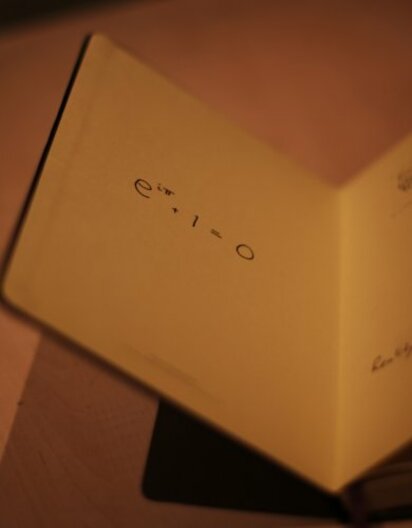
    Euler's identity ties a lot of things together. For one thing, we know from trigonometry that eix = cosine(x) - i * sine(x) because of the infinite series that describe sine, cosine, and e. When you plug in pi for x, sine(pi) = 0 and cosine(pi) = -1. This formula is particularly elegant because it involves the most famous constants in math as well as 1, zero, and 1. What this conceptually describes is walking along the edge of a unit circle in the complex plane, half way around. Until the real value is -1. Euler's identity: e^(i*pi) = -1 Image: Kim Joar via Flickr/Creative Commons

  • Share on Facebook
  • Email this article
  •  

Published with permission from:

Business Insider
Business Insider is a business site with strong financial, media and tech focus.

Read next:

Comments (62 Comments)

  • Zero surely belongs on that list, it’s incredibly significant in all mathematical and related fields

    Reply
  • And July 22 is 22/7 which is approximately pi!?

    Reply
  • 42?

    Reply
    • A supremely important number. But what was the question?

      Reply
    • Sorry, must have been a bit vague in my previous post. I know the answer to the meaning of life is 42. Just wondering what the question was again.

      Reply
    • Sorry, must have been a bit vague with my previous post. Been a while since I read The Hitchhikers Guide books. I know the answer to the meaning of life is 42, just couldn’t remember the question.

      Reply
    • Sorry for the double post. Stoopid phone.

      Reply
    • Paul 23/07/12 #

      The mice forgot the question and the computer Deep Thought couldn’t remember but could design a better computer that would find the question. Unfortunately bypasses have to be built so we never got the question, and the mice settled for “how many roads must a man walk down?”. It later turned out that it was impossible to know the answer and the question about the same universe, or that the arrival of a new species to the computer caused a random corruption of the program, or that if someone ever knew the question and the answer the universe would disappear and be replaced by something even more inexplicable. Some say this has already happened.

      Read those books years ago while travelling, sitting on my own roaring laughing with tears rolling down my face, thanks for the reminder ;)

      Reply
  • rob 22/07/12 #

    Excellent piece, interesting if I could understand it. But never the less interesting

    Reply
  • Tommy 22/07/12 #

    Wow I’ve come across 3 of those numbers before… feel so educated haha

    Reply
  • 69?

    Reply
  • 10 important numbers, 6 glaringly obvious spelling mistakes. Do any of these “journalists” actually read their work before they post it?

    Reply
  • Is there a number to go with Planck’s constant?

    Reply
  • Golden ratio 1.618 is an important number, arguably the most important number in the universe. Why? Because, for some crazy reason, 1 and 1.618 are the ones and zeros that God programmed the universe with. Had he instead used twos and zeroes, everything in existance would probably look a lot taller and thinner.
    Wish I was taller and thinner, bloody god and his 1.618

    Reply
    • Love your description.

      It seems odd that such a fundamental value should have such an awkward number. I suspect this has more to do with our numbering system than the value itself.

      In hindsight, basing our numbering system on the amount of fingers we have might not have been the best idea. Still, it got us this far.

      Reply
  • square root of
    69………. atin a bit.

    Reply
  • from the big bang theory. the best is 73…

    Reply
  • vanessa 22/07/12 #

    I think my brain has just exploded!!!!

    Reply
  • 4 8 15 16 23 42

    Reply
  • 29 and not any more.
    The number of comments allowed when discussing Terry Prone.

    Reply
  • If maths is an artificial language, used to describe very detailed and specific analogies (The scientific formulae), then can these constants be considered contrived devices used to bridge the gap between those analogies and the real world?

    Could another language exist that does not require these devices? A way to describe physical behaviour without constants?

    Reply
    • Er…….

      Reply
    • Gah! How does a question get a thumbs down? What’s the story?

      Reply
    • Nah, I’d say maths is all there is

      Reply
    • @Imran I’m holding out for quantum poetry.

      Reply
    • These fellas didn’t dedicate many years of their own lives making ours easier by calculating these constants for you to question the need in the first place. You should be more grateful.

      These constants have clearly been defined by nature (hence the word ‘constant’) and I’m sure nature can’t be wrong, all these guys did was discover them… not make them up. Same as any other scientific discovery.

      Now, stop trying to show off with your big fancy questions, trying to make yourself look smarter than everyone else… The reds are from people who don’t know what you’re on about and/or think you’re a smartass and the greens are from people who also haven’t a clue but like to think they’re highly intelligent….They clearly haven’t a clue because they would have replied otherwise.

      I gave you a red

      Reply
    • @Imran
      Assuming Continent doesn’t have advanced knowledge of mathematics, (s)he is making an interesting point, albeit slightly naive since physicists need the constants that mathematicians are all too happy to leave in their abstract form, but again, naivety is acceptable in the absence of a degree. In fact in the field of algebraic topology circles, spheres and all classes of objects are dealt with without the slightest mention of pi, so (s)he is perhaps right in the sense that we could describe nature without constants, it would just be purely qualitative without no quantitative use.

      And regarding your comment that nature defines these constants, in fact it doesn’t, perfect circles don’t even exist in nature, they are an abstract invention, and even if they did, there’s an ongoing debate in mathematics that we defined pi wrong, and to save us all the hassle of constantly dealing with 2pi when doing trigonometry using radians we probably should’ve defined pi=6.28, google “The tau manifesto” for more details.

      So in a time where mathematics is becoming more and more important, and people are taking less interest in it and become worse at it, when someone makes a go at trying to understand the topic, stop trying to show off with your big fancy remarks, trying to make yourself look smarter than everyone else…to paraphrase your comment above.

      Reply
    • Thanks Brendan.

      Just to clarify a point, nature does not define constants. We define constants to help us describe nature. It is important to understand the difference between our observations and the patterns we ascribe to those observations.

      Also, asking questions is not ingratitude. Asking questions is exactly what advanced us as far as we are.

      Reply
    • Pi is fine the way it is, it doesn’t matter if I we did define it as half of what it should be…. the theory is sound and if it was such a big issue we’d simply redefine it as twice what it is now…… Besides, its current value allows for slightly more convenient calculations involving circles and spheres… doesn’t really matter.. does it?

      Perfect circles do exist in nature, if you look hard enough. The orbit of the moon around the earth is a perfect circle depending on your varying relative position. But if you want to work it out at a precise point in time you’ll have to allow for the gravitation effects of every other body of mass in the universe …. impossible to do it that way right now, but we know there’s a perfect circle there, just obscured…. You could calculate the theoretical perfect, non-decaying perfect orbit using Newtons G, masses and lunar radial velocity… but that wouldn’t be the same as

      Or how about naturally occurring EM sine waves? Light from a certain source for example, break it down to its fundamental frequencies and they’re all just circles. What about simple harmonic motion in your grandfather clock… without the damping effect of gravity and air resistance (which involves the exponential function in the slideshow, another constant chosen by nature…. The motion decays exponentially) you have a perpetual, perfectly periodic motion. The movement is due to a combination of various factors, it’s not just one single indivisible homogenous movement. The circles are there, don’t think they’re not because they don’t jump out at you.

      Try using diagrams and your native tongue but without maths…. see how far you get, because that’s the only other option available to us as a species. and therefore “I’d say maths is all there is”

      And you don’t get better at maths by asking whether or not maths is the best way to describe the world in the first place….. I’m sure continent wasn’t trying to get better at maths, just asking a philosophical question.

      You can call them what you want, nature has given us the just constants, ratios, values whatever…. Otherwise how do you explain that the charge and mass of every single electron is the same? That’s only one example.

      Reply
    • You’re wrong, we discovered these constants…. The value of the constants are completely irrelevant…. it’s the theory and methods behind them that count…. Aliens from another galaxy with 8 fingers would come up with a different magnitude of number… but you can be certain their methods would be exactly the same as ours

      Reply
    • You’re giving yourself away there straight by saying that “we’d simply redefine” pi, so did we define it or did nature give it to us?

      “And you don’t get better at maths by asking whether or not maths is the best way to describe the world in the first place”

      But you do get better by getting insulted on the internet? And questioning mathematics has often led to better mathematics, probability was a very haphazard exercise until we formally defined the of measure theory and point set topology, and Newton and Leibniz’ theory of calculus wasn’t on concrete ground for over a hundred years until Weierstrauss nailed down a definition of convergence, which could have had disasterous consequences unless people like him asked questions about whether or not the current methods were the best in the first place. And even Whitehead and Russell’s failed attempt to make sure that mathematics was complete and consistent(something that less curious people would scoff at) inspired Godel’s Incompleteness Theorem, one of the most interesting pieces of mathematical work this side of 1900. So don’t scoff when someone asks questions, chances are there’s an interesting conjecture behind even the most absurd mathematical ponderings.

      Reply
    • Hi Imran.

      I see your point about the constants. There are certain measurements which always give the same results: Charge of electron, speed of light in a vacuum, etc.

      There are lots of these constants. I like to think there could be some method of describing the world which gives us just one (I realize the number “1″ is no better than any other number, but I likes it).

      I am an arse, but I do still like pi.

      Reply
    • Nature gave us a ratio between radius/diameter and circumference… what we did next was up to us.

      It was always going to be radius in the end because of calculus and the relationship between 2PIr and PIr^2… Using a diameter would make it a bit messier. That’s my guess anyway.

      And if Continent took offence, I’m sure he can speak for himself…. In actual fact I was taking the piss a bit, I probably should have thrown in a ‘lol’ and made it clearer but perhaps even that wouldn’t have been enough for someone who says circles don’t occur naturally.

      Reply
    • You also don’t get better at speaking Spanish by going to a Spanish class and asking “Is Spanish really the best language to learn to be able to speak Spanish”

      Reply
    • I always assumed diameters were a bit meaningless when dealing with arcs, instead of full circles.

      FWIW, I assume all posts end in a smilie and a lol.

      Reply
    • I’m not sure if you thought constants were just some arbitrary number some scientist chose one day that seemed to work and so people said “Fair enough, let’s roll with this number so” Some constants actually are like that, such as imperial measurements and the like…. But the ones in the slideshow took a lot of work to come up with and are represented by our numerical system.

      So you can say maths is not an artificial language, but the language of physics…. And physics is the science of nature…..so…….

      Reply
    • “You also don’t get better at speaking Spanish by going to a Spanish class and asking ‘Is Spanish really the best language to learn to be able to speak Spanish’”
      – Imran

      A more accurate analogy would be going to a Spanish class and asking “Is Spanish really the best language to learn how the universe works”.

      Reply
    • Well, I only said that because Brendan said you asked your question because you had an interest in maths.

      Reply
    • “Nature gave us a ratio between radius/diameter and circumference… what we did next was up to us”.

      Exactly what I’m getting at, mathematics is a language used to describe nature, but not dictated by nature.

      “And if Continent took offence, I’m sure he can speak for himself”

      Well since I gave a green thumb, I was defending myself as well, since I was one of the people who “haven’t a clue but like to think they’re highly intelligent”.

      “In actual fact I was taking the piss a bit, I probably should have thrown in a ‘lol’ and made it clearer but perhaps even that wouldn’t have been enough for someone who says circles don’t occur naturally.”

      Yeah reading back your original post sounded so good natured with a lol attached, didn’t sound at all like someone using condescension to sound intelligent to make themselves feel better about studying at an IT.

      Reply
    • Oh, had a little peek did you?

      FYI I specifically chose an IT because it’s the only place close to home that offers the course I want. I’m not sure if clicking on your name will lead me to a bio on yourself, nor frankly do I care. I haven’t been rattled enough by our exchanged to do try.

      Watch out for them circles

      lol

      Reply
    • “Exactly what I’m getting at, mathematics is a language used to describe nature, but not dictated by nature”

      That’s like saying commentary is used to describe a match, but the words used aren’t dictated by the events occurring within the match.

      As for the radius and circumference, I have already shown you the occurrence of perfect, repeating circles in nature…. The ratio between the radius/diameter and circumference will remain precisely the same for every single one of them… How can anyone say that’s not just nature? The symbols(numbers) aside

      Reply
  • 2784236907245671.3 is my lucky number.

    Reply
  • My number one has always been the number one

    Reply
  • I love pie, especially rhubarb. I find apple pie can be quite tangy sometimes, I dont like giving the taste buds what you might call their version of electric shock, whah.

    Reply
  • 42, the answer to life the universe and everything! :-)

    Reply
  • i love pie

    Reply
  • Sergé 22/07/12 #

    Used half of these numbers, knew about a couple more and didn’t know about the Euler ones.

    Reply
  • Yawn

    Reply
    • You clicked on the link , obviously you thought it was interesting. Why post “yawn” . I know your a super dooper photographer going by your profile pic and don’t have much time to spare wowing the world with your skills but could you not have tried saying something constructive?

      Reply
  • What happened to e = mc2?

    Reply
  • Pi is exactly 3!

    Reply

Add New Comment