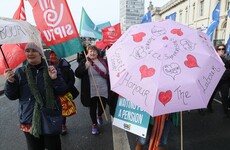
SIPTU said it was still opposed to any attempt by the airline to seek ‘cost offsetting measures’ in return for meeting its responsibility to properly fund the pensions scheme.
George McNeice is now entitled to a pension pot of just under €10 million following the announcement of his retirement from the doctors’ representative group yesterday.
Shop stewards from the union at Aer Lingus met today to discuss clarifications of a proposal by employers’ body IBEC and the Irish Congress of Trade Unions.
Alan Dukes of IBRC told Minister Michael Noonan that staff pay cuts at the bank were not pursued partly because of the difficulty in retaining and attracting staff.
SIPTU said its members will not accept any proposals that require them to engage in productivity negotiations as a condition of protecting their pension entitlements.
This week, former trader Nick Leeson explains how he left London believing all UK political parties were the same – and how it looks like Ireland’s Labour party is also losing its Robin Hood status.
Nine things you need to know by 9am: Britain’s Queen Elizabeth begins an historic trip to Ireland today; two devices are found in Dublin and Kildare; and IMF head detained in the Bronx’s notorious Rikers Island jail.
Enda Kenny will be entitled to a lump-sum payment of €100k, as well as an annual pension of €30k, for the four years he spent teaching in the 1970s – however he says he will not access these funds until he retires from politics.
AT A HIGH-profile US Senate meeting, technology giant Apple was accused of using Ireland as a ‘tax haven’.
The multinational firm, which employs 4,000 people in Ireland, reportedly avoided paying €34 billion in US taxes by negotiating a tax rate of less than 2 per cent with the Irish government – significantly lower than that nation’s 12.5 per cent statutory rate.
The Senate heard that American children are losing out on education because Apple is transferring profits to Irish subsidiaries.
However, the Taoiseach Enda Kenny has denied that Ireland is a tax haven and rejected claims that authorities had negotiated deals with multi-national companies.
So, today we want to know, what do you think? Should Ireland be tougher on multi-national companies when it comes to tax?