TheJournal.ie uses cookies. By continuing to browse this site you are agreeing to our use of cookies. Click here to find out more »
Dublin: 10 °C Wednesday 22 May, 2013

Column: I have coeliac disease. Why can’t I get a meal in many hotels?

An estimated 45,000 people in Ireland have coeliac disease, writes Kelly Hamilton. So why aren’t they being catered for?

Kelly Hamilton

IT SEEMS TO me that the overall majority of folk who operate in the hospitality sector are pretty well-up on food allergies, such as a nut allergy, dairy allergy or even, to a certain extent, a wheat allergy. However when it comes to having a gluten intolerance or coeliac disease the hospitality sector in Ireland, in the vast scheme of things, catastrophically fails the gluten free population of this country.

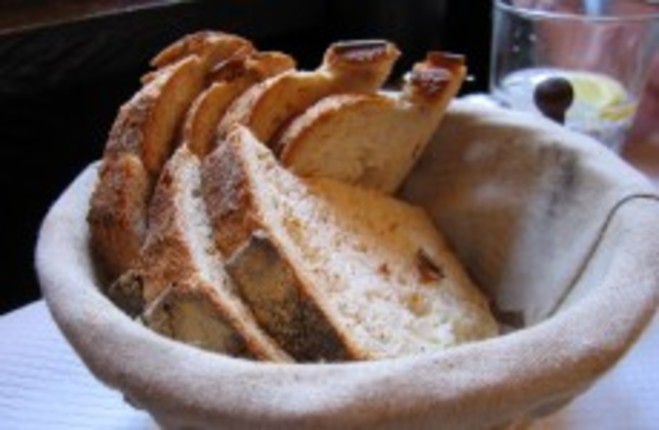
A fine example of this is when I was staying in a B&B recently. We had called in advance to let them know of my dietary requirements. Upon arrival, the owners double-checked what I could eat and I thought no more of it until the following morning when they served up my gluten free bread in the same basket as ‘normal’ bread.

The interesting thing was that the majority of people who were staying that night and who were dining with us the following morning, coincidentally, either had coeliac disease or gluten intolerance, with the exception of my husband and two other folks at the table. All of us had to explain to the owner about cross-contamination and had to return our breakfasts.

The weird thing is, that the owner said they had a close relative who has coeliac disease and that’s why there was gluten free bread readily available. How can they have someone in their family with coeliac, work in the hospitality industry and not know about how important it is to keep the food preparation area free of cross-contaminating gluten containing foods, let alone serve gluten free food lumped together on the same dish with its gluten-containing equivalent?

This is just one of many, many, many, many (ad infinitum) instances in the hospitality sector I have come across. It is so painful, and I feel like such a nuisance that I have to explain exactly what I need, when I thought it was already clear. How fussy do I seem?

Lack of understanding

People who don’t understand, don’t realise the health implications. A person with a nut allergy wouldn’t be served a meal with a sprinkling of peanuts on their dish (at least I’d hope they wouldn’t!), so why is it that there is such little understanding with those who have coeliac or gluten intolerance?

There are an estimated 45,000 individuals who have coeliac disease in Ireland. The problem with coeliac disease is that it largely goes undiagnosed. However levels of the disease, particularly in the west of Ireland, are considered to be very high.

Coeliac disease isn’t a food allergy, it is an autoimmune disease. Gluten triggers an immune reaction in people with coeliac disease. However, people with gluten intolerance can have the same symptoms as coeliac disease and there is the same long term risk. Gluten intolerance can cause intestinal damage and can also attack any other organ of the body, similar to coeliac disease.

Regarding gluten intolerance in Ireland, the research is still in its infancy. There is much debate on the prevalence, but some suggest it could be somewhere around six or seven per cent.

Hotels are the worst culprits. There are some hotels who really know what they’re doing when catering to gluten free diets, but the majority fall short. I always have to bring a ‘back-up’ meal to a hotel. People who have no choice to be on a restrictive diet should not have to bring their own food to established commercial hospitality venues. Especially when the venue has been called in advance and given information regarding dietary needs. In this day in age, you’d think it’s a right to be able to consume food that has been safely prepared in a commercial hospitality venue. You’d think…

Instead, in my experience, I’m faced with either ill-prepared food or no option at all. I appear to be a ‘difficult’ customer and sometimes I am met with outright hostility, incredulity or blank stares when I’m explaining my diet. I have to always ensure that I have my ‘meds’ when I go out, because if I am glutened, I am immediately nauseous and the after effects can last for weeks or months, depending on my gluten exposure. I’m a walking pharmacy!

Tough time

I can only guess as to why the hospitality sector in Ireland is so poor regarding gluten free diets. I do know that the whole industry needs education on the subject. I can only give my voice and opinion regarding gluten free living as that is the world I live in. I suspect there are other allergies out there that are not being addressed properly as well – I have a friend who suffers from a garlic allergy and when she consumes garlic she is sick. Yet, she has the same difficulty in the hospitality and catering sectors. Waiting staff and venues, more often than not, do not grasp the seriousness of her allergy.

Ireland has one of the biggest coeliac populations per capita in the world, but there is a weak understanding of this in parts of the commercial hospitality sector. Italy is also considered to have one of the biggest coeliac populations in the world too, but they are so clued in! They have no problem providing tasty gluten free options to their customers.

I know the hospitality industry is having a tough time in this economy. However, addressing this issue could surely open up new sources of revenue to an ever-more enlightened consumer base that have no problem reporting good or bad experiences on online review sites. I can only pray that someone takes this issue by the reins and educates the Irish hospitality industry and gives it a proper overhaul so that there is understanding across the board to those businesses. I keep dreaming!

Kelly Hamilton is a photographer and blogger. You can read more of her writing at The Gluten Free Photographer, where this piece originally appeared. You can follow her on Twitter and Facebook.

Read next:

Comments (74 Comments)

  • Try out Credo on Montague Lane in Dublin! http://www.credo.ie They have a totally seperate gluten free kitchen for their gluten free pizzas.

    Reply
  • There are a lot of people around where my parents are living who have this disease and at bake sales and the like you will always find gluten free baking available. I know that the local bar/restaurant, The Pink Elephant, caters for coeliac’s, vegetarians, vegans and food intolerant diets if given notice because of the large amount of people who would fall into this category. It does seem strange that a large hotel can’t serve up something for someone with a food intolerance especially if they highlighted it when making the booking. Any chef worth his salt should be able to serve up a variety of dishes to suit all tastes and tolerance’s with then minimum of fuss.

    Reply
    • This is correct but I would point out that placing ‘normal’ bread along with GF bread is hardly going to kill the person so the comparison to a nut allergy is way off the mark. A very condescending piece about bad experiences, nothing more.

      Reply
    • To ryan o neil- one crumb can have huge effects on my mam so regular bread beside gf bread will have big implications.

      Reply
    • To Ryan O’Neill, I can’t share a butter dish with my husband because the minute amount of crumbs that were causing me to have crippling stomach cramps, yes, it is that important to separate them.

      Reply
    • To Ryan, this is the problem. Go and educate yourself on the condition before making ill-informed comments!

      Reply
    • @Ryan What you seem to think is “hardly going to kill the person” may be true, but you fail to realise the devasting affect just one crumb the contamination of placing “normal” and GF bread together may cause, diarrhea within minutes, bloating and abdominal pain which could last for weeks or months. I don’t have coeliac disease but my son has, he was diagnosed at a year old. At the time he was tiny and we tried all the usual things to “build him up” but he just failed to thrive, eventually he was admitted to hospital where a brilliant paediatrician was convinced he may have cystic fibrosis but instead was diagnosed with coeliac disease. He was so sensitive to wheat that once as an infant he absorbed it through his skin from playing with play dough made with flour.
      Gluten is found in things you’d least expect, from the more obvious like gravy powders and confectionery to things like sweets and some chocolates, breakfast cereals (think certain rice and corn cereals are GF, nope), ice creams, yogurts. In fact flour is often used as a thickening agent and most non GF people will never know. Some studies have suggested that if someone with coeliac disease ignores their diet they may a much higher chance of bowel cancer, other long-term problems include infertility, osteoporosis, anaemia and dermatitis herpetiformis. Do you still think it’s a “condescending piece about bad experiences” or should I go on?

      Reply
  • Funny you should mention this. The other day I popped into a city centre cafe and came across a coeliac-minded special offer of a gluten free soup with a complimentary piece of bread (not so gluten free):
    http://www.flickr.com/photos/eyair/7708782916

    Reply
  • I promote tourism in my own town of Tramore via Discover Tramore (www.discovertramore.ie). I work with B&Bs and Hotels and my own parents also run a B&B for nearly 30 years. Tramore is a busy tourist town, has been that way for years. Its not on every menu because its not as frequently occurring as you may think, at least in B&Bs. Since the column was focused on B&Bs, ill respond with that in mind and especially it being an area I would be more familiar with in terms of requirements and standards.

    Most B&Bs and Hotels will do their best to cater for specific dietary requirements if notified in advance. I think some Hotels have the added advantage of being able to help out with very little notice, because they generally have a decent kitchen with ingredients readily available or because they would come across it more frequently as they are open longer and have more than six rooms! :)

    There are loads of requirements that B&Bs must adhere to, more so than the 3 or 4 star hotels. The Hotel industry seems to get an easy ride compared to what B&Bs must go through to be registered or given the star ratings by Failte Ireland – more than the AA! Catering for those with coeliac or other catering requirements isn’t one. Some requirements include that you provide a range of teas, home baking on arrival, several breakfast choices and not just a standard fry. I cant recall any awareness being presented by those setting standards in B&Bs and Failte Ireland themselves. If they don’t have anybody in the family with such, its a tad unfair to think that a B&B will automatically know how to cater for such or already cater for it without prior notice. They are not trained to cater for such as they are not chefs – they just do breakfast mostly. They are not medical professionals so they might not understand about cross contamination.

    Remember a B&B is a family home open to people who want to stay in the just like home atmosphere. Its not like a hotel where its marketed different, run completely different, you have more “rights” for the room, its a lot more industrial, and its a direct profession. Its completely different.

    Saying that, its something I will advise local B&Bs and Hotels about in the next newsletter that goes out. It would be good for them to be made aware of this and hopefully it will be come more common with Failte Ireland taking a lead on it and making the issue of dietary requirements more known.

    Reply
    • How hard is it to occasionally provide, from a clean frying pan, fried or scrambled eggs, tomato, mushrooms? All of these things are actually safe, from the get-go. However if someone fries these sort of things with the Black/White pudding and sausage it becomes unsafe for me. If you’re cooking for several, start out feeding the Gluten free person with the very safe stuff and then cook for the others, they will thank you and it’s not terribly difficult. Most are grateful to just get food. Fruit Salad with good quality yoghurt (some cheap yogurt has wheat in it, though some Aldi/Lidl brands don’t) is another solution and would also be popular with some people trying for healthier food choices. I’m not a demanding person, I don’t expect GF bread, Sausages or anything specialist like that, I just would like to eat with other people I came with and not worry that I’m going to be sick later.

      It’s not about changing what you provide it’s about thinking just a little outside the box.

      Reply
    • It depends on how busy the B&B is, they don’t have a big industrial kitchen and a few chefs and kitchen staff like hotels! If you come down to a full house and expect the kitchen staff (usually two people!) to cook your food separately, its a big ask in a small normal house kitchen. Cooking for a few, then cleaning a grill or frying pan for one person delays breakfast!

      If your first ahead of everyone, fine. If you ask in advance, maybe they will cook it first and leave it separate for you before you come down. B&Bs cook fresh, they don’t have it sitting their for hours under a heater. With a house having 20 people looking for breakfast it is a tough ask to pause in the middle of cooking to clean the grill or pan! Its tough even for a small few people. If they have to delay breakfasts for you, other guests will complain.

      If a B&B only gets one or two people a month with certain requirements, you cant expect them to stocks stuff they don’t usually serve. Perhaps if you ask in advance, tell them what you can have, what you can’t have and no cross contamination then they should be able to facilitate you as they know and understand. In my experience, a lot of people do this or bring their own food. The cost of running a B&B is high, they don’t make money from you other than the room rate unlike hotels with bars, restaurants, room service and so on so some may be reluctant to go out and buy extra stock for rare or once off use. Some may fear that cooking gluten free bread in their only toaster will cross contaminate or cooking a fry on their grill or plan may still be an issue even after cleaning!

      Hotels can whip you up something easily, can afford to buy extra stock and they probably have plenty of pans to use and staff to do it. Remember – a B&B is a family home but with more people staying! Much smaller working environment and the staff are the owners. That’s it. They don’t have several pans, cookers, grills etc.

      Reply
    • Have to say Kevin. Well done on explaining the B&B and Guest Houses situation. I know from my own experience that if I want to be facilitated I just ring or email in advance. On a very few occasions I could hear the exasperated sigh as I explained but those same B&B’s were not as hospitable although saccharine friendly as the others. On two occasions the lady of the house had a mini frying pan where she did my eggs and bacon and in both cases both insisted that they show me even though I didn’t ask. I laughed in a kind way with them at how they were so good and considerate. They were like real Irish mammies. That for me along with their marvellous hospitality made it a reason I’ve returned to them and also recommended them to my pals. You can’t beat an Irish B&B. Irish hotels are great too and iffer more facilities but if you want a real Irish hospitality experience the opportunity of an Irish family home is the way to go and by far the hands down winner. I’ve hilarious stories of my experiences too but they’re not for here. Ah you just can’t beat the Irish.

      Reply
  • Market Lane in Cork has a Coeliac menu. If a restaurant or B&B doesn’t cater for Coeliacs then it loses not just the 1% of business but their famalies.

    Reply
  • The Twelve Hotel in Galway is renowned for looking after special dietary needs and in particular, we proud ourselves on taking care of those with gluten in-tolerances. One should be able to dine out with ease and not feel that because you have a special menu requirement that you are being offered inferior choices or even placing your health at risk.

    All menus at The Twelve indicate what is gluten free. We never use flour in our soups or to thicken our sauces. The Twelve has been at the forefront of looking after Coeliacs and its latest addition, Pizza Dozzina features gluten free pizza cooked in a gluten free oven. Our own bakery shop also features a gluten free section.

    We are proud to host the Western Branch of the Coeliac Society of Ireland annual Christmas dinner and annual summer BBQ every year.

    We will continue to educate others in hospitality as to the needs of coeliacs.

    Reply
  • I operate a website for coeliacs. http://www.coeliacpages.ie. it’s meant to be for suitable gluten free venues. Unfortunately coeliac disease is like leprosy in some places still!! Others are outstanding in their understanding.

    Reply
  • Honestly, I think the case is harmed by people who are not coeliac, but have chosen to eat gluten free. I know a few people who claim to eat gluten free, but have an ordinary scone every second day at work. They eat the roll that comes with the gluten free salad, and it doesn’t bother them, hence the confusion on the part of the chef…

    Reply
    • @P Wurple You have a point there. About a year ago I was doing the shopping, browsing at the GF aisle, when a woman asked me something about one of the GF products I was buying and we chatted about GF stuff. Most people tend to share info, where to get new products, whats on special where etc. She told me she was gluten and lactose intolerant, which is very difficult, so I asked her when she was tested. Most older coeliacs are diagnosed by a duodenal biopsy but now a blood test can be done and sometimes the biopsy is still used to confirm it. She said she didn’t have a test, she hadn’t a clue what I was talking about, she knew she was gluten and lactose intolerant because her nutritionist told her she was. Huh?
      People with more money than sense go to “nutritionists”, with the expectation of being told they’re alergic to something and the nutritionists duly oblige them, in this case it was gluten and lactose. No clinical tests whatsoever are performed and everyone is happy, presumably untill someone gets fed up of being intolerant and moves on to the next fad. I’ve heard similar stories from other people, one bloke admitted his mother was like this.

      Reply
    • Brian an intolerance isn’t an allergy. It’s not usually even permanent, it’s just an irritation to the gut, characterised by bloating and discomfort – perhaps diahorrea too.
      However – constantly ignoring an intolerance can go on to cause a bigger problem, whereas avoidance for enough time to allow the gut to recover can allow you to return to eating the offending foodstuff occasionally.

      Obviously coeliac disease is a whole different ball game and is far more serious. But many people get intolerances and allergies confused, it’s like confusing type 1 and type 2 diabetes, they’re in the same vein, but vastly different..

      Reply
    • 95% of people who think they are allergic to something are not. Always talk to your doctor and not some quack.

      Reply
    • Yes, a lot of people making a fuss unneccesarily really make it harder for those who are actually allergic. After spending time in hospitals with my daughter after severe reactions, and carrying an epi pen everywhere we go, I am actually shocked by the amount of people who say, Oh Me too, when I tell them she can’t eat something they offer her. I ask them what they carry for their reaction, or who they saw in the hospital for it, and they look at me like I have two heads.

      Reply
    • Shanti while I did use the two words “intolerance” and “allergy” to describe the same thing I’m aware of the difference, the woman I was talking about told me she was lactose and gluten intolerant and was told so by her nutritionist without any clinical tests of any kind being performed. I have since heard that this is nothing new and many people go to nutritionists to be told they are intolerant of many things, again without any clinical tests being performed. I’ve talked to a friend this morning who’s sister was told she was intolerant to strawberries, best to avoid them, no tests were performed so I don’t know how this deduction was reached.
      @P Wurple I agree with you completely, while the rise in awareness of coeliac disease can only benefit everyone with the disease if people want to avoid gluten that’s fine and will only increase the market for GF products but when people do this because it’s a fad and don’t actually know what true coeliac disease means it tends to make others believe everyone who is coeliac is on a fad diet. As William said, thinking you may be allergic to something should be confirmed, by someone with MD after their name and by clinical tests, a nutritionist advises on matters of nutrition and how that may affect health, anyone can call themselves a nutritionist, but they cannot diagnose medical conditions or order clinical tests to be done and confirm a diagnosis. Only a doctor can.

      Reply
    • brian must be my mum you were talking to lol, she was told that she was lactose and gluten intolerant, the thing is she can manage to eat the scone i make (reg flour) she can also eat the crusts from the bread here, she can also eat yougurt but apparently they all give her a tummy ache…as does brocolli and most gree veg….i have a fair idea what the problem is, and it isnt shes lactose or gluten intolerant :)

      Reply
  • Sheelah 04/08/12 #

    There is huge ignorance about allergies, even when people in catering are willing. They don’t always realise that ‘dairy free’ means no butter on the vegetables, please! Or, a coeliac I know was served up icecream in a brandy basket and when she said that she had told them she was coeliac, the ice cream was scooped into a different dish. Luckily she is patient, and explained that she needed different (uncontaminated) icecream, not just a different dish.

    Reply
  • I have a diary intolerance and explained it to a waitress in a hotel once. I saw her talk to the manager about it and from the expression on her face you would have thought I asked her to serve up monkey brains rather than no sauce on my chicken.

    Reply
    • this is a typical response from the allergy/intolerance brigade , you saw an expression on somones face and were able to read her mind , why people with these conditions just cannot accept no as a answer is beyond me , if I have no gluten free bread , so what I cannot give you what Ihave not got same applies to all other products, people with these conditions are whingers and known as whingers in the food and beverage business because they just complain and give staff a hard time to all coeliac and gluten free and lactose intolerant people out there if you are not happy and cannot find what you need take the inititave and open a specialist shop or cafe and I am sure you will clean up you will have a que of 45000 punters at your door and p.s stop whinging and get on with your lives

      Reply
    • great attitude there connor, if i pay for something i’ll have it anyway i please.
      i detest mayo for example, i’ll ask for a burger, i will stress no mayo, but 9 times out of 10 there will feckin mayo on it. when i ask for a replacement i get the look that says “just eat it”.

      Reply
    • Elmo 04/08/12 #

      Are you allergic to punctuation, Connor?

      Reply
    • What part of the diary was in the sauce? The paper would make it a little stodgey…

      :)

      Reply
    • Wes: “great attitude there connor, if i pay for something i’ll have it anyway i please.”

      Okay. I might go to my local takeaway tomorrow and ask for for a burger. And considering I’m paying for it, I demand it be topped with a fillet of veal and a side of foie gras. Wait, what? I can’t get that? How dare my local takeaway not serve something they can’t provide. Rabble rabble.

      Reply
    • 2 stupid comments from people named connor/conor, what a coincidence. Well done on taking the comment totally out of context and over exaggerating it, you should get a prize!
      You knew exactly what i meant, if i want something without a sauce, i will get it without the sauce, end of.

      Reply
    • @Connor/Conor That is such a ridiculous attitude. If someone is allergic to something, that means they can’t eat it — it doesn’t mean they shouldn’t be allowed to eat. I’d love to see you deal with having an allergy or intolerance. Or, based on your comments, would you agree to just stop eating altogether?

      Reply
    • Talk to my daughter, Doireann Barrett at The Gluten Free Kitchen Co., in Tralee, who will take orders for any Gluten Free Baking needed.
      She can deliver baking , fresh or frozen, nearly anywhere in Ireland !
      Her cakes, breads & desserts are yummy!

      Reply
    • @Freeman is another of those whinging mindreader types ” I get a look that says just eat it “!!!! just keep on bringing all your dogs to craggy island, also @Elmo get a life!!!!!!!

      Reply
    • with a comeback like that you proved us right, you are an idiot! ps teds house isn’t on craggy island ;)

      Reply
    • My comment was in response to Wes’s comment, who said that because he asks for something a certain way, he should get it so, because he’s paying for it (i.e. a burger without mayonnaise, simply because he doesn’t like it).

      My comment had nothing to do with allergies or intolerances as people are implying. Having intolerances myself, I know what it’s like. So please don’t start pretending I’ve said something I actually didn’t.

      Reply
    • ‘@ Freeman who let the dogs out !!!!!!!!!And I mean all your dogs, all 3 ,The Rocky Horror show vists Craggy Island!!!

      Reply
  • I don’t suffer from it but know a few people who do. Basically to me it seems like the worst form of IBS which never goes away!

    I can’t understand why in 2012 there are still establishments who dont cater for it!

    Reply
  • The Oarhouse in Howth, fab seafood and all sauces are gluten free and yummy!

    Reply
  • For those of you who suspect us Coeliacs are just being faddy, a trace amount of over 200 parts per million is enough to cause damage to the intestines.

    And it is not difficult to keep nice long-life bread in stock in a B&B – Kelkin do a soft sourdough bread that has a very long shelf life. Eggs are GF. Some waffles are GF. Most rashers are GF……get the catering list from the Irish Coeliac society and open up your business to a wider audience.

    Well done to businesses already tapping into the ‘coeliac currency’ : Allegro in Killarney – a dedicated GF kitchen in a takeaway. Pregos Italian in Lucan. Firehouse pizza in Ballymun…….the demand IS there.

    Reply
  • I’m a coeliac and really allergic to eggs – in some restaurants I’m treated to a blank stare, in others they bend over backwards to help out.

    If some restaurants and hotels (small independently owned ones at that )can be so accommodating then why can’t others?

    Do you really think I would choose not to eat gluten and eggs? Do you really think I like being the awkward one and having people crack jokes and take the piss and look at me like I’m a whinge?

    When I go to a restaurant that treats me well, I tell me friends. I go again – in fact I tend to revisit the same restaurants a lot because I trust them. If I go to a restaurant that treats me badly, I will also tell my friends. And twitter, and facebook, and any other review site I can get my hands on. And I certainly won’t be going again.

    Reply
  • Check out http://www.purefood.com. A mother and daughter run gluten and wheat free bakery in Blackrock, Dublin who really know their stuff (both are coeliacs). They make fantastic brown bread as well as numerous treats like brownies and carrot cake. Well worth a visit!

    Reply
  • I’m also coeliac and haven’t eaten out since diagnosis as I just don’t trust anywhere. One mistake leads to wide ranging debilitating symptoms for months.

    Reply
  • Connor do you have an allergy to full stops? Grow up….

    Reply
  • I would love for all you non coeliac, non empathic sufferers out there to go through one day of agonising pain having had your food contaminated by the smallest amount of gluten. See how quickly you’d jump ship on looking for a simple labeling system in hospitality…..

    Reply
    • Really? You’d wish pain and ill-health on me to prove a point? What a fantastic ambassador you make for the cause.

      Reply
    • Aine my girlfriend must eat gluten free foods. I’ve seen what happens, the pain and constantly running to the toilet. The embarrassment and lack of dignity. Truly awful

      Reply
    • Tommy C 05/08/12 #

      Wheat products have no redeeming features other than tasting good.
      My sis is coeliac so when she stays in B&Bs or hotels, she brings some of her own food and leaves it with them.
      Everywhere has been very accommodating to her and shes never had a flare up when away.

      Reply
  • when I explain to people that myself and my husband have separate butter dishes because yes, that little will have me with digestive issues, they start to understand how serious this is for me. I’m not trying to be awkward but is it too much for me to ask that you don’t put the roll of bread on the side of my salad bowl. Yeah my husband will eat it but those few crumbs are torture for me for 2 days. I’ve only been dealing with this for about 3 years now so it’s all still kinda new.

    I’ve had people tell me that I was overreacting when I asked if they had used the same knife on the meringue as the sponge cake, as if somehow I had a choice in this issue. I have to police everything, and sometimes it’s tiring. It never ceases to amaze me how often I ask and I get a “dunno” or a “I’m not sure what we can do for you” I often send waiters back to the kitchen with a “I like the look of this, this and this, what can the chef do for me” which often gets me quite nice dinners. I try to warn places in advance but sometimes you just like to be spontaneous and I know the places that can cope in Dublin City Center. I’ve been very lucky in Galway but I’ve also had blank looks when I mention Coeliac which I think is really poor in an part of the country that has a large number of Coeliacs.

    And don’t get me started on the Spelt/Emmer/other older forms of wheat poison that people seem to think will pass.

    I found it surprising that when I went to Germany (near Frankfurt) I had no problem what so ever and in fact was treated much more politely than in many restaurants here. There was a supermarket with a whole AISLE of GF foods and I almost cried at the choice.

    It can be hard to go into a restaurant or cafe with friends and see them tucking into food while you almost have to sit on your hands, starving in a place full of food. But that’s the world I’m living with now, I have places I know I can eat at and will suggest to friends to meet at. The Powerscourt centre seems to be full of places that are quite good and there are some great places to eat, but like you, I always have the painkillers on hand, just in case.

    Reply
  • Nothing to do with education. Simple economics – if the demand is there the hotels will provide. Don’t expect a hotel or restaurant to stock fresh products that might be requested.

    Reply
    • As an aside, a lot of Americans bring their own food stuffs when travelling. They have their own medicines, cooler bags for the medicine etc.

      Reply
    • Wrong, Mr.Ganly, I work in a large west of Ireland hotel and we go out of our way to cater for those who have allergies such as this.
      we have even gone so far as to produce ALL of our soups and sauces using gluten free flour so in fact our service staff dont have to consult with the chefs , they can let the guest know straight away that their food will be gluten free if required , and we have a range of other gluten free dishes on hand for their choice as well.
      this is so easy for us to do, nothing to do with economics,
      just simple professional courtesy, and a desire to please our guests.

      Reply
    • David – Ireland has the highest per-capita incidence of coeliac disease in the world. 1 in 300 (ish) have it (might be higher due to underdiagnosis). That’s a fair slice, so there probably is a market out there!

      Reply
  • Irish hotels and restaurants find it hard enough to provide decent edible food to non coeliacs. Asking for them to consider special dietary needs would push them over the edge completely.

    Reply
  • But 45,000 people out of 5 million isn’t a lot. It’s 0.9% 0f the population. You want hotels to cater to less than 1%? Keep stuff in stock constantly just in case? :/

    Reply
    • What exactly needs to be kept in stock do you think Sean? We are not looking for extra items, but more importantly the lack of something that is detrimental to our health and well being. For instance, meat, vegetables, potatoes, badda bing, a gluten free meal, I know meat and two veg must seem like a crazy concept to the Irish but i’m sure we could try it out. The fact that a lot of meals are naturally gluten free but not marked as such makes us sound like complainers when all we want to do is check. Vegetarianism is a choice, this disease is not and in this day and age you would expect at least one veggie option on a menu and it will be clearly marked. That’s all I want.

      Reply
    • Sean, surely the hospitality sector at the moment should be open to trying to maximise its market through promoting itself to all channels, not closing itself to certain ones. And as we’re constantly being told, the foreign tourist market makes up a huge share of the turnover to Irish hotels (and particularly B&Bs). Given that these tourists are a lot more willing to post their experiences on various travel review sites than us Irish (particularly if they’ve had a bad experience), surely the hospitality sector must realise it actually has a lot to gain from being food intolerance aware?

      It’s also worth noting that for those folks with food intolerance, the importance of their eating experience is likely to be proportionately much higher than other aspects of the accommodation or venue – The decor might be dated or the beds lumpy, but if the customer feels like their food options are safe, varied and taste good, then their opinion is going to be significantly better than it might have been.

      Reply
    • Yes…..

      Reply
  • My mam is coeliac, so I’ve grown up knowing what is and isn’t GF. And by the sounds of some comments they would have much less tolerance to gluten then my mam. Some sound terrible, horrible consequences to a few crumbs is horrible to hear. As there are now lots of allergies and intolerance’s nowadays, I think its unlikely that all places will be able to cater for everyone all the time. But once you know what you can eat, and have a conversation with your server or the hotel before then you can make the best of it.
    The majority of people don’t know, its not ignorance or disrespect… Its just lack of experience. Id encourage all to explain the situation, once they understand the allergy they can help!

    Reply
  • Just exaggerate. Make up a random “fact” , like out of a certain amount of people with an allergy to something, you’re in the one percent that could possibly spontaneously combust if you eat it. Trust me, no hotel/restuarant wants a customer spontaneously combusting over the other customers so you’ll more than likely get exactly what you ordered. Simples!!

    Reply
  • A few points to take on board in relation to this whole area:

    The foodservice in Ireland is trying their hardest to cater for coeliacs and we here in the Coeliac Society of Ireland, see this effort on a daily basis. The Society is working closely with the catering sector to improve the safety of meals for people with coeliac disease when eating out. The first principle to get right when providing gluten free meals is to ensure that ingredients are “gluten free” – the CSI has recently updated their Gluten Free Catering Information and this is available to all restaurants, hotels and hospitals in pdf from our website http://www.coeliac.ie

    The catering section on the CSI website also contains tips and advice on gluten free catering and managing cross contamination. The FSAI Guidance Notes on the new “gluten free” labelling legislation is also available to download in pdf.

    CSI have a List of restaurants, hotels and B&B’s that cater for coeliacs, this list can be obtained by emailing info@coeliac.ie (all foodservice outlets on this List have received information on gluten free catering from the Coeliac Society).

    The Legislation and the Catering Sector:
    The European gluten free labelling legislation which came into force this January also applies to the restaurants. This means that if a restaurant or hotel uses the term “gluten free” on a menu then that meal has to be 20ppm or less in total gluten content. This is an extremely low safe level and would require the “catering kitchen” to actively manage the level of gluten in their food. It also requires a good knowledge of the legislation, good hygiene practices and good cross contamination controls and above all training and communication with staff, so that they understand the measures necessary to comply with the use of the term “gluten free”. If a restaurant is unable to make a “gluten free” guarantee, they can state that the ingredients in the meal are gluten free but let the coeliac diner be aware that the meal is not made in a “gluten free” environment. (Terms commonly used on restaurant menus e.g. coeliac friendly/coeliac menu/coeliac options/suitable for coeliacs do not necessarily mean the same as “gluten free”).

    The Allergen Directive which deals with “intended” ingredients in a prepacked food product is now being extended to cover meals in restaurants, this legislation will come into place towards the end of 2014. (There are 14 foods recognised by the EU that are responsible for over 90% of all food related allergic reactions: Cereals containing Gluten, Fish, Crustaceans, Eggs, Peanuts, Soy, Milk and Dairy Products including Lactose, Nuts, Celery, Mustard, Sesame Seed, Sulphites, Lupin (legume) and Molluses (clams). Under this extension of the Allergen Labelling laws, all foodservice outlets must be aware of the allergens present in all meals and have this information available for customers (this legislation is mandatory).

    Complaining to improve things:
    Any coeliac who has a genuine complaint regarding food safety, hygiene or a food allergen issue in a restaurant or hotel should contact FSAI. This is the best course of action, it means the complaint will be followed up by the environmental health officer. As part of their routine work, FSAI receive complaints from consumers on all aspects of food and food safety and where appropriate pass them onto environmental health officers. You can contact FSAI through their website http://www.fsai.ie – on right hand side of homepage, you will find complaints box.

    Reply
  • How about you just order the salad and forget all about bread.. When kitchens order the glutton free bread for that 1 in a hundred person who happens to be a coeliac it never gets used and ends up in the bin!

    Reply
    • Couldn’t disagree more. My previous comment on thus topic was that all people with intolerance or allergy should “demand” their needs before they leave home. If there is a market out there for this then persons who need it are the only ones that will change the way the industry handles this or doesn’t as the case may be. well done to those in the hospitality industry who have taken the lead.

      Reply
    • And you have to check if the salad dressing is safe, if the meat with the salad is safe. Yes the leaves served with a made-on-site simple dressing is usually safe and *some* commercial dressings are safe but many contain wheat thickener and unless your waiter can answer you, you’re stuck. Trust me, plain salad leaves are a bit dull.

      Also there’s the issue of how the salad is kept. If the salad comes from the prep area where staff also prep sandwiches and rolls they continuously contaminate it with crumbs.

      I don’t need or want places to provide me with Gluten Free bread when I’m away. I would like people to understand that I’m not being awkward or cranky, I’m trying to prevent two days of gastric distress at a minimum.

      Reply
    • How hard is it to keep a pan in the freezer? You have to toast the bread anyway before serving it. It’s incredibly easy to make most soups/sauces etc gluten free.

      I’m not even asking places to keep bread/pasta (although both are easy to store without them going off) – just have some dishes on the menu that can be eaten by coeliacs and take more care when cooking them.

      I find that the restaurants who treat coeliacs well are also the ones that generally have higher quality food in general.

      Places like yamamori, Manifesto, Pinxtos/Porthouse in Dublin are all excellent.

      Reply

Add New Comment