TheJournal.ie uses cookies. By continuing to browse this site you are agreeing to our use of cookies. Click here to find out more »
Dublin: 11 °C Wednesday 19 June, 2013

Column: ‘The very mention of nuclear power sends people into a flutter’

After Fukushima, nuclear power has become a bogeyman – but we shouldn’t dismiss it out of hand, writes physicist David Robert Grimes.

David Robert Grimes

NUCLEAR POWER GETS a bad reputation. The very mention is enough to send people into a furious flutter of condemnation.

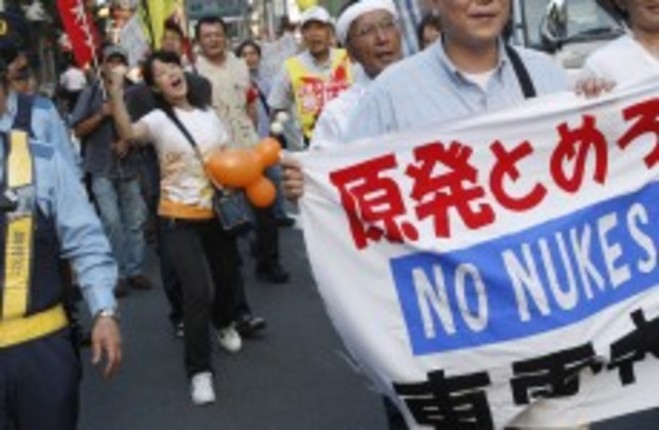
The difficulties at Fukushima have dominated international news coverage, and sparked angry protests. 2011 is the 25th anniversary of the Chernobyl disaster,  which puts ‘PR person for nuclear industry’ at the top of the ‘thankless jobs’ list for this year. Political figures worldwide have been quick to poor scorn on the bogeyman of nuclear power.  But is that fair or wise ? Hardly. Nuclear energy is the most efficient major source of energy. It is also the safest, with much less deaths than both conventional fuels and renewable technologies, and it massively reduces CO2 emissions. And if we’re serious about saving the environment, we cannot afford to dismiss nuclear power.

Politicians of course have a tendency to court populist sentiment, regardless of how wrong-headed it may be. When Angela Merkel promised environmentalists to phase out nuclear power, they hailed this as a victory. But if it was a victory, it was a Pyrrhic one given that Germany aims to replace these with coal plants. This is quite simply the worst possible option – coal produces obscene amounts of greenhouse gas and destroys water, air and land in its wake. It is also notoriously inefficient.

Nuclear energy on the other hand releases negligible amounts of greenhouse gas and boasts about 83,300 times more energy than coal per kilo. While fears about radioactivity are often cited, what is ignored is that the fly ash of a coal plant is more than 100 times more radioactive than the outputs of a nuclear plant. In terms of human health, coal is the absolute worst offender – the WHO estimate solid fuel kills over 1.3 million a year. Nuclear energy very rarely kills anyone, and when it does it tends to relate to uranium mining accidents rather than radiation. CO2 levels are set to rise dramatically because of this, giving a certain dark irony to the celebrations of the obstinately environmentally conscious.

Zero nuclear deaths

Of course, these people wanted renewable energy, and that is laudable – but is it pragmatic? Not yet anyway. Renewables are intermittent and cannot operate in ‘always on’ mode; they have a relatively low yield and they often require huge swathes of land to be effective. They also require a baseload for times they aren’t feeding the grid. But a choice between nuclear power and renewable energy is a false dichotomy – renewables in tandem with nuclear would massively reduce CO2 emissions while letting the relatively young renewable technologies mature to higher levels of yield.

This is important because despite hopeful speculation, renewables as they stand cannot power the world. We have become used to high energy consumption and the world population is growing massively – the UN estimates it will hit 9.1 billion in 2050. Ideally we’d all reduce our energy expenditure, but it would not be realistic to assume this will happen worldwide.

The assumption that renewable energy equates to no deaths is also a fallacious one. In the US alone there have been 83 fatal accidents from windfarms since 1995, and hundreds of accidents. By comparison, there have been zero nuclear deaths in the US since the 1970s. Hydropower can also go seriously wrong; when the Banqiao dam failed in 1975, it killed 171,000 people and displaced 11 million. These illustrations are not intended to rubbish renewables (which we need) but rather to offer perspective.

Of course, it would be remiss to ignore nuclear disasters. Opponents of nuclear power have long cited Chernobyl as a trump card which ‘proves’ nuclear power is dangerous – but does it really back up their point? Chernobyl was an unmitigated disaster. On the night of April 26, 1986, a terrible marriage of human ineptitude and poor design caused a series of steam explosions. The roof, which had been illegally constructed with flammable material, went alight and unprotected firefighters were sent in to put it out. The steam also released some radioiodine 131 into the atmosphere. The Soviet authorities, in a moment of staggering stupidity, made no attempts to move people and actively tried to cover up that anything was wrong.

Victims, not survivors

This is about as bad as a nuclear accident could possibly be – a perfect storm. But how many health effects can be attributed to the disaster ?

That’s a question we can answer. The latest report from the United Nations Scientific Committee on the Effects of Atomic Radiation (UNSCEAR) dealing with Chernobyl was published this year. Some 134 plant workers and cleanup workers were exposed to dangerously high levels of radiation with minimal protection, and suffered acute radiation sickness. Of these 28 died. Radioiodine  is absorbed by the thyroid and hits young children hardest; there were 15 fatal thyroid cancers in children. These could have been avoided had the Soviet authorities issued iodine tablets. Those on site immediately after the disaster are at elevated risk of thyroid cancer, which thankfully is treatable with a 92 per cent 30-year survival rate.

Importantly, zero increase has been observed in solid cancers or birth defects. The Chernobyl forum concludes the greatest threat to survivors is the risk to mental health from exaggerated fears about radiation, noting that “designation of the affected population as “victims” rather than “survivors” has led them to perceive themselves as helpless, weak and lacking control over their future. This, in turn, has led either to over cautious behavior and exaggerated health concerns, or to reckless conduct.”

These are conclusions people often find surprising, expecting the health toll of Chernobyl to be much greater. That this toll is considerably less than people might expect does not take away from the tragedy or make the Soviet response any less dreadful; Chernobyl cost the lives of 43 people and some of those exposed in 1986 may yet die early. But it does put the worst nuclear disaster in history firmly in perspective.* Fukushima, the second-worst nuclear disaster in history, has killed no one yet and is highly unlikely to do so. This is incredible when on considers the plant was obsolete and scheduled for decommission, and was hit with a natural disaster of immense proportions. What is sobering is that in our fixation with Fukushima we’ve almost forgotten that nature itself claimed at least 15,000 lives at the same time.

Natural nuclear reactors

There are of course some practical problems with nuclear fuel. While spent fuel rods can be recycled, plants produce small amounts of radioactive waste, which takes upwards of 100,000 years in some cases to be rendered completely benign. To avoid contamination and potential health effects, this waste is generally stored in sealed, underwater vats in very stable geological locations. This is exceptionally cautious: alpha and beta radiation are entirely blocked by 5mm of paper or aluminium respectively, but it is better to totally isolate them to be on the safe side. The geological structures are exceptionally stable too – natural nuclear reactors have been discovered in Oklo, Gabon, which have remained stable for almost two billion years. Nuclear waste is an inconvenience yes, but it does not render the technology any less useful, especially now as generation IV reactors come online that produce less than one per cent of the waste of current reactors.

Some raise concerns of terrorism as an objection to nuclear power, but that’s based on a misconception. It is important to remember an explosion at a nuclear plant is not the same as a nuclear explosion – you cannot just turn a nuclear plant into a bomb, they use entirely different physical principles. The spectre of the Cold War left the impression of imminent nuclear destruction on the psyche of the world, so it is understandable but wrong that people conflate the two. While we fret about the environmental consequences, it’s worth bearing in mind that France has since 1963 been quietly and diligently generating 78 per cent of its power from nuclear energy. As a consequence, France has the cleanest air in the industrialised world and among the lowest carbon emissions.

Apprehension about radiation is understandable; it is invisible and threats we cannot see are most perturbing. But in deciding how to power our world and save our environment, we should be basing our policy on informed decisions, not a misplaced sense of radiophobia.

David Robert Grimes is a doctor of medical physics with a keen interest in the public understanding of science. He writes a blog on science and medicine called Three Men Make A Tiger.

* People are very often surprised at this figure, when organisations like Greenpeace put the figure much higher – these figures can easily be shown to be fallacious and the UNSCEAR report is considered authoritative.. If you’re interested in the history of the Chernobyl disaster and a discussion of radiobiology, the author has written about it before here.

  • Share on Facebook
  • Email this article
  •  

Read next:

Comments (50 Comments)

  • Brian M 24/08/11 #

    Excellent article

    Reply
  • Excellent article. I still doubt anyone will listen though! I’ve been saying the same to people for quite some time, and it’s a debate where people seem to think facts are unnecessary!!

    Reply
  • Good article. The problem with nuclear power is it has the potential to cause a catastrophic incident. Also you have the NIMBY problem. Who on here wants to live near to a nuclear power station?

    Reply
  • Very well written and informed article.
    The best on this subject I’ve read in a while.

    Reply
  • Great article on nuclear debate, informed, rational and intelligent … I have 2 words in response … Live Line! Real question is how do u get people to stay rational debating issues.

    Reply
  • Fukushima’s 6 reactors were damaged by a massive earthquake, nobody died from radiation. Yet, people cite this as "proof" that nuclear power is far too dangerous for us. You’re spot on, we’re stuck with a post Cold War collective phobia of all things nuclear (mri was originally called nuclear magnetic resonance, but no-one would lie in a scanner with a name like that!). I’d love to see renewable energy technology mature to a level efficient enough to supply our power needs. Maybe, in 50-60 years time, this will happen. What state will our planet be in if we focus on disgusting 19th century coal burning technology until then?

    Reply
  • Very well written article. I’m not necessarily pro-nuclear, but having said it is impossible to dismiss the many arguments in favour of it as an option. As a country, we need to have the debate about the source of our energy. Far too many people dismiss the nuclear option out of hand without actually listening to the pro-nuclear argument.

    Reply
  • Great article, great perspective.

    I remember former minister Ryan saying that it was too late for Ireland though, that it would be too expensive, and this was pre-bust.

    Reply
  • An excellent, clear-headed article on Nuclear Power. Not that Ireland is likely to have a nuclear power plant in the foreseeable future even if there was a consensus that it was a viable and needed alternative to fossil fuels. The expense of building a single plant (which is all that would be required) in this country would be prohibitive. Instead, the best option would be to utilise UK nuclear generated energy via interconnectors and as far as I know this is the ESB’s perspective on the issue. The question is: will the UK build sufficient new nuclear plant to enable us to avail of the power?

    Reply
  • Fukushima should not be used as an argument against nuclear power in Europe , Japan is a earthquake zone wholly unsuitable for Nuclear plants. Using scare tactics like what do we do with the waste are ridiculous considering the amount of damage fossil fuels have allegedly done. The technology to recycle Nuclear waste is very developed and developing further.
    Chernobyl is ironically the only example quoted by many for how not to make safe Nuclear power, how many have died as a result of accidents involving other forms of power generation ,oil production ,coal mining and its bye products etc.

    Reply
  • I used to be very anti-nuclear. But with the oil running out and renewable energy still not a viable alternative to replace it, rethinking nuclear in inescapable. I tend to disgegard the arguments of green zealots because if they had their way we’d all be living in mud huts. Rational debate of the pros and cons of all the enerty options is what’s needed.

    Reply
  • I’ve rarely read an article that so clearly summed up the reality of NP. Good job.

    Reply
  • Won’t someone think of the thorium?
    Plentiful, safe, can be used to clean up old nuclear fuel and can be used itself.

    Reply
  • Nuclear energy is hampered by FUD, people can burn coal in their fireplaces, nuclear fission is complex. Perhaps someday we’ll crack fusion and the debate will be over, until then we’ll have dirty fossils, inefficient alternatives and the bogeyman nuclear.

    Reply
  • They talk about cancers that have a link to radiation – not all do. We have a fairly good understanding of mutagensis from radiation. 4000 is upper limit on life time exposure. It does NOT mean 4000 people will get cancer. It is also worst case scenario figure – Now, at 92% survivability after 30 years, even if all 4000 got cancer, you’d expect 3680 to be alive 30 years later, meaning 320 deaths – which would be awful, but not a patch on other power accidents such as hydro or coal.

    That said, it is highly unlikely that people would have been exposed, hence the figure being a worst case scenario figure is all.

    Reply
  • Kinda agree with this article that it’s safe and clean and all but isn’t the big fuss with nuclear power the waste it produces? Uranium rods once reacted leave like 90% of it’s mass behind in radio-active waste no? Not 100% sure on this if you can clarify.

    Reply
    • It depends on the reaction, but the nice thing about fuel rods is that they can be recycled and reused. There is some waste produced – I found this, might be of use –

      “A typical 1000 MWe light water reactor will generate (directly and indirectly) 200-350 m3 low- and intermediate-level waste per year. It will also discharge about 20 m3 (27 tonnes) of used fuel per year, which corresponds to a 75 m3 disposal volume following encapsulation if it is treated as waste. Where that used fuel is reprocessed, only 3 m3 of vitrified waste (glass) is produced, which is equivalent to a 28 m3 disposal volume following placement in a disposal canister.”

      So in essence, if fuel is recycled (and it tends to be) the high level waste will be in the form of 3m^3 of glass. 1000MW is a very big reactor by the way :)

      Reply
  • Do we receive electricity by inter connector from the UK / NI does anyone know ,if yes we are are already using Nuclear power plants.

    Reply
  • As show by what happened in Fukushima Japan, what might have been considered historically safe (i.e. Nuclear power) does not guarantee that it will be safe in the future. I’ve been to Gomel, the nearest town in Belarus to the Chernobyl reactor. Yes, the classification rules used by UNSCEAR exclude many cancers from being directly attributable to Chernobyl, but that’s just their classification rules. According to the Clinical Institute of Radiation Medicine and Endocrinology Research in Belarus, between 1990 and 2000 cancer rates have risen by 40% overall, compared with rates before the catastrophe in April 1986. Different classification rules, different results.

    Reply
    • Cancer deaths aren’t some arbitary statistic. It’s not a case of “we’ll exclude this from our detection rules…”. There has been no increase in solid cancers. There was a spate of thyroid cancers, which are assosciated with radiation, from people who were directly exposed. But even so, radioiodine (the culprit) dies pretty quickly so it is highly unlikely it would continue increasing and indeed, this is what you see. The study you mention I can only find cited on a website, and not in pubmed which means it’s likely bogus.

      Interestingly, Greenpeace and another crowd got figures of between 200,000 – 985,000 deaths. How did they do this ? They assumed EVERY death in Eastern europe was due to Chernobyl. It was an utter nonsense assumption, and UNSCEAR came in and did a proper figure by figure break down. I’ve written about it on my personal blog if you’re interested – http://3menmakeatiger.blogspot.com/2011/05/25-years-of-chernobyl-retrospective.html

      Reply
    • David I’m not a spokesperson for the Clinical Institute of Radiation Medicine and Endocrinology Research and I didn’t quote Greenpeace in my comment. The point I was making is that the potential of Nuclear power to bring about catastrophic damage needs to be factored into decisions on its future use. And not just catastrophic damage to health. The Belarussian economy collapsed after Chernobyl. You think what happened to the demand for Spanish cucumbers after the E-coli was bad ? – you couldn’t give away Belarussian agricultural produce for man years after Chernobyl, let alone sell it. I’m not saying Nuclear power is safe or unsafe. I am just very wary of letting Scientists & Engineers decide economic and energy policy on their own.

      Reply
    • I’d personally be MUCH happier if scientists and engineers did handle the energy policy, given they are the ones with the understanding of the system. The truth is that the nuclear devastation you allude to simply doesn’t happen, even with a fullscale nuclear disaster like Chernobyl. But yes, I understand your wariness.

      Reply
    • http://www.walesonline.co.uk/news/wales-news/2010/05/10/farms-still-suffering-chernobyl-restrictions-91466-26411200/ Today 369 UK farms are restricted in the way they can use land and rear sheep because of fallout from Chernobyl. That, not immediate deaths caused by Nuclear power, is the risk involved. Only two people died at Fukushima, and they were killed by the tsunami itself. But the long term economic cost to Japan from having to relocate people from the contaminated areas around Fukushima will be huge. As in all things in life, the decision about Nuclear power is about balancing risk against gain. That, I suggest, is why the decision cannot be left to Scientists and Engineers alone to make.

      Reply
  • Well we can always store the radioactive waste in David Robert Grimes’s house. I’m sure, as pro-Nuclear as he is, that he wouldn’t have a problem with it. Anyway, we’re talking about Ireland here. Sure, Nuclear energy may be safe in the hands of the Americans or the Japanese, but, for goodness sake, we can hardly build bloody roads in Ireland, never mind build and operate a nuclear power plant! Just take a look at the LUAS bridge at Dundrum – they built it so low the lorries couldn’t get under it, so they lowered the road and now when it rains it floods! Such fantastic engineering there, and now you want a nuclear power plant? The simple fact is we don’t have the storage capacity, we don’t have public support for the construction of an NPP in their backyard, and we don’t have anywhere to dispose of the waste – unless you want to pass it onto somebody else as their problem!

    Reply
  • “zero increase has been observed in solid cancers or birth defects” does not sit well with me. The full version of the WHO health effects report adopted by the UN, published in April 2006, included the prediction of 5000 additional fatalities from significantly contaminated areas in Belarus, Russia and Ukraine and predicted that, in total, 9000 will die from cancer among the 6.9 million most-exposed Soviet citizens. This report is not free of controversy, and has been accused of trying to minimize the consequences of the accident

    Reply
    • Cathy, the april 2006 UNSCLEAR report (Which is the WHO report) did indeed state “Up to 5000 extra cancers” . It didn’t mention deaths as I have mentioned the treatability of thyroid condition (92% 30 year survivability). However, the Chernobyl forum meet every 5 years, and they released their most recent report in Feb 2011.

      In this report, they further reduce the maximum number of possible cancers to less than 4000. Why ? Because they’re simply not seeing the increase one might expect. Those who got cancers would have to have been exposed near the peak of the emissions in April 1986, and seeing as these victims, 25 years later, are not showing massive increases, they continue to revise down. I think it’s a relief these people are not stricken with cancers.

      Another thing to note is radiobioloy (I suppose my area of knowledge) is a slightly confusing one – not all radiation is the same and it does not all have same biological consequences. I have done a blog on this (linked in main text) and if you’re interested I’d urge you to case your eyes over it. Solid cancers haven’t increased, but this isn’t entirely surprising to a radiobiologist as it requires very specific types of radiation to do this. Blog also deals with the melodramtic reports from Greenpeace etc…

      I don’t think the WHO are famed for trying to reduce the severity of events though. But they do try to be pragmatic and over-cautious, which is a good thing. You can also read their report on the UNSCEAR site.. hope this helps.

      Reply
    • *Cathal sorry, replying in a different window to a Cathy :P apologies!

      Reply
    • why only talk about solid cancers why not others like leukemia? wither way 4000 directly related cancers is unacceptable.

      Reply
  • The energy and carbon dixoide requirements to build and maintain and support all aspect of nuclear power make it a non runner in the Climate Change arguments

    You have extraction, production and refining of nuclear fuel which is completely dependant upon oil and fossil fuels. The extraction location require soil and plant erosion further damaaging CO2 uptake

    You have construction of plants which need energy inputs of fossil fuels etc

    Whatever about safety arguments abiut nuclear, it certainly is not a net CO2 reducer at all. The findings above are far to limited. For example you cite Frances CO2 record, but this take no account of all the CO2 from extraction etc which the French nuclear industry uses but which occurs outside its borders. Much like the shadow banking and accounting system, CO2 (and other emmission) measurements can be made to say what you want if you limit your definitions to get the result you want

    Reply
    • I’ve heard this argument used before, and taken apart before; uranium mining is much, much less intense than standard fossil fuel extraction. Why? Well firstly, uranium has 83,333 times the energy per kilo of coal, so you need MUCH less of it. Secondly, it is not particulate and so doesn’t destroy the atmosphere around it to the extend of coal mining / drilling.

      Another point is that newer reactors can ‘eat’ many different fuels, including waste products. There’s also thorium reactors coming to market which improve this further.

      The net CO2 emissions are much, much, much lower than fossil fuels ; the extraction is only a tiny fraction, and the nuclear reactors themselve produce no greenhouse gases.

      Reply
    • sure you need less of it, but its not found in density really is it. Infact its the refining process that is so damaging.

      Can you back up your claims with evidence

      Reply
    • Yes I can. But can you ? You’ve made a number of assertions there; the refining process isn’t at all CO2 heavy, especially compared with oil / gas etc. It’s found in huge densities – all elements above 92 are unstable, and all you have to do is enrich slightly the extracted rock and make rods from it.

      It’s important to compare like with like here – Nuclear has drawbacks, same as any other power source. But it is far, far cleaner than solid fuels and far more efficient than anything else we have.

      Reply
    • No where in your piece do you compare like with like

      Reply
  • For a country like Ireland, building a nuclear power plant is a bit like buying a space shuttle to do the weekly shop. A plant would take years to build, and require huge government subsidies just to get started (you think you’re paying a lot for electricity now…?). Every part of the process, from constructing the plant, to processing the fuel, to running the plant, to getting rid of the waste, to decommissioning the whole bundle when it’s all over, will require the Irish to hand over money and political agency to foreign investors. It will essentially be a parasite industry.

    But, of course, the very point of the nuclear industry is to be unaccountable. Dr Grimes says, ‘I’d personally be MUCH happier if scientists and engineers did handle the energy policy, given they are the ones with the understanding of the system’. This is an astonishing thing to read. Yes, no need to consult the people who will live with the consequences of expert decisions every day. Why even bother explaining it to them? Technocracy now!

    Nuclear energy is founded on the mistaken belief that ‘technology will save us from the diminishing returns of technology’, to borrow a phrase. It is a mad dash to find a more elaborate, more expensive, less accountable means of sustaining a wasteful and impractical way of life for a few years longer.

    Reply
  • Shit, double post – Can mods delete one of these?

    Reply
  • 3 Energy Efficiency

    You chose Energy density as a measure of efficiency.
    However as your own link points out
    “Energy density (how much energy you can carry) does not tell you about energy conversion efficiency (net output per input) or embodied energy (what the energy output costs to provide, as harvesting, refining, distributing, and dealing with pollution all use energy). Like any process occurring on a large scale, intensive energy use impacts the world. For example, climate change, nuclear waste storage, and deforestation may be some of the consequences of supplying our growing energy demands from fossil fuels, nuclear fission, or biomass.”

    So your measure of efficency actuals excludes all the major energy (and well as social and environmental) costs of extraction.

    A genuine measure of energy returned on energy invested (EROEI or ERoEI); or energy return on investment (EROI) according to http://www.postcarbon.org/files/EndOfOilBooklet_0.pdf nuclear power
    In addition to the cost, the ratio of the total amount of energy returned on energy invested (EROEI) is fairly low Ñothing like the 100 to 1 ratio of petroleum in its heyday. Scaling up the production of electricity from nuclear power would be slow and costly. Just to replace current electricity generated by oil and natural gas in the U.S. would take about 50 new nuclear power plants, and this would do nothing to replace losses of energy to transportation and agriculture as oil becomes scarcer. In short, nuclear power is not a good bet to make up for the declining quantity of energy from fossil fuels in the coming decades. And this is based upon 2003 energy consumption figures.

    To be clear im not totally against all nuclear power, but im against the idea that it offer a way with dealing with climate change.

    4 Its an unstainable solution that puts short terms profits before long term solution

    Urainium is a finite resource n the planet, why would we set up and energy infrastruture that repeats the same failing of fossil fuel dependency on finite resources. Its short term thinking. As the resources become scareer so energy prices,and energy poverty and inequality will soar. Its completely predictable and flagged up by th first detailed report to look at nuclear energy from a CO2 perspective http://news.bbc.co.uk/1/hi/sci/tech/7371645.stm

    Reply
  • G 24/08/11 #

    I must be alone here, I find this article totally insane. Where to start??? Does the benefit outweigh the risk? Not if you live anywhere near a nuclear plant. Within the past six months how many nuclear plants have been switched off as a result of earthquakes? Only last night Virginia had to do the same. I cant quite comprehend the argument that because there has been no deaths due to nuclear power other than the meltdowns. That is a ludicrous statement. No one may die driving at 100mph while blind drunk, but if they crash it could be a disaster for many.

    The Journal has just become a scandal rag, the aim being to ask silly questions, polls about banning the burka and the governments 100 days. God I should have more sense than to be reading this crap!

    Reply
    • do we have earthquake?

      Reply
    • G 24/08/11 #

      Shall I draw you a graph Conor, there are many many ways nature can react that can affect our infrastructure etc. Did Chernobyl have an earth quake? If you think nature cannot affect Ireland consider they things then that mankind can do, errors, wars, terrorism etc. Consider the vast increase in earth quakes developing across Europe over the last twelve months, Portugal, Barcelona, Greece etc. What if they continue to increase over the next ten or twenty for fifty years?

      Reply
    • I’m not sure I follow your points. What are the risks of living near a nuclear power plant? I know it may sound like an odd question, but if you look at the disaster in Japan the people who lived nearby were all safely evacuated. In Virginia any nuclear power plants that were shut down were closed as a precautionaty measure, and again, people who lived nearby were safe. In these cases the risk of living near a power plant seems to be “if there’s a huge natural disaster then you may lose your home”, but to be fair, if there’s a huge earthquake or tsunami then everyone is in danger of losing their homes. You’re probably at more risk if you live by the coast or in Dublin, depending on the nature of the disaster.

      In American 3 million people live near nuclear power plants (where “near” = “within ten miles”), and it hasn’t sparked a nationwide panic. The National Cancer Research (part of the National Institute of Health) found no increase in mortality or in cancer rates for people living near nuclear power plants (source: http://www.cancer.gov/cancertopics/factsheet/Risk/nuclear-facilities), so it claiming that there have been no deaths due to nuclear power seems less ludicrous and more… what’s the word… “accurate”?

      It’s a little depressing that you consider someone taking a serious look at our energy policies to be “asking silly questions”. Thanks to the Journal for publishing this thought-provoking article!

      Reply
    • I’m really glad I had to scroll down this far to find a token sensationalist. Thar she blows!, appalled as ever, devoid of numerical data, never mind the Climate argument, never mind the UN report, never mind reality, some poor soul is scared of “this one time, in america where……and he got spidery powers, and that’s why it’s too dangerous a force for mankind to harness”

      If your brand of anecdotal reasoning was applied to Ireland, there’d be spider police patrolling the streets because of .. “that one time, where a black widow got into a fruit import and a guy died”.

      Please correct me if:
      a) You’ve got a good alternative (AND SOME NUMBERS TO BACK IT UP)
      b) You’ve discovered something that nuclear engineering has missed
      c) You unashameabley work for a coal power plant company and are just trollin’ for the lulz

      As for your journal bashing, if reality, logic and reason are too real for your taste, there are less harshly factual publications you could try before reading articles such as these. I can think of several religious texts you might like.

      Reply
    • G 24/08/11 #

      @Stephen sure people may have to be evacuated, but after an earthquake they can return to see if their homes have survived and perhaps collect anything they own, Hurrican Kathrina is an example, many people returned and rebuilt, with a nuclear meltdown you won’t be returning in this lifetime. The land is closed off and dangerous.

      @Daniel you’ve proven my point. Thanks.

      Reply
    • @ G. “Terrorism?” Really?

      How does one steal a 26 tonne fuel rod, encased in lead and concrete, requiring a special truck that drives at 5mph to get away in what would surely be the slowest high speed chase in police history? There’s a good reason reactors have never been a terrorist target. Even if you did manage to get away at 5mph, you’d have the wrong material, U-28 and not bomb stuff, U-235. The best you could do with it is spend the next few years shaving off bits of uranium and sneaking it into someone’s sandwich in the hope that they’ll get sick a decade or so later.

      If you really wanted to try and take out a plant, (playing devils advocate here) the best thing I can think of is dive bombing it with a 767 or other large airliner. The issue with that is that you’d at worst screw up people’s electricity bills for a few years, maybe kill about 50 or so plant workers. You’d have to penetrate the most rugged structure in the country, the roof, the secondary containment, (meters of lead and steel), the vessel itself and then hope that in the next few days the clean up crew messes everything up and that no one moves away from the site. You’d kill more people hitting a busy supervalu or eurospar in most cases. It’s really not as sexy as your Hollywood imagination makes it out to be. The only thing that would make it a good terrorist attack is people (like yourself perhaps) who will freak out because the word “nuclear” is in the news. It’s exactly this kind of irrational melodrama and ignorance that has us normal people bullied by thugs at airport security when there’s a greater chance of use being killed by an asteroid. Yes, AN ASTEROID.

      At 70,000 flights per day worldwide and about 25 000 000 flights per year How likely is it that you’re on that one flight? Now think about this. the odds of the asteroid 99942 Apophis (2004 MN4) the earth in 2036 are 1 in 250,000. If you really want a sexy story to freak out about, at least freak about about that one so NASA will get some more funding.

      Reply
    • G 25/08/11 #

      @Daniel I’ll happily debate with an adult Daniel, I’m afraid I lost track after your essay about spiders mixed with childish jibes and makey uppy facts.
      Please read my first comment again, as I said you have proven my point. If only most people who read the journal could read our exchange they might realise the comparison with The News Of The World. Thanks again.

      Reply
    • @G

      Childish? I find that pretty entertaining considering you chose to answer my criticism with quite literally, nothing more than name calling. I was hoping for some counter points, reasoning and something of interest.

      If you’re convinced some points are as you say “makey uppy”, then please show me specifically where I’m wrong, if you wouldn’t mind. I wont’t lie, my statistics were not my own work. Admittedly I sourced my two “makey uppy” statistics from lesser known fringe organisations, namely the FAA and NASA.

      If we’re wrong about that asteroid, you should really let us all know. Really, dude, we’d need to know if we’re wrong about that one.

      Reply
  • Nuclear is not sustainable. Last I checked we have on average 80 years of uranium left at the rate we are consuming it. Population is increasing worldwide therefore it will be consumed quicker.

    Currently renewable energy systems are too expensive but they have come a long way and are still progressing. We will also learn to consume less power as time progress’s and energy prices hike.

    Reply
  • This article is a bit misleading & factually wrong. Just do a lookup on Google and you can see In Chernobyl

    27,000 cases of cancer in Adults
    Of those 1800 cases of thyroid cancer were in Children
    237 died from from acute radiation sickness
    22% of Ukraine national budget has been spend on it from 1991 falling to 6% in 2006.
    Chernobyl has a 30km exclusion zone … bigger than Co Dublin !

    I’m pro nuclear power because I understand that fossil fuels have a limited lifespan but saying it’s safe is just wrong. Chernobyl is a bad “trump” example because only a quarter of the radioactive fission products were released into the atmosphere. Had the full amount of material been released then Europe would be a different place. Fukushima is a confirmation that even the most advanced nations in the world can get it wrong and that the technology is not perfect. The Japanese were extremely lucky their containment vessels held because their disaster could have been worse than Chernobyl. The next country to experience a nuclear disaster might not be so lucky.

    Coal may be considered dirty but the people working there who die get paid well to do that dangerous job, the rest of us do not. I personally don’t believe in global warming so I’m happy to see countries build coal plants instead of Nuclear. When the coal starts to run out then its time to look at Nuclear. The Germans got it dead right again.

    Reply
    • Oh boy. So Google search > scientific journals now ?

      I think I mentioned those figures were famously bunk, and gave a link to it in the article did I know ? I even think I harped on about the UNSCEAR report.

      In fairness, maybe Im being a little unfair. You make some good points, and it might have been easy to miss my little bit at the end… the postscript which said…

      “* People are very often surprised at this figure, when organisations like Greenpeace put the figure much higher – these figures can easily be shown to be fallacious and the UNSCEAR report is considered authoritative.. If you’re interested in the history of the Chernobyl disaster and a discussion of radiobiology, the author has written about it before here.”

      And the “here” bit redirects to…

      http://3menmakeatiger.blogspot.com/2011/05/25-years-of-chernobyl-retrospective.html

      Hope that helps, sorry if I appear snappy, been a long day and Im cranky :D

      Reply
  • Some people seem to forget that the Nuclear lobby are in many ways the same people as the fossil fuel lobby. They are the folks doing the extraction. They are the folks who have funded astro turf organisation across Europe and especially the US with the intention of actually finding radical permenant solutions to energy needs

    Reply

Add New Comment