TheJournal.ie uses cookies. By continuing to browse this site you are agreeing to our use of cookies. Click here to find out more »
Dublin: 9 °C Sunday 26 May, 2013

Column: How many people will austerity kill?

The debate on the health service is a morass of figures. But cuts are life-or-death moral choices, writes Aaron McKenna.

Aaron McKenna

LET ME POSE you a question: How many people do you reckon won’t survive the recession because of austerity?

As we scramble to develop this latest austerity budget, one thing that has disturbed me has been the lack of moral questioning of some of the cuts to come. We’re going to cut hundreds of millions more from our health budget. Very seldom has it been said that when you do that, when you take that much money from hospitals, you will inevitably harm and kill people.

The beauty of huge austerity over many years in a complex system is that you can easily lose people in the numbers. File away cases on a spreadsheet and rebuff any questions with reasonable doubt, medical chance, who’s to know what might have been.

Twenty bed closures and an increase of 30 patients on trolleys in your local hospital might raise your ire. But we never seem to have a debate that focuses in on the individuals who reside in those beds and what happens to them.

A long established PR trick is to personalise good news and make abstract the bad. The cuts in our upcoming budget as with prior and subsequent ones will focus on millions and billions of euros. The PR spinsters prefer to talk about saving €150 million from child benefit than focus on the personalised nature of a €10 cut per child per month.

Whereas it is particularly easy to beat the PR machine on social welfare cuts, which are easily translated into a hit in the pocket, health is a different matter: Its functions are spread over a wide variety of services from Accident & Emergency departments to care of the elderly and on to its own administration. It’s easy to obfuscate what each cut can mean.

‘We’re cutting bone, and it will cause permanent damage’

The Four Year Plan calls for a total €1,445,000,000 cut to the health budget by 2014 on top of the cuts in previous budgets. The healthcare system needs reform for sure. But it doesn’t use €1.445bn in paperclips. We’re cutting bone and it can’t be done without causing permanent damage.

How do you break down €1.445 billion into bite sized chunks people can understand?

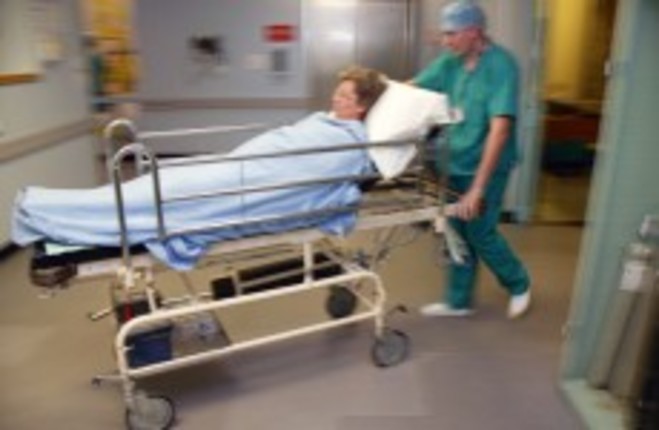
There are certain dipsticks, like the 20.27% increase in patients on trolleys in A&E in the first half of 2011 compared to 2010. That’s 7,766 additional people on trolleys who are waiting to be admitted to a hospital bed, a total of 46,065. Compared to the first half of 2008, prior to austerity kicking in, the trolleys are 52.53% more in demand, up 15,865 in the comparable period.

Meanwhile the number of bed closures throughout our health system is fast approaching 2,500. The fewer beds you have, the less capacity for admitting patients from A&E, the more people you get on trolleys.

Anecdotal stories from staff paint another snapshot. At a recent public meeting on the future of Connolly Hospital in Dublin consultants reported appendicitis cases being far worse when eventually treated thanks to a lack of resources to catch the condition early. Another tale was of a surgeon and his team, fully ready to work, having nothing to do at 2pm on a Wednesday afternoon. His list for the day had been cancelled to save money.

‘The hospital is treating too many sick people’

“Cost containment” is the bureaucratic term used alongside “service targets” when discussing money saving efforts in hospitals. The first is easy enough to understand, but in the second expression lies the dirty little PR secret of the health budget debate: When a hospital is demonised for not living within its budget, it is because it has gone over its pre-agreed service targets.

The hospital is treating too many sick people.

Budgets are made up based on the idea that a hospital will treat X number of Y cases, costing €Z. If you’re only scheduled to have 1,000 heart attacks in your hospital then Case 1,010 puts you 1% over your service target. Naughty hospital.

To contain these spiralling costs hospitals are forced to close more acute beds and to entirely close off certain departments: To go back to Connolly, the surgical day ward will be closed four weeks by the end of the year and when it reopens it will be allowed (‘able’ is the wrong word) to treat 10-13 patients per day rather than the 30-40 it handled previously.

These are patients coming in for angiograms, with hernias and ingrown toenails, patients seeking preventative care to keep them out of A&E and patients looking to be cured of minor but life altering ills.

Staff will be reduced a further 10 per cent in 2012 while strict controls are placed on the amount of agency staff to replace them. Thus, wards will be further crimped in capacity as they do not have the clinical staff to safely admit patients.

‘We have choices, even now’

This is being repeated across the country. We are seeing outpatient clinics to help individuals manage illness closing; we are having labs shut for weeks while the last remaining of four original staff takes a holiday with no cover provided; we are existing in a healthcare system described by patients and staff as like a warzone.

To come back to my original question: How many people who might have been seen to by a surgeon at an early stage of an illness; how many people who might have seen a nurse once a month in a clinic now to go to their GP after feeling unwell for a while; how many people admitted to an overcrowded A&E and left in a chair, let alone a trolley, won’t see the far side of this recession because of austerity?

That is a core moral question for our nation and its leaders. We make choices, even now, as to where we make the cuts. Taxes this, Croke Park Agreement that, means testing the other: We have a target that is set by outsiders, but we meet it in our own way. The way we choose says something about us, about our national priorities and the moral compass and fibre of those making the choices.

We look back on history and scoff at some of the short sighted and even inhumane things that were done in this country as regards the ‘welfare of the people’. I wonder what our descendants will think of of the choices being made today. Will they consider them misguided? Uncaring? Or simply reprehensible?

Aaron McKenna is coordinator of the Defend Blanchardstown Hospital Campaign. He is also Managing Director of the e-commerce company Komplett.ie.

Read next:

Comments (34 Comments)

  • Excellent article. Austerity is costing and degrading lives across Europe on a daily basis. It comes in many guises – deteriorating health service, declining wages , increased stress levels , huge rise in level of suicides & alcohol/drug abuse etc. The question is often asked, usually in a rhetorical way , are we an economy or a society. The answer for most European governments, including our own, is most definitely the former.

    Reply
  • This article seems to ignore some important facts. Ireland with one of the youngest populations in Europe has one of the poorest performing health services and yet spends proportionally more on health services than most European countries.
    The problem with Irelands health service is not the level of spending but the complete failure to spend efficiently.
    http://touch.boards.ie/thread/2056182853

    Reply
    • Couldn’t agree more. Why is it that with the highest number of nurses per 1000 of population than any other country in the OECD and we seem unable to provide an acceptable level of service.
      It has to be bad and inept management. The time as come to set aside te promise to keep all the admin jobs from the old health boards and create modern progressive and responsive management and administrative systems.

      Reply
    • So cut administration so. The reality is that the cuts are affecting frontline staff and facilities and not administration just like cuts on a wider level are affecting average citizens and not management of public services or politicians. Wake up. Things are badly managed so get rid of management.

      Reply
  • Do not under estimate the power of private health providers, the worse the service the more likely frightened people will use private facilities, health care for the moderately rich and rich only it seems,

    Reply
    • AMurphy 02/12/11 #

      It’s a choice to pay for private…it’s paying for peace of mind NOT a belligerent act to degrade the fabric of society!…and if public health service had any morsel of quality of service private health care be obsolete!

      Reply
    • I could have sworn I read an article here recently about people in public care being advised by public consultants to avail of the advice of private consultants, only to pay and find out that its was the same bloody consultant.

      Reply
  • Throwing money into the health service is just like throwing it sown the toilet. There are massive inefficiencies in the health service but no-one seems to want to address them.It is a lot easier for politicians and the unions to say that we need more money in the health service than actually saying we have too much administration and inefficacy. To resolve this people would probably have to be either reassigned (without the usual union BS of getting paid for a job title change) or let go. that is the hard fact of reality but no-one has the balls to do anything about it.

    Why are people complaining about waiting times in public hospitals when there is a private hospital advertising on the radio that guarantees that you will be seen within the hour for minor illness’s and traumas? If they can do it then why not public hospitals? Is it because they don’t just throw money away because they are run efficiently? Maybe it’s because people have to pay that bit more for their care and so aren’t so casual about going in at the first sign of a nose bleed. I have a medical card and only use it if absolutely necessary and only after seeing my doctor first. Luckily enough since I got it I haven’t had to do this but I have been to CUH A&E three times in the last 2 years. What I saw were people abusing the medical system so much that it was no wonder my blood pressure was up on occasion. There were sprains, cuts ear aches you name it, all of which could have been dealt with by a family GP. This is what the staff were telling me. People seem to think that once they get a medical card they HAVE to use it, I’m sure everyone knows of people or families who spend half their week being “rushed” to the A&E and then spend the other half of the week recounting their experiences like it was an cliffhanger episode of ER!

    If the HSE was run better on the money that it has then we could definitely have a better service. We don’t need more money (we haven’t got it) we need someone who spends it wisely and efficiently.
    The public too have a role to play in going to their GP or local clinic first and not clog up vital services for people who are in greater need. GP’s do stitch up minor wounds and bandage sprains you know.

    Reply
    • AMurphy 02/12/11 #

      Spot on!…quality of service isn’t determined by numbers but by effectiveness and efficiency!…

      Reply
    • The HSE is rotten to the core ….if they had an unlimited budget they still couldn’t provide a world-class service…there is such waste…entire buildings not in use heated & lights on 24/7…….work practices need to be reformed and jobs that were created in the good times but were never needed before, need to go…..no one takes responsibility for anything….it’s always someone else’s fault….departments don’t even communicate….staff are very demoralised…..why doesn’t the minister for health look to countries that have the best health care system & copy it….we don’t have to reinvent the wheel….

      Reply
    • In fairness to James Reilly, he has looked at other systems and wants to introduce a system like the Dutch model with universal health insurance and a “money follows the patient” concept. However its going to take years to try and implement changes in the health service and its going to have to be done in the teeth of opposition by the unions.

      The other problem in our health service is that everbody wants their local hospital to do everything which isn’t feasable or advisable. However just look at the outrage that happened when Roscommon hospital’s A&E was downgraded. The Hanly Report in 2002 suggested the same thing but was shelved following protest marches in towns all over Ireland. No wonder Ministers for Health are reluctant to try and make major changes.

      Its also crazy that in this day and age we don’t have a centralised record system that could be accessed by all hospitals. So everytime you visit a new hospital there are forms and forms of data to be filled in, all of which take administrative staff time and have to be stored and archived. Of course the whole PPARS debacle put that concept back years and its unlikely we’ll have such a system for years to come.

      Reply
    • Question Brian. You think throwing money into the health service is throwing it down the drain. Will our tax’s decrease with decreased funding of the healthcare system? NO. It would go to funding private debt instead. I think spending money on healthcare is much less of a waste than that.
      Maybe if your argument was lowering tax’s by letting the private industry do its thing there would be some amount of credibility to what you say but when the reality is that its just the public paying more than ever and getting nothing in return it shows your full of crap.
      Some people cant afford private care, maybe they could if tax’s were lowered but increasing tax’s and destroying public care just shows you have no idea what you are talking about.
      You fell into the trap being put forward of getting people fighting over spending tax on public services without fully appreciating that its a ruse to rob even more money from under your noise.

      Reply
  • If a figure could be put on it, I wonder how many died over the years because of the actions of Jabba da Harney?

    Reply
  • Let me pose a question: How many people will be bothered to actually stand up and say something about any of the cuts.

    Reply
  • the points of this article are way too sensible….. After all our gov only ever firefights (very badly) in a reactive way….. God help us that they should realise the validity of pro-activity/deterrence and preparation.

    The problem with our health “service” is how money is (mis)managed. The top layers of HSE must be trimmed way down. Whilst if might be costly in the short term to get rid of a lot of unnecessary management layers, savings should be put back in the hospital services in the long run.

    But today we have no patience for the long run…. everything needs to be fixed NOW …. we’re so used to instant return and gratification. It’d take a long time to fix our health service for the good of patients but are we ready for that?

    But first things first…………. stop mad bond payments. 1.25 billion Jan 2012…. that money would go a long way at home

    Reply
  • Health cutbacks, to most, generally mean poorer conditions for the unwell. “Our budget is lower, remove facilities!!”. As long as our grossly over populated, public health service exists, the patients will suffer. As long as the public health service get working conditions and perks that are unrealistic to today financial environment, patients will suffer. Take money from the admin side and give it to the sick people, no? The article should be entitled “How many people will the public sectors greed in this time of austerity kill”. I know this does not apply to every public servant, but, based on what I’ve seen, it’s more then 50%.

    Reply
  • try cutting the 750million in aid to third world countrys which is going to buy arms poor people never see a cent of this money

    Reply
  • James Reilly has a very difficult task trying to find savings alongside Croke Park. At least he’s trying to reform the system as he goes, unlike the last Minister who thought the two tier system was grand.

    Only 30% of the health budget is expenditure other than pay.
    I agree, cutting this puts lives at risk and it worsens our health.

    However, if we were instead to touch the 70% of the health budget taken up by pay and pensions,
    then no one will die.

    Of course Labour would rather put lives at risk than disturb their PS/Union voting and funding base….

    Reply
    • Have to say James Reilly has been a resounding disaster since being elected, prior to being elected he was always in the radio shouting the odds, seems to be very quiet lately. I would have been a supporter of his, now I’m not so sure!

      Reply
    • James Reilly has not got a clue what he is at…. He is closing beds,, and patients are left on trollies,, he is closing A&E and over stretching the next A&E …. Tell me where us the logic in that also where is the health and safety issue there

      Reply
  • Very interesting article, but I think the rush to blame ‘austerity’ for our woes both minor and major is a deflection from focussing on our personal responsibilities. We overwhelmingly embraced the system and the people that got us into this mess, so we have to assume some of the blame. If someone dies in part due to ‘austerity’ measures, it is partly mine and your fault for decisions we made both individually and as an electorate. This rush to blame austerity, banks, developers, politicians etc is a cop out. We prop up the system, if we want change, we must change.

    Reply
    • Not buying this crap. The parties don’t meet campaign obligations so it is not the electorates fault. Its also not the electorates debt that we have been shafted with and I am sick of being told to take responsibility for someone elses mess.
      I would much rather my tax being used to save lives rather than pay for the f ups of politicians, speculators, bankers and management. I don’t care how much you or FF or FG tell me to take responsibility for their crap, its not going to happen.
      I refuse to line the pockets of people for making bad selfish decisions.
      Just like no matter how much someone tells me that the grass is blue I am still going to say its green. Because is green.

      Reply
  • There’s one thing that is almost for certain. The only people who are at risk of dying from healthcare cuts are Irish people.

    Reply
  • Yeah… We should just keep spending and spending until the whole system collapses and there’s €0 to treat patients and no creditors left willing to lend to us.

    Reply
  • Ok Aaron, sounds like you’ve answered your own question by pointing out that any measures taken to deal with our monetary bankruptcy will be judged as morally bankrupt as well. You sound like you’re full of opinion, how about suggesting some actual health cuts you think would be justifiable?

    Even in times of prosperity, we can offer better health care than we can afford so decisions about how money is spent and how you would put it, who lives and who dies, happen all the time. Smaller regional health settings struggle to attract and recruit good health staff in any case, so I’d suggest that smaller services should close to allow better funding for larger centers, typically in major cities. Obviously, everyone wants a hospital in every town but that’s just not financially possible or desirable from a ‘best’ clinical care perspective.

    Has anyone got any data on the types of emergency presentations? Are there stats on how many of the folks on trolleys are non urgent cases that could have been dealt with by a gp?

    Reply
  • We can cut pay or cut services. We are choosing to cut services because Labour’s sole policy is the protection of the pay of the unionised workers who fund their party.

    High pay is killing patients not austerity.

    Reply
    • and who exactly are the “highly paid” Arnold? What is the criteria/amount? Don’t you think that the people who actually tend the ill should not be paid properly and have safe conditions for both themselves and patients?

      We can cut bondholder payments; not pay and/or services.

      But in once sense you are correct. Unions need to realise that they have to be flexible in our changed circumstances and that deals made “in the boom” have to be considered as such. I do think the frontline staff of all services just want to be left alone to get on with their jobs in a safe environment, not always having to threaten/action strike / protest etc. And remember they protest as much about patients’ conditions as anything else.

      Reply
  • In answer to earlier Q of 50% comment. I chose that number as it is reasonable to say that 50% have: lump sum on retirement, NCP, incremental days off, walk time to tea break and again for lunch, cheque cash time, job for life. To name few few. Now, how many admin staff are in the public health system?

    Reply
    • I’m a nurse, my increments were frozen 2 years ago-did you know that individual hospitals had the power to do that? I’ve never heard of time for “walking to tea break”. In fact, more often than not breaks are taken standing in the staff room and we almost never get the breaks we are entitled to as it is just too busy. I guessed that you made that figure of 50% up. And I was right. Another public sector hater. With no basis for your comments other than your own petty opinions.

      Reply

Add New Comment