We need your help now

Support from readers like you keeps The Journal open.

You are visiting us because we have something you value. Independent, unbiased news that tells the truth. Advertising revenue goes some way to support our mission, but this year it has not been enough.

If you've seen value in our reporting, please contribute what you can, so we can continue to produce accurate and meaningful journalism. For everyone who needs it.

Alamy Stock Photo

Pádraig Rice TD on dyslexia 'Growing up, I knew I was different'

Having dyslexia himself, the Social Democrats’ spokesperson on health knows the importance of early support in the education system.

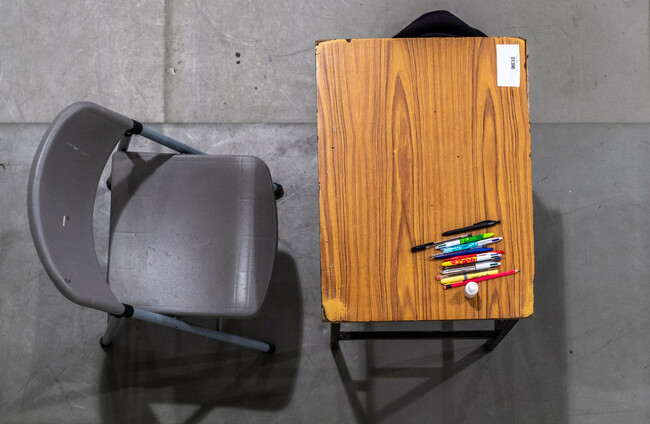
SITTING THE LEAVING is a rite of passage. It marks the end of one chapter and the start of another. It involves studying in sunny weather, planning post-exam celebrations and, unfortunately, unbearable levels of stress.

For most students, it’s a tough and gruelling experience. But for students with dyslexia, it can be extra challenging. Unlike most other European countries, Ireland doesn’t give students with dyslexia extra time in second-level exams. This must change.

Growing up, I knew I was different. I was aware that I struggled with things that my classmates found simple. I knew there were skills I was lacking that seemed to come easy to my friends. But I didn’t have a word for it.

When I was five or six, I remember feeling shame when my childminder pointed out that I was struggling to tie my laces and suggested Velcro shoes instead. I didn’t understand why I found these things so much harder than others.

In fourth class, the night before the weekly spelling test was always torturous. I would try and try but fail time and again.

In my first year of secondary school, I burst into tears when a teacher called me to the top of her class to discuss my spelling mistakes. I knew what bullies did to kids who were branded as ‘slow’.

Dyslexia

I wasn’t formally diagnosed as dyslexic until I was 16. This was done privately at a cost of hundreds of euros – a cost that is beyond the reach of many.

Dyslexia varies from person to person. For me, I struggle with some spelling and word sounds. I often have to stop and think about how a word is spelt — how many fs is difficult, or whether it’s an o or an e at the end of traitor. Sometimes, I get it quickly. On other occasions, I really have to think hard or ask others for help. This takes time, energy and mental effort.

Many Leaving Cert students with dyslexia face similar challenges. The State is doing them a cruel disservice by not providing them with extra time to compensate for this difficulty. This is in sharp contrast to the supports available at third level.

Looking back on my educational experience, one of the things that really frustrates me is that the higher you go in education, the better the supports get. But really, they should be there from the earliest stages of academic life and maintained throughout.

Leaving Cert

I sat the Leaving Cert in 2008. I was given a smaller room but no extra time. Exceeding my own expectations, I got over 500 points and went on to study a B.Sc. in International Development and Food Policy at UCC.

From day one, I was linked in with the UCC Disability Support Service. I met with a disability adviser and was given extra time (10 mins per hour) and a spelling waiver for all my exams. Thanks to this support, and a lot of hard work, I graduated with a First Class Honours and won a scholarship to study a Master’s in Public Policy at the University of Oxford.

At Oxford, the supports levelled up again. I was given access to assistive technology, time with a dedicated tutor, the option to type exams, and 25% extra time. These supports made a huge difference and encouraged me to continue my education journey with a postgraduate law degree at UCC.

Looking back, I wonder why these supports are in place at third level but not for second level students? How many students drop out before supports are available to them? Why do you have to break through an education barrier before you can avail of the supports you need?

My colleague, Dr Jen Cummins TD, is an expert in education policy. I know from discussions with Jen and from my own experience, that things need to change. It’s time for extra time.

Last month, two students from Our Lady’s Bower Secondary School in Athlone, Sive O’Brien and Madison Moore, made a clear and compelling case for extra exam time to TDs and Senators. Their Oireachtas briefing was based on their BT Young Scientist Project, and no doubt prompted many of us to speak out.

The current Reasonable Accommodations for Certificate Exams do not provide for additional time for students with dyslexia in their own right. In 2008, an expert group led by Professor Áine Hyland recommended additional time for students with specific learning difficulties. This was ignored.

Change is needed

In 2016, the Ombudsman for Children produced a report that set out a series of complaints from students and parents. More recently, Dyslexia Ireland launched a petition that was signed by over 33,000 people.

Ireland is an outlier when it comes to the lack of supports for second-level students with dyslexia. In the UK, students with dyslexia are typically given 25% extra time, while in Italy it’s 30% and in France 33%. We should follow suit.

It’s not acceptable that students in Newry get extra time, but those just across the border in Dundalk do not. This change would make a big difference at a limited cost.

Beyond the exams, we need better teacher training and wider understanding. There should be ongoing, continuous professional development courses to enable teachers to better understand dyslexia. There also needs to be support and extra time given for class tests.

Ultimately, we need a less rigid education system that celebrates each of our unique abilities.

In recent years, I have come to see my dyslexia as both a strength and a weakness. The charity Made by Dyslexia is on a mission to highlight the many ways in which neurodiversity can be a bonus. From visualising to connecting, there are areas in which dyslexic minds work better. As time goes by, I’m sure we will discover more.

Personally, I have learned many ways to overcome the challenges of dyslexia. For example, I use the read-aloud function to proofread. My ear picks up errors that my eyes skip over. I send voice notes instead of long texts to ensure my message is clear. I use add-on software like Grammarly to help me edit. Before I publish an article or essay, I’ll ask someone else to cast an eye over it for errors. These little things make a big difference day-to-day.

As a country, we need to ditch the shame and stigma that too often comes with dyslexia. This begins with a wider understanding and proper support for students. A good start would be extra time for next year’s Leaving and Junior Cert students. I urge the Minister for Education to heed this call.

Pádraig Rice is a Social Democrats TD for Cork South-Central and is the party’s spokesperson on health. 

Readers like you are keeping these stories free for everyone...
A mix of advertising and supporting contributions helps keep paywalls away from valuable information like this article. Over 5,000 readers like you have already stepped up and support us with a monthly payment or a once-off donation.

View 14 comments
Close
14 Comments
This is YOUR comments community. Stay civil, stay constructive, stay on topic. Please familiarise yourself with our comments policy here before taking part.
Leave a Comment
    Submit a report
    Please help us understand how this comment violates our community guidelines.
    Thank you for the feedback
    Your feedback has been sent to our team for review.

    Leave a commentcancel

     
    JournalTv
    News in 60 seconds