TheJournal.ie uses cookies. By continuing to browse this site you are agreeing to our use of cookies. Click here to find out more »
Dublin: 3 °C Saturday 25 May, 2013

Rise in number of sexual offences committed by juveniles

A new report into juvenile crime has revealed that 195 sexual offences, including 50 rapes, by under 18-year-olds were dealt with by Gardaí in 2010.

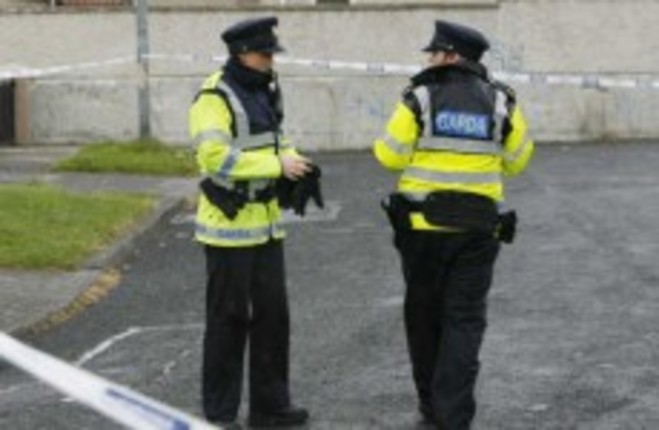
File photo of a crime scene.

THERE WAS A significant increase in the number of sex crimes carried out by teenagers in Ireland last year.

Official figures from the Garda Juvenile Diversion Programme show that the number of sexual offences jumped from 74 in 2009 to 195 last year.

Ellen O’Malley-Dunlop, CEO of the Dublin Rape Crisis Centre, said that the widespread availability of hard-core pornography has contributed to the “shocking and worrying” increase in sexual offences.

“We are sure that part of the reason for the increase is to do with easy access to hard-core pornography on Internet and smartphones,” she told TheJournal.ie, adding that there was international research to back the claim up.

Throughout the year, 50 incidences of rape were dealt with by Gardaí, compared with 17 in 2009. There were also 10 defilements of boys or girls under the age of 17 recorded and three aggravated sexual assaults.

There were a total of 119 non-aggravated sexual assaults.

“Pornography desensitise young people at a stage of very important development,” continued O’Malley-Dunlop.

She urged parents to continue to supervise their children’s Internet access and update child protection software. She also called on schools to continue to deliver and follow through on their SPHE and other sex-education programmes.

Juvenile crime

In 2010, 27,257 offences by young people were dealt with through the diversion programme, an increase of 13.8 per cent on the previous year.

However, the number of children referred to the programme fell by 533 to 17,986. Minister for Justice Alan Shatter said he welcomed the reduction in the number of child offenders but highlighted his concern that some were deemed ineligible for the programme.

There are a number of reasons that children will not be accepted into the programme, including if the child is offending persistently, if he or she does not accept responsibility or if it is not in the interest of society to caution the child.

The majority (31.35 per cent) of offences detailed in the report fell into the public order category, while 22 per cent were theft and theft-related.

However, some of these were more serious with a rise in aggravated burglary noted. In 2010, 26 aggravated burglaries by children were dealt with by Gardaí.

There was also a jump in the number of murder and manslaughter cases from two in 2009 to five in 2010.

More than half of the children referred to the programme received informal cautions, while in 856 cases the Gardaí took no further action.

The overwhelming majority (78 per cent) of those in the programme were male and about 32 per cent were 17-years-old. Just 26 of the offenders were below 12 years of age.

The Garda Juvenile Diversion Programme was established in 2001 under the Children Act and aims to prevent young offenders from entering the full criminal justice system by deterring them from committing further offences.

Read: Fewer child offenders referred to Diversion Programme>

Read next:

Comments (15 Comments)

  • Sharrow 13/09/11 #

    Consent is not taught in schools as part of the SPHE program.
    It should be.

    Reply
  • Doesn’t blaming pornography seem like a great scapegoat, for parents who don’t teach their children to be compassionate, moral and decent people? How come it seemingly turns certain children into rapists, and with others it has no effect?

    Post hoc ergo propter hoc. Pornography may well be a contributing factor, but I think that if we rush off to update the nanny software on our kid’s computers, we may be deluding ourselves into a false sense of security. We need to examine this from every single possible angle, because it’s too serious a problem to have only one simple elegant solution.

    Another thing – nanny software must have come some way since I was a kid, because I always treated it like a standard joke.

    Reply
  • The rape crisis centre may be right about pornography, especially of the violent kind, being a contributor to societally undesirable sexual behaviour amongst minors but I hope they are not condoning Chinese style censorship of the Internet and a return to the dominance of the Irish Censorship Board. My opinion is the following: If you have internet technology of any kind and children in your house, ensure you use parental controls. It is complete parenting negligence to shrug your shoulders, declare yourself a luddite and allow your children access an unrestricted web. It’s paramount to allowing your kids to wander the streets of the city centre at 2 am. Yes children are technologically savvy these days but you are buying them this technology therefore it is your responsibility to educate yourself in it’s applications and how to appropriately restrict it. It’s fine for organisations to point at pornography as a culprit but utterly unproductive if they are not even hinting at a solution. Parental culpability must be the first step. Internet pornography is here to stay.

    Reply
  • Not surprised to hear this. I would be concerned most about the normalisation of rape, humiliation and torture depicted in a lot of porn from the USA in particular. Part of the same societal degeneration that gave the world Abu ghraib.

    Reply
  • Just thought that I would also mention that it’s a little unfair to feature Tramco’s picture featured in such an article. Last time I looked, it was not a hot bed for underage sexual assault..

    Reply
    • what ever about featuring tramco, I think its poor taste referencing the young boy in the caption. he was released without charge, and should be allowed get on with his life without being associated with the criminals in this article. There may well be an increase in the number of sex crimes amongst juveniles – but as far as the DPP is concerned, he is not responsible for that. I should have thought considering that when the Journal first reported on that incident, that the boy was all but identified in reader comments, that the Journal would have shown more consideration and tact here.

      Reply
    • Thanks for the feedback. We have changed the image to a more generic one.

      Reply
  • I’m not so sure if pornography is more available, it was always there, the internet existed when I was growing up and I’m pretty sure it had porn on it then too. Even in school it was widely available and that was a good while back. I remember the scummy kids seemed to be doing a roaring trade selling the stuff, downloaded movies, copied DVDs, stolen magazines. This report may be about 15 years out of date if that’s what it’s outing this down to. Are they even aware of the consensual things that kids are getting up to? Fortunately, some kids talk to their parents about what goes on, that’s when you can positively influence behaviour

    Reply
  • The correlation of pornography and sex crimes has been thoroughly disproven by serious studies, yet it keeps popping up in political discourse. In any case, a one year increase means nothing, it could easily be a blip

    Reply
  • Where are you off to showing a picture of Tramco? Talk about putting your hand out to be slapped. This is second time you have used Tramco for such an article. It’s called slander and it’s illegal.

    Reply
    • Actually its called defamation, and this is not, read the caption under the photo.

      Reply
    • There is no caption under the picture on the main page. They shouldn’t use that picture on the main page without there being some sort of explanation there.

      Reply
    • Apologies for using the incorrect term! Can someone clarify the laws on using images for an article? I tried to look online, but couldn’t find what I was looking for. I thought that defamation applies to a situation where something is implied without being directly stated, so correct me if I thought wrong.
      I have only been to Tramco once and I didn’t particularly enjoy it, but I don’t think the journal should use an image of Tramco every time there is an article about rape. As I mentioned, this is at least the second time they have done this. Do you really think this is fair?

      Reply
    • Thanks for the feedback. We have changed the image to a more generic one.

      Thanks,
      Sinead

      Reply

Add New Comment