TheJournal.ie uses cookies. By continuing to browse this site you are agreeing to our use of cookies. Click here to find out more »
Dublin: 12 °C Monday 20 May, 2013

Russia remembers Stalingrad 70 years on

Today Russia marks the 70th anniversary of a brutal battle in which the Red Army defeated Nazi forces and changed the course of World War II.

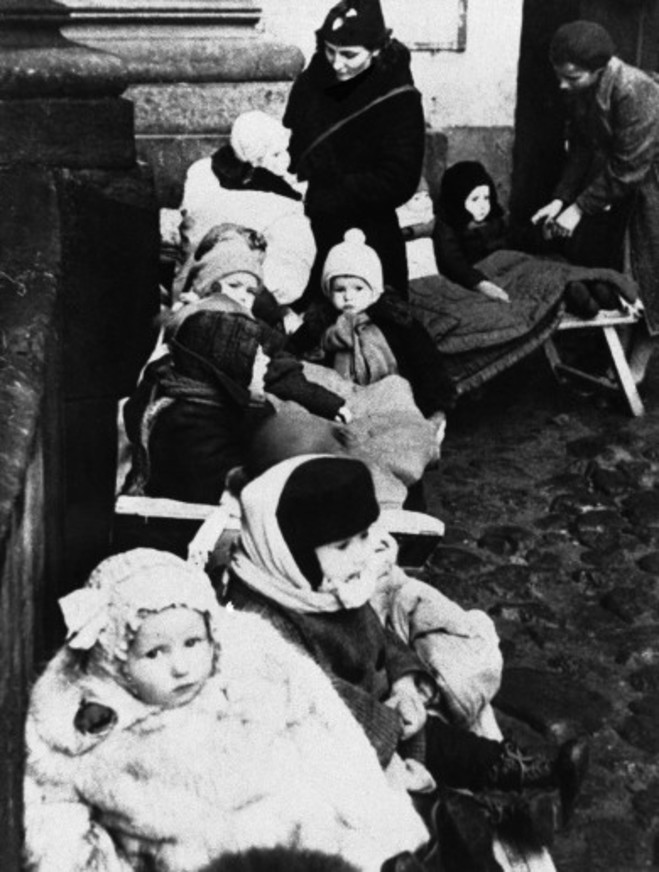
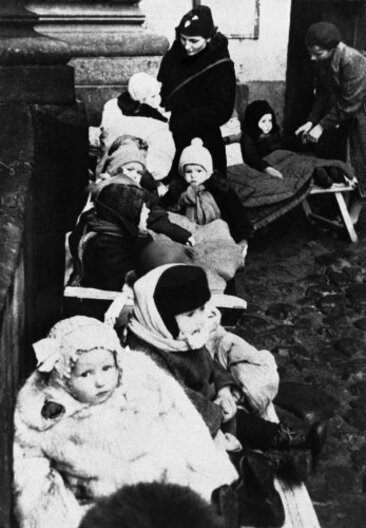
Heavily clothed for protection against the bitter weather, Russian children take cover in an air raid shelter in a public park in Leningrad, Russia, during a raid by Nazi planes: 18/04/1942.
Image: AP/Press Association Images

THE CITY OF Volgograd was renamed Stalingrad for a day Saturday as Russia marked the 70th anniversary of a brutal battle in which the Red Army defeated Nazi forces and changed the course of World War II.

Commuter buses emblazoned with pictures of the feared Soviet dictator ran across the southern city as patriotic Russians remembered what many view as the Soviet people’s greatest achievement.

“I remember the sadness of the war and the victory of the Soviet soldiers,” said World War II veteran Alexander Kudlyayev as he joined 10,000 others at a wreath-laying ceremony at Volgograd’s Tomb of the Unknown Soldier.

“I came to honour my friends who died here,” added 89-year-old Stalingrad survivor Pyotr Chabarov.

The deaths of two million people

The half-year battle in 1943 in the city on the Volga River – much of it fought in hand-to-hand combat across the ruined streets – claimed the lives of two million people on both sides and eventually led to the German troops’ surrender.

The battle marked Hitler’s first big defeat and led to a Nazi retreat from Soviet territory after a lightning June 1941 invasion that had caught Stalin completely unaware.

The pulverised city was renamed Volgograd in 1961 after Soviet leaders admitted the extent of Stalin’s tyranny during his decades in power.

But the old city name has remained synonymous with the battle and Volgograd lawmakers have decided to revive it for the anniversary and five other days of the year.

“We will defend our country by commemorating the great Battle of Stalingrad — our great victory,” Deputy Prime Minister Dmitry Rogozin told veterans who gathered to watch a commemorative march in which a few hundred young soldiers paraded in replica 1943 uniforms.

“Any enemy and potential aggressor should see this, understand this and feel this,” the close ally of President Vladimir Putin said.

Russia remembers Stalingrad 70 years on
1 / 16
  • Stalingrad

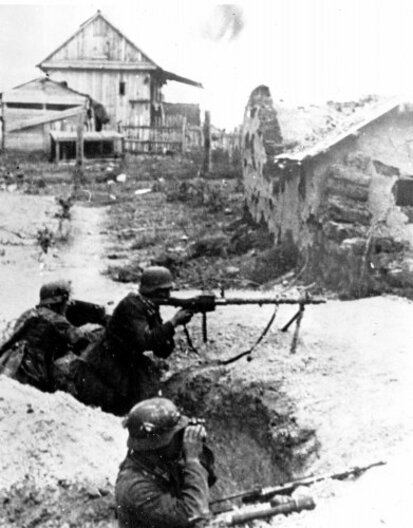
    German soldiers use a light machine gun in Stalingrad, Soviet Union, in November 1942 during World War II. (AP Photo)
  • Stalingrad

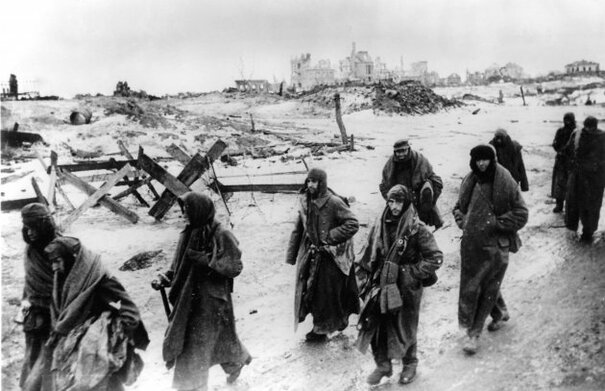
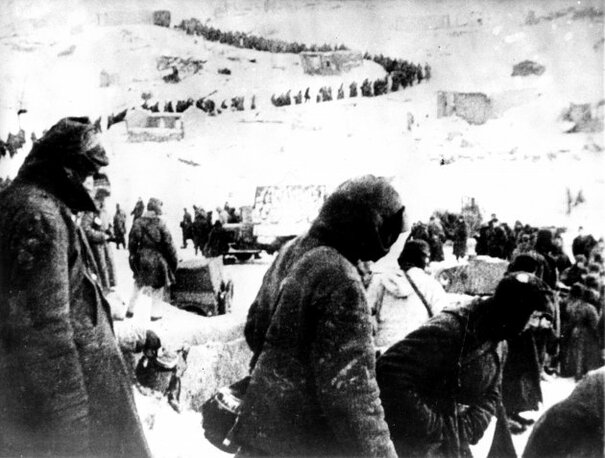
    Stalingrad fell on January 31, 1943 to the Soviet armies and brought to end the major German resistance in that city. It was seen by many as a turning point on World War II. Photo shows captured German soldiers, their uniforms tattered from the battle, making their way in the bitter cold through the ruins of Stalingrad.
  • Stalingrad

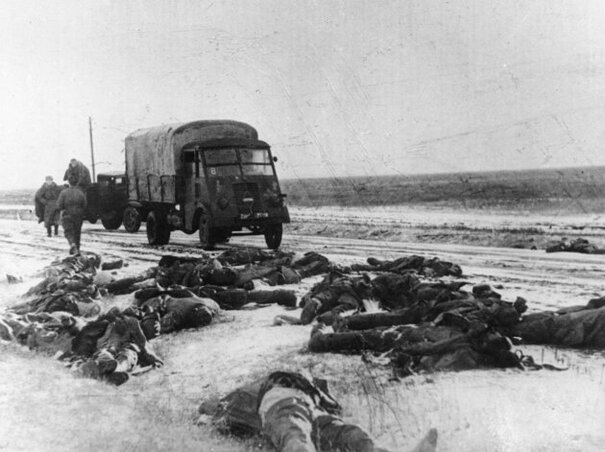
    The frozen bodies of dead German soldiers lie sprawled across a roadside southwest from Stalingrad, on April 14, 1943. (AP Photo)
  • Stalingrad

    German prisoners of war captured by the Russians in the defense of Stalingrad march in a long line winding over a hill toward a Communist prison camp on March 26, 1943 during World War II. (AP Photo)
  • Stalingrad

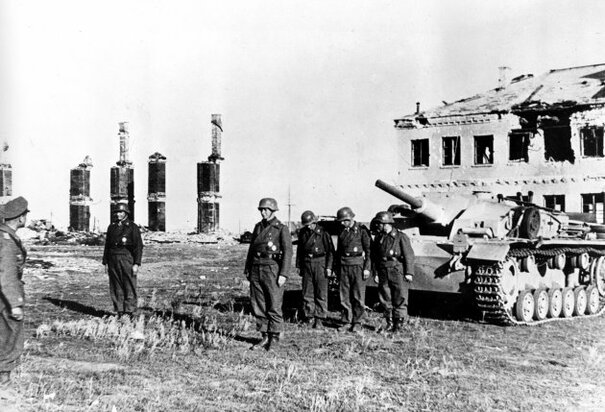
    Members of a Nazi tank crew line up near ruined buildings in Stalingrad as their leader is presented with the Knights Cross, an award for destroying nine red tanks in 20 minutes, in 1942 during World War II. (AP Photo)
  • Stalingrad

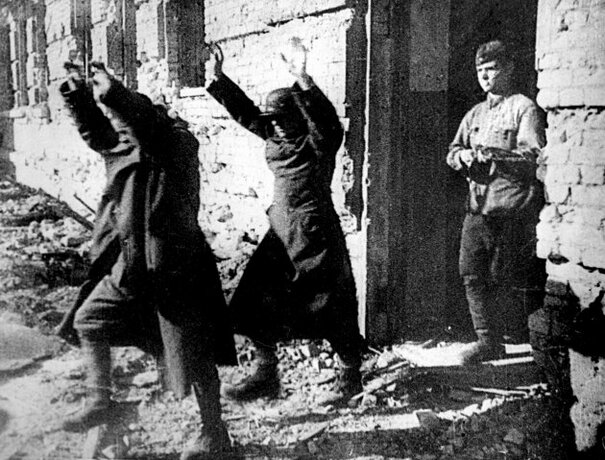
    Two Axis soldiers, with their hands held above their heads, are marched out of a battered building by one of their Russian captors as German soldiers are evicted from Stalingrad on Jan. 25, 1943 during World War II. (AP Photo)
  • Stalingrad

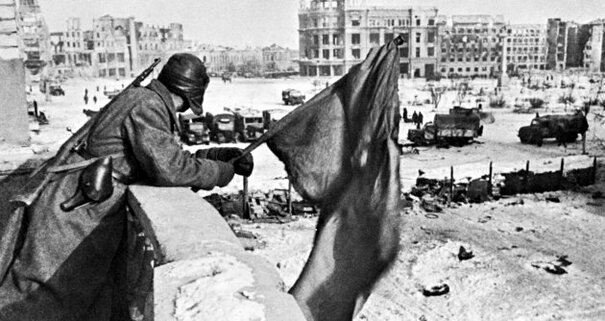
    The Red Flag flies over the battered ruins of Stalingrad.
  • Stalingrad

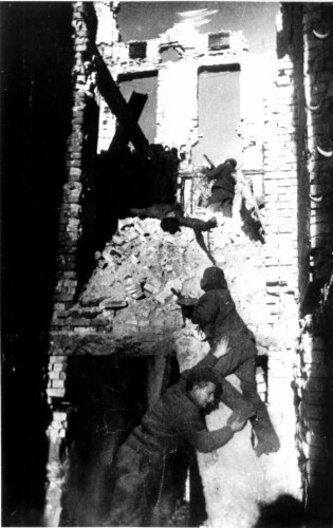
    Fighting in the centre of Stalingrad.
  • Stalingrad

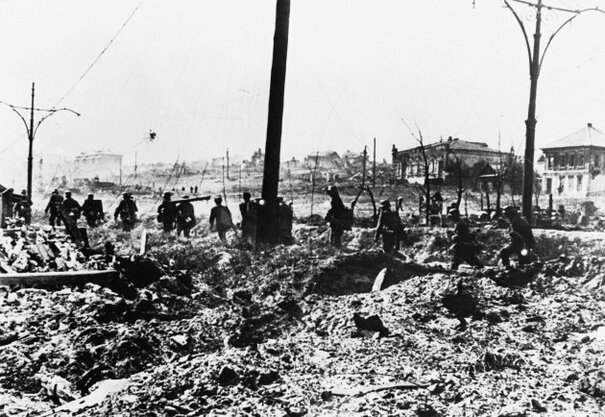
    German soldiers advance through wrecked suburbs of Stalingrad in Russia on Oct. 20, 1942 during the fierce fighting now going on in the northern factory district. (AP Photo)
  • Stalingrad

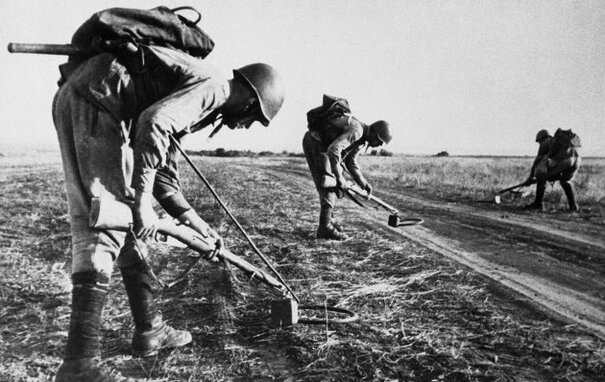
    Sappers of the red army using special equipment for their task, probe for enemy mines in the Stalingrad area on Feb. 24, 1943. (AP Photo)
  • Stalingrad

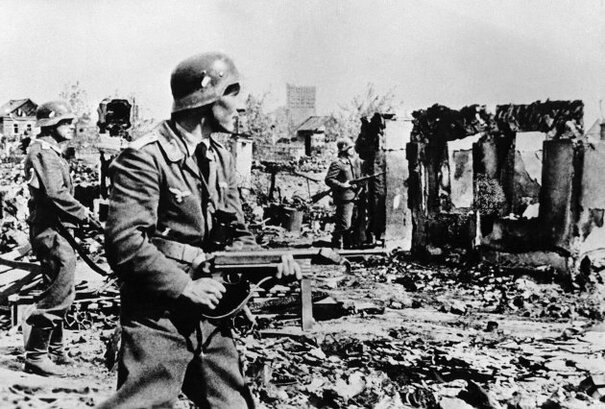
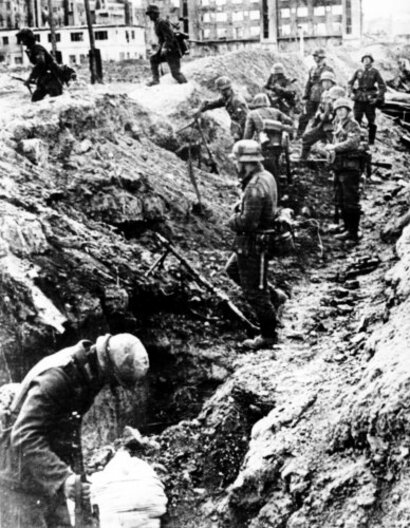
    Soldiers of the German Airforce during street fighting in the destroyed streets of Stalingrad on Feb. 24, 1943. (AP Photo)
  • Stalingrad

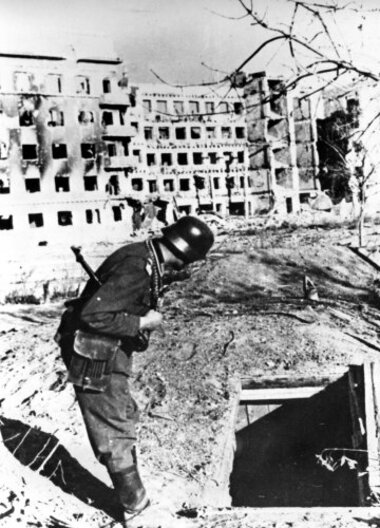
    A Nazi solder peers into the entrance of an underground shelter in ruined Stalingrad, Russian, in 1942 during World War II. Bombing and bombardment have made a wreck of the building in the background. (AP Photo)
  • Stalingrad

    Soldiers from the German Army are stationed in Stalingrad, Russia on Dec. 12, 1942 during World War II. (AP Photo)
  • Stalingrad

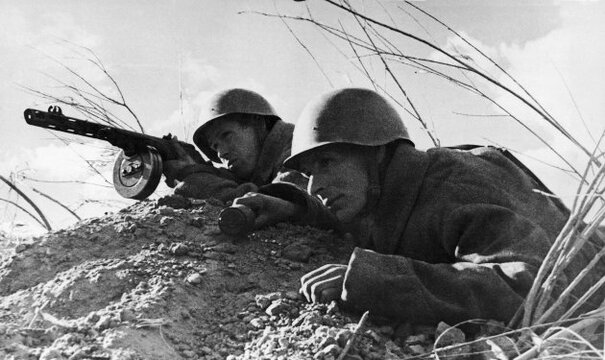
    Red Army men in a firing line in the Stalingrad area on Feb. 8, 1943, hold their fire until the enemy is at close range a picture typifying the determination and alertness which has won the soviet forces their smashing victories. (AP Photo)
  • Stalingrad

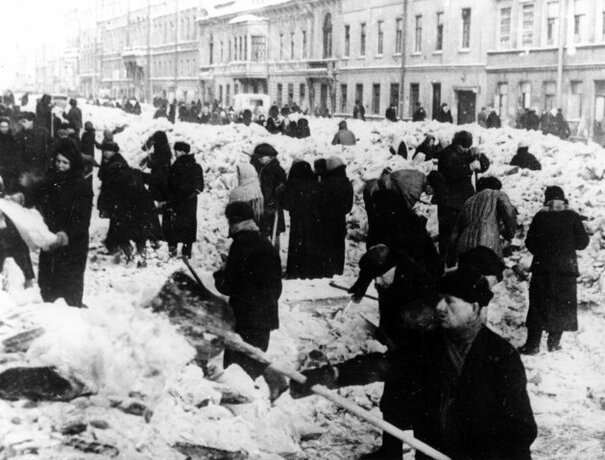
    Weakened by hunger and cold, men and women work slowly to clear snow blocking Nevsky Prospect, Leningrad's main street, during the winter of 1941-42. Many workers could hardly lift the shovels. As they turned over the snow, they found many bodies of people who had died of starvation in this first winter of German soldier's' siege of the city. It was the coldest winter in a half century, with temperatures falling to 22 below zero (fahrenheit).
  • Stalingrad

    Heavily clothed as a protection against the bitter weather, Russian children take cover in an air raid shelter in a public park in Leningrad, Russia, during a raid by Nazi planes on Russia's northern city.

Putin – due to attend a fireworks display and concert in Volgograd later Saturday – has never denied Stalin’s murderous purges of innocent citizens and deadly forced collectivisation.

But he and other modern leaders have preferred to overlook the disastrous errors in military strategy Stalin made during the war.

And Putin in particular has preached a patriotic message since returning to a third term in the Kremlin last year.

Analysts believe this has helped him maintain support among many of the older middle class voters in the face of the first street protests of his rule among the young.

State media focused their attention on Volgograd throughout the week as they detailed the lavish preparations and Kremlin’s attention to veterans.

The Volgograd commemorations were broadcast live on the national news channels while state television broadcast a new dramatised documentary about the “battle that changed world history”.

ISS broadcast

Afternoon broadcasts also relayed a special message from the Russian crew members of the International Space Station – a tradition usually reserved only for the highest national holidays.

“We extend our wholehearted congratulations,” said ISS member Roman Romanenko.

“We will always be grateful for your feat. Its memory will live on for centuries.”

But not everyone was pleased that this memory now appeared to be once again firmly associated with Stalin’s name.

“This was a mistake,” said a woman who agreed to only give her first name Larisa.

“We are overestimating Stalin’s role in the war,” she said. “He was bloodthirsty.”

Three days ago, Germany marked the 80 year anniversary of Hitler’s rise to power, with Chancellor Angela Merkel urging the Germany public never to allow the apathy that permitted Hitler’s rule to return: “Human rights do not assert themselves on their own; freedom does not emerge on its own; and democracy does not succeed on its own.”

“A dynamic society… needs people who have regard and respect for one another, who take responsibility for themselves and others, where people take courageous and open decisions and who are prepared to accept criticism and opposition,” she said.

Merkel was speaking at the inauguration of an exhibition in Berlin to commemorate eight decades since Hitler became chancellor on January 30, 1933 – an anniversary which has aroused much interest in Germany.

Ninety-year-old Jewish-German author Inge Deutschkron also spoke to the Bundestag on Wednesday, recalling the day 80 year previously when everything changed, the Guardian reports.

Deutschkron recounted a conversation with her mother, when she was told:  ”My child, you are a Jew. You belong to a minority and you must defend yourself.”

- © AFP, 2012

Additional reporting by Jennifer Wade

Read: Hitler’s rise to power a ‘constant warning’, says Merkel

Read next:

Comments (32 Comments)

  • Anthony Beevor’s book Stalingrad is really really good. Highly recommend it to any history buffs out there.

    Reply
  • Germany and Russia each lost more men to death and injury in this battle than the British and American forces did in the entire course of the war and there were several Battles that were just as costly to both sides, such as Leningrad (German dead estimated at 800k, Russian soldiers and Civilians 2.5mn estimated dead) and Kursk (1.3mn casualties between the two sides). D Day size battles on the Eastern front were so common that they are lost to public memory at this stage

    The total allied loss was 120k for the D Day invasion and it would have been much larger but 60% of the German army were tied up in Russia.

    If Hitler hadn’t invaded Russia he would have comfortably held all of Europe. Thank God he was nuts. Russian paid a very heavy price loosing 9 million soldiers and 12 million people, losing more people in that fight than Britain and America had lost in the previous 200 years.

    P’S Stalin was a bast5rd

    Reply
    • Allied casualties on D Day were about 8,500 of which about 4,000 were fatalities. Soviet casualties were extraordinarily high, mainly due to the ferocious nature of the fighting but also, in no small measure to the callous disregard that both dictators had for the lives of their people.

      The brutal behaviour of the Red Army in Berlin is well documented and reported.

      Reply
    • The figures I give are for the first month of the fighting while the operational stage of the Normandy invasion was on. ie before they got really stuck in to motoring. across Europe.

      No doubt they were callous in the fighting on both sides in the Eastern front but if Stalin was still an ally of Hitler at the time of the D Day invasion, the British and American forces would have been facing the entire Germany army rather than under 40% and its best equipment and men not the smaller, poorly equipped force they did and it still took a year.

      Reply
    • ”The brutal behaviour of the Red Army in Berlin is well documented and reported”
      true – but this was basically blowback for the even worse atrocities – of Nazis as they advanced thro USSR . It was a brutal confklict beteen thse tow countries – but Stalin at least had the sense to realise he was not a good miltary man – and handed over control of miltary to Zhukov .
      No dictator or leader has much respect for its citzens – whether in military trem or in a banking crisis .
      The UK knew about Pearl harbour – but let it happen as they wanted the USA in war .
      And for US 9/11 – is it not strange that larry siverstein upped the insurance just weeks before [ big time ]- and other strange events re that attack . I dont think it was an inside job – but they knew there was an attack comimg – anf they let it happen . They [US Politicians ] reportdly said ” we neeed another Parl harbour ”- well they got it – and the rest as they say is history .

      Reply
  • It’s just a bad idea to try to invade Russia, if their army doesn’t defeat you, their winter certainly will..

    Reply
  • So many lives lost. War is a terrible thing.

    Reply
  • A fact that Stalin was originally Georgian

    Reply
  • ptriley 02/02/13 #

    Stalin justs pips Hitler at the post for being the most ruthless of the two.

    Reply
  • The Germans won the peace and they remain a well organized nation. Their standard of living over took Britain in 1962 and they are the ones working on doggedly keeping the EU together. They are well deserving of our respect. The German army themselves are supposed to have behaved well in the war in spite of what the press says. The bastards were the Waffen SS and the Einsatzgruppe whose task was to do the bidding of the Nazis. The quality of the German engineering in the war was superior to that of the Allies. Look at the quality of the Tiger tank compared to the Sherman and tell me which one you’d rather be in. But they made the mistake of taking on the World. Maybe the Germans will have the last laugh. Their humour is not superior however, I’ll grant you that. One other thing to note is the Germans didn’t invent the concentration camps. They only upped the engineering. I heard that Lord Roberts (of Waterford stock but born in India) made the suggestion to concentrate Boer women and children into camps in South Africa). Kitchener (born in Ballybunion, Co. Kerry) caught onto the idea and implemented it. Therefore it is conceivable that we invented the concentration camps. As always it is important to write the history as that is good for PR. Anyhow the Germans have taken their beating and come back. They have done more conquests with the Euro than they could ever hope to do with the Panzer!

    Reply
    • German engineering in the War was exceptional and much of the break throughs in the years after were based on their technology. Their mistake was taking on the planet at once, they still gave a good run for it though.

      Regarding atrocities, the SS and the Einsatzgruppen were certainly the cutting edge of the killing machine but the Werhmacht was involved in many massacres as well. The SS were as a force quiet large in their own right. It is a convenient truth to say that the German civilian populace did not know or have a good idea what was going on, collective denial maybe. They as a nation are not the only ones to commit atrocities, as you point out the British Army have a long history of targeting and killing civilians. Churchill himself was a great advocate for using poison gas against Kurdish villages in Iraq. In the end it was the rifle and bayonet that they used on tens of thousands of men, women and children. All too common sadly.

      Reply
    • Fair answer but I feel that the British have more of conscience than the Nazis somehow. Now having said that I could be splitting hairs. I’ll refer you to their colonial records and in particular to the slaughter of the Hereros in Namibia by the German. now having said that the British did a fairly comprehensive job in that regard in East Africa. I’m aware that when the rent wasn’t paid promptly in Mesopotamia that a biplane was sent out to bomb few villages until payment was effected. I’m also aware that in Yemen up until 1970 that Britain kept the one side busy with the other so they’d keep off of our backs. This policy of containment ended with the bombing of USS Cole and the collapse of two towers in New York. I could be getting confused between conscience and efficiency I’ll grant you.

      Reply
  • That vayhickal in picture 5 isn’t a tank… its an assault gun. Just sayin’ is all

    Reply
  • Well done Russia you’ve progressed and liberalised so much since then…oh wait.

    Reply
  • “Nazi” was in use from the early part of the war as an attempt by Churchill and Roosevelt to focus allied antipathy on the leadership rather than on the ordinary Germans.

    Reply
  • I would just like to point out that the word ‘Nazi’ is used a lot under the photos. The Wehrmacht tried to be as apolitical as possible under the Nazi regime and many soldiers would have been vocally against Hitler were it not for the Gestapo and the SS. So ‘Axis’ is a much more fitting title I feel.

    Reply
  • God bless this truely mighty Nation of Heroes (!) for saving the World from Nazis! Thank you Russia! We will always remember!

    Reply
    • They bravely and valiantly defended the motherland, they didn’t save the world from the Nazis. Russian occupation of eastern Europe after the war was a brutal affair that only came to an end recently.

      Reply
    • James. They broke the back of the German army and left it in tatters. It still took the allies a year to get to Berlin even though it was up against the run down and significantly smaller side of the German army, the poor cousins as such. The British and Americans just didn’t have the manpower trained to beat them without Russian tying up Germany for 4 years.

      Reply
    • P that’s a bit selective in fairness.. The yanks left it very late to enter the war, and the brits and french simply couldn’t contain the nazis in the west.. indeed the nazi occupation was so vast by 1944 that they were simply over-stretched, and the resistance fighters played no small role in running the nazis out. The soviets would have been in big trouble if hitler hadn’t had his obsession with stalingrad, and had pressed for moscow instead..
      But the russians played it crafty, with the scorched-earth policy and waiting for the winter to kick in. As someone else has said, thankfully hitler was a madman, because germany may well have won the war had he not made mistake as napolean made 150 years earlier..

      Reply
  • And ur a bollocks Eric…

    Reply
  • 70 years on and Germany is forgiven her sins. In 70 years from now, our grandchildren will still be paying for ours.

    Reply
    • You’re joking, right.
      I was born under a communistic dictatorship but people still blame me and my generation for everything that happened during WWII.
      We will forever be the nazi’s and let me tell ya it’s not nice.
      Truth is, I used to live in ireland for a while and whenever people couldn’t argue rationally they called us nazis.
      My great grandfathers fought in the war and I am still paying for that.
      So don’t you dare to state that “we’re” forgiven our sins.
      Plus they weren’t mine to begin with. I do know about my families history and no one was a member of the nazi party or the SS. They were normal people. My great-grandmother even helped people escape.
      But all that doesn’t count. Doesn’t matter where I go some stupid person will call me a nazi.
      Oh and just to make that clear. I am not saying that germany was innocent. What happened was cruel and wrong. But letting generations pay for it who’ve never done anything wrong?

      So yeah who knows, maybe your grandchildren will still be paying off the debts, but at least no one will look at them and judge them for their heritage.

      Reply

Add New Comment