We need your help now

Support from readers like you keeps The Journal open.

You are visiting us because we have something you value. Independent, unbiased news that tells the truth. Advertising revenue goes some way to support our mission, but this year it has not been enough.

If you've seen value in our reporting, please contribute what you can, so we can continue to produce accurate and meaningful journalism. For everyone who needs it.


Sitdown Sunday: She turned her life story into a bestselling memoir - but was it all a lie?

Settle down in a comfy chair with some of the week’s best longreads.

IT’S A DAY of rest, and you may be in the mood for a quiet corner and a comfy chair.

We’ve hand-picked some of the week’s best reads for you to savour.

1. The real Salt Path

gillian-anderson-und-raynor-winn-bei-der-premiere-des-kinofilms-der-salzpfad-the-salt-path-und-des-verleihung-des-cinemerit-awards-auf-dem-42-filmfest-munchen-2025-im-deutschen-theater-munchen Gillian Anderson, who plays Raynor Winn in the film adaptation of The Salt Path, stands beside the author at the premiere in Munich. Alamy Stock Photo Alamy Stock Photo

Raynor Winn’s The Salt Path, telling her unbelievable life story, sold millions of copies worldwide and was adapted into a blockbuster film. When a newspaper decided to investigate her tales, they uncovered a scandal. 

(The Observer, approx 19 mins reading time)

Winn has since written two sequels and has a lucrative publishing deal with Penguin to produce at least one more. Five weeks ago The Salt Path reached new audiences when it was released in the UK as a film, starring Gillian Anderson and Jason Isaacs, and Winn is a co-producer. Standing proudly on the red carpet outside the Lighthouse Cinema in Newquay, Raynor, 60, told TV cameras at the film’s UK premiere that the experience was “almost unbelievable”. In that moment, she and Moth seemed like the ultimate examples of British grit and perseverance. Back in Wales, Hemmings saw a very different picture. Because she knew something about Winn that almost everyone – her publishers, her agents, the film producers – had missed. She knew that Raynor Winn wasn’t her real name and that several aspects of her story were untrue. She also believed she was a thief.

2. Something in the water

Notorious serial killers Ted Bundy, Charles Manson and Gary Ridgway all lived in Tacoma in the 1960s. A new book examines whether lead pollution played a role in their crimes. 

(The New Yorker, approx 15 mins reading time)

Fraser thinks the master key is to be found in the fact that these serial killers disproportionately originated in the counties and milieu of her childhood. The area south and southwest of Seattle was home to massive ore-processing facilities, and she, her classmates, and her subjects were reared in their murky, particulate shadows. “Spare some string for the smelters and smoke plumes,” she writes of her crazy wall, “those insidious killers, shades of Hades.” The smelters caused a profusion of heavy metals in the region’s air and water, and toxins such as lead and arsenic were found in staggering concentrations in the blood of Tacoma’s postwar children. Some were merely dulled, or delinquent; a few became tabloid monsters. Bundy was the most famous figure in “a long line of outlandishly wanton necrophiliac killers who’ve lived, at one time or another, within the Tacoma smelter plume.” Fraser waxes in a self-consciously Lynchian register, with stygian and hallucinatory descriptions of the Pacific Northwest. In Tacoma, she writes, it was “as if someone had scratched through to the underworld and released a savage wave of sulfur.”

3. The Initial Teaching Alphabet

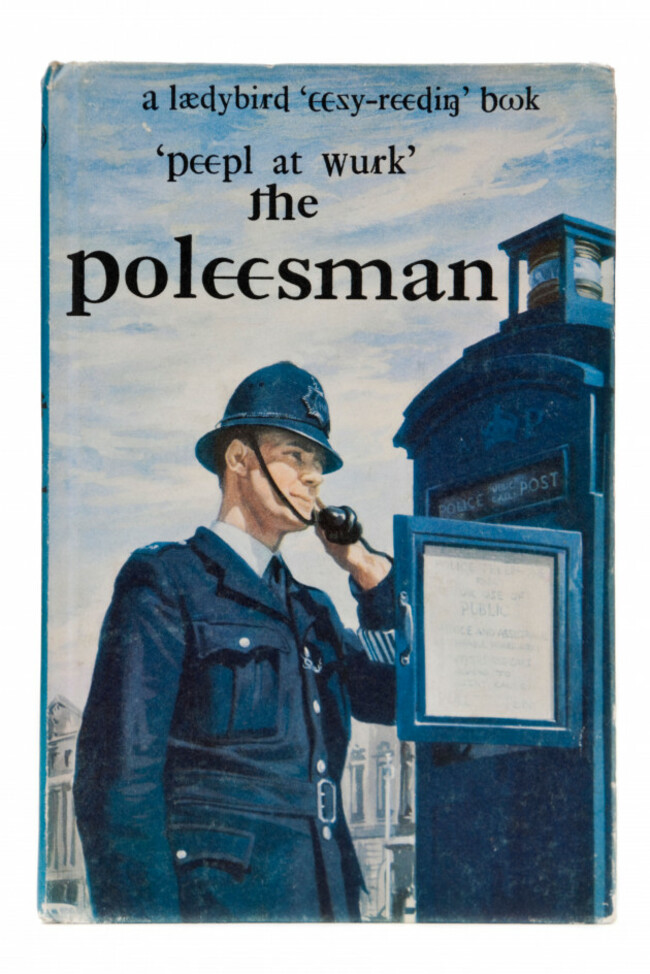
rare-1966-ladybird-ita-initial-teaching-alphabet-book-the-poleesman A 1966 Ladybird ITA (Initial Teaching Alphabet) book titled 'The Poleesman'. Alamy Stock Photo Alamy Stock Photo

A generation of UK schoolchildren were left unable to read and write after being taught an alternative alphabet in an experiment to boost reading skills. 

(The Guardian, approx 12 mins reading time)

My mum grew up in Blackburn in the 1960s, a bright child who skipped a year and started secondary school early. She doesn’t remember the details of how ITA was introduced. “That’s just what we were taught,” she tells me. “I didn’t know there was another way, or that I was going to graduate on to something else. “I’m nearly 60, and poor spelling has dogged me my whole life,” she continues. “Teachers always used to make jokes about my spelling, and I’d get those dreaded red rings around my work.” English was always her favourite subject, but it quickly became a source of shame. “I remember that absolute dread of reading in front of the class, stumbling on words. And then, at A-level, I’ll never forget my English teacher said to me, ‘You’ll never get an A because of your spelling.’ That was crushing. English was the one subject I loved – I felt so aggrieved.”

4. Using AI to humiliate women

A whistleblower has revealed details of how lucrative it is to run an app that uses AI to create fake nude images of women for millions of users. 

(Der Spiegel, approx 14 mins reading time)

Nudify apps are not hidden in obscure forums or on pornography platforms, rather they are freely available on the internet. The only limitation: Many of these services only work with women’s bodies. The AI programs they use have apparently never been trained to produce naked pictures of men. Images of women in underwear are usually free, with faked photos of subjects in typical pornographic poses available for a price of just a few euros. Clothoff is one of the leading apps on the market. In just the first six months of 2024, the website received 27 million visitors, with an average of 200,000 pictures being produced by the program each day, according to the company. Thousands of women have likely become victims of the app. 

5. RMS Empress of Ireland

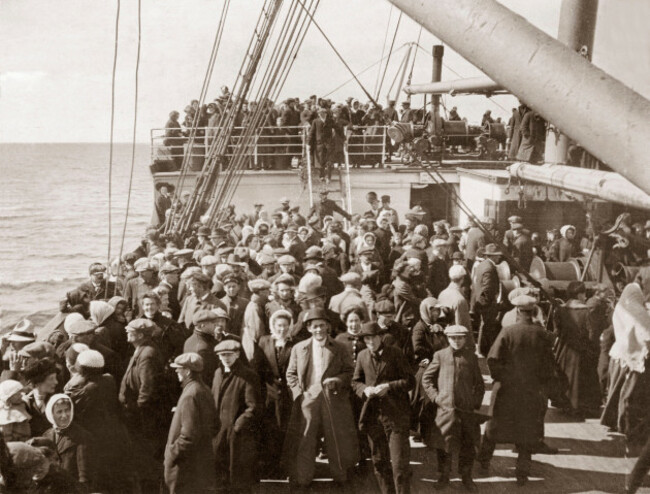
onboard-in-1914-people-onboard-the-canadian-steamer-rms-empress-of-ireland-at-the-liverpool-harbor-headed-for-canada-on-the-saint-lawrence-in-canada-river-the-ship-collided-with-the-norwegian-coalsh People aboard the RMS Empress of Ireland at the Liverpool harbour in 1914. Alamy Stock Photo Alamy Stock Photo

The ship sank two years after the Titanic and had an even higher passenger death toll. In this piece, Eve Lazurus recounts the tragedy and examines the story of Gordon Charles Davidson, who reportedly swam over six kilometres and managed to survive. 

(The Walrus, approx 10 mins reading time)

The Storstad was on its way to Montreal, carrying more than 10,000 tons of coal. She had a reinforced hull that could slice through winter ice, and at that moment, she was headed to Father Point to collect a pilot who would navigate the ship up the St. Lawrence. Her sharp prow ripped through the Empress ’s steel plates and cabins, tearing a 32.5-square-metre hole in the ship’s starboard side, well below the waterline. More than 200,000 litres of water a second poured into the Empress, causing catastrophic flooding in the engine rooms and lower decks. The furnaces flooded. The power went out.

The ship was thrown into darkness before most of the sleeping passengers could even grasp what was happening. Those who had managed to leave their cabins were left groping around in the pitch dark, trying to find a way out, clawing their way up the tilting stairs. Because they had boarded the ship mere hours earlier, they were unfamiliar with the ship’s layout. In just thirty seconds, the Empress had taken on almost half her own weight in water. After a minute and a half, the boiler rooms were flooded with the equivalent of nine Olympic swimming pools of water.

6. The secret lives of icons

From staying with Marlon Brando on his private island in Tahiti to touring with Dolly Parton and spending days with Al Pacino, Lawrence Grobel interviewed some of the most famous stars on Earth. From his diary, this is a glimpse of their candid conversations. 

(Vanity Fair, approx 40 mins reading time)

Took three days before Marlon agreed to let me turn on the tape recorder. I’d ask, “Feel like working?” He’d answer, “No, not really.” So, we sat and stared at the bay and talked, off the record. He’d say, “It’s all very elemental here: the sea, the sky, the crabs, the wind. If the mermaids don’t sing for me here, they never will.” I joked, “Yeah, this is the life, Marl, just sitting here in silence, in the elemental wonder of it all.” When I mentioned acting, he’d say, “Acting bores me.” And I said, “I know, but if I was talking to Heifetz, I’d be asking him about music, and if I was with Mickey Mantle, I’d talk to him about baseball.” And he’d respond, “If you were with William O. Douglas, would you ask him what Marilyn Monroe thought of him?”

And on it went. We ate breakfast, lunch, and dinner together, went night sailing, walked on the beach, sat on the pier under a strong moon, played chess until 1 a.m., and somehow managed to tape 15 hours of conversation that I’ll transcribe myself because he spoke very softly. Not as psychological as Streisand or as playful as Parton, but it’s Brando. Witty, funny, serious, and memorable. Took 68 pages of notes that I’ll add to this journal.

…AND A CLASSIC FROM THE ARCHIVES…

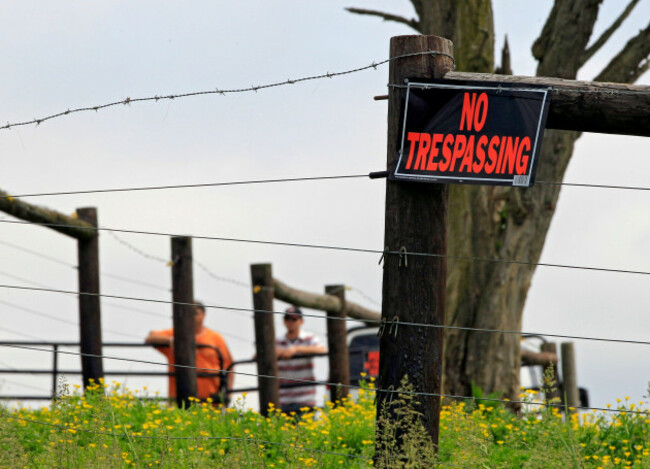
two-men-guard-the-gate-to-the-farm-of-marian-thompson-near-zanesville-ohio-friday-may-4-2012-the-columbus-zoo-returned-five-exotic-animals-to-thompson-the-survivors-of-56-animals-her-late-terry-t Two men guard the gate to the farm near Zanesville, Ohio on 4 May 2012. Alamy Stock Photo Alamy Stock Photo

The riveting but grim 2012 longread about Terry Thompson, an Ohio man who had dozens of exotic animals on his farm, and the night he let them all free.

(GQ, approx 56 mins reading time)

A little before five o’clock on the evening of October 18, 2011, as the day began to ebb away, a retired schoolteacher named Sam Kopchak left the home he shared with his 84-year-old mother and headed into the paddock behind their house to attend to the horse he’d bought nine days earlier. Red, a half-Arabian pinto, was acting skittish and had moved toward the far corner of the field. On the other side of the flimsy fence separating them from his neighbor Terry Thompson’s property, Kopchak noticed that Thompson’s horses seemed even more agitated. They were circling, and in the center of their troubled orbit there was some kind of dark shape. Only when the shape broke out of the circle could Kopchak see that it was a black bear.

Kopchak wasn’t overly alarmed by this sight, unexpected as it was, maybe because the bear wasn’t too big as black bears go, and maybe because it was running away from him. He knew what he’d do: put Red in the barn, go back to the house, report what he’d seen. This plan soon had to be revised. He and Red had taken only a few steps toward the barn when Kopchak saw something else, close by, just ahead of them on the other side of the fence. Just sitting there on the ground, facing their way. A fully grown male African lion.

Note: The Journal generally selects stories that are not paywalled, but some might not be accessible if you have exceeded your free article limit on the site in question.

Readers like you are keeping these stories free for everyone...
A mix of advertising and supporting contributions helps keep paywalls away from valuable information like this article. Over 5,000 readers like you have already stepped up and support us with a monthly payment or a once-off donation.

Close
15 Comments
This is YOUR comments community. Stay civil, stay constructive, stay on topic. Please familiarise yourself with our comments policy here before taking part.
Leave a Comment
    Submit a report
    Please help us understand how this comment violates our community guidelines.
    Thank you for the feedback
    Your feedback has been sent to our team for review.

    Leave a commentcancel

     
    JournalTv
    News in 60 seconds