We need your help now

Support from readers like you keeps The Journal open.

You are visiting us because we have something you value. Independent, unbiased news that tells the truth. Advertising revenue goes some way to support our mission, but this year it has not been enough.

If you've seen value in our reporting, please contribute what you can, so we can continue to produce accurate and meaningful journalism. For everyone who needs it.

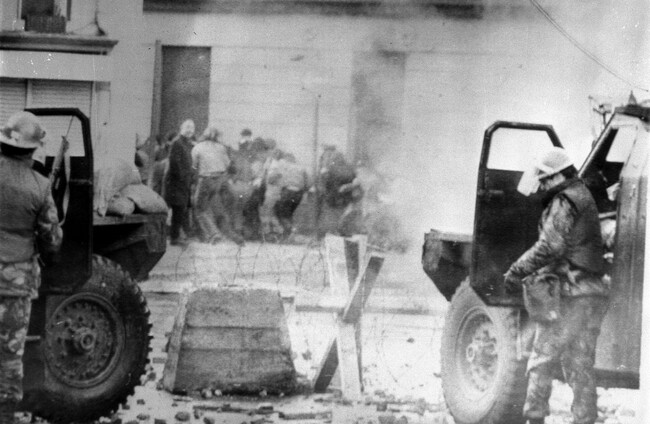
British soldiers taking cover behind armoured cars in Derry on Bloody Sunday, 1972. PA

Crucial hearsay evidence of shots fired has been allowed in trial of Soldier F

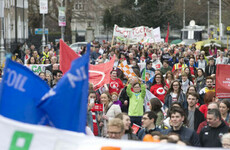
Members of the Parachute Regiment shot dead 13 civilians in Derry on Bloody Sunday after a civil rights march.

A JUDGE HAS ruled that key hearsay evidence in the trial of a former paratrooper accused of two murders on Bloody Sunday can be admitted as evidence in his trial.

Judge Patrick Lynch, who is presiding over the non-jury trial at Belfast Crown Court, granted an application by the prosecution to admit a number of statements made by other soldiers on the ground during the shootings in Derry on 30 January 1972.

These statements include claims that the accused veteran, known as Soldier F, fired shots in the courtyard where the two men he is accused of killing were shot.

In making the application at Belfast Crown Court last week, the prosecution had characterised the evidence as “decisive” to the case.

Members of the Parachute Regiment shot dead 13 civilians in Derry on Bloody Sunday after a civil rights march.

Soldier F, who cannot be identified, is accused of murdering James Wray and William McKinney.

He is also charged with five attempted murders during the incident in the city’s Bogside area, namely of Joseph Friel, Michael Quinn, Joe Mahon, Patrick O’Donnell and a person unknown.

He has pleaded not guilty to the seven counts.

Last week, prosecution barrister Louis Mably KC argued that statements given by soldiers G and H to the Royal Military Police (RMP) on the night of the shootings, and to the Widgery Tribunal in 1972, are the only evidence “capable of proving” Soldier F fired his rifle at civilians in Glenfada Park North.

“This is decisive evidence,” he told the court.

Defence barrister Mark Mulholland KC, acting for Soldier F, argued against the application to admit the hearsay evidence, describing the contents of the statements as “contradictory, unreliable and inadmissible”.

Outside court today, bereaved relatives welcomed the judge’s ruling.

Close
JournalTv
News in 60 seconds