TheJournal.ie uses cookies. By continuing to browse this site you are agreeing to our use of cookies. Click here to find out more »
Dublin: 14 °C Tuesday 21 May, 2013

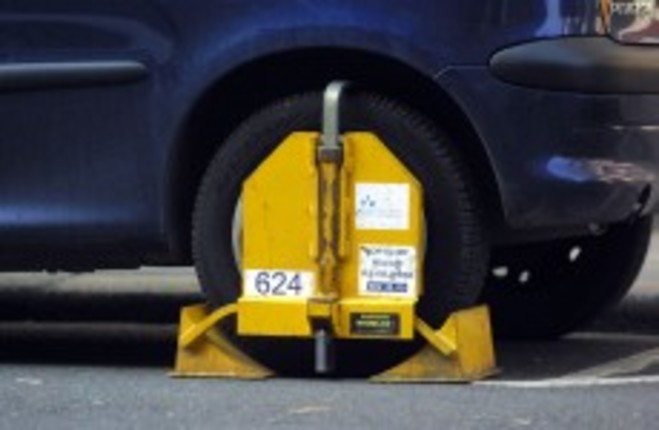
Strict legislation on clamping recommended

Maximum release fees, a ban on clamping in hospitals and a two-tier appeals process are just some of the 38 legislative proposals given to Leo Varadkar today.

AN OIREACHTAS COMMITEE has told the Minister for Transport that clamping on private property needs to be regulated by legislation.

The Environment and Transport Committee also recommended a ban on clamping in sensitive locations such as hospitals.

There should also be a uniform and regulated appeals process in place to respond to an incident of clamping, it said in a report detailing proposals for the regulation of the industry.

A Parking Appeals Officer should be appointed at a national independent level so that the appeals process has two tiers to represent best practice.

The committee has made its recommendations to Leo Varadkar this morning following a request by the Minister in February. He had asked the committee to take a role in the pre-Heads of Bill stage and contribute to the initial drafting of the legislation.

Varadkar also heard that release fees should be reasonable and clamping should not be used as a profit-generating exercise.

According to the report ‘The Regulation of Vehicle Clamping’, a national code of practice governing clampers on both public and private properties should be established. Appropriate training and vetting of clamping company staff has also been recommended by the group.

Altogether the report details 38 legislative proposals on the regulation of the vehicle clamping industry.

Other proposed measures include standardised penalties and signage to bring public and private properties in line with each other.

The regulator and licensing authority of the industry should be the National Transport Authority, according to the committee.

In order to obtain a required clamping licence, rules should be put in place to ensure those licensed are tax compliant, have a registered office, adequate insurance cover and submit a yearly report.

Other recommendations, which are driver friendly, include:

  • A specific period be provided for the release of vehicle clamps, and where that period is exceeded that the release fee be refunded;
  • Where a clamp has not been fully fitted by the time a motorist returns to their car, the clamper should immediately cease and release the vehicle;
  • Legislation should provide for a maximum release fee regardless of whether the operator is a private company or a local authority;
  • There should be a graduated scale of release fee based upon the seriousness of the parking infringement;
  • The Joint Committee considers that private clamping operators be precluded from using premium rate or high rate telephone numbers for the release of clamps. Instead a Freephone, local rate (1890) or national rate number (0818) would be required so that there is a standard charge regardless of where a person is telephoning from.

Download the full Oireachtas Committee report>

Read next:

Comments (29 Comments)

Add New Comment