TheJournal.ie uses cookies. By continuing to browse this site you are agreeing to our use of cookies. Click here to find out more »
Dublin: 16 °C Monday 20 May, 2013

Unsafe water kills over 1 million children every year – Oxfam

On World Water Day, Oxfam Ireland highlights the need for access to safe water worldwide – with 600 million people in sub-Saharan Africa alone lacking access to safe toilets.

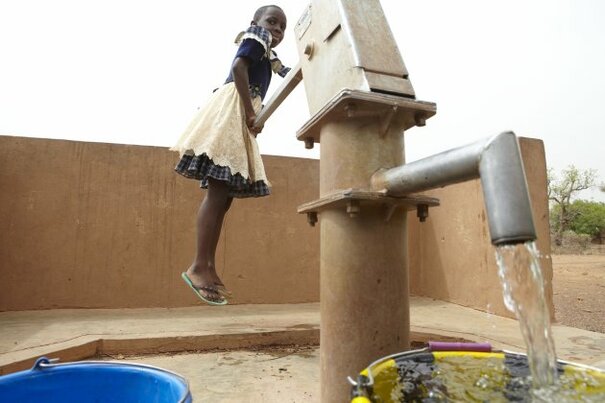
	Jessica Batoure fetches water for her class in Soanga school, north central Burkina Faso.
Jessica Batoure fetches water for her class in Soanga school, north central Burkina Faso.
Image: Oxfam Ireland

SOME 1.5 MILLION children die every year from diarrhoea because of poor sanitation and hygiene, according to Oxfam Ireland.

Marking World Water Day, chief executive Jim Clarken says that unsafe water is the main reason for these preventable deaths, with 600 million people in sub-Saharan Africa alone lacking access to safe toilets.

“70 per cent of Africans do not have access to a safe toilet” said Clarken. “This is an outrage and one of the main reasons that children in the region are about 16.5 times more likely to before the age of five than children in developed regions.”

Clarken added: “If governments met their obligations to increase spending on water and sanitation we could reduce the number of deaths significantly.”

African governments signed a declaration in 2008 committing themselves to spend at least 0.5 per cent of GDP on sanitation and hygiene. Despite this, just one country, Equatorial Guinea, has since confirmed it has done so.

Clarken said that while more than two billion people had gained access to improved drinking water since 1990, billions still live without proper sanitation facilities. “On current trends, it will take another 200 years for African governments to halve the number of people living without proper sanitation facilities,” he pointed out.

Women and girls, who are made to walk long distances in rural areas and queue for hours in city slums to draw water, bear the biggest burden of unsafe water. More than 1 in 3 women in the world lack access to safe sanitation, with 526 million forced to go to the toilet in the open, which puts them at greater risk of disease and sexual violence.

“We must praise the work of governments and local communities around the world who have prioritised the issue of safe drinking water. But the same amount of energy and resources must go into fighting the problem of sanitation. Otherwise we are condemning hundreds of millions to a life of poverty and violence,” Clarken said.

Unsafe water kills over 1 million children every year – Oxfam
1 / 4
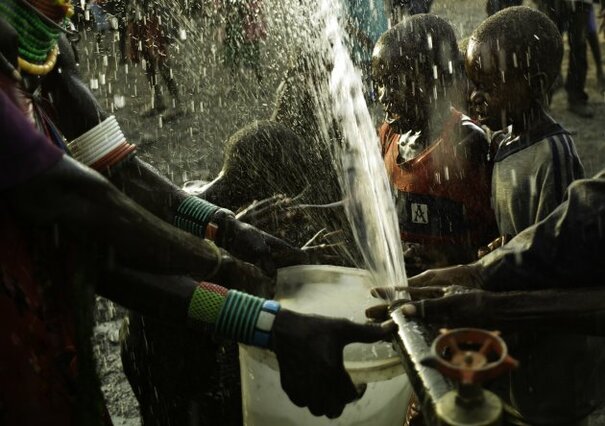
  • Children celebrate the arrival of clean water in Turkana, northern Kenya. Only 15% of the largely nomadic population of Turkana has a reliable water supply. Credit Kieran Doherty

    Children play in the borehole fresh water as it is sprayed from a pipe in the village of Nawoyatir in the Lapur district of Lokitaung in Turkana. Nawoyatir previously had a scoop hole (hand-dug well). ItâÃÂÃÂs difficult to keep these wells clean as they are so shallow. People have been leaving Nawoyatir because thereâÃÂÃÂs a lack of water. Serious water related illnesses, such as cholera, are common in Turkana.
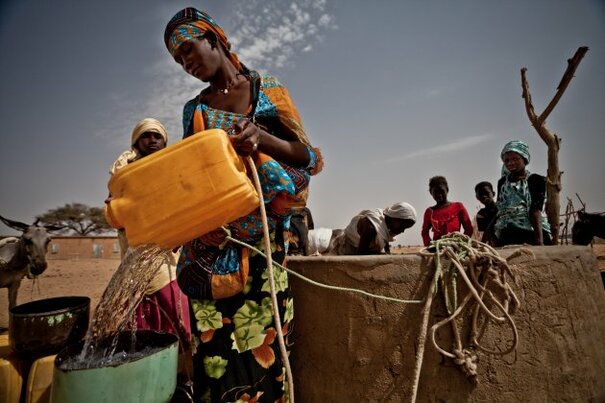
  • Fatimata Awade drawing water from a well in Natriguel, Mauritania. It was one of the few wells that didn't run dry in last year's drought, which destroyed over 50% of the country's crops. Credit Pablo Tosco

    Fatimata Awade drawing water from a well in the community of Natriguel, It one of the few wells that hasn't run dry in the drought. People living in the Sahel region of Mauritania are at risk from food insecurity due to the lack of rain .
  • Burkina Faso food crisis

    The drought in Burkina Faso has resulted in Lack of crops and pasture, as well as decreasing water reserves. Millions of people are food insecure. Jessica Batoure fetches water for her class. Soanga school. North-central region, Burkina Faso. 13/04/12
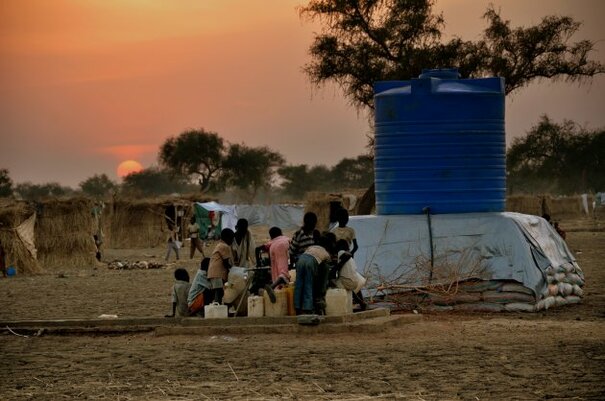
  • South Sudanese boys gather at dusk at a water tank built by Oxfam. There have been 6000 cases of Hepatitis E in camps for displaced people since July 2012. Credit Oxfam

    Oxfam is providing the camp with clean, safe water. The soil in the camp itself means that drilling boreholes has been problematic so far – so most of the water is trucked in from boreholes a few miles away, and emptied into these tanks for people to collect from.

Read next:

Comments (9 Comments)

  • There is something seriously wrong in that country, many many countries including our own have been donating money to Africa for years, and yet 1.5 million children are still dying????, where is it going?????
    I used to donate to Africa but haven’t in many years, its just a bottom less pit.

    Reply
  • They can pipe gas 5450 miles and let kids die for want of clean water
    super rich nations of the world and people should be ashamed to call themself humans,

    Reply
  • Do something about this. Give one euro today and give someone in Africa water for

    Seriously, just a euro.

    Onedayoneeuro.com

    http://t.co/iredMV5OQ4

    Reply
    • I would have said yes a few years back but look after our own first. Alot of people are on the bread line here now.

      Reply
    • Itiswhatitis I agree, we do need to support charities here, and I do whenever possible. But still, I don’t think anyone would miss a euro. A euro really can save someone’s life and given the day that’s in it, we’re trying to encourage people to donate just one euro, just for today.

      Reply
    • We don’t know how lucky we are. Some people here might be on the breadline but its nothing compared to what these people have to go through, especially in soaring temperatures.

      Reply
    • As long as most of this euro ain’t going to directors like some ‘charities’ I’m in :)

      Reply
    • Every cent from this euro will be spent in Malawi on installing the canzee pump. This is a pvc pump will not break down or contaminate the water. The charity Wells for Zoe, is a small irish NGO set up by Mary and John Coyne from Lucan. All of of who work for the charity do so completely voluntairily. We agree that there needs to be transperacy with charity and money and will happily talk to anyone who’d like to know our figures breakdown. For more, you can see wellsforzoe.org or contact wellsforzoe@gmail.com. We also offer fantastic volunteer opportunities for anyone who would like to travel to Malawi

      Reply
  • Why do we have this problem because rich corporations with the backing of governments and banking cartels have gone into these countries just like they will do with our own, and have robbed their natural resources.

    The problem is the corporations, if that is not addressed than the problem will persist. They were born into the richest nation of natural resources yet they are living in third world conditions, where is all the money going, big rich corporations. Makes me sick. Than they guilt trip us into giving them charity money for a problem they caused and could fix, when the money most of it doesn’t go to the people it was meant to help.

    These people are just looking for running water we have the money in this rotten world to provide that for them, but the corrupt system for the elite won’t allow that.

    21st century and people still live like this, makes me sick and ANGRY.

    Reply

Add New Comment