Take part in our latest brand partnership survey

We need your help now

Support from readers like you keeps The Journal open.

You are visiting us because we have something you value. Independent, unbiased news that tells the truth. Advertising revenue goes some way to support our mission, but this year it has not been enough.

If you've seen value in our reporting, please contribute what you can, so we can continue to produce accurate and meaningful journalism. For everyone who needs it.

Annette Brock.

This abandoned cottage was transformed into a coastal haven, using four shipping containers

In surfing mecca Easkey, Sligo, a derelict off-grid 200-year old building was renovated over 15 years.

FOUNDER OF CEARDEAN Architects, Derek Trenaman, has fused a two-hundred-year-old cottage with four shipping containers to create a colourful and cosy home inspired by the sea. Here, he speaks to Ruth O’Connor about the project.

LDSC02026-Edit-2 Cottage meets shipping containers in this passion project by architect Derek Trenaman. Annette Brock. Annette Brock.

When Derek Trenaman purchased a derelict cottage in Sligo in 2009 he knew that it would take time for the project to come to fruition. Happy to take things slowly, and to do most of the work himself, the cottage remained off-grid for a 10 year period – growing with him as his family grew. 

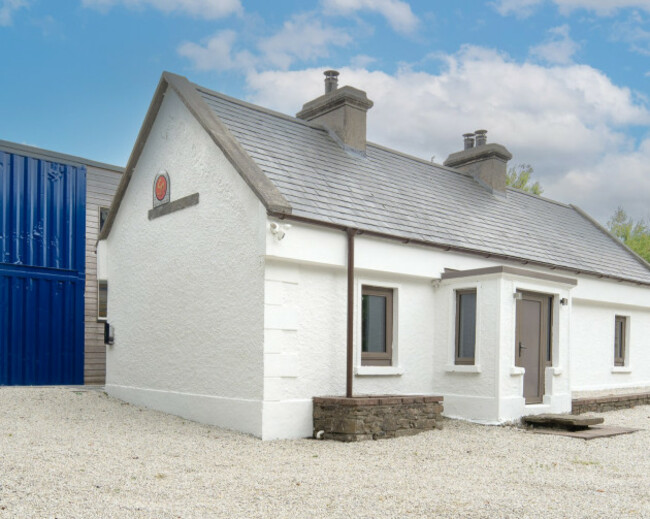
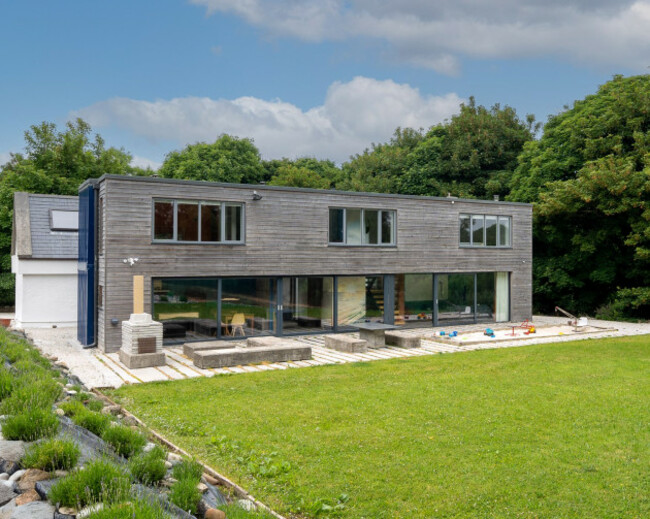
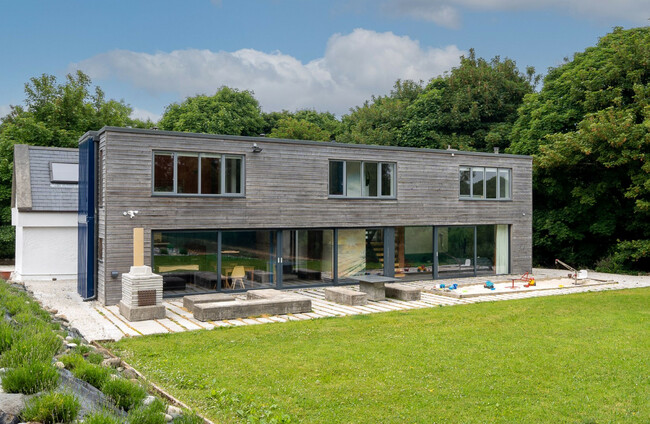
Situated along the Wild Atlantic Way, close to some of Ireland’s key surfing spots, the cottage has been converted with the addition of four shipping containers – the integrity of which remains evident from both inside and outside the building. 

“The extension was built using shipping containers and the house was designed that way from the very beginning – it was part of the masterplan from 2009,” says the architect. “The building evolved slowly over time and I was happy to do it that way. I wanted a project that would tick along. I have done a lot of the work myself so I was happy to take my time to work on the house.”

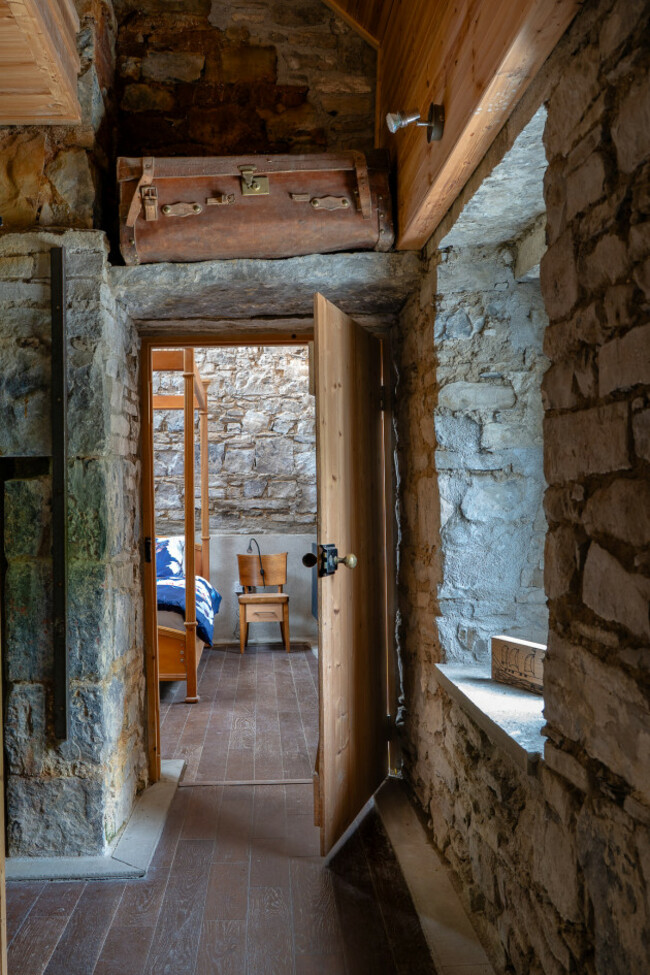
While there was a master plan in place from the very beginning which involved the addition of the shipping containers, Derek started with the renovation of the original cottage which dates from the 1800s and which was in a sorry state. The whole cottage had to be re-floored and layers of thatch and the original roof removed and a slate roof put on the building to seal and secure it. 

Starting with the renovation of the existing cottage meant that the house could be lived in and enjoyed over time while work took place and Derek was keen to maintain the character of the original cottage as much as possible throughout the project. 

_DSC8013 The architect owner was keen to retain the existing cottage in its original state as much as possible. Annette Brock. Annette Brock.

“I really wanted to retain the cottage in its original state as much as possible. Sometimes with cottage conversions, people blow out the whole back wall and stick a box on the back but, to me, when you do that you lose the whole character of the original building,” he says. “I wanted to maintain the cottage simply as it was to a large extent. Doing that also meant that I could use it as it was during the interim period with the original kitchen later becoming a nice big bedroom after the extension went on.” 

Derek says that it is vital to have an end goal in mind when working with buildings of this nature, as well as to employ the services of an expert who can help to plan the final design.

“It’s important when working with old buildings to work with an architect to plan the project from the beginning. It’s important to come up with the end solution and then work back from there,” he says. “There might be tweaks that need to be added in over time but doing it this way means that that core of your idea will remain safe. My advice would be to try to do as little as possible to the original building in terms of the demolition and then add a piece on. It means it can be phased and you can do it in your own time.” 

DSC01952-Edit The homeowner focused on the landscaping around the cottage in the early days of the project so that the plants would mature as the project did. Annette Brock. Annette Brock.

It took four years for Derek to renovate the original cottage and the house remained off-grid for almost ten years until he purchased an EV which needed to be charged. “It was possible to live off grid for almost ten years as there was a low energy demand in the house and it suited us not to have electricity,” he says. “Then when I made the extension, with all of the modern things that come with a house, I had to get the electricity in.” 

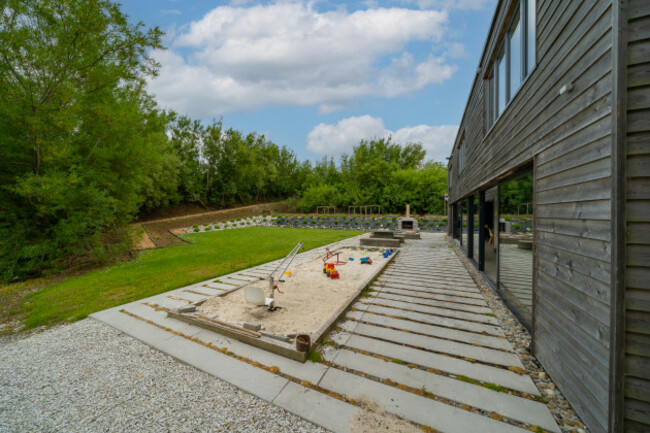
While being on the national grid was way down his priority list, the landscaping on site was not. The architect and keen outdoor enthusiast was eager to ensure that the landscaping around the house was developed from the very beginning in order to give it time to mature as the house developed. 

“One of the things I did, which is quite unusual perhaps, was to develop the landscaping around the house at the very beginning. I could have used the money to do other things but I felt that it was important to have the landscaping developing over the years rather than to spend all the money on the house and then to do the landscaping at the end,” he says. 

“It is the frame or master plan of the garden and it has evolved over time. It takes at least ten years for trees to mature, so to create the shelter belts that I wanted, I needed to put the native willow in early.” 

_DSC7928 Derek Trenaman says that using shipping containers in projects is not always the easy or cheap solution people think it is. Annette Brock. Annette Brock.

While the idea of utilising pre-existing structures such as shipping containers may appeal to people both from an aesthetic or cost perspective, Derek warns that containers are not always the cheap option that people think they are. 

“This house is bespoke. Anything that is bespoke is going to cost more so it’s not something that I’d necessarily suggest to other people to do,’ he says. “I had containers already so I wanted to put them to use. When you’re doing a labour of love like this for yourself it’s nice to do something quirky and something that’s a bit of a challenge. I had seen projects using containers, I was interested in upcycling and It’s a theme I’ve gone with throughout the project.”

Indeed, all of the windows in the extension are windows that didn’t fit other projects which Derek purchased at reduced prices and which he then cut window openings in the containers to fit. “I’m interested in finding new ways to use old things and I wouldn’t usually have the opportunity to do that in my clients’ projects – most people want a fairly standard build. I’m handy at doing things myself thanks to my father’s influence so this type of method worked for me.” 

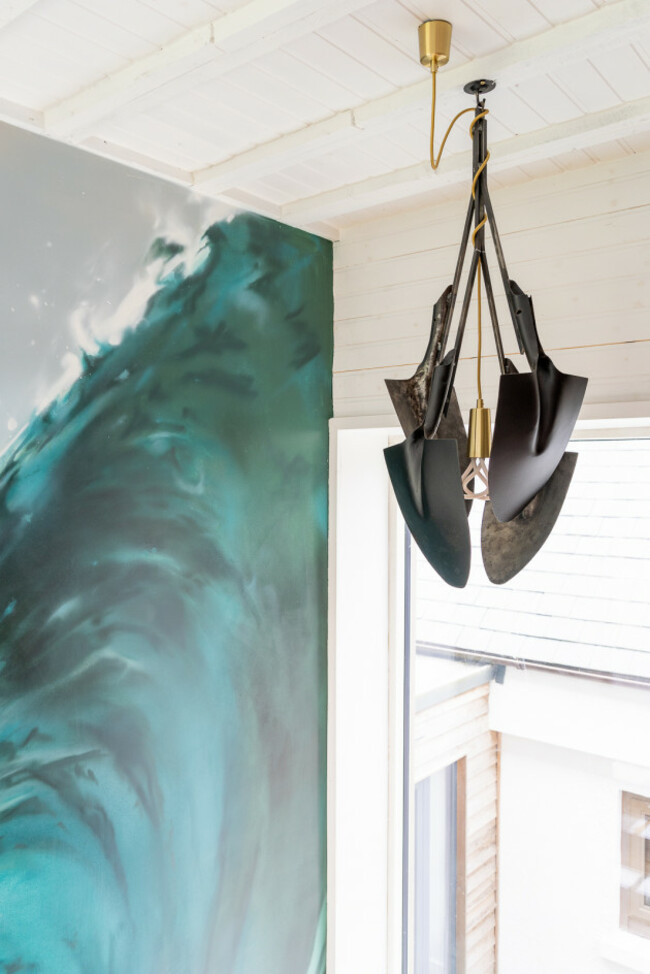
_DSC7906 The light shade in the stairwell is made from old shovels. Annette Brock. Annette Brock.

Elsewhere in the house, Derek’s passion for sustainability and upcycling can also be seen – there is a quirky lightshade in the stairwell made from old shovels and the outdoor seating was salvaged from a client’s garden. The flat stone at the front door of the old cottage once served as a platform on which resident chickens were fed. And then, of course, there are the containers themselves which run between the old cottage and a new gantry creating a striking visual contrast to the original cottage. 

LDSC02055-Pano-Edit-Edit A gantry was added to the containers to increase the size of the extension and to enhance the flow in the building. The outdoor furniture was salvaged from a client's garden. Annette Brock. Annette Brock.

“The containers themselves are very small so I built a gantry alongside the containers from blocks which are now clad with wood. The gantry is what makes the extension work and improves the size of the extension and the circulation in the house,” says Derek. 

“The structure of containers is extremely minimalist, you can’t cut them up all over the place or you’ll lose their structure, however if you take one wall away it’s still structurally sound for the most part. Sometimes you see container projects in which the container is cut up everywhere and there is a lot of structural supplementation – I tried to avoid that here because if you’re going to do that you might as well do a new build.”

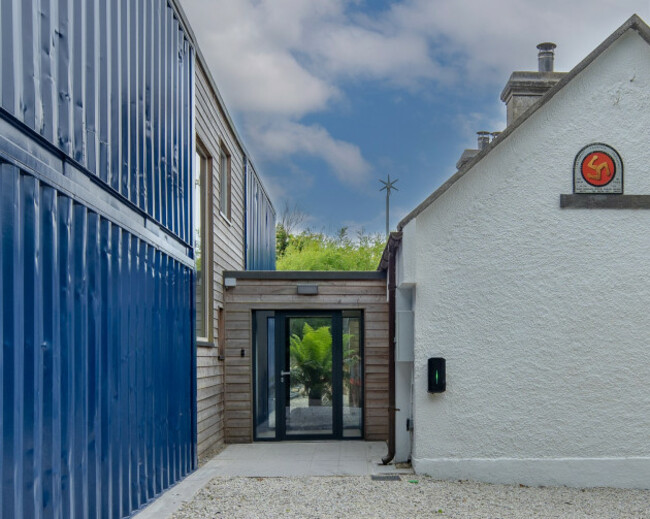
LDSC02021-Edit-Edit An atrium links the original cottage with the container extension. Annette Brock. Annette Brock.

The two sections of the house are now linked by a glass atrium which also provides a new access door to the property. The extension now houses the kitchen and dining area as well as two extra bedrooms and bathrooms. The original cottage kitchen has become a sizable bedroom.

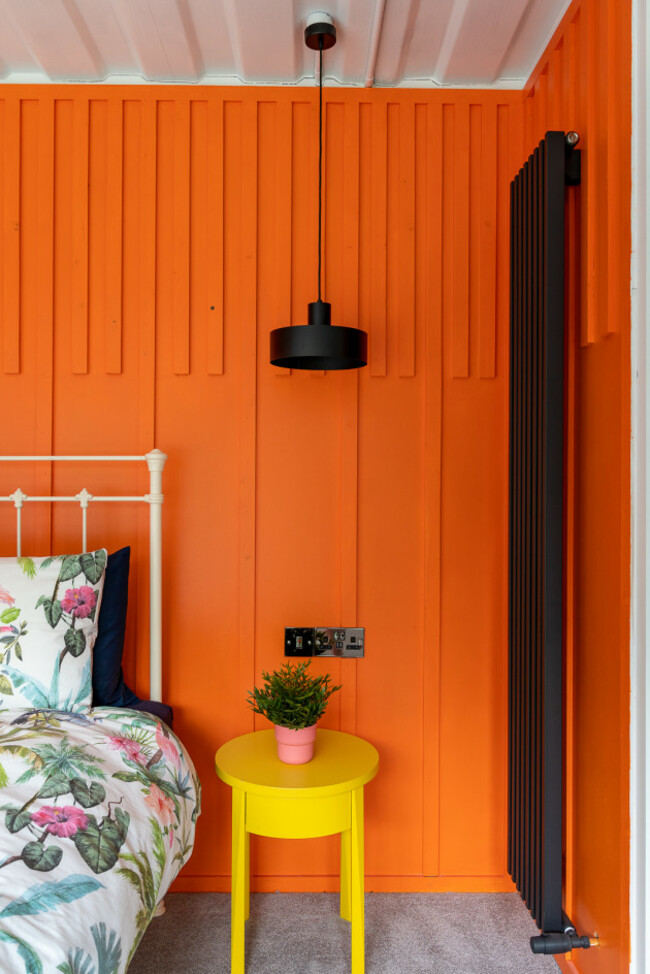
_DSC7894 The couple brought in some bright tropical colours in the interiors to echo the path of the shipping containers. Annette Brock. Annette Brock.

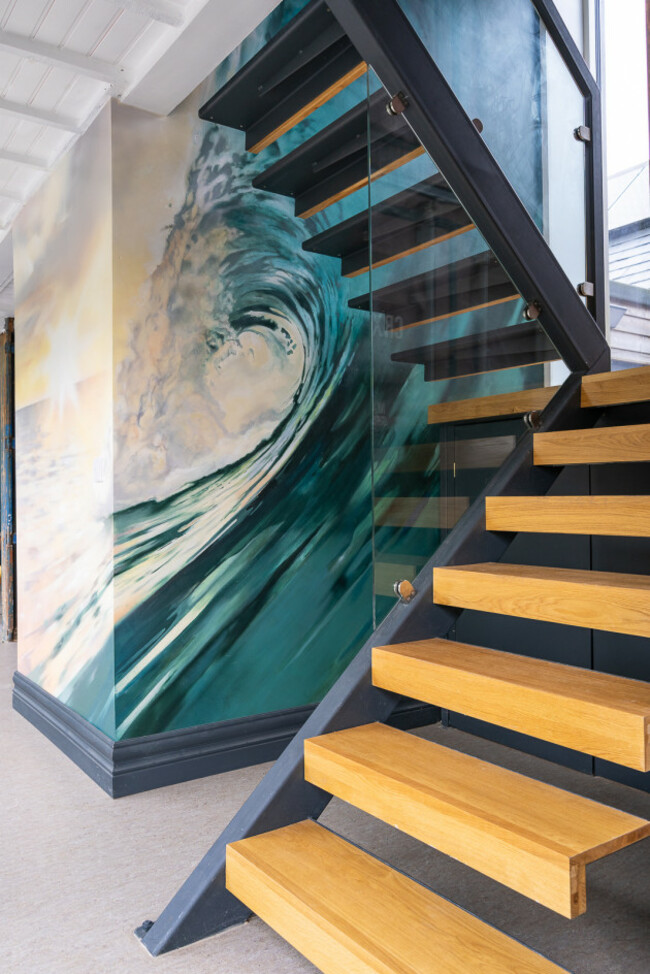
Internally, Derek and his partner Catriona Kennedy have had a lot of fun with the interiors. Their love of bright, bold colours inspired by time spent abroad is evident in one of the bedrooms with its bold orange colour scheme. The striking wall mural in the hallway by Sligo artist Nik Purdy of Blowdesigns is inspired by the famous waves at nearby Easkey Right – popular with surfers and the namesake of the couple’s young son Easky who has grown up as the house has been developed. “It’s where I learned to surf and our son’s name is Easky so it has a lot of resonance for us. This building took its time which meant that Easky has also got to learn building skills during each stage of the process just as I learned a hands-on approach from my own father.” 

_DSC7923 The handpainted mural of Easkey Right on the stairs is by local Sligo-based artist Nik Purdy of Blowdesigns. Annette Brock. Annette Brock.

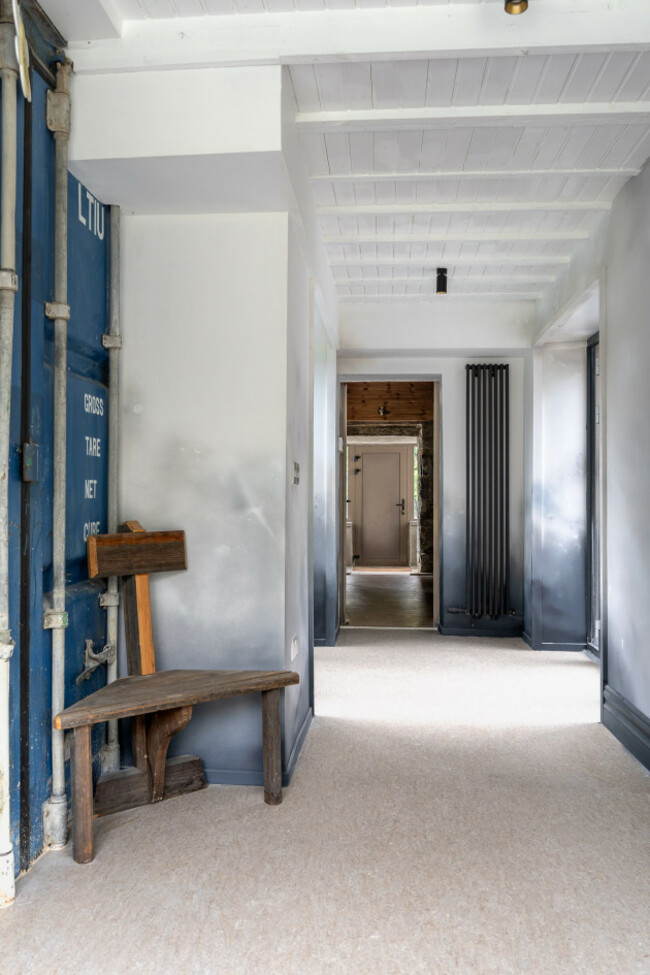
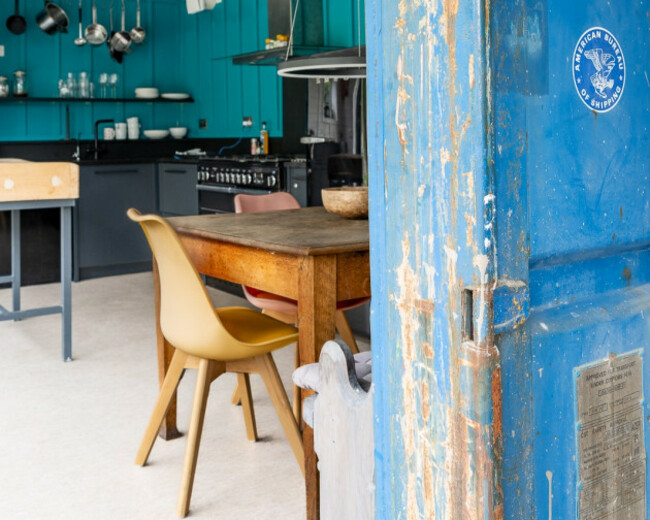
The containers retain evidence of their well-travelled history too. “We have left the markings on the containers – it’s a strong interior but it is what it is,” says Derek. “I’ve done other projects where containers were used but from the inside you wouldn’t know they were containers. On this project I wanted the container to be obvious from both the outside and the inside.”

L_DSC7925 Derek left the integrity and character of the containers intact. Annette Brock. Annette Brock.

The original cottage dates from the 1800s and is surrounded by ringforts thus the site of this home has been inhabited for a very long time. In much the same way, the passage of time and the handiwork of its owner is evident in this project.

“The most important thing about this house is time. It has evolved over time and was never a stressful experience – because of the way it was designed it could be done bit by bit and could be enjoyed over the years while the work was being done,” says Derek Trenaman. “That’s not to say it wasn’t very ambitious, but the ambition was contained in such a way that the house could be enjoyed without living in a building site for 15 years.” 

ceardean.com

Close