We need your help now

Support from readers like you keeps The Journal open.

You are visiting us because we have something you value. Independent, unbiased news that tells the truth. Advertising revenue goes some way to support our mission, but this year it has not been enough.

If you've seen value in our reporting, please contribute what you can, so we can continue to produce accurate and meaningful journalism. For everyone who needs it.

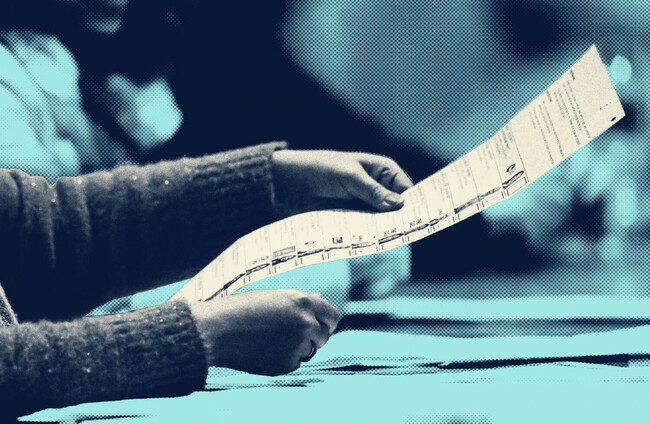
Political ad ban by social media companies leaves elections ‘susceptible to bad actors’

The Journal Investigates found huge money was spent on social media ads by candidates and parties during the last general election.

AT LEAST €1 million was spent on social media and digital advertising during the last general election campaign, as candidates and parties sought to target new audiences with their political messaging.

But social media companies are currently at odds with the European Union over new transparency rules, resulting in the removal of political ads altogether from Meta and Google platforms right in the middle of the presidential election campaign.

This change will leave our elections susceptible to ‘bad actors’ and those who know how to game the algorithm being able to set the agenda online, according to experts - and there’s already been one high-profile deep fake example of this.

The Journal Investigates analysed 528 election expense forms returned to the Standards in Public Office Commission (Sipo) by candidates following the last general election.

Our team previously revealed that it costs, on average, over €20,000 between candidate and party spending to run a successful election campaign.

These expense reports also detail the amount spent by candidates and parties on social media, typically on Meta’s platforms, Instagram and Facebook.

The reports show that many candidates paid huge amounts of money to boost their reach and engagement in order to target younger audiences.

Political parties and candidates spent almost €700,000 on social media ads during the last general election campaign.

Fine Gael, the only party not to clearly label their social media spending, spent a further €316,000 on ‘digital advertising’.

While this likely includes social media ads, it may also include direct advertising on websites or other digital platforms. Our team asked Fine Gael to clarify what ‘digital advertising’ refers to, but we did not receive a response.

Around 150 reports have also yet to be uploaded to Sipo’s website, with a spokesperson for the oversight body previously telling our team they could not comment on how many candidates had failed to submit them.

While a vast amount of money was still spent on advertising in local media outlets and election posters remain king of political messaging, the pivot to social media demonstrates a more direct way for candidates to reach the electorate.

Should political ads remain banned on social media for future elections, candidates and parties will have to find new ways of reaching voters in an increasingly digital world.

Fine Gael’s high-profile attack on presidential candidate Catherine Connolly, for example, went viral earlier this week, but the party was at pains to say that it was not an ad but simply a video.

Investigations like this don’t happen without your support… Impactful investigative reporting is powered by people like you.

Labour candidates spent most on social media

Labour dominated the list of elected candidates with the highest spend on social media at the last election, with four of the five highest spenders coming from the party.

Marie Sherlock spent the most of any candidate, buying almost €12,000 worth of ads.

The Journal Investigates previously revealed that the Dublin Central TD was among the highest overall spenders among elected candidates at the last election, coming fourth with €37,932.


Only Social Democrats TD Sinéad Gibney broke the Labour stranglehold on this list, spending €9,735 on social media.

Labour leader Ivana Bacik (€9,681) and Tipperary North TD Alan Kelly (€9,644) also spent almost €10,000 in total on social media ads.

Kildare South TD Mark Wall rounds out the top five, with €8,391 spent between individual and party spend.

Wall’s social media spend originally totalled over €14,000, including €6,000 in ads attributed to the Labour party, making him the highest elected spender.

However, when contacted by The Journal Investigates about this, he said the €6,000 had been double-counted in the party’s returns in error, adding that the party had reached out to Sipo to amend the mistake.

The figures above have been changed to reflect this.

There were also big spenders among those who didn’t win a seat in the Dáil.

Labour candidate in Dublin South-Central, Darragh Moriarty, spent close to €16,000 between individual and party expenses on social media. A further €5,320 was spent on ‘digital ads’.

And Independent Ireland’s Michael Clarke (€11,119) and Noel Thomas (€10,332) both spent huge sums on social media but were ultimately unsuccessful.

A number of candidates also spent thousands on social media consultants, including Gerry Hutch, who spent €8,400 on one and came close to winning a seat in Dublin Central.

Interestingly, Hutch’s only other election expense is €984 spent on election posters, highlighting the focus his campaign put on the power of social media.

The Green Party’s Roderic O’Gorman also spent €6,580 on communications training, while Sinn Féin’s Fionntán O Súilleacháin spent €5,155 on a consultant for online ads and PR work.

Some candidates also spent money on video productions for social media.

MSherlock1 Labour TD Marie Sherlock spent the most of any elected candidate on social media at the last election. Alamy Stock Photo Alamy Stock Photo

An end to social media political ads?

Many candidates relied heavily on social media to get their message across to voters, but they’ll have to do without it in future elections.

Some of the major players in the online political advertising space – Meta and Google – have banned political advertising on their platforms in response to new EU transparency rules.

These new rules mean that all political adverts must show certain information like including who sponsored them, a transparency notice explaining the purpose, and the amount paid.

But instead of making changes to comply with these rules, big tech companies decided to simply ban political ads on their platform outright.

In announcing the decision to ban political ads in the EU, Meta directly cited the “burdensome regulation”, arguing that it would create “significant operational challenges and legal uncertainties”.

Liz Carolan, a tech and democracy writer at The Briefing, told The Journal Investigates that this change “makes the job of bad actors easier”.

“Parties and candidates are going to play by the rules,” she explained, but “if you’re a bad actor inside or outside the country and you wanted to use these platforms to interfere in political discourse in elections, these changes make the job easier, not harder.”

And while candidates may not run political ads themselves, third parties, such as highly political news organisations, will still be allowed to run ads on issues that are relevant to elections, Carolan added.

She said that this change is likely to have an impact on future elections, as “people’s political information on platforms will be almost entirely at the whim of algorithms,” which she said can be influenced by the platforms themselves to favour certain views.

Sinn Féin get candidates elected without social media

Perhaps the party best suited to adapt to this change is Sinn Féin.

Just 24 of the 173 candidates elected to the Dáil last year did not spend a cent on social media (Fianna Fáil’s Seán Ó Fearghaíl retained his seat automatically as outgoing Ceann Comhairle).

Ten of these candidates stood for Sinn Féin and include party leader Mary Lou McDonald and Eoin Ó Broin.

No other candidate from a major party went without spending on social media or, in Fine Gael’s case, ‘digital advertising’, demonstrating its importance to the other parties.

Even with some of Sinn Féin’s successful candidates not spending money on social media, the party still spent the fourth-highest amount of all the parties, focusing on party advertising rather than on individual candidates.

The party also spent significantly on social media in the months prior to the election being called, which isn’t included in the figures supplied to Sipo.

These figures above include all the election expense reports returned to Sipo, not just those candidates who were elected, and so may increase as more are added online.

But the vast majority of the missing reports are from independents or smaller parties, meaning the totals are unlikely to change significantly.

Fianna Fáil spent by far the most of any party, partially due to the large number of candidates they ran, though their national party spend also dwarfs that of the other parties.

The majority of Fine Gael’s candidates clearly stated their social media spend in their individual returns, but as previously mentioned, the party classified this spending as ‘digital advertising’.

A total of €317,547 was spent by Fine Gael between the party and candidates on digital advertising, though it is not clear how much of this relates specifically to social media.

Fine Gael did not respond to numerous attempts by our team to clarify this spending.

Political campaigns will have to adjust

With the ban on political ads by social media companies already in place, campaigns will have to adjust to the new landscape.

Iain McMenamin, professor of comparative politics at Dublin City University, said that because ads can’t be bought anymore, parties and candidates will look to hire consultants or firms that are “the equivalent of the old spin doctors, except they’re more data driven”.

They might also look to pay for higher-quality video production or people adept at search engine optimisation to break through into people’s feeds.

McMenamin said that it’s also possible that money will instead be spent on different ways to manipulate the algorithm, such as using bot accounts to artificially boost engagement. He added:

That would be something I’d worry about for the future because that type of technology is going to become better and cheaper, and less and less transparent.

Carolan said that a shift to alternative media, such as podcasts, by candidates may become the new way of reaching different audiences, pointing to presidential candidate Catherine Connolly’s appearances during the most recent campaign.

But even with this change to political campaigning, Carolan said, those with the ability to game the algorithm will be the ones who set the agenda, rather than it being the people with the best ideas.

With additional reporting from Concubhar Ó Liatháin.

The Journal Investigates

Reporters & Data Analysis: Conor O’Carroll & Maria Delaney • Editor: Noel Baker • Social Media: Cliodhna Travers • Main Image Design: Lorcan O’Reilly

Investigations like this don’t happen without your support...
Impactful investigative reporting is powered by people like you. Over 5,000 readers have already supported our mission with a monthly or one-off payment. Join them here:

Close
32 Comments
This is YOUR comments community. Stay civil, stay constructive, stay on topic. Please familiarise yourself with our comments policy here before taking part.
Leave a Comment
    Submit a report
    Please help us understand how this comment violates our community guidelines.
    Thank you for the feedback
    Your feedback has been sent to our team for review.

    Leave a commentcancel

     
    JournalTv
    News in 60 seconds