We need your help now

Support from readers like you keeps The Journal open.

You are visiting us because we have something you value. Independent, unbiased news that tells the truth. Advertising revenue goes some way to support our mission, but this year it has not been enough.

If you've seen value in our reporting, please contribute what you can, so we can continue to produce accurate and meaningful journalism. For everyone who needs it.

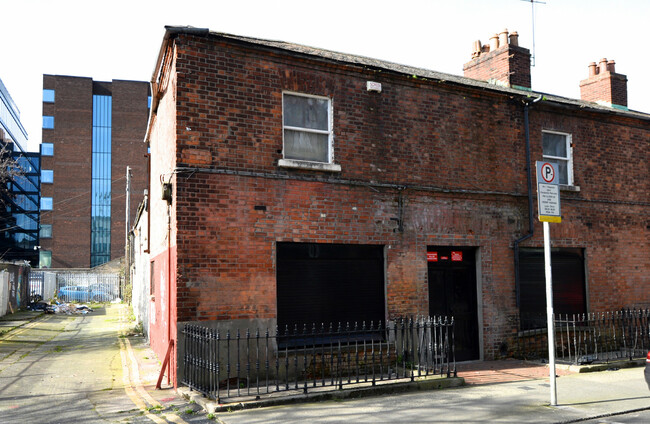
Derelict houses on Sandwith Street Upper in Dublin. RollingNews.ie

Opinion At this rate, it will take over 30 years to fill Ireland's existing derelict homes

Taking a look at derelict buildings around the country, Jude Sherry and Dr Frank O’Connor say a lack of enforcement is slowing the reduction rate.

THIS WEEK, WE both came to the stark realisation that we might not live long enough to see the end of widespread dereliction in Ireland.

After five years of campaigning and instigating a national movement, which has turned dereliction from a rarely mentioned topic in the media into a weekly and sometimes daily conversation, this is a hard pill to swallow.

This is not to say we ever expected every single derelict property in the country would be saved. But after five years, we hoped the systemic changes required would be in place to bring about a rapid decline in our high vacancy and dereliction rates, and to provide much needed homes.

This realisation was sparked by GeoDirectory’s annual Residential Building Report, which was released this week. This report analyses all the homes in the country with an Eircode. It also contains proxy data on vacant and derelict homes identified by An Post staff as they deliver letters and parcels to our homes. Homes that don’t accept post are recorded as vacant and homes that look like they need structural work to be habitable are classified as derelict.

The good news is that the amount of vacant and derelict homes in Ireland is reducing every year. The bad news is that the rate of reduction is slowing down.

This year marks the lowest reduction since GeoDirectory started publishing its dereliction data in 2021. Over the last five years the average reduction rate was 3.4%, which is higher than this year’s 2.9% reduction. The reduction in the vacancy rate is even lower, only having dropped 0.2% in the last three years, from 3.9% in 2023 to 3.7% in 2025.

According to GeoDirectory, this equates to 11,807 fewer vacant homes and 2,933 fewer derelict homes over a five-year period – which is good news, but when there are still at least 100,149 vacant and derelict homes in the country, these reductions are happening at a glacial pace. If we continue at this rate of reduction, it will take 30+ years to remove existing derelict homes, meaning Frank will need to live five years beyond the average lifespan to see an end to Derelict Ireland.

We hope this decline in reduction is coming just before a tsunami of renovation spurred on by the Croí Cónaithe Vacant Property Refurbishment Grant. This is free money for owners of homes left empty for two years who can get €50,000 towards their renovations, while homes that need structural works can get €70,000. Plus there’s additional grants for farmhouses, island homes and SEAIs energy retrofit grants, as well as Living City tax breaks.

Hoarding property

Since Croí Cónaithe’s launched in 2022, there have been 2,096 home renovations completed, while there are an additional 6,556 successful applicants who have yet to complete their projects. We hope these figures will climb steadily as awareness of these grants grow. Payments through instalments would increase the attractiveness of the grants rather than the current situation of only being paid out after the full renovation is complete.

Unfortunately, some owners of vacant and derelict buildings will continue to hoard property despite these generous financial grants. According to the Irish Hardware Association, “22% of property owners would prefer to leave the property as is, as it is increasing in value” rather can convert above shop premises into homes. For these owners who prefer to hoard and speculate property, we need effective punitive policy measures in line with our constitutional right to regulate private property for the common good and social justice. The good news is we already have some of these measures. The bad news is they are currently ineffective.

So far, €112.5m has been paid out to owners of vacant and derelict homes through the Croí Cónaithe grant, with early reports indicating these have mostly been to landlords. Compare this to the Vacant Homes Tax (VHT) and the Derelict Site Levy (DSL), both of which only invoiced €1.6m and €5.6m respectively in 2023, with only €600,000 of the €5.6m collected. This is because Revenue does not yet collect the DSL. In fact, in May, the Government delayed this happening for another year by voting against a Green, Labour and Social Democrats Seanad bill to make the change.

Even if collection rates were 100%, both the VHT and the DSL only apply to a fraction of the vacant and derelict homes identified by GeoDirectory, which in itself can’t capture all the derelict and vacant buildings in the country (we explain why further on).

Lack of enforcement

The VHT was designed to fail, so it’s no surprise that a whopping 97% of the vacant homes identified by GeoDirectory do not pay the VHT. Revenue have also not done enough to fully enforce the self-reporting, only sending letters out to 25,000 homes.

The 35-year-old DSL suffers the same lack of enforcement. There were only 1,913 officially registered derelict properties in the country in 2023, despite GeoDirectory locating 19,821 derelict homes, a figure that doesn’t include derelict commercial buildings.

If the VHT and DSL were applied to all the vacant and derelict homes located by GeoDirectory alone, the state could raise at least €100m a year.

Collected taxes could be used by City and County Councils towards creating and maintaining their own housing stock and related services.

Instead, the councils are compensating for this failure by raising the Local Property Taxes for those of us who actually use and live in our homes. It’s also worth remembering that uninhabitable (i.e. long-term vacant and derelict) homes are exempt from the Local Property Taxes, as are homes with no Eircodes, adding further insult to the ordinary person.

Since GeoDirectory is funded by Irish taxpayers, surely every Eircode they identify as vacant and derelict should be handed over to Revenue and Councils to immediately apply the VHT and DSL. It makes no sense for state bodies to repeat work through developing their own separate lists of vacant and derelict properties.

Since GeoDirectory doesn’t include buildings unless they have an Eircode, it will miss many vacant and derelict homes. This has been confirmed through our research into Derelict Ireland, where we found numerous long-term derelict buildings without an Eircode, as well as new but never used buildings, such as the well documented 20 empty homes above a Dunnes Stores in Macroom without an Eircode.

Too much and not enough

Another challenge with the GeoDirectory data is that it doesn’t provide us with any insight on what has happened to vacant and derelict homes removed from the list. Were they demolished? Are they back in use as homes? Are they being used as holiday homes or short-term lets? Did the owners renovate with grants?

This leads to a much bigger concern: the fact that we don’t know how much of our housing stock is in use as homes, as hotels or just lying empty.

This is shocking, given housing provision is seen as a national emergency and the Government is claiming it is a policy priority. It is for this reason that, last year, we called for a national property registration system managed by Revenue, as is standard across much of Europe.

Linked to all of this, we find ourselves in a very strange position of having four datasets on vacant homes (Census, ESB, GeoDirectory and Revenue) and three data sets on derelict properties (GeoDirectory, Councils Derelict Site Registry and LPT exemptions), yet none of them are accurate, up to-date or detailed enough. This results in constant debates on the scale of vacancy and dereliction, rather than debates on the best measures to tackle the problem, with the argument for new measures around compulsory sales and compulsory rental never being stronger.

So, as another year rolls by, the numbers in emergency accommodation have risen to over 16,000. With €361 million spent on these services in 2024, it would make more sense to invest in preventative measures that increase the housing supply.

We believe it’s time to sort out these data gaps once and for all while fully enforcing the VJT and DSL. Start with registering all the vacant and derelict homes with Revenue, charging the taxes and levies and investing this money where it is needed to ensure an end to this state-enabled homeless and dereliction epidemic within five, not 30 years.

As always, we live with Dóchas.

Jude Sherry and Dr Frank O’Connor are founders and creators of the anois agency and they run the #DerelictIreland campaign.  

Readers like you are keeping these stories free for everyone...
A mix of advertising and supporting contributions helps keep paywalls away from valuable information like this article. Over 5,000 readers like you have already stepped up and support us with a monthly payment or a once-off donation.

Close
72 Comments
This is YOUR comments community. Stay civil, stay constructive, stay on topic. Please familiarise yourself with our comments policy here before taking part.
Leave a Comment
    Submit a report
    Please help us understand how this comment violates our community guidelines.
    Thank you for the feedback
    Your feedback has been sent to our team for review.

    Leave a commentcancel

     
    JournalTv
    News in 60 seconds