We need your help now

Support from readers like you keeps The Journal open.

You are visiting us because we have something you value. Independent, unbiased news that tells the truth. Advertising revenue goes some way to support our mission, but this year it has not been enough.

If you've seen value in our reporting, please contribute what you can, so we can continue to produce accurate and meaningful journalism. For everyone who needs it.

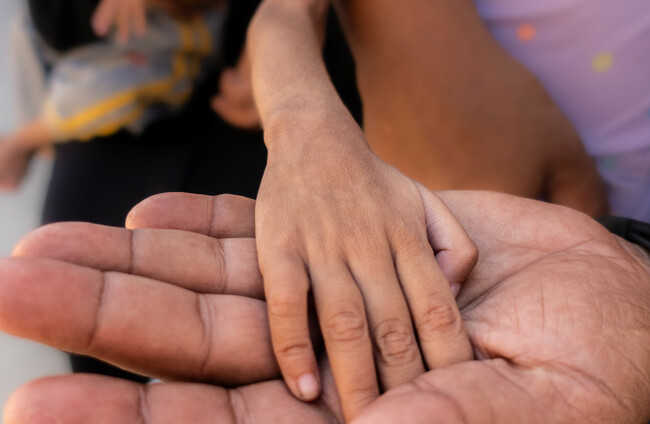
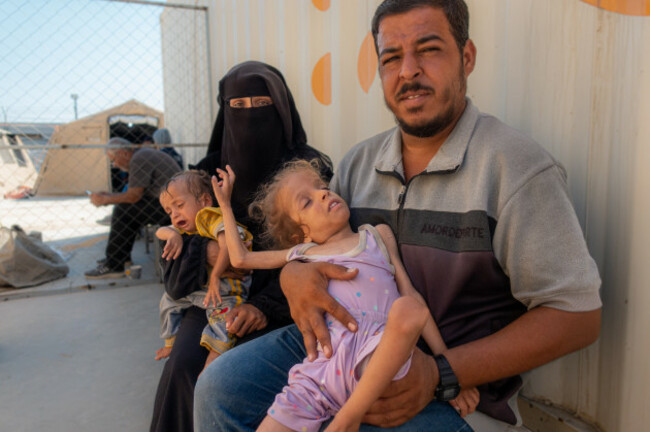
Image taken August 3 /4 at the UK Med field hospital at Al Mawasi, Gaza, showing an emaciated child.

‘They're too malnourished to treat' Marion McKeone meets an NHS nurse working in Gaza

Marion McKeone meets an NHS nurse working in Gaza, who details the suffering and starvation they now witness under Israel’s ongoing blockade.

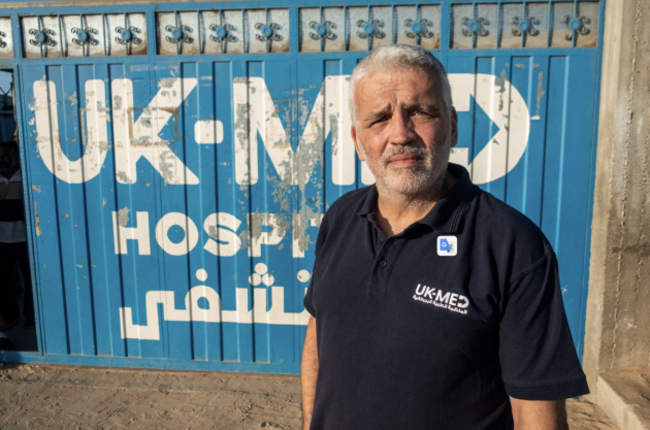
IN EARLY 2024, David Andersen, an NHS nurse and no-nonsense Scotsman, oversaw the construction of a tented field hospital in Al Mawasi, a coastal town in Southern Gaza that has been overwhelmed by the arrival of hundreds of thousands of displaced Palestinians. It took just under a month to complete the hospital, including the sourcing of all materials, medical supplies and equipment.

Over the next seven months, Andersen and his UK Med team supervised the building of a second medical centre from scratch and recruited 600 Palestinian doctors, nurses and security personnel to staff a 120-bed trauma treatment centre, complete with an operating theatre in Al Mawasi and a primary care medical centre in Deir Al Balah.

Between them, the two field hospitals have provided emergency and medical care to more than 600,000 Palestinians. They’ve helped deliver hundreds of babies, treated chronic illnesses and performed thousands of operations, amputations and life-saving procedures on civilians who have suffered traumatic injuries.

Screenshot 2025-08-12 at 11.16.23 NHS nurse David Andersen, working in Gaza. David Anderson David Anderson

Doing all this against a backdrop of relentless bombardment and an ongoing ground offensive lands somewhere between unthinkable and impossible. Andersen, 55, is a senior adviser to UK Med, an NGO that rosters some of the NHS’s most experienced staff to provide emergency healthcare in war and crisis zones. It also provides the Nasser Hospital in Khan Yunis, the only fully functioning hospital remaining in Gaza, with a supporting rota of surgeons and anaesthetists.

Andersen, who received an OBE in recognition of his humanitarian work, is no stranger to trauma and suffering. He’s also worked in Ukraine and West Africa, but says that what he’s witnessed since his return to Gaza earlier this year is worse than anything he could have imagined.

Last year, he says, the field hospital was mainly treating trauma victims. Within an hour of an Israeli strike, they could be overwhelmed by as many as 70 critically injured admissions. He saved the life of a three-year-old girl who was hit in the neck by gunfire that ripped through the makeshift tent she was sheltering in with her family. The bullet had torn through her mother’s hip and chest before lodging millimetres from her spine. In the midst of relentless suffering, small victories boosted morale and raised the spirits of exhausted staff for whom the sound of bombs and bullets and human agony had long been the soundtrack of their daily lives.

Now, in addition to trauma victims, staff are increasingly grappling with the harrowing consequences of sustained starvation.

‘Worse than anything’

Anderson was on duty when Adel Fawzi Soubhi Madi, a 26-year-old man with cerebral palsy, was brought to the Al Mawasi field hospital by his father. Emaciated, dehydrated and suffering from acute malnutrition, Andersen was unable to help him. All he could do was ensure his death was as dignified as possible.

After multiple displacements, his family had no access to food or clean water. His father was faced with the hellish choice of leaving his rapidly deteriorating son alone while he made the treacherous journey to a food distribution centre. With no guarantee he would get any food, or even survive the attacks on food distribution sites that have killed than 1500 civilians, he brought Adel to the hospital in the hope of saving his life.

But as Andersen explains, when a certain point of acute malnutrition has been reached, it’s irreversible. Adel’s father asked that his son’s remains be photographed so the world could witness what was happening. 

* * The pictures of Adel’s body are distressing, but can be found here and here.

As starvation takes root in Gaza, cases like Adel’s are becoming increasingly common. “The images you’re seeing now are a result of weeks and months of malnutrition,” he says. “Their bodies have become so damaged by malnutrition we’re dealing with infections, with diarrhoea and respiratory diseases and all that has a massive impact on their ability to recover.”

“We’re seeing an increasing number of children and adults with disabilities and women who are pregnant coming in in the latter stages of malnutrition. Many of them have reached a stage that is ultimately unrecoverable.”

Compounding the crisis is the lack of even the most basic medical supplies. “We put in an order five or six months ago for (medications and equipment) which we’ve had sitting in our warehouse in Stockport since then, just waiting for permission to bring it in,” Andersen says.

“We do what we can, but we’ve run out of even basic medications. We’re running out of antibiotics. Even for something as simple as a wound infection, he says, not having the right antibiotics can mean the difference between life and death.”

GAZ00147 (1) Images were taken August 3/4 at the UK Med field hospital at Al Mawasi, Gaza. David Anderson David Anderson

The combination of malnutrition and a lack of medical supplies means that patients who survive are taking longer to recover, even as the spike in acute malnutrition cases means demand for medical intervention has never been higher.

But with the partial or complete destruction of 34 of 35 of Gaza’s hospitals, the facilities needed to provide the levels of care needed just aren’t available.

Children and adults with severe acute malnutrition have no fat reserves left, their muscles are wasted, their organs are damaged, and their immune systems are destroyed. After even a relatively brief period of starvation, babies can no longer digest food. They need weeks of sustained, specialised treatment, often with feeding tubes, to avoid the potentially fatal consequences of ‘refeeding syndrome’.

Even then, he says, ‘they may die and even if they do survive they’ll likely suffer long-term impacts and cognitive issues that will affect them for the rest of their lives.’

Clinging to life

In the previous 24 hours at the Al Mawasi facility, four babies were born to severely malnourished mothers. The births were especially difficult, he says, because the women were so weak. “The babies were all well below the size you’d expect at full gestation. They look like they’re premature. They’re not. But they’ll probably be stunted and have impaired cognitive ability.”

According to the most recent figures available (9 August) at the time of writing, 240 people have died in Gaza as a result of malnutrition, including 108 children. World Health Organization (WHO) director Tedros Ghebreyesus has warned that at least 12,000 children aged five and under were suffering from acute malnutrition in July – the highest monthly figure since the war started. The UN says the total number suffering from acute malnutrition has likely exceeded 90,000. The collapse of Gaza’s health system and the displacement of 90 per cent of its population make accurate data collection difficult, if not impossible.

Starvation is everywhere. Andersen says it’s ‘soul destroying’ to witness the physical deterioration of his highly skilled, dedicated team. “They’re still working around the clock, but they’re malnourished, they’ve lost a lot of weight, and they’re completely exhausted.”

Even with regular salaries, they can’t afford the stratospheric cost of basic foods, which have spiralled due to scarcity. According to the World Food Programme, the price of a bag of flour has increased by 15,000 per cent.

Thousands of civilians who made the treacherous journey to GHB distribution centres ended up seeking emergency treatment instead as Israeli forces use tear gas, tanks and live bullets to control the starving crowds. The previous day, four civilians who had been waiting for food were admitted with gunshot wounds. Two died and two survived.

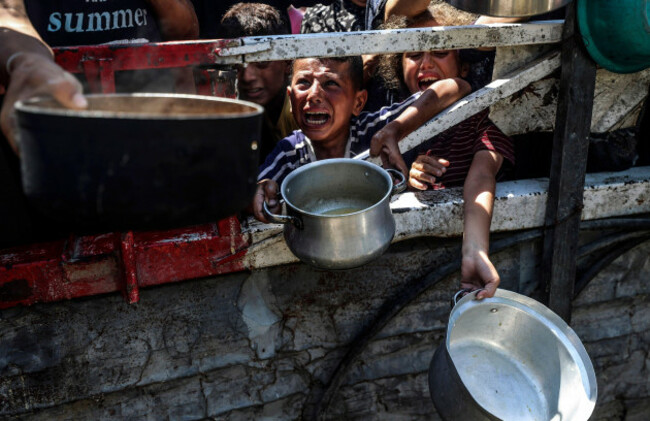
gaza-gaza-23rd-july-2025-palestinians-crowd-to-receive-a-hot-meal-at-a-food-distribution-point-in-gaza-city-on-wednesday-july-23-2025-over-100-aid-agencies-and-human-rights-organizations-issue Alamy Stock Photo Alamy Stock Photo

“We’re at the tip of an iceberg,” says Sonia Zambakides, director of International Operations at UK Med. “The most vulnerable in a community, the elderly, babies, pregnant women and those with disabilities, are the first to be impacted in a crisis. When starvation hits, they will be the first to get sick and die.”

Zambakides became involved in humanitarian work when she became director of Cradle, the Irish charity that was founded by Jadzia Kaminski in 1992. Over four years, they delivered truckloads of emergency supplies for children in war-ravaged Bosnia.

A new kind of suffering

In the interests of full disclosure, I worked with Zambakides between 2011 and 2015 when she was humanitarian director for two Save the Children emergency relief programmes; one responding to the famine in Somalia and the other responding to the humanitarian crisis caused by the brutal civil war in Syria.

We saw firsthand the devastating impact of starvation on children. And we saw how, without a sustained supply of emergency aid, children and babies who had recovered became acutely malnutrition a second or third time before eventually succumbing to death. Even with a surge of aid from international agencies, between 2011 and 2012, 260,000 Somalis died as a result of severe acute malnutrition, more than half of them children under the age of five.

***

Analysis

Alex De Waal, a leading authority on the causes of famine, claims that for starvation in Gaza to have reached its current levels, it had to be deliberate and sustained. “It’s beyond dispute you have to starve people systematically because it takes so long,” he says.

The 1977 Protocols to the Geneva Conventions prohibit the starvation of civilians as a method of warfare. Since July 1 2002, weaponising starvation has been officially recognised as a war crime by the International Criminal Court.

When the International Criminal Court issued its arrest warrant for Netanyahu and his defence minister, Yoav Gallant, on 21 November 2024, the war crime of using starvation as a method of warfare was amongst those cited.

Israel’s 21-month aerial bombardment and ground offensive hasn’t just laid waste to health, education and sanitation facilities. It has systematically destroyed the small farms, orchards and olive groves that allowed Gazans to grow a limited amount of food.

Farm animals have starved or been obliterated by bombardments. Fishing off Gaza’s coast is forbidden. Its crop yield is just 1.5 per cent of the 2023 total. By design, Gaza’s population became entirely dependent on international aid. Initially, Israeli Prime Minister Binyamin Netanyahu slowed aid to a trickle, before imposing a total blockade on food, water and medical supplies from March to mid-May.

Then, claiming widespread looting of UN aid by Hamas, a claim disputed in a New York Times report citing senior Israeli military officials, Netanyahu sidelined the UN and its network of 400 aid distribution centres, replacing it with a US-Israeli hybrid that established just four distribution centres – roughly one for every 500,000 civilians.

This policy of allowing aid to enter Gaza intermittently and at levels that are far short of what’s needed to even meet basic needs has led to an entirely predictable scenario where the strongest manage to grab food, and the weakest and those who need it most remain unfed.

UN agencies say the principal looter of aid was Abu Shabab, an armed gang that targeted aid trucks at various points. But the answer is more, not less aid. The most effective way to reduce theft and looting is to ensure an adequate, sustained supply of food. A black market can’t flourish if civilians have enough food. Even as Netanyahu continues to insist aid is getting through, thousands of trucks carrying tonnes of humanitarian aid remain backed up on the Egyptian side of the Rafah border.

israeli-prime-minister-benjamin-netanyahu-speaking-to-the-press-during-a-joint-press-conference-with-u-s-secretary-of-defense-lloyd-j-austin-iii-in-israel-on-april-12-2021 Netanyahu has refused to allow aid through. Alamy Stock Photo Alamy Stock Photo

Meanwhile, the US Department of State defends its decision to destroy more than 500 tonnes of high-calorie, nutritionally dense emergency food that was stored at a USAID warehouse in Dubai. The food – high-calorie, nutritionally dense biscuits – was intended for maximally efficient distribution in emergencies like Gaza and would have provided each of Gaza’s one million children with enough nutrition for almost two weeks.

A Department of State official acknowledged that Elon Musk’s DOGE policies intended to reduce ‘waste, fraud and abuse’ led to USAID staff cuts, which in turn caused ‘logistical hurdles’ that prevented the transfer of ready to eat emergency food to organisations like the World Food Programme that could have facilitated its distribution in Gaza before the consignment reached its expiry date.

And the situation is likely to get worse. Last weekend, Netanyahu announced a military siege of Gaza City, where around one million Palestinians currently live in makeshift shelters.

He has also vowed to target the designated humanitarian zone of Al Mawasi, the site of UK Med’s main field hospital. UN Assistant Secretary General Miroslav Jenca has warned the move would risk “catastrophic consequences for millions of Palestinians and could further endanger the lives of the remaining hostages in Gaza.”

Marion McKeone is an award-winning journalist, writer and documentary maker. 

Readers like you are keeping these stories free for everyone...
A mix of advertising and supporting contributions helps keep paywalls away from valuable information like this article. Over 5,000 readers like you have already stepped up and support us with a monthly payment or a once-off donation.

Close
JournalTv
News in 60 seconds