We need your help now

Support from readers like you keeps The Journal open.

You are visiting us because we have something you value. Independent, unbiased news that tells the truth. Advertising revenue goes some way to support our mission, but this year it has not been enough.

If you've seen value in our reporting, please contribute what you can, so we can continue to produce accurate and meaningful journalism. For everyone who needs it.

Alamy Stock Photo

Opinion Irish artists are keeping the folk tradition of speaking out on political issues alive

As Electric Picnic gets underway, Jack Campbell looks at the role of the musician as a truth-teller and the enduringly political nature of Irish artists.

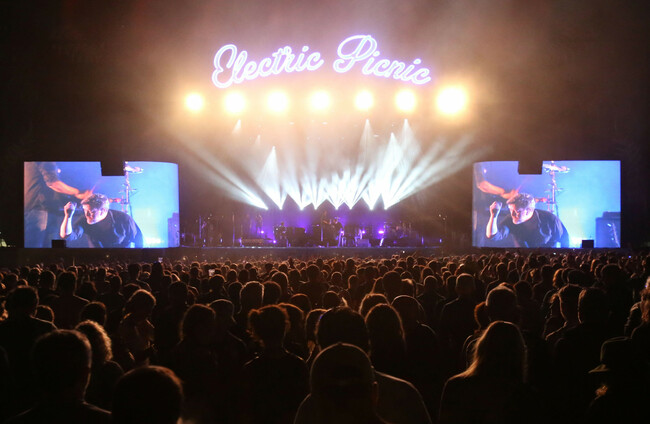
AS MUSIC FANS make their way to Stradbally Hall this weekend for Electric Picnic, there is bound to be more than music on the agenda.

It has been a long summer of festivals – and controversy – with the music often playing second fiddle to the politics: from Bob Vylan’s police-investigated chants at Glastonbury in June to the Mary Walloper’s silencing at Victorious Festival in Portsmouth last week.

And with Kneecap added to the EP lineup as “a really important statement” in light of “what’s going on in the world”, it’s clear to see that it is our musicians, not politicians, who have taken moral leadership on the pressing social and political issues of our time.

Looking at the festival lineup, it is also hard not to see how, in a crowded field, Irish voices are clearly amongst the loudest – not least on Palestine. The role of music as a political intervention, and the prominent role played particularly by Irish musicians, is worth understanding.

The role of the musician has long been that of truth-teller, an oral tradition formed in pre-literate societies in which song was the vehicle not only of storytelling but, more basically, of news-giving and record-keeping. Before print or radio or social media, it was the troubadour who, travelling from town to town, delivered news of the outside world.

Music as resistance

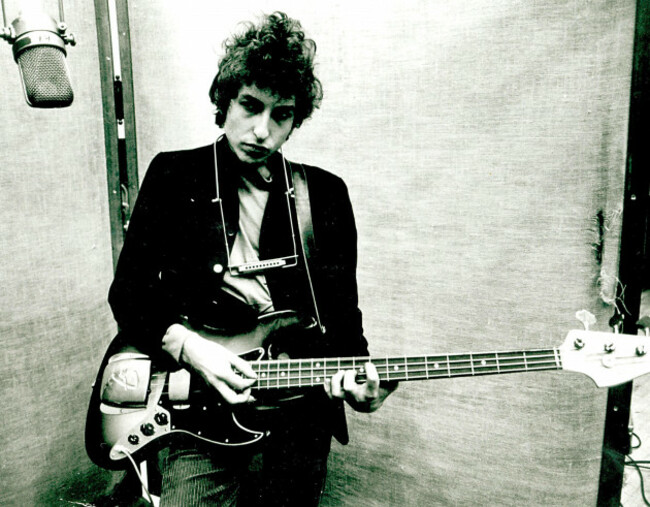
The musician did not only provide a basic account of events, however. They also interpreted, and even symbolised, these events. In the 1960s, Bob Dylan became the ‘voice of a generation’ for his anti-war, pro-civil rights polemics. That he refused this moniker made it even more fitting: a generation forced to be defined by the events of wars it did not commit and oppression it did not support.

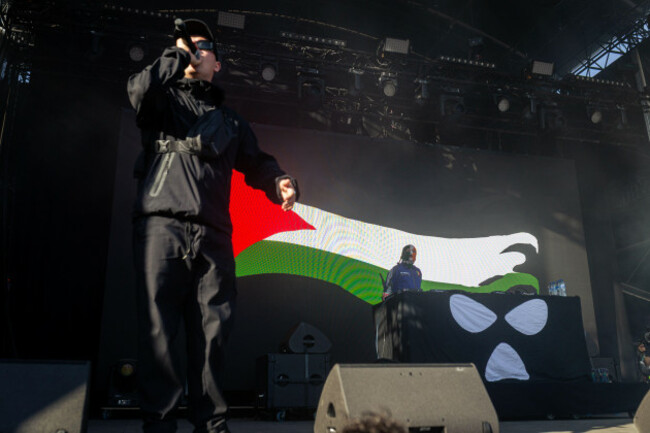
Today, musical acts like Kneecap and Dylan’s near-namesake, Bob Vylan, play a similar role, coming to symbolise resistance to the genocide in Gaza, in opposition to the inaction of political leaders.

new-york-ny-usa-13th-oct-2016-file-photo-dated-january-13-15-1965-bob-dylan-plays-a-fender-jazz-bass-with-the-harmonica-around-his-neck-while-recording-his-album-bringing-it-all-back-home-o In the 1960s, Bob Dylan became the ‘voice of a generation’ for his anti-war, pro-civil rights polemics. Alamy Stock Photo Alamy Stock Photo

In the ensuing half-century between Dylan and Vylan, however, music has changed in such a way that these more recent artists’ statements are all the more significant. In the early twentieth century a confluence of events – the migration of farming populations to urban areas, improvements in recording technology, mass expansion of the middle class brought on by industrialisation – meant that the folk tradition, as a wide social force, transformed into a more apolitical, commercial, ‘country’ music.

The singer, once a political actor, became an economic one, no longer truth-teller but record-seller.

So today, many big artists who in previous years may have similarly become the voice of their generation are silent on politics. Taylor Swift perhaps most powerfully illustrates this: arguably the world’s largest artist, with one of the biggest and most fervent followings, her voice is silent on major political issues, not least the genocide in Gaza. The enduringly political nature of Irish artists, by contrast, is perhaps no surprise. The Irish folk tradition served a crucial role in previous struggles against colonialism and oppression, and so this tradition remains alive and well.

Musicians remain a trusted voice on politics, however, in a way that other social actors are not. This may not be in spite of, but rather because of, their financialisation. Artists speaking up risk a financial cost in lost sales and blacklisting and even, in our increasingly censorious political environment, often legal challenge and political interference.

Creating connection

In the face of this opposition, those artists who do speak out win our admiration all the more. Kneecap have surely gained some listeners at least as much for their politics – and the harsh political and legal response to it – as for their music. The financialisation of the music industry may have, against its will, worked to bring us closer to these artists and keep the folk tradition of truth-telling alive.

Which brings us to this weekend at Electric Picnic.

Music in any form can be transformative, but it is especially so when heard live. This is music at its best: a shared experience, joining the individual into a wider collective.

In a world where we are increasingly polarised, particularly online, shared, real-world experiences like this are more important than ever. Yet, as the Irish artist and academic Tríona Ní Shíocháin argues in her book Singing Ideas, through song we share a communal experience not only with each other in the present moment, but with our past.

a-palestine-flag-is-displayed-on-a-screen-during-the-kneecaps-concert-at-the-rock-en-seine-music-festival-a-group-of-pro-israel-protesters-attempted-to-disrupt-a-concert-by-irish-trio-kneecap-at-the Kneecap have surely gained some listeners at least as much for their politics – and the harsh political and legal response to it – as for their music. Alamy Stock Photo Alamy Stock Photo

In singing songs passed down through generations, and new songs inspired by our shared history, we create a connection between present and historical events. Bob Dylan’s Blowin’ in the Wind, once a civil rights anthem, today takes on the suffering of the Palestinians.

Through the medium of song, we can quite literally see how, in words often attributed to Mark Twain, history often ‘rhymes’. Through music, we connect past, present and future.

The keener

Let’s return to the role of Irish history here, where music was often a means of processing the trauma of death, violence and oppression. This is clear in the figure of the keener, who at funerals often wailed and sang to embody the grief of the mourners. By performing our grief, the keener allowed us, on one level, to renounce of our own need to grieve.

We must not view the musician as the keener in this sense, allowing us to perform our activism so that, after their performance is over, we forget about the struggles they represented. Rather, we should see the musician-as-keener in another way. By being so vocal in their grief, the keener made it easier for other mourners to express their own grief. Similarly, by seeing the musician take a stand on Palestine, at huge personal cost, we should be inspired to take our own stand.

To festival-goers heading to Electric Picnic this weekend, the message is simple: enjoy the music, but don’t forget the struggles of which our music is often in service.

British courts today are using the law as an instrument of oppression, quelling protest and silencing dissent of musicians and other activists. Here, past and present are brought particularly close: music as a means of Irish rebellion to British colonial rule is clear.

History often rhymes. But don’t take it from me: Kneecap will surely say – and sing – this best.

Jack Campbell is a PhD researcher in accounting and everyday life at Dublin City University, funded by Research Ireland. He researches social and political accountability in everyday contexts, particularly social media and social protest music. 

Readers like you are keeping these stories free for everyone...
A mix of advertising and supporting contributions helps keep paywalls away from valuable information like this article. Over 5,000 readers like you have already stepped up and support us with a monthly payment or a once-off donation.

Close
JournalTv
News in 60 seconds