Take part in our latest brand partnership survey

We need your help now

Support from readers like you keeps The Journal open.

You are visiting us because we have something you value. Independent, unbiased news that tells the truth. Advertising revenue goes some way to support our mission, but this year it has not been enough.

If you've seen value in our reporting, please contribute what you can, so we can continue to produce accurate and meaningful journalism. For everyone who needs it.

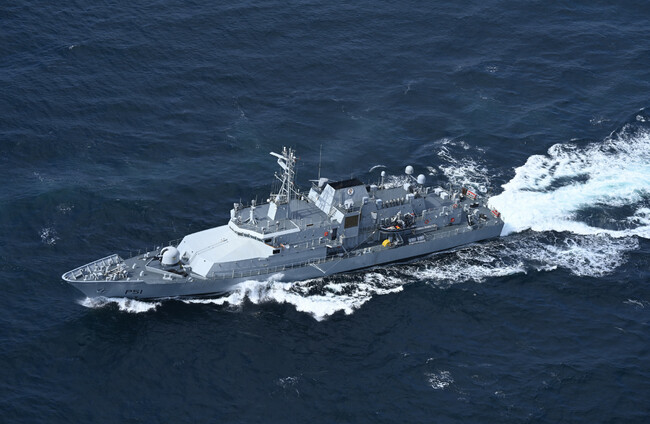
An Irish Navy Ship at sea. Irish Defence Forces

Criminals could exploit Ireland's antiquated paper system of registering ships, experts warn

Ireland still uses a paper-based nineteenth century system, with data collected on a ‘good faith’ basis.

IRELAND COULD BE exposed to major corruption and money laundering in the shipping sector because of our antiquated system of registering vessels, an anti-corruption group has warned. 

The issue of apparently legitimate ships being used by criminals for smuggling of drugs, people smuggling and sanction dodging across the world has been widely reported by The Journal in recent years. 

One example of this issue is the case of the MV Matthew, which was bought by a drugs gang using a front company to ferry drugs to Ireland. The vessel was registered in a country that has been identified as having opaque regulation which is not Ireland.

As Ireland prepares its National Maritime Security Strategy, The Journal spoke to two experts to see what key issues need to be addressed in the document.

Alexander Chance, the Head of Policy and Research at anti-corruption body Transparency Ireland, has laid out the criminal threats and major loopholes that could be exploited by international organised crime. 

Tony Geraghty – a newly retired Commander with the Irish Naval Service - spoke about how maritime sovereignty can be assured with robust funding and a dedicated agency to manage the seas around Ireland.

Chance said the group’s submission outlined that three specific areas needed to be examined. 

They called for an overhaul of Ireland’s system of ship registration, the need to address the risks of corruption of port and maritime workers by organised crime and the need for work on safeguarding against bribery and corruption in the planning and construction of critical maritime infrastructure projects.

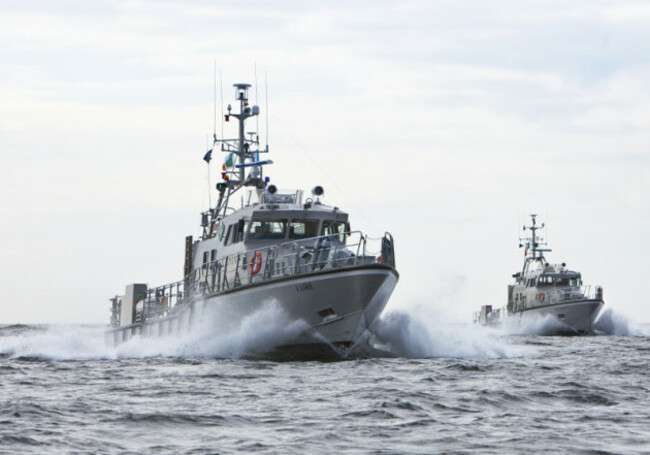
IMG_1227 Two Revenue Cutters at sea. Revenue. Revenue.

Loophole

Chance said that the group came across a significant loophole in the ship register for Ireland while carrying out research on cross-border crime. 

“We were surprised to find that Ireland still uses a nineteenth century system to register ships, with each vessel being recorded by hand in separate, paper ledgers in each of the country’s 13 official ports,” he said. 

Chance explained that they do not ask for basic details of identification for people such as nationality, passport number or date of birth – he said the details are collected by Ireland “on an entirely ‘good faith’ basis” and no checks to protect against the submission of false information. 

The expert said it has been clearly shown that “high-value assets” such as ships and yachts can be used for money-laundering – criminals purchase them to launder cash generated from the proceeds of crime. 

He said that vessels are also used for “various other illicit activities”, such as sanctions evasion, arms smuggling and drug trafficking. For that reason, he said, it is critical for gardaí, naval service, and customs to be able to easily find out who owns and operates a suspect vessel. 

Chance said one key failing is that the Oireachtas passed legislation in 2014 to create a digitised ship register but that this Act has never been commenced. 

He has also identified port and maritime corruption facilitating mass smuggling of drugs and other contraband. 

He said that the big issue for those fighting corruption is that if it takes root inside ports, it then tends to seep out into the broader society. 

Chance stressed there is also a need for robust measures to prevent corruption in the planning and construction of maritime infrastructure.

He said that infrastructure projects that rely heavily on state contracts or licenses can present higher risks of bribery and corruption.

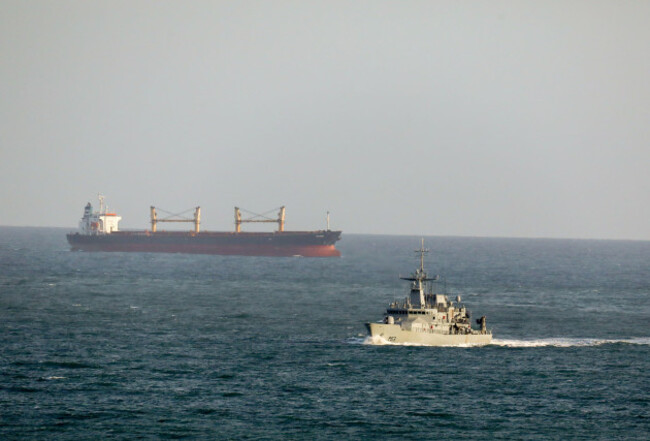
roches-point-cork-ireland-26th-september-2023-irish-naval-vessel-le-william-butler-yeats-escorts-bulk-carrier-mv-matthew-outside-roches-point-cork-ireland-after-the-army-rangers-stormed-the-ves The LÉ William Butler Yeats escorting the detained MV Matthew which was carrying €157m worth of cocaine on board. Alamy Stock Photo Alamy Stock Photo

The department of Transport in a statement denied there was an issue with the register. 

“Ireland operates a ‘traditional’ ship register and certification scheme with very high levels of control and oversight.

“Irish ships are required to hold a Continuous Synopsis Record (CSR) under the SOLAS Convention. The CSR gives full details of the ship’s history including registration, charterers, ownership and operation amongst others,” a spokeswoman said. 

The department also said that all Irish flagged ships are fully compliant with the International Ship and Port Facility Security Code and are maintained under surveillance for compliance by the Department of Transport.

“Ireland holds ‘White list’ status on the Paris MoU listings and is in the top tier of the International Chamber of Shipping rankings. Ireland implements EU Regulation 725/2004 on maritime security and EU Directive 2005/65 on Port Security. Additionally, Ireland is implementing the NIS2 Directive which further enhances cyber security in the maritime transport sector,” it added. 

At a crossroads 

Tony Geraghty, who served in the Irish Naval Service at a senior officer level, said Ireland is at a “maritime security crossroads”. 

Geraghty believes that the inadequate monitoring of the Exclusive Economic Zone by Ireland means that it cannot “assert strategic autonomy”. He said the regeneration of the naval service must continue as a “national priority.

Key to his proposed response is policy integration between defence, national security, climate action and critical infrastructure resilience measures. 

Geraghty believes that Ireland must also invest in dedicated maritime cyber defence to catch up and secure the advancing digitisation of the marine industry.  

He said that during his naval career he saw the impact of Brexit and the “growing presence” of suspicious vessels in Irish water. He believes the potential use of “proxy vessels” underlines the need for a robust “maritime domain awareness”.

“Geography alone does not ensure maritime security. What is needed is determined political leadership, institutional innovation, and sustained investment to safeguard Ireland’s maritime future.”

The Department of Transport said the ship registration is handled under 1955 legislation by Revenue Customs officers. It said this will continue until the new law is commenced which needs a new IT project to establish the new digital system. 

The Department said there are 43 international trading ships on the Irish flag.

The spokeswoman said that there are surveys and inspections carried out and that oversight and compliance assessments continues at a high level. 

Readers like you are keeping these stories free for everyone...
A mix of advertising and supporting contributions helps keep paywalls away from valuable information like this article. Over 5,000 readers like you have already stepped up and support us with a monthly payment or a once-off donation.

Close
JournalTv
News in 60 seconds