We need your help now

Support from readers like you keeps The Journal open.

You are visiting us because we have something you value. Independent, unbiased news that tells the truth. Advertising revenue goes some way to support our mission, but this year it has not been enough.

If you've seen value in our reporting, please contribute what you can, so we can continue to produce accurate and meaningful journalism. For everyone who needs it.


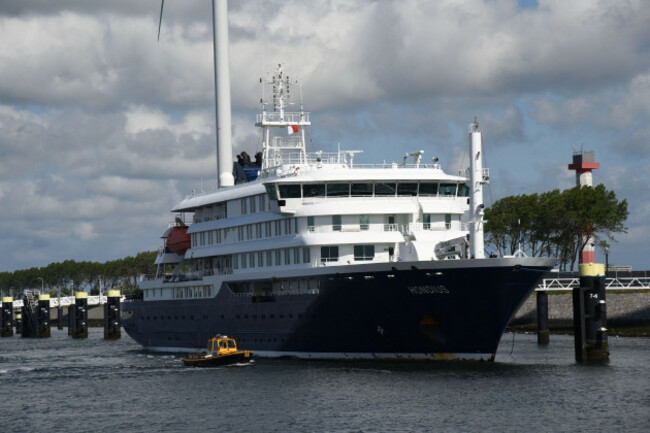
The hantavirus-hit cruise ship MV Hondius arrived at the Dutch port of Rotterdam on Monday for disinfection, concluding a voyage that had drawn the attention of international health authorities. Alamy Stock Photo

Sitdown Sunday: Inside the hantavirus-hit cruise ship

Settle down in a comfy chair with some of the week’s best longreads.

IT’S A DAY of rest, and you may be in the mood for a quiet corner and a comfy chair.

We’ve hand-picked some of the week’s best reads for you to savour.

1. Inside the Hantavirus-hit cruise ship

rotterdam-netherlands-18th-may-2026-the-hantavirus-hit-cruise-ship-mv-hondius-arrives-at-the-port-of-rotterdam-in-rotterdam-the-netherlands-on-may-18-2026-the-hantavirus-hit-cruise-ship-mv-hon The hantavirus-hit cruise ship MV Hondius arrived at the Dutch port of Rotterdam on Monday for disinfection, concluding a voyage that had drawn the attention of international health authorities. Alamy Stock Photo Alamy Stock Photo

The passengers aboard MV Hondius, who paid between $8,000 (€7,000) and $27,000 (€23,000), were expecting a leisurely cruise with bird watching and wildlife spotting. Within a month, three passengers had died from what was most likely hantavirus, a family of viruses carried by rodents. The rest of the passengers and crew wrangled with the realities of isolation, protective gear and quarantine as they tried to prevent contracting the rare virus.

(The New York Times, approx 13 mins reading time)

“The grim-faced captain had bad news for the people gathered in the lounge of the MV Hondius. One of their fellow passengers had died. ‘Tragic as it is, it was due to natural causes, we believe,’ the captain, Jan Dobrogowski, told them on April 12. He added that the ship’s doctor had said the man was “not infectious, so the ship is safe.’”

2. Irish Brehon bee laws

honeybee-or-bee-feeding-on-purple-allium-flower-in-garden-during-summer-pollination-season-macro-closeup-dublin-ireland Alamy Stock Photo Alamy Stock Photo

The rules around all things relating to beekeeping were codified in Medieval Ireland under Brehon law. The unusual set of laws was called Bechbretha, which translates to bee-judgments. But why?

(The Conversation, approx four mins reading time)

“One suggestion the Bechbretha makes is to dust flour over bees, follow them to source and identify the culprits. Because honeybees tend to return repeatedly to the same nectar sources, tracking and marking them with white flour – which scatters onto the ground as they fly, leaving a visible flight path – can be effective. The laws also state that the owner of stray bees has three years to collect their honey, but by the fourth year must surrender the first swarm from that hive to the wronged party.”

3. The unusual tale of Timmy the whale

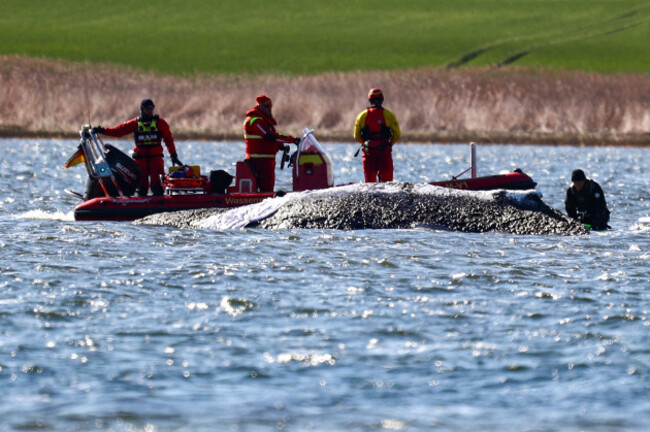
wirtschaft-walrettung-timmy-21-04-2026-walrettung-timmy-v-l-rettungsteam-bei-timmy-hope-insel-poel-mecklenburg-vorpommern-deutschland-deu-economy-whale-rescue-timmy-21-04-2026-whale-rescue-t Rescue team pictured with Timmy the whale. Alamy Stock Photo Alamy Stock Photo

A whale, dubbed “Timmy” in Germany’s media, became a national talking point after it was spotted stuck on a sandbank on 23 March. After various failed attempts it was finally put in a barge and released into the North Sea off Denmark on 2 May. But two weeks later it was found dead near a Danish island, officials said. This longread explores how public sentiment and the media impacted Timmy’s journeys.

(The New York Times, approx 11 mins reading time)

“The whale became a tabloid star and a magnet for marine-mammal-adjacent social media influencers. He freed himself but got stuck again. His superfans turned on the experts who had tried, and failed, to set him loose, armed with elaborate theories about why the government wanted him dead. Government officials did, in fact, briefly consider killing him — for humanitarian reasons, they said — but decided against it.”

4. Get-rich-quick courses targeting Australia’s tradies

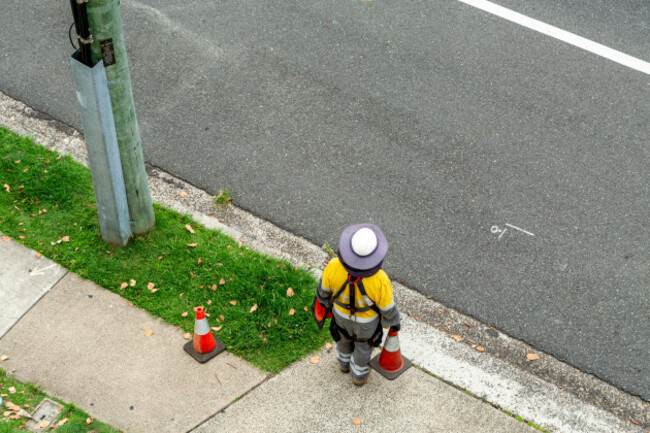
electricity-worker-standing-near-wooden-power-pole-on-street-edge Alamy Stock Photo Alamy Stock Photo

Influencers are allegedly targeting young Australian trades people with promises of financial courses that will bring wealth and security. In reality, the courses seem to have parallels to pyramid or multi-level marketing schemes, but the young people who invest thousands often don’t realise until it’s too late.

(ABC, approx 12 mins reading time)

“As a kid, Billy* dreamed of one day having the thing his family did not have much of: money. By the age of 18, he had become an apprentice carpenter. His dreams were simple yet still felt out of reach. ‘I’ve always wanted to retire my mum and provide for my future family,’ Billy said. That is when a network of influencers and salesmen began popping up on his social media feeds, telling him there was a quicker, smarter way to get rich.”

5. Stalker or stalked?

Shawn’s addiction counsellor Bridget began texting and calling him from different numbers. She knew what he was wearing and shared details about him online. He complained to the Department of Health and the police. Then he was arrested for stalking. He alleged his former counsellor got a restraining order against him and then, pretending to be him, broke it. Authorities eventually discovered the truth and Bridget was imprisoned. This interesting longread delves into the bizarre and traumatic story.

“At the warehouse where he worked, an unidentified woman called his boss, claiming he was using drugs again. Human resources pulled him into a meeting and questioned him. Shawn didn’t yet know if the threat of a $30,000 defamation lawsuit was real. Or how Bridget kept obtaining his new phone numbers. Worse, Shawn wasn’t confident his version of events would prevail. No one will believe the recovering addict, he thought. He didn’t know who to trust. He stopped sleeping. And going to work.”

(San Francisco Chronicle, approx 50 mins reading time)

6. Being the subject of true crime

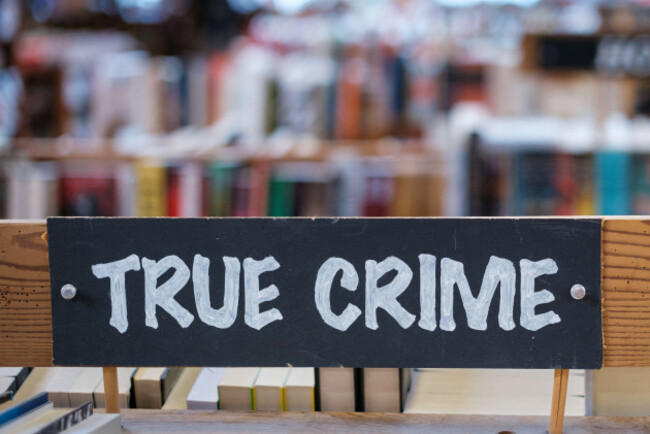
the-true-crime-section-of-a-bookstore The true crime section of a bookstore. Alamy Stock Photo Alamy Stock Photo

True crime has been all the rage in podcasts, television and newspapers in recent years, with fans of the genre forming communities online around some well-known crimes. But what’s it like to be the subject of all this attention? The daughter of Albert Walker, the infamous Rolex Killer, has opened up about her experience.

(Toronto Life, approx 20 mins reading time)

“There’s a distinct line between ethical journalism and exploitative trauma porn. At its best, true crime can be like Serial: a way to pursue justice where the police and courts have failed, to inform people of the many flaws in our criminal justice systems. A well-handled story can galvanize people into righting wrongs and fighting for justice. But a lot of true crime content is just a cheap bid for clicks that retraumatizes people who are already reeling. Victims often feel torn: they’re grateful for media attention if it helps solve their case or gives them a voice, but they also grieve the loss of privacy. They have no control over how, where and when people talk about their personal experiences in excruciating detail. Instances of journalists stalking victims at their homes or harassing them on the street are less common now, at least in Canada, but the internet has introduced a whole new way to invade someone’s privacy.”

…AND A CLASSIC FROM THE ARCHIVES…

7. Mistakes made during the 2014 Ebola outbreak

The World Health Organization has declared a public health emergency of international concern following an outbreak of Ebola this month in the Democratic Republic of the Congo. In 2018, The Guardian wrote about a book by a British doctor and an Irish diplomat who both felt global agencies didn’t learn from mistakes made during the 2014 Ebola outbreak.

(The Guardian, approx 10 mins reading time)

“In Getting to Zero, the duo show how a litany of mistakes made in distant offices in New York, Washington, London and Geneva, combined with poor leadership in Sierra Leone and a weak health service, created a catastrophe that could have been prevented.”

Readers like you are keeping these stories free for everyone...
A mix of advertising and supporting contributions helps keep paywalls away from valuable information like this article. Over 5,000 readers like you have already stepped up and support us with a monthly payment or a once-off donation.

Close
Comments
This is YOUR comments community. Stay civil, stay constructive, stay on topic. Please familiarise yourself with our comments policy here before taking part.
Leave a Comment
    Submit a report
    Please help us understand how this comment violates our community guidelines.
    Thank you for the feedback
    Your feedback has been sent to our team for review.

    Leave a commentcancel

     
    JournalTv
    News in 60 seconds