TheJournal.ie uses cookies. By continuing to browse this site you are agreeing to our use of cookies. Click here to find out more »
Dublin: 12 °C Sunday 26 May, 2013

Banking System

# banking-system - Today’s News

SPONSORED

# banking-system - Wednesday 15 May, 2013

50 jobs lost as Citi Bank announce Waterford office closure

The Waterford branch will close by the end of the year.

# banking-system - Saturday 9 June, 2012

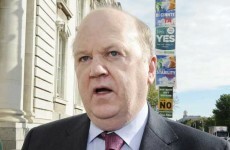
Noonan: €1.2 billion of pension reserves already committed

That leaves about €4.5 billion in the pot.

# banking-system - Wednesday 10 August, 2011

From Business ETC ECB

ECB’s lending to banks is now at nearly €50bn

The loans – which are for the unusually long period of six months – are aimed at steadying the banking system.

# banking-system - Thursday 23 June, 2011

Your Say This post contains a poll

Poll: Should the Irish public be given shares in bailed-out banks?

The UK is considering creating ‘people’s banks’ by distributing shares in certain banks to members of the public.

# banking-system - Sunday 10 April, 2011

From Business ETC Iceland

British and Dutch governments to sue Iceland over lost billions

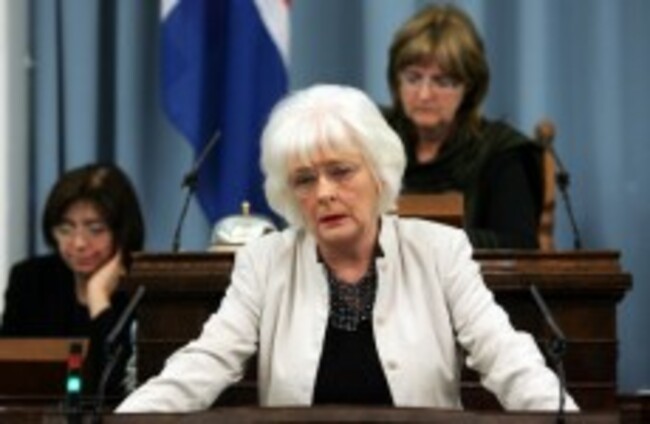
The British and Dutch governments are preparing to sue Iceland after the country’s electorate rejected a second proposal to repay billions of euro of lost deposits.

# banking-system - Thursday 31 March, 2011

Your Say This post contains a poll

Poll: Are you confident that the full extent of the black hole in Irish banking will be exposed today?

Today’s stress tests are expected to draw a line under the banking crisis. But are you confident we’ll know the full story at last?

# banking-system - Tuesday 24 August, 2010

JOSEPH STIGLITZ was ignored ten years ago when he warned about a global economic collapse, but he was right.

Speaking on Morning Ireland this morning, the Nobel laureate once again highlighted what is wrong with the economic system, and in particular he criticised the bank bailouts.

(Listen here.)

“The problem is that we’ve confused the financial crisis,” he said, adding that governments have been “so tied to the banking system that they thought: if we just fix the banking system then everything will be ok.”

He continued: “But the second problem is that because they were also so tied to the mistakes of the past, they didn’t see in what ways they had let the banking system malfunction.”

Stiglitz explained that the primary function of a bank is to provide credit, particularly to small and medium enterprises, but that banks today had moved away from that role and into different areas.

Addressing what has happened in Ireland and the United States, he said: “We’ve socialised losses and privatised gains, that’s not market economy, that’s not capitalism – and when you do that you get a really distorted economy.”

Stiglitz warned that he was worried about the European economy because a number of the countries in Europe are engaged in “major cutbacks”. He said that while books need to be balanced, financial austerity will ultimately create “a weakened  economy, high unemployment and disappointing tax revenue”

Instead, Stiglitz says, it is important for governments to focus spending on investment. By doing so, the economy will be stimulated in the short-term, growth will be promoted in the long-term and “even with mild rates of return on investment, long-term national debt will actually be lowered.”

Investment in innovation, education and infrastructure is the only way to lift an economy out of the crisis, he said.

When asked about whether he would have included Brian Cowen in the top leaders of the world on the back of his handling of the banking crisis, as Newsweek did, Stiglitz replied “probably not”.

He added that “the way the banking restructuring has been done (in Ireland) is actually one of the most problematic… the cutbacks have been draconian, and the public sector in a modern economy plays a very important role – if you cut wages you’re not going to attract good people to the public sector.”

“What you have to do to get things going is not just cut, cut, cut…” he said, “You have to have vision of where you want to go. It’s not just saying  ‘well we have to go back to where we were in 2007’ – something was fundamentally flawed about what we were doing back in 2007 that got us into this mess.”

Stiglitz’s book about the banking crisis, Freefall, is now available.