TheJournal.ie uses cookies. By continuing to browse this site you are agreeing to our use of cookies. Click here to find out more »
Dublin: 10 °C Saturday 18 May, 2013

Campaign says Government policy statement ‘paves way’ for underground infrastructure

A group which advocates a proposed electricity interconnector between the North and South be placed underground has welcomed a Government policy statement on the issue.

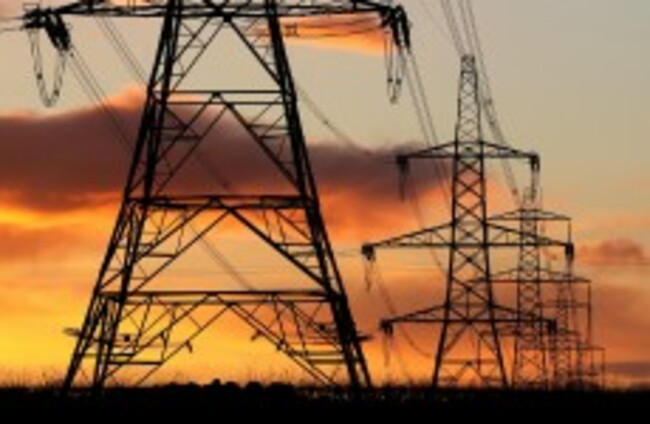
Image: Andrew Milligan/PA Wire/Press Association Images

A GROUP ADVOCATING the placement of high power electric cables underground have said that a recent Government policy statement has paved the way for such technology to be routinely used in energy infrastructure.

The North East Pylon Pressure Campaign (NEPPC) said that a statement published by the Government on the website of the Department of Communications, Energy and Natural Resources following reports by the Expert Commission and Joint Oireachtas Committee, had reaffirmed “the imperative to develop and renew our energy networks, in order to meet both economic and social policy goals”.

The International Expert Commission’s ‘Meath-Tyrone Report‘, carried out last year, says that the cost of linking the electricity grids of the Republic of Ireland and the North by means of underground cables would rise from €167 million to €500 million – but would be possible. Following the publication of the report, the Minister for Communications Pat Rabbitte said that after a brief consultation period he would go back to the government “with a memorandum on Security of Energy Supply, to which Eirgrid and the planning process will have regard.”

‘Slow but steady step’

NEPPC says that it welcomed the Government’s policy statement as “a slow but steady step” towards recognising the importance of its campaign objective of undergrounding the Meath-Tyrone interconnector project.

The proposed interconnector line would be 140 kilometres long, and residents along the Monaghan-Tyrone border have expressed opposition to the construction of electricity pylons across the countryside in their area.

“This is a major step forward”, said Aimée Treacy, chairperson of NEPPC. “Crucially, the Government policy statement highlights the need to include human, environment and landscape impact and public acceptance as key components in analysing the most timely, cost-efficient and sustainable solution.”

“It is our contention that the undergrounding option is the only technology that meets all of these criteria. Lifetime costs show it to be more affordable than the overhead lines option. It is an acceptable technology for landowners and local communities, and so can be established and delivered in a very timely manner.”

The NEPPC welcomed several different points raised by the policy statement, saying it: would encourage EirGrid to objectively examine all technology options for the Meath-Tyrone interconnector; recognises that a new HVDC undergrounding cable would be a feasible solution; recommends that EirGrid is ‘required to address and mitigate, as necessary, human, environmental and landscape impact in delivering the best possible engineering solutions’; and underlines the imperative for early and ongoing engagement and consultation with local communities and all stakeholders.

The group said that the statement also promised that  Government would keep under close review the effectiveness of the consultation processes and stressed that transmission infrastructure programmes needed to be ‘delivered in the most cost efficient and timely way possible, on the basis of the best available knowledge and informed engagement on the impacts and the costs of different engineering solutions’.

Read: Putting North-South interconnector underground more expensive – report

Read next:

Comments (18 Comments)

  • If this goes underground we will all pay for it in our Electricity Bills. Which are already among the highest in Europe.

    Reply
    • Wont happen. They’re just doing this please the tree huggers. Cant think of anywhere in Europe that this is done with extra high voltage lines.

      Reply
    • to be honest with you it’s not just to please “tree huggers”, there is less maintenance required and less risk of damage when the cables are underground. It will also make the skyline look a hell of a lot better.

      Reply
    • The era of centrallised electricity generation is coming to an end. Ireland in particular would be well suited to decentralised generation due to our climate, overdependence on fossil fuels, high economic and enviromental cost of generation and having no nuclear generation.

      ” By 1970, mass-produced engines and turbines cost less per unit of capacity than large plants, and the emissions have been steadily reduced. These smaller engines and gas turbines are good neighbors, and can be located next to users in the middle of population centers. Furthermore, the previously wasted heat can be recycled from these decentralized generation plants to displace boiler fuel and essentially cut the fuel for electric generation in half, compared to remote or central generation of the same power.

      But the industry had ossified. Electric monopolies were allowed to charge rates to give a fair return on capital employed. To prevent excessive or monopoly profits, the utilities have long been required to pass 100 percent of any gain in efficiency to the users. This leaves utilities with no financial incentive to adopt new technologies and build decentralized generation that recycles heat. In fact, such local generation erodes the rationale for continued monopoly protection—if one can make cheap power at every factory or high rise apartment house, why should society limit competition?”
      (Casten, Downes 2005)

      Reply
    • Jason what you say is true but it costs 4-10 times the amount to install and maintain and the big problem is when something does go wrong your up sh!t creek. It’s a lot harder to repair than just a line and takes a hell of a lot longer.nnSean you can’t just put turbines where you please, why do you think we don’t do it? You need lots of open ground so the is minor amounts of turbulence in the air. That’s why the turbine are mostly in remote areas. Pylons are the way to go with extra high voltage, show me a country that buries all of theirs.

      Reply
    • John the article refers to gas turbines not wind turbines.

      Reply
  • Regardless of whether the cables are above or below ground they still produce an EM field, but by placing them underground it is out of sight out of mind but people are most likely going to end up closer to the source.

    For all the studies done for overground transmission, has anyone conducted studies on the possible health effects of underground, they maybe worse you know?

    Reply
  • This might not even be an issue if the inventor of our electricity, Nikola Tesla had his way. We would all be plugging straight into the ionosphere from our own homes to get free electricity. I would prefer underground cables though.

    Reply
  • Current wind turbines are a no go. Same with current underwater turbines. They are net deficits. The green energy movement does look promising with some emerging technologies.
    Transparent solar cells: http://newsroom.ucla.edu/portal/ucla/ucla-researchers-create-highly-236698.aspx
    New urban windturbine: http://www.mccamley.com

    Reply
  • Yes we are getting high percentages of our energy from ‘green’ energy. However, they are not efficient. Wind turbines without government subsidies would not get off the ground as the amount of electricity they produce does not cover operating costs and they have ongoing maintenance costs. The Netherlands have abandoned their EU green energy target of 20% as they have seen the high cost of these wind turbines. In their current form they ate not a way forward. Our country can afford to put massive amounts in and get a minimal return. As for underwater turbines, salt takes a high toll on the equipment and their maintenance costs are massive.
    I wish we had more affordable ways if green energy but at the moment the wool is being pulled over a lot of people’s eyes with regard to this. Anyway, just my opinion on the matter.

    Reply
  • In relation to previous comment. Supposedly you only need to go up 30/40 feet. Look at Wardenclyffe Tower on web or YouTube. Tesla was able to produce free energy. They knocked it down(the people who bought Tesla patents) as they couldn’t figure out a way to meter it and charge the masses. Oh yeah, wireless electricity too.

    Reply
  • Martin if this was happening near where you live you would want the cables buried. For the future cables should be buried. The Danish model shows it can be done. I am willing to pay a little more to have them all go underground.

    Reply
    • The Danish model? I’m a regular visitor to Denmark, and the only electricity cables that are routinely buried are 10kV and under. Pylons carrying 100kV, 200kV and 400kV cables are as common a sight there as here.

      Reply
    • Paul you’re dead right. People can’t seam to understand this and would be the first to complain when they have no power for a week because of an underground cable fault.

      Reply
  • M J Fox 25/07/12 #

    Burying cables cost 10x more than hanging them, and this is before you take into consideration the considerably higher maintenance costs.

    Reply
  • For anyone that wants to see the actual numbers on how many of these cables are underground have a look here on page 5. http://ec.europa.eu/energy/gas_electricity/studies/doc/electricity/2003_12_undergrounding.pdf

    Reply

Add New Comment