TheJournal.ie uses cookies. By continuing to browse this site you are agreeing to our use of cookies. Click here to find out more »
Dublin: 12 °C Friday 24 May, 2013

“Are smart kids misrepresented in the media? Definitely.”

Thousands of academically above-average students attend the Centre for Talented Youth every year. Here, three teenagers explain what it means to them.

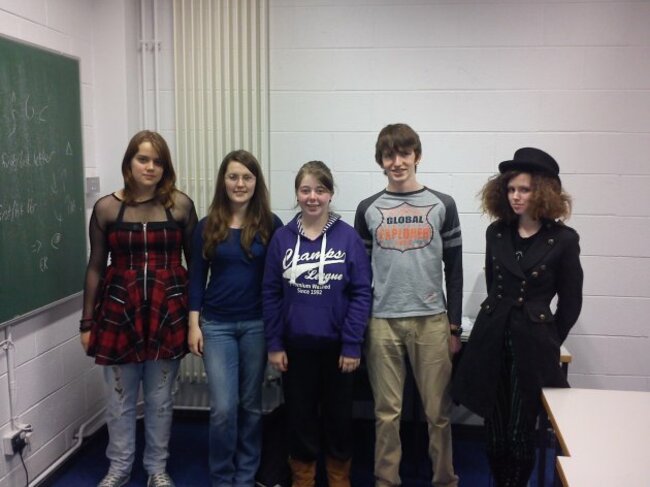
The journalism class at CTYI this summer
Image: CTYI

FOR THOUSANDS OF kids across Ireland, the Centre for Talented Youth is one of the most important parts of the year.

CTYI,  based in DCU, runs classes for academically above-average students aged from 6 to 17. For younger students this means attending classes on Saturdays during term-time, while for teenagers it involves an three-week residential course during the summer.

Here, three students from the journalism class describe what it’s like to be academically talented, the reaction from other people, and what they get out of going to ‘nerd camp’.

Jack Kearney

I have been attending CTYI since I was 7 years old. CTYI is a programme aimed at providing academic stimulus for gifted students between the ages of 6 and 17. CTYI offers its participants a variety of courses to choose from such as Journalism, Philosophy, War and Conflict Studies, Cyber Psychology, Law, Medicine and more. CTYI’s programme not only caters for students during the school year, but also over two sessions during summer.

I first attended the CTYI summer programme in 2010. That year, I studied War and Conflict studies which I greatly enjoyed. It was very interesting to look at a huge number of wars that have scarred our history, and the way the media portrayed these events. We looked at some of the techniques that some media sources used, such as being biased to one side over another and using propaganda to make one side look better then the rest. The course was very enjoyable, but it isn’t just the academia that I enjoy at CTYI. The programme also has a huge social aspect to it, one that I highly value. I have made a lot of friends at CTYI, friends who share the same interests as me, and this is one of the reasons why I hold CTYI in such a good light.

This year, I studied Journalism during the summer session. It was a great experience – I’ve learnt about how journalists and the media go about their work and the risks they take to ensure they get the best material. Working on our own class newspaper was a big highlight for me, and gave me a really idea of what it felt like to be a journalists and work in an office producing newspapers.

I can honestly say that CTYI has been one of the best experiences that I have been lucky to say I have participated in. It’s a hub where young individuals who have the same interests and are all on the same level come together and can just be themselves. I definitely feel privileged to have got the opportunity to do it.

Shauna Caffrey

IMG_20120802_150941

(CTYI students Caroline Gowan, Aideen Byrne, Mary Spillane, Jack Kearney and Shauna Caffrey)

As a student of CTYI, I’ve seen all of the misconceptions that people have about it and the people who go there, and I’ve seen how the media can (albeit unintentionally) misrepresent talented children and alienate them from their more ‘normal’ peers.

As an organisation, CTYI opens up doors for its students to study topics of interest that are not available or accessible in the school system, which can often help students (we call ourselves CTYIzens) to discover things that they may want to follow in their life, be it in college or just in their spare time.

But one of the most important things about CTYI is its social scene. It’s true that a lot of talented children have social anxiety and find it awkward communicating with their peers (not in all cases), but CTYI gives them, us, a chance to meet people with similar interests, and who most likely have experienced similar social situations.

CTYI has as vibrant and full social scene as any other place where teenagers populate. Maybe the conversation topics are a little different from time to time, but overall there is little difference between CTYIzen to CTYIzen conversations and the conversations held between any other two teenagers.

A flaw in most portrayals of CTYI and its students is that they focus very much on why the students are different. Of course it’s important. Failing to talk about and acknowledge the abilities of talented children would be a travesty. We are different. We’re smart. We have our own traditions (we like to dress as pirates on Wednesday), but we’re human.

We’re teenagers. We watch TV, we like music, we use the internet, we have facebook accounts, we have relationships, we worry about exams.
Sometimes it seems that if people talked about that more people would understand a lot more about talented children, and their world at CTYI.

Mary Spillane

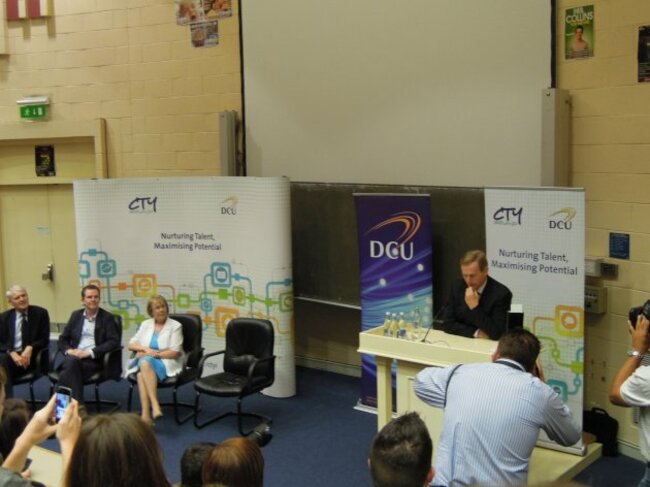
DSCN1051

(Taoiseach Enda Kenny addressing students at CTYI in July. Photo: CTYI)

A solitary tear rolled down my face as the last line of ‘American Pie’ rang out across the quad in DCU. I moved to wipe it away as the talented teenagers all around me erupted into a fit of clapping and emotional hugs.

This is the way the last night at CTYI always ends; one candle-lit ceremony, 300 students and an endless stream of disappointed tears. It’s amazing how attached you can get to your so-called ‘ fellow nerds’ in the space of just three short weeks.

This year’s second summer session at the Centre for Talented Youth of Ireland began on Sunday 15 July and ended yesterday. After my two previous experiences of CTYI summer courses, I was really looking forward to it. But that does not mean I wasn’t nervous.

As a fifteen year old, I had just finished my Junior Cert before starting CTYI. Contrary to the high achievements and effortless As I have been used to for the past two years, my first state exam threw my belief in my own brain. I battled through endless nights of homework and study, trying to learn it all, wanting the best result I could muster.

So, needless to say, barely a month after I had finished, driving up to a summer course full of individuals who nonchalantly got nine or ten As in their Junior Cert was daunting at the least.

At home, there is a certain amount of pressure on me, as a ‘talented; youth, to keep my test results up. I personally hate telling people what grade I got, because their reaction is either an ‘of course you did’ one, or, if they did better than me, the usual is to squeal excitedly and then proceed to tell everyone else their achievement.

When people treat me like this at home, as nothing but a comparative, I cannot help but feel that I must be intelligent. Couple this with the fact that my parents are always telling me that I can do anything if I put my mind to it and you have the makings of a seriously cocky teenager.

But I am not like that. After attending a CTYI course for the first time in 2010, my feet were most certainly still on the ground. In my opinion, all the other attendees were much smarter, being competent enough to discuss the complicated topics and titles relating to ‘Speculative Fiction Writing’ in great detail. I felt useless, stupid, because I did not think I was good enough to be there.

When I first heard about CTYI I thought it would be a great chance to have an intellectual conversation for once with someone my own age. After coming home, I realised I wasn’t all that I thought I was.

So which side of the spectrum did I prefer. Well, that would be a hard question to answer if I had not discovered the method of learning for which I have been deemed ‘talented’. I listen and learn from others, soaking up information like a sponge, I don’t think I’m the kind of person who spoon-feeds the information to others. Knowing this, it was easier to tackle medicine in CTYI last year, making me feel more adept at the coursework. All of a sudden, I was not the overachiever or the completely lost teen anymore. I was just another student, roughly equal in terms of academic ability for a change. It felt good to be in the same boat as someone for a change.

Though now I have regained a quiet confidence in my own academic ability, I still do not consider myself ‘talented’. If I was to give a synopsis of what it is like to be talented in Ireland, I don’t think anything else could sum it up better than my secondary school experiences thus far. I love CTYI because it is challenging, not necessarily more so than school, but in a different way. In short, I love being smarter than average, but I know that I have a long way to go to be considered ‘talented’.

How are gifted young people cared for in Ireland? >

Read next:

Comments (30 Comments)

  • Great to see the students’ perspectives here. CTYI is an amazing, important programme – both academically and socially – and we don’t hear the students’ voices nearly enough when it’s being discussed in the media.

    Reply
  • CTYI basically saved me from madness, or at least complete cynicism and social dysfunction. I’m incredibly grateful for all they do.

    Reply
  • I was CTYI but unfortunately could never afford to take classes in the summer time. there was an intensive course for medicine I had my heart set on but in the end I couldn’t fork out €500 for it :(

    Reply
  • What a lovely piece by a very grounded student. Well done and enjoy your time in school as I am sure you will.

    Reply
  • my brother went to the summer camp for the second time and he loves it. its really great for him because hes not really into things others of his age are into so beyond anything else he gets to hang around with other self confessed nerds and its nice that he comes out of his shell so much and he has a fantastic time.

    as hes also doing first year college level introduction courses it gives him a good idea of what to expect in college so he’ll be better prepred when it comes to cao decision time (unlike me!).

    to be honest i wished i had known about ctyi when i was his age as it would have been nice to hang around with all the nerdy kids (god knows i was a bit of a nerd) and maybe my cao choices would’ve been a bit more thought out

    Reply
  • As an ex CTYIer of many moons ago I really enjoyed this piece. In particular I think Mary wrote a very nice part to the article which I must say really remind me of my own Nerd-camp days! The social aspect of CTYI was vital in my development as hinted at by other comments here. It is a great pity that lack of funding and the current economic situation has probably put this great experience out of the reach of many students who could really benefit from it.

    Reply
  • Nice to see this piece. Gifted education is a contentious issue, no doubt. It is worth pointing out that many gifted and talented kids have learning issues such as dyslexia, dyspraxia, Asperger’s Syndrome to name but a few. It is heartbreaking to see your child’s potential and their challenges misunderstood and/or ignored by any educator, but CTYI, in my family’s experience, does not discriminate against children who are ‘twice exceptional’, but focus on and cater to their talents. As parents, we are learning to do the same. Being different, in any way, is tough. CTYI embraces difference, strives to nurture talent and fills the gaping hole in the Irish education system to some extent. When our Minister deigns to integrate gifted education into schools and the law defines giftedness as the special need it is, we will see the benefits to all students. Until then, we as parents have to bear the cost and the responsibility of raising our children to reach their full potential in life, as well as academically. No child, whatever their gifts and challenges, should lack the opportunity to shine and having a special educational need as currently defined does not preclude intelligence or giftedness. This much I have learned.

    Reply
  • I went to CTYI, qute a few years back now, and I have to say that it completely changed the way I lived my life. I had always been obsessed with reading, and had a knack of picking up most academic things quite quickly, but this meant that school, both in primary and secondary bored me. I ended up spending 5 minutes out of a class doing the work, and the rest either helping my classmates or falling asleep, or alternatively not going in at all as i didn’t see the point in it. It was also difficult to make friends, as very few were interested in the things I found fascinating, and vice versa. My first session in CTYI changed my outlook on life- I hadn’t realised until then that there were people who were like me, who could understand what I was saying without me having to explain every second word. It was the first time classes fascinated me, and the first time that I felt my opinion was valid in class, here people weren’t learning just to pass exams or to get it done, but because they enjoyed finding out more about something they loved. We were encouraged to discuss our opinions and even argue with the lecturers, made to feel like we were adults and on par with the faculty. I made friends there that I still have today, learned skills that I still use today, and I would say the only negative thing I experienced, was having to leave at the end of the three weeks. I would encourage anyone who is able to go, to go. I understand that it has only become more expensive since I was there, but if there is any way that you are able to find the money, I can guarantee you that it will be worth it.

    Reply
  • A very nice piece, CTYI is a very valuable and extremely rewarding experience and long may it continue! I went to several courses back in the day and thought the entire thing was beneficial on many levels. That said, I was also teased about going to “nerd camp”, which I think highlights a problem that Mary addresses.

    Teens seem overly threatened by “talented” people, resulting in this condescending attitude of “oh you’re going to nerd camp to hang out with your strange friends”. I daresay it wouldn’t be entertained very long if the tables were turned and the “nerds” insulted the obnoxious under-performers about their lack of intelligence (oh you broke through 60% that time, good for you!), so why is the opposite acceptable?

    Reply
    • You obviously have an axe to grind Niall! I am a father of twin girls one is academically a high achiever and her sister has a learning disability called Dyspraxia. We recently had an educational assessment done on the child with Dyspraxia and it turns out she has an IQ of 119! Those ‘Under Performers’ that you call them are mainly under-performers because the system has let them down, and they know it! They see themselves being pushed to one side throughout their entire school life and see the “talented” groomed for bigger and better things while they are doomed to a bleak future. Suck it up Niall!

      Reply
    • In reply to Will, if you follow the link at the bottom of the piece you get this:

      “There is little support for exceptionally-abled young people in conventional schools – generally because of the perception that they will do well ‘no matter what’, he says. However, that is not the case: gifted children can be deemed to have special educational needs or learning disabilities. In other words, a child may have a natural intellectual capacity but if this is ignored, or not properly nurtured, they can miss out on developing their talents.”

      Congratulations, you have two talented daughters. Like CTYI students, your daughter with dyspraxia has special educational needs that must be met if she is to thrive.

      Reading Niall’s comment, it looks to me like he is lamenting how his academic ability is made fun of in school, and says that if the tables were turned on the obnoxious people who mock him, it wouldn’t be acceptable. I don’t see how Niall’s attitude leads to the marginalisation of one of your talented kids.

      Reply
    • Aleo 04/08/12 #

      You and Niall both make valid points, Will, but it is you who comes across as the axe-grinder. There are many educators, including those at CTYI, who would share your ideas.

      Reply
    • I think you are all missing my point. I was trying to give Niall the view from the child looking at the smart kids getting all the breaks and letting their frustrations out by calling him a nerd or whatever. I can see with extreme sorrow my daughters self esteem getting squashed every day. I never said that his comments were marginalising one of my kids.

      @ Chris: Your right I have two talented daughters but I know and see that the system is letting my daughter with the Dyspraxia down. I think you are very naive in thinking that her needs will be fully met by the system so she can reach her full potential I can see this at first hand. Just before the holidays I was told by her teacher that she was just lazy!

      @ Aleo: There are many educators who share my ideas but unfortunately they are few and far between.

      Reply
  • I was very very shy when I was younger and my parents really had to try hard to persuade me to go. Ended up being one of the best things I ever did. Attended four years in a row and I loved every second of it. First time I felt like I fit in. My neighbour went for the first time this year and he absolutely loved it.

    Pity the fees have gone up so much for those attending now (think they’ve doubled since the last year I went which was 2006).

    Reply
  • ‘A solitary tear rolled down my face as the last line of ‘American Pie’ rang out across the quad in DCU. I moved to wipe it away as the talented teenagers all around me erupted into a fit of clapping and emotional hugs’

    This bit made me nauseous if I’m honest.

    Reply
    • It may seem a little saccharine, but I’m sure the emotion is real. For many students, CTYI is a chance to hang around with people who are passionate about the same things as they are, in an environment that celebrates diversity. It’s an intense emotional experience, being with others 24/7 for three weeks without a break, and the bonds of friendship seem unbreakable on the last day when everyone goes home. Of course, the real world pops the CTYI bubble then, but in the moment it may feel like it will last forever.

      It’s a pity that the withdrawal of Government funding now puts the CTYI experience out of the reach of most talented kids.

      Reply
    • Ah jaysus Anthony! We’re talking about kids here! I remember making friends on holidays as a child and teenager, hanging out together every day for 2 weeks, and everyone being upset after we went our seperate ways a fortnight later. Such emotion is real and heartfelt. It’s a lovely thing in this cynical world of ours

      Reply
    • Ah Tokidoll, I didnt mean to come across as cynical. I believe talented kids should be encouraged and their strengths developed. Chris talks about diversity, but I fail to see the diversity in the collective gathering of a group of ‘superkids’,if you like.

      Reply
    • Tokidoll 04/08/12 #

      Quoting the girl’s description of an emotional moment and describing it as nauseating came across as quite cynical and a bit mean to be honest. Fair enough if you didn’t mean it to, but the girl could be reading this. Not sure your comment would make her feel any better… As far as the idea itself goes, I think it’s great. Talented or gifted children have known to be victims of exclusion, taunting or general wariness on the part of other pupils. In extreme cases, some have even been known to try and “dumb down” to try and fit in. Maybe nowadays things are better, but this was certainly the case in the past. This celebrates their gifts in an environment of likeminded children, which is reflective of the diversity that exists among children. I’ll bet you find each child excels in different ways.

      Reply
    • Wesley 07/08/12 #

      “You made a common grammatical mistake, you said nauseous when you meant nauseated. But go on.” – Sheldon Cooper FTW.

      Reply
  • When ‘smart kids’ fail it is the system, government, academia, society, ad inf. that takes the blame. If the term ‘smart kid’ is applied because of higher than average scores in IQ tests then why are IQ tests not to blame for failures? The inescapable conclusion is that IQ tests do not test for intelligence!

    Reply
    • Most educators do have issues with IQ tests, and it’s aptitude tests rather than ‘intelligence tests’ as such that most gifted education or high-ability programmes use to assess students. The idea that ‘smart kids’ should succeed immediately at everything simply because they have a high aptitude for something is a misguided assumption – if this was the case then why would we bother teaching anyone anything at all, if their innate aptitude was the only factor? It isn’t, of course; all students need to learn how to learn, and the educational system does fail many students with a lot of potential, just as it fails many of the students at the other end of the spectrum.

      Reply
    • Academic ‘aptitude tests’ are another name for IQ tests. Changing the name does not improve the credibility of such tests. The converse of your argument would be to ask, how many students fail the educational system? Would there be other factors (extraneous variables) that have not been considered in the wider debate?

      Reply
  • Smart kid quote ” I’m studied journalism ” eh , what to say to that!!

    Reply
  • Sharrow 04/08/12 #

    Yes it is a wonderful program for bright kids, if their parents can afford the IQ tests and the cost of the programs.

    Reply
    • Just to clear something up, you take the SATs not an IQ test. When I attended if you got the required maths score (older you are taking the test, the higher the requirement) you can do a science course, and if you get the required english score you can do a humanities course.

      Reply

Add New Comment