TheJournal.ie uses cookies. By continuing to browse this site you are agreeing to our use of cookies. Click here to find out more »
Dublin: 9 °C Saturday 18 May, 2013

Less than 5% of sex offenders convicted in Ireland

Support group One in Four says the way the Irish criminal justice system treats victims of sex crimes is “simply unacceptable”.

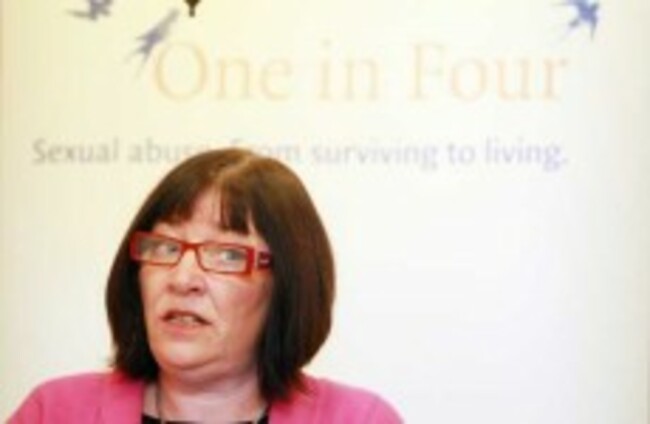
One in Four's Maeve Lewis at the publication of the report yesteray.
Image: Photocall Ireland

CRIMINAL TRIALS IN sex abuse cases only serve to re-traumatise the victims, says advocacy group One in Four.

“It is not uncommon that procedural requirements, such as seeing the perpetrator, recalling the abuse and cross-examination evoke feelings of anxiety, isolation, confusion, exposure, powerlessness and intimidation,” says advocacy director Deirdre Kenny.

As a result of the difficulties in accessing the criminal justice system in Ireland, fewer than 5 per cent of cases result in conviction, the support group revealed in its annual report.

The organisation says it remains concerned about the experiences of victims who have gone through the system. Many of the group’s clients remain bewildered at why the Director of Public Prosecutions has not taken a case against the offender.

“The DPP often does not give a reason,” Kenny said, “there is a definite lack of information being passed on.”

Unacceptable

Executive director Maeve Lewis said, “The way in which the Irish criminal justice system treats victims of sexual crime is simply unacceptable.”

The system is long overdue a fundamental overhaul, she added.

In contrast, Kenny told TheJournal.ie that most of the group’s clients have had a positive experience with the Gardaí in recent years.

“As an organisation, they have addressed the issues they may have had around sex abuse. The experience of victims has definitely improved in recent years,” she said.

Increasing concerns

Lewis explained that the number of notifications made to the Health Service Executive about suspected sex abuse rose in 2010 because of mandatory reporting of concerns.

We are very concerned that in many instances those concerns are not investigated, either because they are historic allegations, or because we could not name a specific child who might be at risk. Just because sexual abuse took place ten or twenty years ago does not mean that the alleged offender is no longer a risk to children.”

Altogether in 2010, One in Four provided 749 people with information and support in accessing the justice system.

A separate report is due out this year in which the support group examines its clients’ “harrowing experiences” with the system.

Kenny said the consequences of victims reporting abuse to the Gardaí and HSE are far-reaching.

She said, “Clients report social and familial isolation, denial, withdrawal of support, intimidation and threats. Victims fear how the act of reporting and initiating a court case will affect relationships within their family and in the wider community.

Some clients have felt their lives would be at risk if they were to make a report.”

Unfortunately, the adversarial nature of criminal trials leaves many victims feeling they themselves were on trial, explains Kenny.

Treatment for sex offenders

As conviction rates in Ireland remain low, One in Four hopes to offer more services for non-convicted sex offenders who are living in the community.

The State provides treatment programmes for convicted offenders in prison or those on release.

During 2010 there were 21 sex offender in the group’s community-based treatment. Fifteen of those had abused a child and in 10 of the cases, the victim was a relative – either a sibling, niece or nephew or their son or daughter.

One in Four has previously called for the Children First guidelines to be put on a statutory footing, something which the current Government has promised to do.

Under legislation proposed by Justice Minister Alan Shatter, non-compliance with mandatory reporting could incur a sentence of up to five years. The proposed new laws are causing some confusion and concern, Kenny told TheJournal.ie.

“We get a large number of calls of people who are aware of abuse but are not sure how to report it. It can be very distressing for victims to come forward. They need a lot of support and having clear information is important.

“Clarification on the proposed legislation would be helpful,” she added.

Read: Child sexual abuse support group reports continuing high demand for services>

More: Version of Sarah’s Law to be introduced in Ireland>

Read next:

Comments (13 Comments)

  • 5% of ACCUSED sex offenders are convicted. There is a fundamental difference, you know.

    Reply
  • Alan Shatter needs to re-evaluate this issue. It is obvious that either the justice system is too narrow, or the system in general is too lenient. The system needs to be changed in order to give more resources to the gardaí to be able to investigate such problems.

    Reply
  • You could also have titled “95% of accused sex offenders are found not guilty” – that would have given a different spin on things.

    There is a network of support groups also for people wrongly accused of child abuse: it’s called VOCAL – Victims of Child Abuse Laws. I guess Ms. Lewis would like them all in prison too?

    Thank God in this country there is a justice system that does not condemn people before evidence is heard and considered.

    Reply
  • Is this news to anyone? I would venture to say that less than 5% of any criminal group is convicted in this country.

    Reply
    • Nah, all kinds of rape and sexual assault are particularly difficult to prove, and in many cases the victims don’t speak up because they don’t want to go through the trauma of a confrontational trial. And even then, when

      The problem is that reforming the way criminal trials proceed is going to be morally dangerous. The defendant is entitled to a chance to defend himself, so we simply cannot remove cross examination. And in most cases the only witness to the crime is the victim. We’re left in a hole, so where do we go to now? Lord only knows…

      Reply
    • *And even then when they do go forward, they can be discredited by the defence. Especially in child abuse cases, when the person who reports it is usually much older, there’s never any biological evidence.

      Reply
    • This is an inherent problem with the judicial system here coupled with a lack of accurate information systems. How is it that you have people running around this country stealing cars and mugging people with 60 or 70 convictions and they aren’t doing life? I’ve witnessed this over the course of 10 years and can say without hesitation that it is the courts failing the justice system here.

      Reply
  • Darren 15/09/11 #

    In a lot of these cases, It’s usually just one persons word against another’s so you can’t put someone in jail on that

    Reply
  • Why doesn’t this surprise me! Ireland has a complex when it comes to sex, be it crime or anything else to do with it, catholic hangover I think.

    Reply
  • Don’t spilt hairs and stay on the subject

    Reply
    • It’s actually a fair point. We’ve had seventy year olds speak up about being abused by priests for the first time, so clearly talking about the crime is something that’s very difficult for people. The figures OneInFour are releasing are to do with people who they have given support to, one way or another.

      5% is terrible – but the reality is far worse. We need to get a much better state support infrastructure together to make it easier for victims to speak up, even if they don’t want to press criminal charges.

      Reply

Add New Comment