Sign in. It’s quick, free and it’s up to you.
An account is an optional way to support the work we do. Find out more.
Sign in. It’s quick, free and it’s up to you.
An account is an optional way to support the work we do. Find out more.
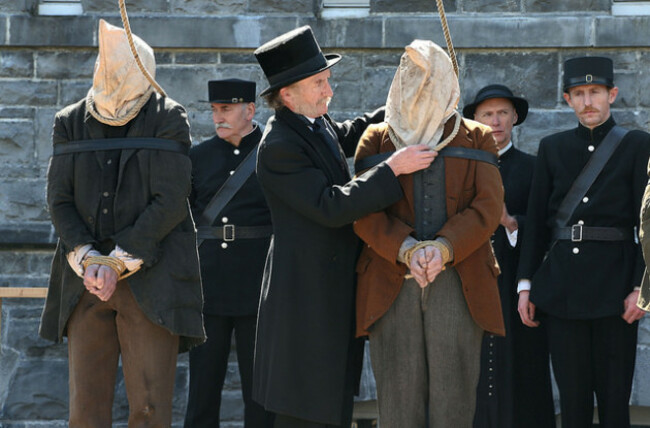
ON AUGUST 17 1882 five members of the Joyce family were murdered in their home in Mám Trasna, which lies in the hilly, isolated, countryside on the Mayo-Galway border.
In a trial that followed eight local men were convicted of the crime based on, what was later to be revealed as, perjured evidence.
Alleged eyewitnesses and informers were paid for the evidence that led to the conviction of the men, one of whom was Myles Joyce (Maolra Seoighe) who was pardoned by President Michael D Higgins this afternoon.
Joyce and two others were hanged for the murders, while the five other men received life sentences. Two of the convicted men died in jail while the remaining three were released 20 years later.
Before the execution, the other two men separately admitted that they were guilty of the crimes, and said that Joyce was innocent.
However this was deemed insufficient to stop the execution and Joyce was hanged along with the other two on 15 December 1882.
Last year the government appointed an expert to examine posthumous pardons in the case.
The constitution grants presidents the power to pardon, commute or remit punishments imposed by the courts, but they must act on the advice of the Government.
In March the Minister for Justice, Charlie Flanagan, approved Joyce’s pardon which opened the door for President Higgins to sign the warrant granting his posthumous pardon today.
Only five presidential pardons have been awarded since 1937, and this is the first for a case which occurred before the State’s foundation.
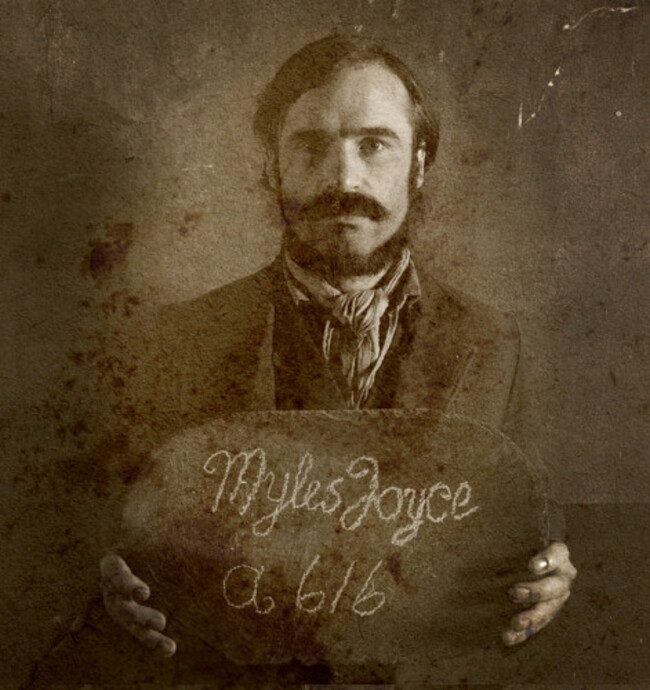
Speaking in Murdair Mhám Trasna, a new drama-documentary on TG4, President Higgins said the British authorities viewed the convicted men, who were native Irish speakers, as a “race apart who were not on equal footing with ordinary civilised people”.
“Everything that happened at that level of the State was horrendous. There was bribery involved,” he explained.
The accused didn’t get a chance to defend themselves. There wasn’t an atmosphere of equality and there was no equality as regards legal processes at that time.
Documentary
The documentary, which will be broadcast on TG4 at 9.30 tonight, is based on the book Éagóir, written by former language commissioner Seán Ó Cuirreáin.
Speaking to TheJournal.ie, Ó Cuirreáin explained that he took such an interest in the case because it involved issues of language rights.
“If you’re tried in a court of law in a language that you don’t understand, then you can’t really contribute in any meaningful way,” he said.
When you can’t even speak to your own solicitor because he doesn’t speak your language, then there are huge fundamental problems of law.
The feature-length film was directed by Colm Bairéad.

To embed this post, copy the code below on your site












have your say