TheJournal.ie uses cookies. By continuing to browse this site you are agreeing to our use of cookies. Click here to find out more »
Dublin: 14 °C Thursday 20 June, 2013

Recycling project turning cigarette butts into plastic

Entrepreneur has turned a creative eye on all kinds of refuse that would previously have gone straight to landfill.

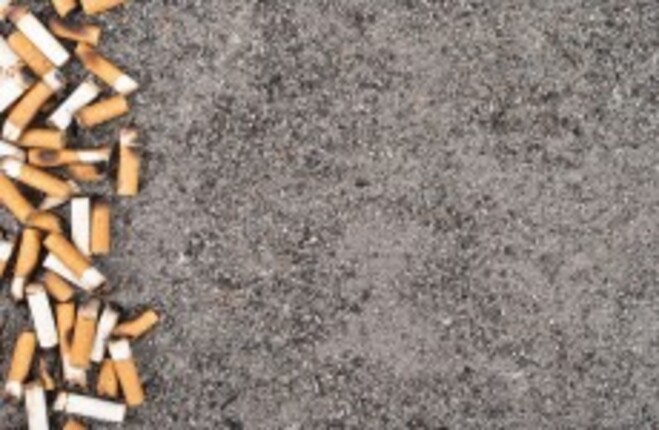
Cleaning up their act: discarded cigarettes can be broken down and recycled.
Image: SeDmi via Shutterstock

RECYCLING ENTREPRENEUR Tom Szaky is stubbing out the world’s cigarette problem – one butt at a time.

The 30-year-old who dropped out of Princeton University to start his innovative company TerraCycle in Trenton, New Jersey, says there’s no such thing as trash, even when you’re talking about the contents of ashtrays.

In a programme started in May in Canada and now running from the United States to Spain, TerraCycle collects cigarette butts from volunteers and turns them into plastic, which can be used for anything, even ashtrays themselves.

The discarded cigarettes, which litter countries around the world, are first broken up, with the paper and remaining tobacco composted.

The filter, made of a plastic called cellulose acetate, is melted down and turned into an ingredient for making a wide range of industrial plastic products, such as pallets – the trays used to ship heavy goods.

It seems that for once smoking benefits everyone.

The tobacco industry, happy to get some decent publicity, pays TerraCycle.

“Points per butt”

Volunteer collectors win points per butt, which can then be redeemed as contributions to charities.

Pavements start looking cleaner. And TerraCycle, which sells recycled products to US retailers like Walmart and Whole Foods, gets more business.

TerraCycle has a similarly creative view on all manner of other refuse that has tended to be bracketed as impossible to recycle and is instead sent to the landfill.

Juice sachets, plastic bottles, pens, coffee capsules, candy wrappers, toothbrushes and computer keyboards are all grist for TerraCycle’s mill.

Some items go to classic recycling, meaning they are used purely as material for a wholly new product.

Others are upcycled, which means the shape of the piece of garbage is retained and incorporated into a new product. For example, candy wrappers, complete with their logos, are used to bind books, or are joined together to make backpacks.

“The purpose of TerraCycle is to make things that are non recyclable recyclable,” CEO Szaky told AFP at the New Jersey headquarters. Soon they’ll be doing chewing gum and dirty diapers, but Szaky said his “personal favourite” is used cigarettes.

“Expect to see the project spread across Europe”

“It’s the ash, the cigarette butt, it’s the packaging, everything,” he said.

“After we launched it in May in Canada, it was so successful, we collected over a million cigarettes in a short period of time. We had all these great organisations collecting and the tobacco industry was so excited that they launched the program in the US, in Spain.”

Expect to see the project spread across Europe and possibly Mexico in the next four months, Szaky said.

It takes between 1,000 and 2,000 butts to make a plastic ashtray, and more than 200,000 to make a garden chair. Not that there’s any shortage of supplies: 37 percent of the world’s litter is in cigarette butts, with up to a couple trillion thrown out yearly, Szaky said.

About 35 million people across 22 countries take part in TerraCycle’s collection programs, which are financed by businesses, like Old Navy clothing in the United States and Colgate, which supports the toothbrush collection.

“When we created the cigarette solution, we went to big companies and showed them plastic made from used cigarettes. They couldn’t believe it and the companies got very engaged,” Szaky said.

“They not only finance the program and pay for all the costs, they are out here, and are going to do very aggressive promotion.”

Szaky’s company began when two people had the idea of harvesting worm excrement for fertilizer. Now it employs about 100 people.

“I want to solve every kind of garbage that exists,” he said. “My real goal would be that there is no such thing as garbage. Garbage doesn’t exist in nature.”

Szaky previously attracted attention with his organic fertiliser product which was made from worm waste (the fertiliser sells under the brand name Worm Poop/ AP Photo/Mel Evans)…

Worm Waste Suit

…and then packages it in recycled soda bottles like these (Tom Szaky pictured in 2005/AP Photo, Jose F Moreno)

WORM WASTE

- © AFP, 2013

  • Share on Facebook
  • Email this article
  •  

Read next:

Comments (7 Comments)

  • Cigarette butt litter is a serious problem, every day I see smokers stubb their butts on the pavement without giving it a second thought; these same people wouldn’t dream of throwing a used sweet wrapper away, but cigarettes seem to fall under a different category, I suppose it’s not as easy to stick a lighting cigarette into your pocket. When I lived in Australia, the shops selling cigarettes also gave out free stubby boxes, they were basically small plasctic containers (similar to a camera film box), that you could put a drop of water into and then use it as a little portable ciggy stubber, the plastic lid stopped it from getting smelly and you could dump the contents as soon as you passed the next bin – A simple solution to a terrible problem..

    Reply
  • Great idea, but can it possibly be true that “37% of the world’s litter is in cigarette butts”? That seems highly unlikely to me!

    Reply
  • Really happy to see this.. My ex worked in environmental science and I remember cigarette butts were one of his pet peeves for the reason mentioned above – the amount of time it takes for them to break down.. And I agree, seeing them everywhere is as bad as the chewing gum!
    If they can serve a positive purpose then it’s a great thing.

    That stubby box sounds like a fantastic idea, pity we don’t have that forward thinking here..

    Reply
  • Guilty!!

    Reply
  • Well although the 37% figure is almost incredible, the underline matter is very true: when we talk about waste, there’s no such thing as garbage. We seem to be stuck in the traditional waste concept where recycling is seen as an “alternative”. Same misconception is also seen when talking about “alternative” energy, suggesting that green energy is just optional, which it certainly isn’t anymore.

    Reply

Add New Comment