TheJournal.ie uses cookies. By continuing to browse this site you are agreeing to our use of cookies. Click here to find out more »
Dublin: 19 °C Tuesday 18 June, 2013

Central Bank to review how banks handle ‘distressed’ mortgage holders

Governor Patrick Honohan told Oireachtas committee that Central Bank checking that institutions are following its code in tackling mortgage arrears: “They are behind the curve”.

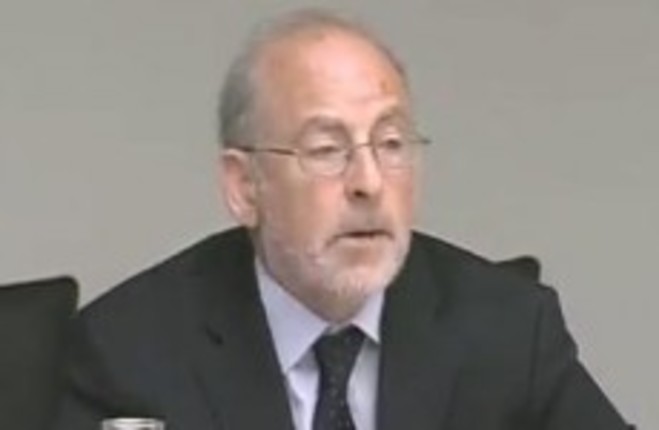
Central Bank Governor Patrick Honohan speaking this morning at the Oireachtas Finance Committee.

Updated 11.49am

THE GOVERNOR OF the Central Bank has announced that his staff are carrying out a review of how financial institutions are observing the current code of conduct in dealing with mortgage arrears.

Patrick Honohan has told the Oireachtas Finance Committee this morning that while a blanket forgiveness scheme for mortgage debt relief is not likely (as Finance Minister Michael Noonan also told the committee yesterday), the banks ARE expected to look after those people in large arrears. He said that “it is clear that many lenders have been slow to recognise” an inability in the case of some mortgage-holders to service their debt. He said:

We think that they (the banks) are behind the curve.

He added that it was a “difficult job” to identify these “distressed” borrowers when some are not coming forward to try and renegotiate their loan terms, but that the banks needed to do more and had failed to put sufficient resources into this area up to this point.

Honohan said that while “the vast majority” of people were continuing to serve their mortgages, there has been an “exceptional increase” in the number of households falling into arrears. However, despite recognition of this number of cases, Honohan said that the mortgage debt issue had to be dealt with on a “case-by-case” basis and that a blanket solution is not in the works.

Some suggestions Honohan made for relieving distressed debtors included the mortgage holder staying in the house on a rental basis, a shared-equity temporary solution, restructuring of payments and a moratorium on payments. However, borrowers would not be allowed to “walk away” from their debt, especially in the case of buy-to-let investments.

Answering Fianna Fail’s Michael McGrath, the Central Bank chief acknowledged that some banks had negotiated with borrowers to try and relieve debt that cannot be fully paid back. However, he said that it was not something that the Central Bank had ruled those banks undertake.

Honohan said that the Central Bank was “vigorously policing” the code for dealing with “distressed” mortgage-holders and were undertaking a review of whether banks were sticking to these guidelines. “Banks need to work harder” to reach out to troubled customers on a case-by-case basis, he said, and the Central Bank has ensured that the banks can absorb some losses in the worst cases.

Mathew Elderfield, deputy governor with the Central Bank, said that the review would focus on whether the banks were staying their hand on court action until they had explored all other options with the debtor, and whether the process was efficient.

Read: Michael Noonan – “no magic bullet” for mortgage debt relief>

  • Share on Facebook
  • Email this article
  •  

Read next:

Comments (14 Comments)

  • If they give you the option to rent the house back off them, obviously they will be after looking at what you can afford to pay so why wouldn’t they just let you keep paying your mortgage at that rate instead of making you rent it. Their still getting their money, albeit in smaller sums over longer periods, but they will still be getting it.

    Reply
  • The solutions to our economic problems is growth. These include unemployment, distressed mortgages, excessive public and private borrowing.
    Economic growth will not begin until the size and cost of government is reduced.
    http://origin.heritage.org/research/reports/2005/03/the-impact-of-government-spending-on-economic-growth

    Reply
    • @Sean. You are a treasure trove of info. Thank you and keep up the commentary, links and posts. I find your info well informed and relevant.

      Reply
    • I appreciate your comment RP. As the father of a young family, I think it’s important that we try to find a constructive way out of this mess.
      I have posted other links on the Irish Liberal Institute’s and Unitedright’s fbp if you would like to learn more or have any comments.

      Reply
  • Our society is made up of people who care and those who don’t. The ‘Don’t’ will take any opportunity that comes up to get out of paying. Times are hard, fook the bank lets stop paying our mortgage.
    I am more concerned about the ones that do care, we are the ones that keep paying our mortgage while we sacrifice everything else in life. This is done out of a sense of decency yet we will be the ones at the bottom of the heep when the help comes around.

    Reply
    • I agree with your point Gary and I don’t believe things should or need to be like this.

      Reply
    • Spot on Gary.
      Personally I think that I’d a property is used to guarantee a mortgage (yes people, that’s the way mortgages work) then the loan should clear if a house is repossessed or handed back to the lender.

      In parallel schemes like extending loans, renting should be in place.

      Reply
  • as long as those who really are in trouble get helped and not those like yawn muppet who was expecting the debt been wrote off because the rent she ws charging wasnt enough to cover the mortage

    Reply
  • I trust my neighbor to recirculate his/her income into the economy more than any Governbank.

    Reply
  • Anyone read http://www.blankofireland.com ? Time for all mortgages to be scrapped?

    Reply
  • Honohan should be hung out to dry with the rest of the shower that wrecked this country How i hate thie man and for what he stands for HIMSELF

    Reply
  • 2 scenarios:

    1. Self employed person buys apartment to rent and provide a pension on retirement. Business bombs, gets into debt, can’t afford mortgage.

    2. Public servant buys large family home on both husband and wife’s salary. Wife loses her job, falls behind on mortgage, bank wishes to repossess house.

    Which of the above should receive debt forgiveness?

    Reply
    • Single, very mature woman, saves for 12 years to buy deralict cottage and tries to do it up, looses job and applies for over 150 jobs in one year. Contributes to society by volunteering and organising community groups, Is given disability benfit but still persists in looking for work as she feels that she can contribute and is useful to society. Borrowed a modest amount, owes no one else any monies. Never missed a payment has worked with banks to ensure no debt on mortgage just paying interest. Would like to sell cottage and move into rented property, but no one is buying.

      @Oil we all have our own lives and its impossible to pigeon hole people. I dont think second homes/rented properties should get any form of relief or support. However, these are the people that can afford to be represented so would probably get financial relief.

      I dont beleive that the bank shoud be in charge of any mortgage relief help, its like asking a wolf to mind the sheep !

      Reply

Add New Comment