TheJournal.ie uses cookies. By continuing to browse this site you are agreeing to our use of cookies. Click here to find out more »
Dublin: 11 °C Tuesday 21 May, 2013

Could Ireland ever become a totally cash-free country?

Irish people take out more money from ATMs than anyone else in Europe. So could we ever move to an electronic-only system?

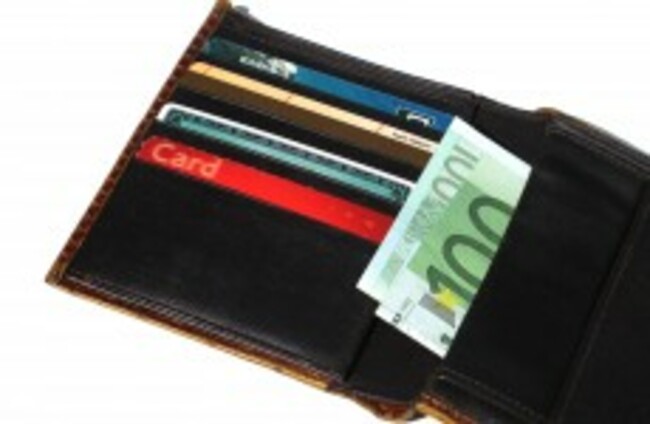
The average person might be willing to use a debit card for a €100 transaction - but would be less keen to use it for a €3 cup of coffee.

IN THE YEAR 2010, the average Irish person – including those who do not have bank accounts – went to an ATM machine 40 times, withdrawing a total of €4,982 across the year.

In the same year, the average Dane went to an ATM just three times, withdrawing €405 in total. To put it another way: the average Irish person withdraws more cash from the ATM every month than the average Dane does every year.

Ireland comes close to the top of the table in terms of the frequency with which we visit ATMs every year (only the UK and Portugal are more frequent users) – and we’re right at the top in terms of the absolute cash we withdraw, well above the €2,786 average for the eurozone.

While there are some mitigating factors in this – people on the continent have a more lingering tendency to walk into a bank branch to withdraw cash, instead of using a machine – the fundamental truth is obviously: as a nation, we Irish are still pretty attached to our cash.

It doesn’t just end there, though – we’re also one of the few European nations to still actively use cheques – and it all begs the question: in a world where more and more people use debit cards to pay for products, could Ireland ever become a society where cash simply isn’t used at all?

A group being overseen by the Central Bank is aiming to examine the impediments that stop Ireland from being more reliant on electronic transactions – including stakeholders from banks, utility companies and government departments.

The group’s ultimate goal is to produce a National Payment Plan (NPP) – which isn’t intended simply to result in cash being phased out entirely, but rather to try and break down the barriers so that someone might use a debit card to pay for a €100 product doesn’t feel the same inhibitions using it to pay for a €10 one.

‘Not as efficient as it should be’

Ronnie O’Toole, who is overseeing the formulation of the plan at the Central Bank, says the co-ordination of a new national payments strategy is motivated by “a recognition for a long time that Ireland’s payments system isn’t as efficient as it should be”.

This doesn’t necessarily mean the total abandonment of cash – something which many people would find detrimental if all payments became electronic, given how we often think of banknotes and coins when we think of how much money we have to spend in our wallets.

“For many families, cash budgeting is very important – even, literally, setting aside €10 a week,” O’Toole says. “There’s substantial demand for it. A lot of people like the anonymity and the immediacy of cash – and they feel safer if they’re not dependent on IT structures and the likes as well.”

This is why the National Payments Plan isn’t intended to focus on scrapping cash – but more about breaking down the barriers so that people who want to use other means of payment can actually do so. “We’re more along the lines of how we can increase choice,” O’Toole says. He adds:

Pretty much anywhere, you can go and pay for something in cash, but it’s not as easy with a debit card, for example. We’re behind most northern European countries in terms of point-of-sale terminals.

In taxis in the likes of Copenhagen or Brussels, you can pay for a taxi by debit card on the spot. In Dublin, overwhelmingly, you can’t.

Spending money – and saving it too

David Fitzsimons of Retail Excellence Ireland believes the overdependance on cash is not only inconvenient, but deeply expensive. Though people might avoid debit cards because of their transaction costs, the ultimate cost to a retailer of accepting cash – and having to sort, bag and deposit it – is much higher.

“It also has a cost to the State, because as an economy we’re more open to fraud and to a shadow market,” he says.

Russell Burke, the head of strategic development at the Irish Payment Services Organisation, points to research which identified potential savings of up to €500 million a year – particularly in larger payees like government departments – if Ireland could move away from its cash-and-cheque culture.

“Looking back Ireland was relatively late in the adoption of both debt and credit cards, in comparison to other countries,” he says, suggesting that the duopoly of cash and cheque caused a hangover that stopped Ireland from taking so keenly to newer options, even if they were more convenient.

There are two main difficulties with the transition to a purely electronic system. The first is that it’s often fundamentally inconvenient to fish out a debit card to pay for a relatively low-value transaction when the chances are you’ll have sufficient coinage anyway.

Burke poses this scenario. Imagine yourself in a cafe or a pub, buying yourself a coffee or a pint. You might be the sort of person who would use a debit card in a supermarket when you’re buying €50 of groceries – but would you use the same card to buy a €4 drink?

Probably not – because in the time it takes to dig out your card, stick it into the terminal (which someone might have to bring over to you), put in your PIN, and sit and wait for the transaction to be cleared, you could just as easily hand over a €5 note and move on.

A vision without contacts

A solution to this is on its way though – and it’ll be in the hands of most Irish people by the end of the year. Both AIB and Bank of Ireland are replacing their traditional Laser cards with contactless ones, which get rid of the PIN-and-dial-up system for any transaction under €15.

So – if you’re paying for a coffee or a beer, you’re much more likely to whip out your card (or even just your wallet, with your card tucked inside) if you can hover it over a wireless terminal for a couple of seconds and pay for your product that much more quickly.

The second problem is that money is, in the words of economists, a ‘networked good’ – it’s only useful as part of a two-way process. If nobody will accept your money, your money is worthless.

Just ask anyone with a stash of Zimbabwean dollars – a currency which became some distrusted that even though it’s legal tender, people simply don’t take it any more. Money is useless if nobody will exchange it for a good or a service.

Thinking about the problem that way, it actually becomes more apparent that the difficulty isn’t so much to do with encourage people to want to pay by electronic means – but rather to receive in the same way, a method which is seen as being beyond most ordinary people.

A vision from overseas

This is where we can look across the water to more recent innovations – to a system being pioneered in Britain by Barclays – for a more hands-on solution. The bank’s Pingit system obscures the nitty-gritty of making payments in elegant and perhaps ingenious way.

As O’Toole mentioned above, one of the main reasons people like cash is its anonymity – a stranger can walk into a shop, buy a coffee from another stranger, and leave without ever compromising their identity or anything salient about themselves.

With an electronic transaction, there’s not quite so much freedom – because fundamentally, one party will need to share their account details, whether that’s through a cheque (including the buyer’s bank details) or an electronic transfer (with the recipient’s).

But Barclays’ solution covers both of these – by simply inviting customers to link their mobile number to their account. If a Pingit customer wants to send money to someone else, they open their app, enter the recipient’s phone number (or choose it from their contacts), enters the amount, and sends it. The recipient gets a text message confirming the arrival of the cash, and instructions on how to claim it. If the recipient is also a Pingit user, with their phone number tied to their account details, they get the cash immediately.


(YouTube: svrgunner08)

The elegant solution could work across multiple banks and mobile networks, particularly if managed by a neutral intermediary like IPSO – which already exists with the fundamental goal of facilitating transactions between institutions in the first place.

This could even get around some of the other scenarios where you might not imagine an electronic transfer to be feasible. If you call your local chipper and get a delivery on a Saturday night, you might not think an electronic payment is workable – but if it’s all done with mobile numbers, the delivery man could leave as soon as he gets a text message confirming your payment, and no cash need every change hands.

Hindrances

There are, however, other less technological challenges at present – including the price of having an electronic terminal installed. As Burke explains, renting the machinery to accept electronic payments isn’t cheap – and some fledgling businesses might not bother, given how the costs could undercut their profit.

Though there are some elegant solutions to this – like those offered by Square, the side venture of Twitter founder Jack Dorsey, which makes small card-reading gadgets that plug into smartphones – there aren’t many on this side of the planet, and so the NPP discussions include the banks – who mostly have indirect stakes in merchant services companies – to see how their costs could be lowered.

The second difficulty is that the reintroduction of banking fees at AIB and Bank of Ireland (and, reportedly, at Ulster Bank) are actually a disincentive to use electronic means. Under both systems, electronic transactions are cheaper than cash ones – but one cash transaction can cater to many payments.

So if you’re going on a night out, and you might go to the bar five times, you can either use your debit card – and incur five different 20c charges – or take out a load of cash, and take a single 30c hit. On aggregate, it makes more sense to use cash.

A nudge in the right direction

Burke acknowledges that this presents difficulties – but points out that there are other case studies which can be used for inspiration on how to coax people into electronic means:

The Oyster Card in London is a good example of incentivising electronic options. When they rolled it out they offered lower fares, they made it so that the majority of barriers used the card only, and they arranged contactless cards so you could swipe your way through.

Similar artificial nudges could be employed in Ireland, he believes, to overcome – though Ireland’s banks are also part of the NPP discussions so an alternative model for transaction fees might be arrived at instead.

In fact, it’s possible that both of the two solutions could be solved by the mobile phone – because more and more phones are being designed with a built-in wireless transmitter which could actually double as a contactless debit card. So, instead of fishing out a debit card to pay for your coffee or taxi, you could just whip out your phone and hold it over the transmitter. Paying for a pint? There might, literally, be an app for that.

How long will it be?

But just how close is this utopian idea of a totally cash-free society? O’Toole isn’t quite convinced that the entirely electronic era is just around the corner.

“You can go on the net and find predictions for the ‘end of cash’ going as far back as the 1950s. We’ve been on the cusp for a long time, and I imagine we’ll be on it for a very long time!

“We certainly could be using our money better – and that’s the whole view of the NPP – but we’re not on the cusp of a cashless society.”

Fitzsimons, though, is much more enthusiastic – and says the Pingit model could lay the foundation for the future of payments.

“If you look at what’s happening in the UK with Barclays’ Pingit, you will in a very short space of time be going into a grocery store, or coffee shop, and sending the properitor the cash through your phone.

“A significant proportion of the population have mobiles, so I don’t see it as being a barrier,” he says, predicting that a “significant cohort of consumers” will make the jump shortly.

Burke reckons certain ploys – like the sponsorship concerns that mean London’s Olympic Stadium will take only contactless cards – will also send people over the edge, particularly if the new breed of smartphones can substitute for a card.

One of the great things about the use of mobile phones, [is that] quite often those people suffer the most because they don’t have access to computers, broadband, and so on.

But virtually everybody does have a mobile phone, so therefore if the solution is mobile-based, they’re not going to be excluding those elements of society and to make sure they are included. A mobile would ensure maximum inclusivity.

Read: Could Ireland ever abandon the 1c and 2c coins?

Read next:

Comments (53 Comments)

  • Scrapping the annual stamp duty on cards might help as well.

    Reply
  • Hmm what about all the small businesses ( tea rooms etc
    ) that don’t accept laser or credit card cos the fees are too high!

    Reply
    • Exactly. Small businesses refuse to pay a tax to the banks for the use of their machines. A cashless society is a bankers dream and a punters nightmare. Think of the cues we experience in the bank already. More jobs will be shed and more branches closed

      Reply
    • Paul 17/06/12 #

      Read the article: use your leap card (no transaction charge), use a phone app, text the money to someone

      Reply
    • @Karie Murray

      By the end of the year they’ll be closer to making it impossible for you to have the choice. You might move your account but the next bank isn’t far behind. By the end of this year possible next year nobody will have the choice. All wages will be paid by internet banking by companies, small and big and all banks will refuse to take cash or give cash.

      Reply
  • When you use an ATM and take out your money, you get charged once for that service. When you spend that money you can’t get charged for each transaction using that cash.
    If we were in a cashless/electronic society we would be charged for each and every transaction we made. Resulting in more charges for us and more profits for the banks.

    Reply
    • Totally correct. Only a fool would let him/herself open to charges for every single financial transaction undertaken. Does anybody seriously think I would pay a transaction fee for a cup of coffee or a a pint of beer, it’s expensive enough!!!!

      Reply
    • @Eamonn Connaghan & Anthony O’Brien

      All the banks have already started. Many don’t realise it yet, but when one is standing in the queue in the bank and a cashier/bank official comes over and asks “would anyone like to lodge”? Some say yes, and the bank official shows them how to use the little lodgement machine. They don’t want to deal with people any more at counters that are lodging a few bob or taking it out. Because customers will be able to do it themselves as many do it now on their internet banking.

      National Irish Bank started this 2/3 years ago. They do not deal with ‘ordinary day to day transactions’ any more and now Bank of Ireland won’t let you pay your household bills over the counter, they will but charge you for doing it now! Soon, the banks will be closed to ordinary/every day customers, yet! they still want your money/account to stay with them! There will be many redundancies in all banking in the next couple of years!

      Reply
  • Trust and anonymity are big factors. Why would you want the government, banks, regulators, revenue knowing every move you make when you can’t trust them to use that information equitably.

    Cash is also a good way to ensure you only spend what you have.

    Long way to go!

    Reply
  • Alvaro 17/06/12 #

    Why would anyone want a cashless society when all their transactions are monitored and recorded.. Its just handing over more control to ‘the man’. Cash is king!!

    Reply
  • We just love the feel of it.

    Reply
    • I never want to see a cashless society…. We can all clearly see the mess created by digital money, 1′s and 0′s on computer screens and the fractional reserve banking systems of this world… Who would ever want to make it 100% electronic….. Only the banks and governments… It’s up to us to fight this….

      Reply
    • Think of the control the bank manager could have over you. Power that will be abused to silence critics of banks and their yes men in Leinster house

      Reply
    • Cashless society?
      Not a good idea.
      Because it will give Uncle Sam more insight into your financial transactions.
      Good for the government.
      Bad for the individual punter.

      Reply
    • Ireland a cashless country?
      Since our government and banks have stole and squandered all but a few billion.
      I’d say we are nearly there.

      Go to you bank in the morning and ask for a few grand of your own money (if you are fortunate to have a few left).
      Depending on the bank in question it could take you up to 24 hours to get your hands on your reddies.
      Just a matter of time before we see an Irish Northern Rock style bank run.

      Reply
  • M 17/06/12 #

    I don’t expect my granny to put a Pingit in my birthday cards anytime soon

    Reply
  • How would it work for our drug dealers!!!!!

    Reply
  • Everything electronic is progressing by spectacular degrees, yet those credit card machines are as slow as they were in the 1990s. Most of us must have experienced the sudden, lengthy freeze in a shop queue when somebody gets a card for a ?5 item.

    Regardless of the “big ideas” to change payment systems, there’s simply no excuse for the existing system to still be so slow.

    Reply
  • Politicians expenses… It would be too transparent for their liking.

    Reply
  • I was recently advised by someone in my bank to use cash more and cut back on debit card use as you tend to spend less that way. Seems like good advice to me.
    As banks profit by taking a cut on every transaction made, and have become more powerful and heartless than governments the only cashless system I would favour at this stage is barter. ;)

    Reply
  • Gzeit 17/06/12 #

    A cashless society takes away what little power people have and gives it all to bankers and big government. Any move towards a cashless society must be met with vigorous resistance!

    Reply
  • But what about all the shops that have a stupid “no cards for sales under €10″ rule?

    Reply
  • We are already cash starved so cash free is only around the corner!

    Reply
  • Kind of exposing the complete abstractness of the modern monetary system. When we phase out cash will money even really exist? To think we’re all a slave to imaginary ones and zeros.

    Reply
  • To phase cash out would be foolish in the extreme. It would give private banks totally control of our spending. When you replace cash with electronic payment you take away a barrier to spending creating more debts. Do you really want your entire life saved on a file on somebody’s computer. What happens in a power cut? How will you buy candles or batteries for your torch?

    Reply
  • Crikey lads, would you read the article before commenting!!!?????

    Reply
  • We are a practically cash-free country. German unsecured investors have it all

    Reply
  • One of the main reasons people won’t use a debit card for a transaction under 10 euro is because you’re often not allowed to do so by the merchant.

    Reply
  • why don’t small businesses get together and partner with the credit unions to create a business credit union that can handle these kinds of credit and transfer services? why aren’t isme and ibec talking to the CU and government to see if it’s possible? also if card skimming in this country is so prevalent and the tech etc at achieving it so advanced, and everyone is issued these near-field com swipe cards, how long til these skimming gangs are walking down the street scanning ppls pockets with their own gear and ripping people off left right and centre? if they can install equipment undetected on atms what’s to stop them doing the same at say pearse or connolly station turnstyles and scanning every commuter passing through? all of a sudden thousands of ppl have their accounts emptied in a wk! now try convicing ppl to switch to some “easier” method of electronic payment!

    Reply
  • As the global financial system is perilously close to collapse I don’t see this being hugely popular…

    Reply
  • Dmc 17/06/12 #

    I think this might be a good idea. Use electronic transactions for everything. That would stamp out the black market. It would also make tax avoidance nearly impossible. The guy who developed twitter has made a device that plugs into your smart phone that enables you to recieve credit card payments. eg, A painter that paints your house. He plugs this device into his phone. You swipe you laser/ credit card in this device. He is now fully payed for job completed. Now, as its electronically done, the revenue can get records and bring in more tax.

    Reply
    • Yippee…. The powers that be want absolute control over everything we do…. So your basically saying u don’t trust people to do there own taxes. If we can’t have cash I don’t want to live…. I will buy and island and there I will accept all major denominations of cash…. Your all welcome to my Monaco :)

      Ok so what’s happens if and when there are faults, with power networks and with technology companies and servers crashing which we all knows happens…. Sorry I can’t accept payment now for the 1 litter of milk u want. Come back try again later. Sorry bout no thanks….. I want my breakfast now pal…

      Reply
    • Dmc 17/06/12 #

      I can understand your point but the facts are if you get paid cash there is more of a chance of one being able to declare less than what they earn. The fact is that it IS happening. We can blame the Germans and French for everything but the point is we are in the Sh*thouse and the government are screwing everone. It would be less harsh if ALL taxes were up to date. That way this country can stand up again and be proud

      Reply
    • Dmc 17/06/12 #

      Also, Im sure alot of people who submit their own taxes are honest. Not everyone is dishonest. Im just trying to come up with a solution to this economic crisis!

      Reply
    • MojoRise 17/06/12 #

      Haha no offense but this is not a solution to the economic crisis…. What in gods name makes u think it is….

      Reply
    • MojoRise 17/06/12 #

      How about changing the banks to operate morally without the overwhelming greed… How about not doing bank guarantee schemes… How about the politicians not knowing how to tell the truth… How about you open your eyes and see what the hell is going on…. Those who are not capable of govern themselves from the outside must be governed from within… Thank you but I don’t need more interference cause I can handle my own affairs in a fair and just way…. Can U tell me one thing thats is fair and just in our country please…. Think about it before answering!!!!!

      Reply
    • Dmc 17/06/12 #

      Very little is fair. I agree with you there. Im just trying to imaging this country as a business. A business must make profit inorder to survive. If its losing money, its outta business and cant pay its workers etc. I have no sympathy for bankers and I guess the point I was trying to make didnt come across to well as it looked like I was in favor of Big Brother looking at everything we do. Capitalism is a mean machine but the way things are, how are we gonna take in extra taxes. Theres zero growth and bankers are still overpayed. The guys who helped cause this mess wont be arrested cas they are tied in somewhere down the line with Politicians etc.

      Reply
  • As soon as a company introduces a smart phone payment service I see cash declining, certainly with the young anyway. I hope cheques are phased out soon, they are scary for retailers.

    Reply
  • I used electronic payments all the time in NZ and it was great. it was chip and pin all the way and it wasn’t a big deal (as it seems to be here for many stores). However, with the current reintroduction of fees to AIB account holders, is every coffee/pint you buy going to cost an extra 20c transaction fee?

    Reply
  • For many taxpayers and small business owners, the weeks are often cash free.

    Reply
  • Plus how many shops have a no purchase under €10 using a card ? Pretty pointless

    Reply
  • After many years in the making, we hope to launch carapay current accounts later this year. Carapay is regulated by the Central Bank and one of the first businesses to secure a licence to operate in the banking payments network – not as a lender or credit institution but as a “payments institution”. Our objective is to make the cost of payments (almost) free for consumers, accessible via mobile apps and with APIs so it can be used when shopping online. Our business account is designed to lower costs and fraud issues for retailers. It has been a very long project and we are currently testing in Ireland in closed beta. The accounts will be multi currency and operate across europe as we have also joined the UK and pan european banking networks. If interested you can register on http://www.carapay.com better still follow us on facebook or twitter. Thanks.

    Reply
  • It would benefit our tax base no end to be cash free. My local restaurant won’t take cheques or card of any description. I think I know what they are at.
    Our government in its wisdom have a tax on writing a cheque. Have they thought it through? So now when I have a plumber in to fix a leak and he can only take cheque or cash I feel inclined to pay cash to avoid a cheque charge and now there is a very good chance the government lose out on the tax and VAT of that transaction.
    I am all for electronic but in the meantime stop taxing cheques if you don’t want the tax take to fall.

    Reply
    • It’s still ur choice how u pay. Trust me it’s hard to get customers to pay the VAT these days. They are the ones who suggest cash simply because they believe they won’t have to pay me the VAT and not because of a 30 cent charge on cheques as u mention. At the end of the day we collect VAT and pass most of it onto revenue after we deduct our bits and pieces…. I like to live my life not being always told what and how to do things. I don’t live in a dictatorship led country but lately its looking more and more that everybody (many who are not even irish) are telling us what to do…

      Reply
  • 3 letters….. N W O

    Reply
  • “A group being overseen by the Central Bank is aiming to examine the impediments that stop Ireland from being more reliant on electronic transactions – including stakeholders from banks, utility companies and government departments.”
    My initial reaction was; how come the ultimate stakeholder, the consumer isn’t represented. There’s some very lightweight information on http://www.ipso.ie/section/NationalPaymentsStrategy and http://www.ipso.ie/section/NationalPaymentsImplementationProgramme and a feedback email address. It does seem there is some consumer representation but in the face of overwhelming Government, Banking and Business participants I can see the groups struggling. The details on the site though are exceptionally poor.

    I’m all for reducing cash use and increasing electronic payments (if I could go cashless for my day-to-day expenditure I’d be delighted) but this isn’t about helping the consumer.

    Reply
  • At the rate our Government are spending the cash, it’s only a matter of time!

    Reply
  • I was pretty much cashless until a few months ago when AIB (and others I believe) charging 20c per debit card transaction. Total disincentive to go cashless so I have gone back to the 90s using ATM for cash.

    This is the most backward move by our banks in a world that will be cashless in a few years, like it or like it not.

    Reply
  • The reason Ireland uses cash a lot more are due to a number of factors

    1) higher merchant fees for card transactions – this results in businesses like takeaways not accepting cards at all, and shops having a ‘€10 minimum spend’ on cards

    2) we like haggling for 2nd hand purchases from donedeal etc.. and cash enables that to be done more effectively.

    3) cash enables you to sort of budget a night out in a pub , take out 50-80 , leave the card at home, night sorted

    Reply

Add New Comment