TheJournal.ie uses cookies. By continuing to browse this site you are agreeing to our use of cookies. Click here to find out more »
Dublin: 12 °C Wednesday 22 May, 2013

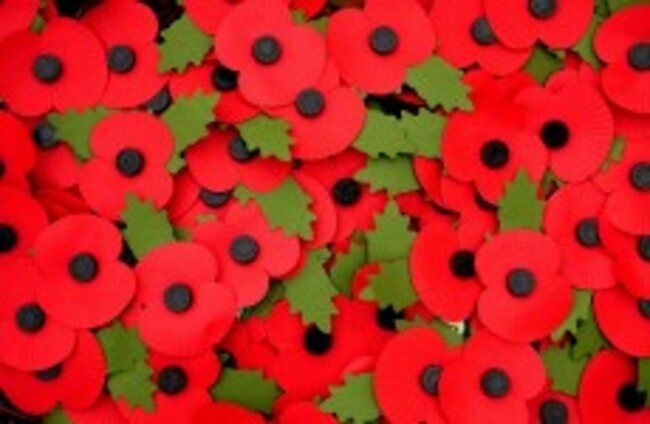
Column: ‘Surely it’s time Ireland embraced the memorial poppy’

It’s not about choosing sides – Ireland should lose its timidity and commemorate fallen Irish soldiers, writes David McCann.

David McCann

WE ARE FAST approaching the centenary anniversary of the outbreak of the First World War, an event which had huge implications not just for the future of Europe, but also Ireland as it battled to achieve independence from Britain. The impact of the war spurred on a group of Irish volunteers on Easter week 1916 to seize key positions in Dublin proclaiming Ireland as an independent Republic.

Ever since the executions of the leaders of rising it had been written into Irish folklore that those who took part in the rebellion were no less than patriots of the highest order while those who fought in the trenches in France and Belgium were considered at best misguided or at worst traitors to the cause of Irish freedom.

The lack of any critical analysis about this period in our history has allowed this view to persist to this day as Ireland has not came up with a symbol to properly commemorate those who died in the first world war. Now, a century after famous battles such as the Somme, should we not begin to have as part of our yearly commemorative calendar alongside the Easter rising a day were we remember those Irishmen who gave their lives during the First World War.

False choice

Why is it important to now begin a reappraisal of Ireland’s contribution during the war? Well for a long time Irish people have tended to get caught in what I believe is a false choice of supporting the actions of the volunteers of 1916 and the soldiers of World War One. This misconception of the Irish Parliamentary Party leader, John Redmond, as a naive fool conned by British government into participating in the war ignores the fact that Nationalist participation much like their Unionist counterparts was in part a strategic move by both sides to further their constitutional ambitions. Also most commentators at the time bet that the war would last no longer than a year. Redmond’s desire to join the British war effort was not born out of a deeply held desire to fight for King and country but rather an attempt to further the cause of home rule and go to the aid of Belgium.

Yet in modern Irish politics it still seems to be unfashionable to even mention Redmond’s name. Since independence we have only had one Taoiseach, John Bruton, that has given any serious acknowledgement to his role in Irish history. The lack of any mention about Redmond in our history only mirrors the lack of acknowledgement for the thirty thousand plus who died during World War One. It should be remembered that most these men signed up to fight for an independent Ireland that they would never live to see.

Embrace the poppy

In 1966, with great fervour Ireland commemorated the fiftieth anniversary of 1916 rising with almost no mention of those who died in World War One. Surely in 2016, we should take a more balanced approach and shift away from this hierarchy of hero’s complex we have gotten ourselves into over this issue.  If we have learned anything from the visit of Queen Elizabeth last May where we seen two heads of state standing side by side commemorating the fallen men and women of both the rising and the war, then surely it’s time for Ireland to embrace symbols such as the poppy and loose some of its timidity in commemorating those who as US President, Abraham Lincoln, said at Gettysburg, ‘gave the last full measure of devotion’ to their country.

Those who will express opposition to any form of commemoration in favour of remembering only those who died during the rising should remember that our perception of these events could easily have very different. Had it not been for an overly vengeful response from the British forces in Ireland it is likely that our view of the Easter rising would be as an act of pure folly by a group of overzealous fanatics.

Commemoration

I am not arguing that everybody in Ireland should now burst into frenzied celebration over this country’s role during World War One nor am I arguing that we should belittle the importance of Easter rising but we should make a better attempt to strike a fairer balance in how we commemorate these events. The simple fact is that it is not a case of choosing sides as both groups who fought in 1916 ultimately wanted the same thing they just had different approaches in achieving that aim. We should drop our reticence in commemorating and debating the motives of those who fought for Irish independence during this period in Irish history. In writing this column I hope that this can make some contribution towards opening up this debate.

Read: “Still the battle rages”: Dublin mother’s WWI diary goes online>

Column: Time to ask questions about Irish army deserters during World War II>

Read next:

Comments (136 Comments)

  • A lot of the men who fought were Irish Volunteers who joined up because the Irish Parliamentary Party’s leader, John Redmond, had said they would in exchange for Home Rule being granted.
    Others were men who lost their jobs after the 1913 Lockout, and needed the money to support their families.
    The Irish experience in the Great War was horrifying; in Suvla Bay, they arrived without guns or ammunition – the pride of Clongowes and Belvedere’s rugby and cricket teams, young men who had been famous for their sporting prowess, were throwing stones at the Turks led by Kemal Ataturk, and bowling back the bombs at the Turks; they had no water, and the Turks were targeting the wells, which had piles of bodies growing around them. The English generals leading them were stupid and cowardly – Maxwell (who would next year execute the 1916 leaders, and would have continued the executions if Asquith hadn’t personally crossed to Ireland to stop him) was found cowering incoherent in a funk-hole by a young Irish officer. In the Somme, thousands of Irish, both northern unionists and southern nationalists, were blown to bits as they crossed a ridge – blown up by a British bomb that exploded under the ridge. And so on. A pointless, tragic sacrifice, to defend an empire that occupied their country. Insanity.

    Reply
  • The centenary of an event marks 100 years.WW1 began in 1914 so we are two years off that event!

    Reply
  • Of course those who died in WW1 should be commemorated. It was foolish and wrong for Irish society to all but deny their existence for so long. I wouldn’t agree that wearing the poppy is the best way to do that however.
    *firstly the poppy commemorates British veterans, alive and dead, from all branches if the British Military, and from all wars and conflicts. Wearing a poppy isn’t a simple commemoration of the Great War, but rather a very political symbol of support for Britain’s past and current foreign escapades, and their conduct and the conduct of their forces worldwide. Conduct that had been laced with murder, genocide, torture, rape, exploitation, cruelty and impunity. In addition monies raised through the sale of poppies funds British Legion grants for retired British Soldiers. In remembering those who died in 1914-1918 should we be rewarding those who voluntarily participated in illegal wars more recently, which witnessed unprecedented per capita civilian death tolls ? The women and children didn’t just kill themselves ye know..
    *secondly the poppy represents a very narrow and nationalistic way if commemorating the Great War. Millions of people died, military and civilian. From all European countries and from farther afield.it was a war between imperialist powers and made heavy use of ‘patriotism’, nationalisms, and naked jingoism to con young men into killing and being killed by the thousands. Surely our commemoration should be universal, apolitical, non-nationalistic, and should remember the human tragedy, not the false glory and chauvinistic innuendo that propelled millions if men into eternity at a horrific pace. Insofar as the poppy commemorates the First World War, it commemorates only the ‘glory’ of fighting and dying for King and Country. It glosses over the real tragedy, the sheer scale of the carnage, the universality of death, the complicity of the Governments in sending the dead to die.
    *there are many ways to commemorate events and people. One us to wear a paper symbol on your chest for a day. A much better and meaningful way is to continue doing what is being done in Ireland nowadays.. Collection and collation of stories, letters, artefacts and memorabilia; exhibitions, talks, symposiums, newspaper articles, book publications, essay competitions, and public discourse. That is how a pluralistic, modern and unselfconscious country remembers things. Those who were pushed Ito cloud of machine gun bullets were soared the pomp and ceremony of brass buttons and parades in the manic haste to feed the war machine. The least we can do today is to spare them the incongruousness of flag waving and the indignity of a wholly inadequate opulence of paper that symbolises nothing, and explains less.

    Reply
  • Leave the Britain-Ireland thing aside for a moment and read what Robert Fisk has to say about wearing the poppy: Do those who flaunt the poppy on their lapels know that they mock the war dead?

    Reply
    • I dont normally comment on my pieces but that is an excellent piece by Fisk. Really good to get that different perspective.

      Reply
    • E D 11/11/12 #

      thanks for the link

      Reply
    • Excellent article Jim.
      Lest we forget what? That at least 200 million of this planets inhabitants lost their lives in the 20th century courtesy of state sponsored violence.
      That the twentieth century was by far the most violent century in human history courtesy of the same misguided patriotism that now trumpets remembrance for the ‘fallen hero’ and treats the horrors of war as a romantised hallmark event.
      Britains anti-war movement promotes the wearing of a White poppy on remembrance day. Lest we forget the senselessness of war.
      ” The first panacea for a mismanaged nation is inflation of the currency; the second is war. Both bring a temporary prosperity; both bring a permanent ruin. But both are the refuge of political and economic opportunists.”
      Ernest Hemingway

      Reply
    • Ta Jim, that Blunden book just went on the end of reading list.

      It should also be noted that we are being appealed to as Irishwo/men to commemorate the Irish dead…precisely the cause of the carnage…rampant divisive nationalism elevated to imperial insanity for the agendas of parasitic arms industrialists and their financiers selling weapons and usurious loans to both.

      These are the same global financial ‘players’ whose knuckle-duster is today gloved in the Troika, IMF, World Bank and WTO. When the Mitt comes off the duster sparkles as Nato in hot pursuit of its forecast resource wars of the 21st century of PNAC neo-con fame. The Great Game and the Great Wars run in tandem.
      Wear your corn poppy(papaver rhoeas) if you must, but remember its a metaphor for a bullet hole in a young lad who seldom knew what lies he was dying for. I’d be more inclined to wear papaver somniferum, the opium poppy, for the victims of the ongoing imperial adventures in Afghanistan that sees the crop expanding exponentially under the Karzai puppet and resurgent warlords installed by the usual suspects.
      Is it coincidental that as Burma is accepted into the western fold this raw material of the heroin trade is expanding its cultivation there also?
      But then, Britannia learned in its 19th century Opium Wars against China how useful that commodity is for extracting revenues and debilitating target populations.
      Dulce et decorum est pro patria mori?

      Reply
    • Thanks of link – very interesting

      Reply
    • Great article, thanks Jim.

      Reply
    • Well done,great link,explains it very well

      Reply
  • The red poppy is launched each year by the Royal British Legion who choose to remember ALL the fallen in the cause of the ‘Empire’ not just those who died in WW1. This is where the problem arises, for all the glory and honour bestowed upon the British army
    where is the honour and glory attached to their criminal actions in the world over. Just up the road from Dublin, there is a place called Belfast where the people who shove the poppy in your face, they also remember the perpetrators of the Ballymurphy massacre and Bloody Sunday. Honour and glory indeed! While the First Minister was in Enniskillen remembering the innocent victims of the Enniskillen bombing I wonder did he also remember the innocent victims not killed but murdered by members of the Argylle regiment 40 years ago also in Fermanagh. You should look it up David, it’s known as “the pitchfork murders”. The nature of the murder may make you wonder why a lot of people would feel uncomfortable engaging in an act of remembrance for members of the British army killed in WW1.
    Just a thought but would it not be a better option if a non-political emblem were created to remember victims from Ireland who fell in all wars

    Reply
    • But that’s not what the poppy symbolises. The British legions poppy campaign uses the money raised from the selling of the Poppy to aid the veterans fund. Don’t want to contribute? Then don’t buy one from the British legion it’s as simple as that

      Reply
  • Unfortunately northern unionists use the poppy as status symbol. They see wearing it as a sign of how british they are. While I agree that we should acknowledge Irish soldiers who fought in the wars, I feel that the poppy is not the way to do it.

    Reply
  • Shane 11/11/12 #

    we have a national day of commemoration which remembers all Irish people who have died in past wars and with service for the UN. each year in July in kilmainham hospital.

    Reply
  • Thing about wearing the poppy is… well, if it were honouring the fallen, no problem. But it’s not; it’s honouring the empire they fell for. If it were honouring the Prussians who goose-stepped in perfect formation into the machine-gun fire of Passchendale to be cut down in their hundreds, and honouring the Turks, and the Italians, and the Australians, and the Irish, fine. But when you see a poppy, you can hear the grinding of an axe. There’s always an agenda.
    Other countries across Europe don’t wear the poppy or any such symbol. They have a dignified commemoration service at the eleventh hour of the eleventh day of the eleventh month, and that’s it.

    Reply
  • Some forgotten hero from some forgotten war.

    Lest we forget.

    Reply
  • How many articles is this now on this topic? Was it not flogged to within an inch of its life last year, and the year before that? Wear it if you want, don’t if you don’t.

    Reply
  • No problem David.Good point about Redmond.Definitely the forgotten man of Irish history!

    Reply
  • The Royal British Legion is inextricably linked with the British military and always has been. Let people wear the Legion poppy if they want but be aware that the poppy is not just about remembering the Irish dead of WW1 – it symbolises the dead of the British army in successive imperialist wars. It is right that the Irish dead of WW1 should be remembered.But do not try to obscure the fact that the cause they were fighting for was the British Empire. And that can never be equated with the cause of Irish freedom. Redmond tried to do that and suffered the political consequences. One of the main reasons for Redmond’s fall and the rise of Sinn Fein was not just the 1916 executions but the anger of the Irish people at the way they had been dragged into the slaughter of the trenches for the ‘freedom of small nations’ while their own freedom was denied by the British government.

    Reply
  • World war 1 started after the assassination of frank Ferdinand in June 1914, the war started the month after. The 11th of November is the day the war ended

    Reply
  • Ireland is a sovereign country. If we want to commemorate our war dead of World War 1 or any other war where Irishmen died then we can find our own way of doing it. I’m not British, so why would I wear a red British poppy which is inextricably linked with Britain’s contemporary armed forces?

    It would be wiser for Irish columnists to suggest innovative ways in which we might show respect for our own war dead rather than trying to suggest we copy the behaviour of a neighbouring nation. Indeed the Poppy fascism in Britain has become unseemly and more and more liberal British people agree. It only highlights why we Irish were so desperate to leave the UK to avoid the bully boy tactics of the British establishment on its people.

    Reply
    • Hypocrite. You’re not American but you watch their TV shows. You’re not Indonesian but you wear their clothes. You’re not Ethiopian but you drink their coffee. You’re not from anywhere else but most of what you own/eat/use comes from somewhere else, you are linked to the rest of the world like it or not, why single the poppy as being your objection to wearing something associated with another country?
      Your objection on the grounds of sovereignty is cannibalism by your own hypocrisy.

      Reply
    • What a ridiculous post. You are equating watching television shows and food from other countries with wearing an overtly British POLITICAL symbol. The sharp rise in Poppy fascism in the UK coincided with the invasion of Iraq and Afghanistan and the resulting British military casualties.

      It is merely an attempt by the British state to get the British nation behind ‘the boys’ in the armed forces. That’s their business, of course. It’s not Ireland’s business and neither is the promotion of their Poppy. Being a sovereign nation means we decide whether to wear it or not, and quite clearly most Irish people have little or no interest in it.

      Get over it.

      Reply
    • What should I get over? My observations of your hypocritical comments or the big chip on your shoulder about the British. If you read the fisk article posted in an earlier comment by someone else you’ll read that his father wore the poppy after he fought in the war. It’s not a new thing, and it’s not British because I’m Irish and I wear one. Is the shamrock Irish? It’s a symbol.

      Reply
    • I have no chip on any shoulder about the British, Alan. I regard them as our greatest friends along with America. But that does not make us either British or American nor compelled to follow their national remembrances about the great war or any other conflict. We are a sovereign nation and entitled to choose our own method of remembering our war dead.

      To say the red Poppy isn’t a British symbol is just patent nonsense. Everyone knows that it is. Watching the US elections last week showed only British people in America wearing poppies. So my suggestion is that Ireland find its own way to commemorate our war dead.

      Reply
    • And before we find our own way what do you suggest?

      Reply
    • That would be a personal choice. But wearing a white poppy for peace would be my suggestion.

      Reply
    • And if the personal choice is the red poppy, what’s the problem with that?

      Reply
    • Then that’s your choice. But denying it’s a British symbol to yourself or anyone else is pointless.

      Reply
    • Chris K 11/11/12 #

      Taxi for Alan Hayes

      Reply
    • Taxi to the nearest Cenotaph to acknowledge the almost 40,000 Irish men who died in the first world war.

      Reply
    • I agree with Alan in that post.
      It is also important to note the reason the poopy is used in the first place.
      Put political symbols aside, and ask ‘Why the red Poppy?’ the red poppy plant eventually gets suffocated by weeds but it’s seeds remain dormant for years and years until such time as there is a violent upheaval of the earth, then the seeds get the daylight and can sprout again . There was so many such events in the fields of France that the poppies were all vn

      Reply
  • It’s simple for me I find it offensive in my own country when people wear the poppy as they commemorate British armed forces that fought and killed thousands of Irish men and women at the time of independence and for Irish people to that wear a poppy to commemorate these people is beyond me …. However I do think many brave Irish men died in 2 world war and should be commemorated in a different way so as not to bundle those murders that killed our people in 1916 and those murders at Bloody Sunday ect…..

    Reply
  • In Ireland the poppy campaign has become embroiled in the ‘wars of symbolism’ and it origin are lost in an excess of name-calling and ignorance.
    The Poppy Campaign existed America, Australia, Canada, and France, before the British Legion launched the Flanders Poppy campaign in 1921. Due to a general ignorance of the origins of the British Legion Poppy Campaign, we are now creating new legends.
    The British Legion is a charity founded in 1921 to help the men who survived WW1. Its remit was to raise money to help the surviving soldiers and their families because the military pensions were inadequate. Its secondary remit was to act as a symbol of remembrance. The launch of the Flanders Poppy campaign in 1921 coincided with the first official British Government Armistice Commemoration in London. The poppy campaign remains a charity event.
    In 1925, the legion, at the invitation of the Irish ex-servicemen’s associations became involved with the launch of the ‘Southern Ireland Area of the British Legion Irish Free State’. The money collected in the twenty-six counties was spent in the Free State. Since then the poppy symbol has been central to republican protests and consequently has become an integral part of the ‘wars of symbolism’ in Ireland.
    In fact, the charity in existence for almost 100 year and still raising money for soldiers and their families reflects the continuing failure of the British State to treat its soldiers with respect.

    Reply
  • The centenary isn’t for two years……..

    Reply
  • Emmet 11/11/12 #

    Lets remember that we were part of a different country back then. Most of the nation had no pretences of independence. The young boys that went off with their friends to some water-logged hell in France went, in many cases, because the army paid and it supported their families. Lots of those boys probably didn’t care about who ran the country, they wanted to provide for their homes and they wanted to support their friends. Many were already part of British regiments. Many went for the adventure.
    Let’s remember very young men who sacrificed their lives. Forget the cause or lack of it. They died in their thousands on some days and often alone, probably crying for their mothers. Most of us, and I include myself in that group, wouldn’t have the cajones to do what they did.
    Where do we get the poppies?

    Reply
    • The one that had the ‘cajones’ were the ones that questioned their induction and went to firing squads rather than conform out of cowardice.

      It is only in recent years that their smearing as traitors has started to be rolled back. Try and find a copy of Dalton Trumbo’s ‘Johnny Got His Gun’, an account from the hospital bed of a survivor who envied the dead, or view the Tom Courtney movie King and Country, an account of a shell-shocked private’s courts martial for desertion after he wandered away from his unit.
      Search ‘Shot at Dawn’ if you want more detail.

      Reply
    • I’m a Quaker, so obviously I totally disprove of war and would consider it my moral as well as religious duty to resist it in all of its forms. We’re one of the major reasons that conscientious objector status is so widely recognised.

      But one of the bravest things you can do in life is follow your conscience, Damien. Not all who fought “conformed out of cowardice”, just like not all conscientious objectors are afraid of battle. Generalisations like that are incredibly unhelpful.

      Reply
    • Nick

      I am against imperial wars out of considered conviction..not some religious program(the god concept has too much blood on its lilywhites).
      I am not some ideological pacifist. I can envisage a necessity to kill.
      This war resulted from a set of controlled imperial agendas oiled by multimillion propaganda, of which I witness the insinuation of this poppy campaign along with the use of our air facilities for resource wars on innocent civilians as a continuation into the 21st century. We are reincorporated into their Great Game.
      I find your hair-splitting particularisation and whataboutery serves the war party propagandists more than those of us who are waging a war on war against considerable resource odds.

      Most who fought conformed out of whipped up conviction, manufactured by cynical industrial parasites and blessed by religious humbuggery in collusion with a warrior culture which is an atavistic vestige of our animal savagery masquerading as bravery.
      My purpose is to counter that culture of blinkered fratricide, which the forces behind this poppy front are again cynically utilising to justify recruitment for imperial adventure. I am quite capable of discriminating between the duper and the duped.
      Get past your religious piety and apply a little more analysis.
      It is a little clear thinking, not sentimental sympathy I would like to be ‘helpful’ towards. These wars are premeditated, not accidental, and their mentalities are embedded in the prevalent culture.

      Reply
  • Most of the leaders in 1916 people had jobs. Pearse & Dev, Teachers. Thomas Clarkes own father was a British soldier.

    For most of the population education was a luxury of the higher classes, like Dev who was educated at Blackrock College & Trinity. The almost 40, 000 Irish men who died were from poor families. Just like today, they took jobs that were available and if fighting in the British Army was a way to put food in your child’s belly rather than watch them starve and suffer from malnutrition I believe most would do it.

    Wearing a poppy is not a sign of religion, Nationality Ireland political ideology. It is a mark of respect to those who died to feed their families.

    Reply
    • @Alan..to some it is.

      But to the British army it is a propaganda symbol to glorify conformist youthful camaraderie and machismo as heroism and a recruiting lever for more useful idiocy in the service of cynical warmongers whose children will profit from their crippledom and death.

      Be aware. Beware sentimental sybolisations, they can be means of hypnosis. From flags to religious emblems they are the tools of wizardry down the ages, from Pharaoh to Madison Ave via the Vatican and Orange Lodges.

      Reply
    • Alan you’ve hit the nail on the head. Case in point to this is that of John Condon a 14 boy from Wexford who is the youngest soldier to die in WW1. He lied about his age and enlisted owing to the fact that his mother, a widow, could t afford to feed or clothe him. He is said to have only wanted a pair of boots. He died in a chlorine gas explosion in paschendale. The irony of it is that the only thing they found of him was a dog tag from his boot.

      Reply
    • Damo, to some it is… also a chance to show their Anti British sentiment. Also a chance of Romanticising the 1916 rebels because they weren’t there at the time to feel the disgust that was predominant in relation to the timing of the rebellion. The Irish who fought in WW1 did their piece to advocate independence. Revisionists have forgotten them and their role in gaining independence.

      Reply
    • @Alo

      You are a little confused. To be anti-imperial militarism is not to be ani-British(not for us all anyway).

      The men of 1916 were attempting to break a stranglehold of parasitic resource-extraction, vivisected logically since at least Swift(who would have identified as both British and Irish), running through plantation, ethnic cleansings, racist/sectarian/cultural/legal warfare, repeated famines and repression of development, treachery, bribery and assassination and the cultivation of a fascistic Ku Klux Klan Orange bigotry allied to Tory reactionary subversion.
      I have British and American family members, I am neither anti British nor anti-American, though often accused of both by simplistic historical illiterates.
      To elevate the unfortunate cannon fodder fed into this imperial carnage, and deprecate the men of 1916 into some ‘romanticised’ distortion(whatever the immediate reaction of the dumbfounded Dubs of the day) is a piece of revisionism worthy of a Goebbels.
      You are deluded. I would suggest you have read your history(if indeed you have even bothered to) to confirm a preconceived ideological opinion.

      Reply
    • ..quite apart from your asserting(sans foundation) their ‘piece to advocate independence’, after already explaining they were merely tryiing to feed the families impoverished by the same imperial economic vampire.

      Your agenda is a bit transparent. Revise your revision.

      Reply
  • Glad to see no one responded to my above post at all..
    We do commemorate those who died, and so we should. We do so through reflection, analysis, remembering stories, and promoting peaceful resolutions to international disputes. I think these are more appropriate, respectful, and salient ways of commemorating the dead rather than pinning a glorification and compromised (no mater it’s origins) piece of paper.

    Reply
  • An original and thought provoking article. I’m surprised this argument was never brought up in the past.

    Reply
  • tom 11/11/12 #

    the poppy is British full stop.
    1916 was a time a few brave Irish men stood against be biggest empire in the world in a bid for freedom.
    our Easter day parades has for years been curtailed for fear of encouraging paramilitary activists.

    it’s time we proudly embraced Ireland freedom and remember it’s long struggle and fallen hero’s that stood up against British rule and vast army’s (that included a lot of native Irish men)

    time has moved on and England once the enemy is now a friend but the poppy is a British symbol of their fallen hero’s not ours. we need to remember our own fallen hero’s in our own way.

    Reply
    • You do realise that the article was about Ireland forgetting about our dead of the great war while remembering only the men that fought and died here in 1916? 30 comments later and we’re already back to talking about the rebellion and forgetting the many thousands that died during world war 1.

      Reply
    • And until we have ‘Our own way’ I’ll wear a poppy to commemorate the Irish who died.

      Reply
    • Alan while it’s admirable that you wish to commemorate the Irish that have died the poppy is a British symbol. To wear it says you’re remembering British soldiers and unless you plan on stopping to explain that to everyone, Honoring the British military is the message you’re putting out there.

      Reply
    • Mark, I disagree with you. And I’m more than happy to discuss with anyone who wants to stop me on the street.
      Tom, Are you one of the people who sings “Green fields of France” (AKA Willie MacBride) and thinks their commemorating an Irish rebel? Just curious, many if them out there.

      Reply
    • correct me if I’m wrong but the whole point of any symbol is to display your support of something without needing to stop and discuss it with anyone.

      Reply
    • tom 11/11/12 #

      sad part is that the bullet holes are still in the GPO and still visible for anyone who cares to look at the columns
      these bullet holes where cause by the very British army swelled with Irish men fighting and killing their own bothers who made a brave attempt for freedom.

      I’m not going to celebrate British army putting down our true hero’s struggle for freedom. I do sympathies with Irish men joining the British army because of misguided belives and sent to be slathered at the front in the war of great empires that proclaimed to be the great war to end all wars.

      let’s not forget that Irish fought on both sides although that won’t be popular with poppy lovers.

      Reply
    • Good lad Tom, near 40, 000 Irish people die in a war and you point out your distaste with the bullet holes they left on the GPO.

      Reply
    • the man that wrote that song lives here in Australia. It ridicules those who fought in WWI and I’d guess that’s why people would view it as a republican song but I’m sure people think the song’s reference to 1916 is perceived as our Easter Rising.

      Regardless I think Bogle was on the money with the lyrics, he could so easily have written similar lyrics about the unnecessary wars in Iraq and Afghanistan.

      Reply
    • tom 11/11/12 #

      Alan
      selective memory isn’t history. nor is celebrating a British army occupation and forceful suppression of its people by firing squad. this is also all part of the great war. to remember the Irish men who jointed the British army to fight their own country men and those in the field of France with a symbol of British solidarity and support for their armed forces in past and present wars is ridiculous. let’s not forget NI and the bully boy behaviour of sectors of that community and it’s UK state run terrorism against those it considered foe..

      Reply
    • Chris K 11/11/12 #

      @alan as was pointed out by wearing a poppy you are offering support to the foundation set up to provide for all retired members of their forces etc probably some of the same guys who were in Derry on Bloody Sunday so tell me why it’s appropriate for any Irish person to wear this totally British symbol? I agree they should be remembered but not by wearing a poppy stained with the blood of Irish people murdered by crown forces

      Reply
    • You couldn’t be more wrong. The red remberence poppy was inspired by the poem “in Flanders fields” and it was an American woman called Moina Michael who created the first poppy badge. It was then taken on by the American army as a away of remembering American war dead of WW1 before being adopted by various veterans groups and eventually the British legion. The idea that the poppy commemorated all war dead is inaccurate. It merely represents those who fought and died in WW1. The political issue here is that they are sold by the royal British legion. I wear a poppy but I bought it in Ypres at the Menin Gate. I wouldn’t by one from the RBL because their ” poppy campaign” supports current engagement of the BA in Afghanistan ect. It is however wrong to suggest that the poppy is British. It’s nothing short of a display of ignorance. The poppy is an International symbol and was around long before the RBL started selling them

      Reply
  • Surely its time for Britain to embrace the eater lilly? After all, those brave men who fought in the rising were British citizens at the time. Because that’s what this is all about isn’t it Davey, recognising such heroism and sacrifice as opposed to sectarian oneupmanship?

    Reply
  • I don’t think the poppy is as contentious as it’s made out to be, except amongst a limited few. I’ve been wearing it for years and no one has passed any negative comment. I wear it purely to remember my Great Uncle blown to pieces at Passchendaele, and the other 30,000 young Irish men who died in that obscene war, whatever their motivations. . It is absolutely not a mark of respect for the British, German, Austro Hungarian or Russian establishments who started and / or propogated the travesty for four years. If Ireland wants to introduce a green poppy or whatever then I’ll happily wear that instead.

    Reply
  • personally couldnt care less about the poppy,but hope the same people will be making as much effort to wear the lilly come easter

    Reply
  • Have a Remembrance Day at a different time of year with a different symbol, perhaps a harp.

    Reply
    • There are dates are remembered within the Irish Military, the Organisation of National Ex-Servicemen and Women http://www.oneconnect.ie/ use a purple flower called the FUCHSIA to request that people remember, and there is the white Lilly at Easter.

      Reply
    • Would it not make more sense to have it on the 11 of November? After all, that was when the Great War ended. The harp wouldn’t be an appropriate symbol as it is too political, after all it is the national emblem. The poppy makes sense, as it commemorates the poppy fields of France in which many Irishmen and other countrymen alike were killed fighting for freedom, but perhaps a different shape, or colour poppy would be more acceptable to those who don’t want to conform to British symbols. I would just like to be able to show my respect to all people who fought for our freedom no matter what country they came from, and I believe that wearing a simple flower is a great way of doing so.

      Reply
    • I agree Ireland should have a day to remember the fallen in the Great War but I feel that the poppy is now political. It is used as a symbol of Britishness by many and whether you like it or not that is the way most see it here. Im sure an appropriate symbol can be found for the Irish that died and I hope that happens. Just not a poppy.

      Reply
  • Why should Ireland embrace another British tradition????

    Reply
  • When fresh graves where dug en mass in France it turned up thousands of seeds which grew and flowered. Poppys that covered the graves of all the dead even before the ranks of white crosses where erected. Beneath those Poppys lay several brave Irish men who joined the British Army as a way to fight back against tyranny. Its sad that this can not be acknowledged without reference to Anglo Irish relationships.

    Reply
    • Join the British army and fight tyranny….that has a ring to it.

      And in the red trench, joining the wehrmacht to fight for Liberty against tyranny…

      I think its time we found a flower for the buttonhole that commemorates the innocent civilian ‘collateral-damage’; increasing with each further iteration of the industrialising crank on the wheels of modern technologised, remotely delivered, obscenity.
      Maybe we could rebrand the shamrock, or wear a cannabis leaf(we had a theory in the Viet Nam days that the reason it was illegal was because it tended to be conducive to reflection, not a quality propaganda-indoctrinaters are overly mad about: alcohol is a far superior stupefacient).

      Reply
    • So many big words to say so little, it is so sad that you chose to dishonour the dead in this regard but it is your right sir, I however feel that these brave heros deserve our respect.

      Reply
    • I think the biggest word I used was ‘industrialisation’.

      Most of the Tommies in the trenches would have known all about it, Irish, African or Anzac(or are the Tommies strictly the English?).

      It means the mechanisation and consequent amplifying of the power of fratricidal killing through scientific application of systematic concentrated rationality that accelerated with the American civil war and has now gone to remote capability to vaporise a mega-city from the far side of the planet at speeds that mean you won’t hear the delivery vehicle approachin(they do travel faster than sound).

      I hope that helps..let me know if any of the shorter words are a problem. I’m into explaining my stance. Its considered and I’ve done a little homework on the topic.
      I reserve my honour for the living. And consider the moral bravery to resist warmongering stupidity trumps blind physical courage directed by organised criminals.

      Reply
  • “Compared to how Irish history was altered by Easter 1916 I think we all know that WWI was a sideshow….”
    Well Id like to see how the 1920 rising would have gone if WW1 had never happened … Let me see hummmm badly for us . Also on a global stage what did 1916 do ? Im sure it did have some impact … Particularly the brutal manner it was put down . But compared to the horrors and futility of WW1 its just not in the same league .

    Reply
  • There appears to be a policy of putting up “controversial” articles on The Journal to get a reaction. I never seem to see the invitations to write these articles.
    As to the poppy. No. We’re already morphing enuff to brits.

    Reply
  • If you want to wear a poppy then do so. If not then that is also fine. We do nothing to remember the thousands who died in the two great wars. It is to Ireland’s eternal shame we did not stand up to fascism. We should at least be able to to honour those who died for our freedom if we wish without ridicule from small minded republican clowns.

    Reply
  • You attach your own values to symbols. I have no problem with someone wearing it to remember the dead of World War 1 only. If orange men suddenly adopted the shamrock as their symbol would you stop wearing it on Paddys Day? I think not.

    Reply
  • the rhetoric about people supporting premier league soccer teams is getting beyond boring also but do carry on.

    I don’t actually recall the British army fighting for my freedoms at any point in history, maybe history has changed recently lol ha ha etc

    Reply
    • Jay Finn 11/11/12 #

      Irish men fought in ww1 with the British army in the hopes of garnering favour with the Brits that would lead to Irish independence. 30000 Irish men died in British uniforms. Doesn’t make them less Irish. Nor does the men of 1916 make them more Irish. Wear a poppy. Don’t wear a poppy. Point is we are free to choose either way.

      Reply
    • Ur rite j. It doesn’t mean they were less Irish, just easily led

      Reply
  • to be bruatally honest its a disgrace more irish people dont wear the easter lily at easter to commerate all those who fought for irish freedom rather than the poppy which is seen by many in ireland and throughout the former british empire as a symbol of british imperialism true many irishmen fought and died in the first world war and i would have respect for them as men and soldiers but they fought for the wrong country and died in the wrong war it was better to die at pearses side than at suvla or the somme

    Reply
    • See I would wear one if I didn’t have to buy it off SF. I will never contribute to SF coffers. I’ll buy a lily from a florist. I won’t contribute to a political party that had highjacked the symbol, much like my feelings towards the poppy. I’ll wear one but I bought it in Belgium,

      Reply
  • Excellent article. The point is we have the history we have not the history we want. We should commemorate our war dead. Our war dead were encouraged by our nationalist party, the catholic church and the nationalist press to fight in WW1. This should not be forgotten!! And we did commemorate our war dead in the early years of independence. Kevin O’Higgins laid a poppy wreath in London acting as minister of foreign affairs, college green was the focal point of remembrance throughout the ’20s, one year over one hundred thousand people turned out to remember our war dead until it was moved to the phoenix park because of republican violence. Wearing a poppy is a personal choice but our war dead should be remembered.

    Reply
  • Chris: War is wrong. I don’t advocate killing people, even in the struggle for freedom. Until there is another symbol, I’ll wear the red poppy and happily have conversation with people who want to know why. I don’t deny people their opinions and I don’t think others should deny mine, all are subjective.

    Reply
  • Why don’t the people who think that the poppy glorifies war read the poem which inspired it’s use (in Flanders fields). It is a symbol, so any individual can choose to interpret it which ever way they like however glorification of war is certainly not how it was originally intended. I do disagree vehemently with the notion in the UK at the mo (particularly seen with TV presenters) that you have to wear it etc etc. Remembrance is a deeply personal act, I believe that the poppy is a beautiful symbol of hope and a poignant way of remembering war dead. The poppy should also serve as a reminder that if WW1 soldiers fought the war to end all wars then we do not honour their deaths by accepting conflict and militarism in the 21st century.

    Reply
  • The Poppy is used to commemorate the British war dead. You say whatever you like what you think it should commemorate but that’s just wishful thinking. Yes, many Irish people died in WWI, but really, let’s be honest, who cares? It was nearly a hundred years ago. It was a war between Imperialist powers who are now at peace. I’m sympathetic to those who died but I find myself asking what they died for. Compared to how Irish history was altered by Easter 1916 I think we all know that WWI was a sideshow.
    Since then, and what a lot of Irish people seem unwilling to recognise, the Poppy has come to commemorate all of Britain’s war fought in the meantime. Wearing the Poppy shows support, whether you like it for not for those paratroopers in Derry, the Royal Scots Guards who wheeled into Baghdad on a quest for oil as well as those soldiers who shot hundreds of people peacefully protesting in Amritsar.
    Since our independence we have been privileged to have been a neutral country, why on earth would we seek to tack onto the UK’s ever-lengthening list of foolish, money grabbing wars. We’d be far better off rescuing nationalist symbols from those who have abused their meaning.

    Reply
  • Why can’t Irish people be Irish and proud? We fought and to an extent still fight British oppression up north, people died for the freedom you would so easily dilute to be politically correct, this idea of adopting the poppy makes me sick.

    Reply
  • Jaysus I hope we don’t need a referendum to decide this. Can’t take any more of John Waters

    Reply
  • The idea to commemorate the war dead through the use of the poppy was by an American woman inspired by a poem by a Canadian.

    Rejecting it as it’s British makes about as much sense as rejecting curry as it’s British.

    Reply
    • and the swastika was originally a symbol used in Hinduism and Buddhism. I think it literally translates as ‘to be good’

      sadly the origin and true meaning of things gets lost as they get adopted by the west

      Reply
    • tom 11/11/12 #

      the pass week been filled with programs of British remembering their empire past to prestent wars all adorned with poppies. If I was English I would proudly ware one however I’m lucky enough to be Irish so it’s not for me.

      Reply
    • @Damocles

      You miss the point that it is being used as a cynical recruiting tool by the British army to glorify the imperial resource wars of the 21st century.

      Reply
  • Jay Finn 11/11/12 #

    All this anti-English rhetoric is getting beyond boring. The same people spouting it will probably be cheering on or going against one of the premiere league football teams on telly today.
    If you want to wear a poppy do. Do. If you don’t then don’t. Those people died for our freedom. Freedom to choose being part of that.

    Reply
  • Surely it’s time to embrace the Sterling, commonwealth and unite again too?!!

    Reply
  • I dunno guys but i reckon 30or 40000 Irish men wud have been better served joining the rebels in 1916 than fighting a war that (correct me if I’m wrong, of which i have no doubt ye will) we as a neutral country should never have been involved in. To be honest i feel like the majority of those poor souls were simply duped by the brits to help em out.

    Reply
  • People who wear the poppy do it to remember the war dead. They do not spend hours or years considering whether they should or should not wear it. It is that simple.

    Reply
    • Maybe if they spend a few years(or even hours) reading up on the background to this imperial collision of Teutonic warriors(King and Kaiser being cousins in military glorification and the Angles and Saxons being fellow Teutons of the emerging German search for its ‘liebensraum’ against the sunsetless empire)we might yet stop the next round of this increasingly devestating Great Game for global hegemony that brought us yet another Great War; each side funded and armed by the same multinational financial and industrial paragonic ‘pillars’ of polite society.

      They haven’t gone away you know. Haliburton and BAe are just two of their diabolic offspring.
      The are, literally, legion. And their symbolic eagle goes back from the currently dominant bald through several reichs to the Roman eagle.
      Leave the dead to bury the dead. Protect the living by educating them against this fratricidal idiocy’s cyclic escalations. Sentimentalising the horror is a recipe for repetitions, and the poppy is cynically used to glorify this falsified definition of ‘courage’ and masculinity, fastened like a leech on a warrior cultism.
      Have the courage to reject regimentation.

      Reply
    • why do you talk like that Damien? i mean using eloquent works is fine fair enough but in every post in every sentence ?? kinda gives you the aura of slight bit eccentric nutter disconnected from reality. May mean lower your intelligence but can you try to connect with people on roughly the same level. no need to unnecessarily use words that just sound over the top

      Reply
    • @Stewie

      I’m not talking, I’m typing.
      Like that?Its English, my Gaeilge is not fluent enough to express what I’m trying to communicate.

      I use words that represent what I think, as accurately and comprehensively and economicaly as possible.
      Time and space are valuable. I have other things to do. I have no idea how broad your vocabulary is, I’m presuming anyone reading is bright enough to open a dictionary if they have mastered the keyboard(which I’m actually not very fast on). When I am talking I get feedback clues as to the extent of understanding of my listener, or whether I have lost them. I don’t do telepathy, so I have to make preumptions as to literacy levels on line.

      Maybe I am an eccentric nutter(hardly for me to say).
      Finally, if you have followed ‘every post in every sentence’, ta for your perseverence and patience.
      I hope that helps.

      Reply
  • Dónal 11/11/12 #

    I wholeheartedly agree. The poppy isn’t meant to symbolise anything other then remembrance of those who died(the fields in which they fell). It’s used all over the world and shouldn’t be associated only with the Royal British Legion’s Poppy Appeal or the British war dead. In reality, those who fought in the war(s) fought primarily for a human cause and not for ‘King or country’.

    Reply
  • surely its to me Ireland remembered the black and tans and thanked them for coming over as well.disgraceful article

    Reply
  • why don’t we put up the English flag this is Ireland the men that faught. and died were pledged to the queen so no to the poppy

    Reply
    • It was actually a King on the throne when WW1 started Mark. Such ignorance weakens any point you’re attempting to make!

      Reply
    • John 11/11/12 #

      Mark – many irish men fought in WW1 which broke out 2 years before 1916. Those who fought in 1916 were initially despised by the general irish population because, in part there was patriotic support for those Irish men fighting in the trenches. What has remembering those Irish men who fought in that war got to do with flying the British flag? The Irish state did not exist when these men signed up to the great war. Do you suggest we just whitewash any history of the state prior to our independence that may inconveniently point to a close relationship between Ireland and britian?

      Reply
    • Mark, your comment sums up a lot of the misunderstanding around the role of Irishmen in WWI. There was no Irish State when it started, many aspired to independence and yet remained loyal to the Empire, I think the British over reaction to a small group of brave Irishmen who conspired with the Germans to overthrow British rule in the name of genuine Irish freedom was the catalyst for the start of the Irish nation. Irishmen in the trenches fighting the Germans and Turks must have had very mixed feelings when they heard of the 1916 rebellion and the German support for it,they had spent nearly two years in the slaughterhouse at that stage fighting the same Germans. Had the British dealt more humanely with the Irishmen of 1916 and not executed them as traitors to the Empire I wonder what would have happened- certainly the righteous anger of the Irish people would have been less and the foundation of our country would not have begun then. Remember too the Union Jack flag is a composite flag and includes the Irish St Patricks cross. 1916 in Ireland changed everything. The men who were literally fighting for their lives in France Belgium Turkey came home to a changed public attitude to the war because of the executions in particular they are to be held in the highest regard for their sacrifice just as the men of 1916 in Ireland. Btw I think it was King George V was the man on the throne then.

      Reply
    • Mark, your ignorance on the topic knows no bounds if this comment is anything to go by. In 1914 we were all bound to king and country whether we liked it or not. Fact of the matter is, those men were sold a lie. After years of lobbying for home rule they were assured of its coming to pass after the war which everyone believed would be over by Christmas. They weren’t to know any better.

      Also I feel it’s important to remind you that the notion of a 32 county sovereign state was only cemented in the mindset of the Irish people following the execution of the rising leaders. The week before they were vowed as mindless things who had blown up half of Dublin.

      I personally think that we should remember these men who we have written out of our history for their service to each and every one of us as they didn’t go out there for the British empire they went out there so that in years to come each and every one of us might live free from oppression of a foreign nation and many of them died believing that. They were lied to and used as cannon fodder and I for one will remember their sacrifice.

      Reply
    • My great grand father fought & died in trenchs to save People!!! not any particular county at the time we were under British rule so he did fight for king and country but some of his family fought for Irish freedom. He was a farmers son and he just wanted to help protect people and ha died with British and Irish lads so we could be free.

      Reply
    • @Orela, you are justly proud and we all should be proud of your great grandfather, I am all for remembering the fallen of just causes, the problem is that the poppy is not represting just causes as the “Empire” it stands for raped and murdered women and children and oppressed the people of many nations over many hundreds of years.

      Reply
  • @Dave Kavanagh
    Several?? Try tens of thousands..
    Plus the vast bulk of iRish recruits were motivated not by an impulse to ‘fight tyranny’.. But by economic factors and being told by Redmond et al that joining up would secure national freedom..

    Luckily the British didn’t introduce conscription in Ireland due solely to the campaigning of socialists, feminists and republicans.

    They did conscript hundreds of thousands of their own people.. And sent them out to be killed.. That in my opinion is tyranny.. So to say WW1 was a fight against tyranny is ridiculous, the whole bloody thing was tyranny!

    I think that reducing the commemoration of a hugely complex and all encompassing event like WW1 to the wearing of a piece of paper leads to such ridiculous, simplistic and erroneous analyses like ‘fighting against tyranny’..

    Reply
  • Damocles 11/11/12 #

    If anyone gives me grief for wearing a poppy, I’ll be giving them a piece of my mind. Although obviously not a big piece.

    Reply
  • don’t think so, we would also b commemorating soldiers who tried to prevent Ireland’s independence

    Reply
  • Seems the recruiting sergeants are out thumbing down those of us who want no part in their bloody racket.

    Google Smedley Butler for a Major General’s scope on the war industrialists. His book ‘War is a Racket’ lifted the lid on their can of worms.

    Reply

Add New Comment