TheJournal.ie uses cookies. By continuing to browse this site you are agreeing to our use of cookies. Click here to find out more »
Dublin: 11 °C Wednesday 19 June, 2013

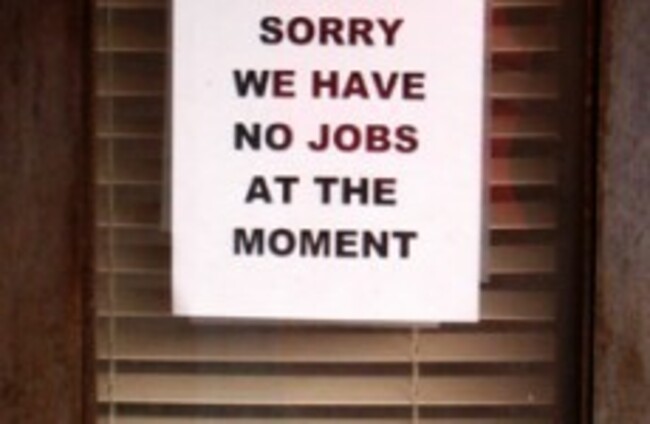
Column: This Budget will cut 15,000 jobs from our economy

Enda Kenny called it a ‘Budget for jobs’ – but the very opposite is the truth. We can expect dole lines to lengthen, writes Michael Taft.

Michael Taft

DESPITE THE TAOISEACH’S 17 references to jobs in his national address last night, the budget presented this afternoon will cut out between 15,000 and 20,000 jobs from the economy next year.  In other words, there would be between 15,000 and 20,000 more people at work next year were it not for the budgetary measures announced this afternoon.  This is, by any definition, a jobs destruction budget.

Let’s go through the four main elements that will lead to this job destruction.

First, capital spending cuts will on average, according to the Department of Finance, cut 7,500 direct jobs from the economy next year.  These jobs are directly employed on construction, maintenance and repair work.  In addition, there are ‘downstream’ jobs created as a result of the activity created by capital spending (sourcing and transporting materials, demand created by the employment, etc.).  Conservatively, this would mean an extra 1,000 to 1,500 jobs.  In this area along, between 8,500 and 9,000 jobs lost.

Second, the Government announced it would reduce public sector employment by a massive 6,000.  Taking this amount of jobs out of an economy where unemployment is expected to rise is simply irrational.  It will do little to cut the deficit but it will drive unemployment one-for-one basis, while substantially reducing consumer demand – thus, hitting businesses and private sector employment dependent on that demand.

These measures alone will cut out 15,000 jobs out of the economy.  But there’s more.

‘This will impact on wages and employment’

Third, a large part of spending on public services goes on procurement from the private sector.  While there is no data in the recent Government’s 4-year plan, the April Stability Programme Update estimated that expenditure on contracts from the private sector would be reduced by approximately €500 to €600 million next year.

It is not possible to assess the employment impact of this cutback. But there is little doubt that companies providing goods and services to the Government will be hit by the loss or reduction of contracts.  This in turn will impact on wages and employment in these companies.

Fourth, the social protection budget will have to be examined in detail but the full-year impact is substantial – over €800 million.  Most of this will reduce payments to current social protection recipients and, as such, will hit demand.  We can assume that the full year impact will reduce consumer demand well over €600 million.  This will lead to further pressure on domestic businesses and employment.

All in all, this will lead to job losses of well over 15,000.  This, at a time when the ESRI has projected the domestic economy will return to recession next year, with rising unemployment, falling real wages (after inflation) and a continuing decline in consumer spending.

Don’t mind the rhetoric, watch the action.  Employment will fall and this budget will be a major contributor.

Can’t wait for part two tomorrow.

Michael Taft is Research Officer with UNITE the Union; author of the political economy blog Notes on the Front; and a member of the TASC Economists Network.

  • Share on Facebook
  • Email this article
  •  

Read next:

Comments (27 Comments)

  • Michael, in addition to your 20,000 job cuts, a VAT hike will mean that retailers who are trying to cut prices to encourage spending will not pass on the increase to customers and therefore will need to pay for it through expenditure. The only answer I see is to cut staffing levels.

    Reply
  • I reckon this guy has it spot on, but thereby hangs the tale.

    These are deflationary budgets, when what we need are more people working. That’s the single biggest thing that will turn around the deficit. How do we close the gap?

    Well, means testing for one thing. Not everyone needs everything they get, as with Mick O’ Leary’s recent rant about the government paying his to dance the horizontal conga, through children’s allowance. He doesn’t need it. Like it or not, it should not have risen after the third child either, counter intuitive, and probably a vote buying exercise at some stage.

    Also, putting up the VAT is lunacy, on the part of the troika specifically, who insisted on it. If anything, it should be dropped by degrees, and in all likelihood, would result in a greater return, as people spend more.

    Tackle the banks in a meaningful way. They are recapitalised now, and they owe us. Enter into a partnership with them to end this credit crunch once and for all, and lend to viable business entities in a meaningful and sensible way. No point in dividing and conquering with this optical notion of a state “bank” for start ups.

    That’ll be a start, at least.

    Reply
    • Some very sound ideas there!! Pity the ordinary Irish citizens have no say- I think if the govt cared to read comments on here, letters in papers, twitter/Facebook suggestions, etc they would know what people r worried n upset about and they’d see some great suggestions and ideas too…. Unfortunately there’s so way to get them to listen!

      Reply
    • I’m not as stupid as I look ;)

      Seriously, as you may know, the gov.ie do pro actively monitor all media, especially sites that thrive on feedback/discussion, like this one. On Enda’s old facebook page (which he used to post on personally, with a smartphone presumably, usually in the early hours), he posted up a message one evening telling all and sundry that FG were setting up something like an “interactive” online presence, in that the younglings were being drafted in to “engage” as he put it, on social media. I questioned him on this, and in fairness, he responded at length, probably driven by the fact that he was on the campaign trail at the time. After about an hour of to-ing and fro-ing, he promised me FG would contact me in the morning, which they did. But after a boilerplate response from them, I gave up. I’d imagine this move was more about heading off any negativity at the pass, rather than anything else.

      Suffice to say, they do read what goes on. Not that we’re going to change the world or anything, but it definitely ends up somewhere. And it’s far quicker and more effective than writing a letter to say, Mr. O’ Sullivan at the IT.

      Reply
    • You hit it spot on – means testing. So little in this country is means tested, so that the people who get the worst deal are low-earning working people. Social welfare is comparatively generous (to other countries), but people who work and don’t earn much are getting more and more penalised.

      I agree on the higher rate of tax for very high earners, it remains to be seen how much it would rake in.

      I don’t understand why nobody talks about increasing the marginal tax rate. I would not be happy as it would increase my own tax bill, but it would protect the lower earners while at the same time it would be paid by many more people thus bringing a substantial amount.

      Ordinary workers are the lifeblood of any economy, instead it looks like they are the worst treated.

      Reply
  • 05/12/11 #

    Why is noone talking about industrial hemp? Hemp, which is at the tipping point of regulated use across Europe, North America and is being used across Russia, can create over 25,000 innovative and environmentally friendly products. These include paper, cars, fuel, construction supplies, Cosmetics, foods- hemp seed is the only source of food in the world that contains all essential fatty acids- and a lot more. This would not only stimulate green investment in agriculture, processing, manufacturing, exports but also consumption! Ireland could take a leading role as a paper supplier for example, saving rainforests of much destruction. Similarly, hemp is good for the environment here. It takes no pesticides or herbicides to grow meaning it can be grown between other crops and rejuvinates the soil. Its being used in Chernobyl to take radiation out of the ground! What’s also amazing I think is that hemp produces over 4times as much pulp than trees. And unlike trees which take over 20 years to mature, hemp takes 4 months. Hemp is being grown and processed in Ireland in limited locations however its growth is heavily restricted due to a misunderstanding of its relationship to the cannabis plant. Although they are cousins, hemp does not under any circumstance produce psychoactive chemicals. What’s frightening I believe is how easily people are lead to believe the lies that is evident across the prohibition of the cannabis culture. This plant is restricted in all its forms because of the threat it causes to oil, pharmaceutical, construction, paper corporations and the capitalist model more broadly. Capitalism is measured with gdp, the amount we need to produce on a yearly basis. If that’s not growing constantly we’re apparently screwed. Well I suggest otherwise. Capitalism was invented at a time when we thought the world had infinite resources. Well we don’t. We are not living on some infinite growth paradigm and we need to rethink our policies about which crops can help societies and the environment best. Join this group on Facebook, hemp for Irish jobs growth and revenue.

    Reply
  • Dave 06/12/11 #

    The time has come folks. We’ve been putting it off for too long. We must stand up and be counted.

    Reply
  • Well that’s bye bye Ireland for me and thousands of other recent graduates like me. Spend the money educating us just to send us off to another country.

    Reply
    • Best of luck making the move ! If I didn’t have ties (kids & mortgage) I’d be gone too ! Ireland’s not a great place to live at the moment – your lucky in a way that your in a position to leave !

      Reply
  • Reading stuff like this everyday makes me think I should stay in Oz for another year…

    Reply
  • Paul 05/12/11 #

    Yes the more we tax the people the lest we have to buy goods in the shops so in turn the lest the shop keeper needs for staff

    Reply
  • so apart from spending and borrowing more, what would you propose instead?

    Reply
    • 05/12/11 #

      A third level of taxation for individuals earning over 100k,52% until 2014 dropping to 48% after that. up to 2% wealth tax similiar to wealth tax in France,include a capital control measure like Iceland did. abolish USC.implement the mortgage plan put forward by New beginning freeing up peoples money so they can afford to spend again.lots of things can be done but sadly this government haven’t a clue.the situation is getting worse and will continue to do so as this column points out

      Reply
    • Capital control measure,,, what will it mean in Ireland?

      Reply
    • Scrap this whole IMF nonsense and burn the ECB. let the Germans pick up the tab. It was there shafting of Brian lenihan that meant we had to pay the losses of the German/Franco banks who leant to Anglo et al. And it was there need for low interest rate that contributed largely to the property bubble that wrecked this economy. I’m Not letting the government off for there gross mismanagement either.

      Reply
  • Can’t see a way out of this mess .thinking of selling everything thats left and heading to a jungle where there is no money .my opinion is Europe is bankrupt just like my business except I’m closed down and get nothing off social after all these years of paying tax

    Reply
  • Let’s all go on holiday…… And tell them at dole office that Leo V told us to so now will you pay for it
    What an insult with the salary and expense account he has and when does not get elected ever again he will still never live in the real world I wish I could wake up in the morning and all this was just a nightmare but I do know it is a real living nightmare and these boooooos will never experience what the ordinary person on the street have suffer if they would only take a two thirds cut in their own income It might help to keep the services Un place. The shower in DAIL EIREANN will never know UNTILL they WALK IN RHE SHOES OF THE PEOPLE WHO PAY THEIR OVER PAID SALARIES

    Reply
  • We also need to take into account the government plan to push the responsibility for paying sick-pay back on to employers, despite the fact that they pay employer’s PRSI. This measure ALONE will result in a jobs hemorrhage.

    Reply
  • Exactly how much tax would a higher rate of tax for those earning over €100k bring in? I can’t imagine it would be enough to cover the deficit?

    Reply
    • Lisa the point isn’t that it covers the deficit, the point is that it prevents cuts on the most dependent in society and takes from those that can’t afford it. If €20M was raised it would be €20M less cut on health or social welfare

      Reply
    • I don’t disagree with the idea, just would like to see what kind of money could be brought in. I suspect that similar cuts would still have to be made so its a bit of a red herring.

      It is unfair that wealthy families are getting the same cuts as poorer families, it just shows how much means testing is needed for things like college fees and child benefit.

      Reply
    • It’s a matter of basic fairness. All of these cuts have either been directly targeted at the lowest earners and those in receipt of social welfare. The wealthiest in society must pull their weight as well, in these “exceptional times”.

      Reply
    • It’s also a matter of economics. Wealthy high income earners tend to hoard, tie up in unproductive assets or spend abroad far more than low income earners. We need more spending in the economy to restore growth. It won’t happen any other way. And the deficit will not be reduced by decreasing employment which brings in less direct & indirect taxes.

      Ireland has managed to merely stagnate its economy thus far because of the bounce back from its relatively very large multinational export sector, and, to an extent, because its unemployment benefits were higher than other countries.

      But the exports rebound is already slowing, & new austerity measures & stagnation (or contraction) in UK & Europe means there is no more growth to come.

      Ireland will likely contract in 2012 & its deficit position become worse not better. The fantasy of growth magically leaping to 3% growth in 2013 from a removal of another €3.8 Billion from its economy in 2012, is just that – a fantasy.

      Europe is being run by a financial oligarchy of creditor classes, represented by the ECB & ‘captured’ political leaders.

      We are being bled dry slowly to make every repeated ‘turning the corner’ phrase sound plausible. Some in the middle incomes now, still with a job, are led to believe it’s not so bad, it’s manageable, you will be ok. But make no mistake, your turn is coming.

      It need not be this way, at all. It is now recognised throughout Europe that Ireland’s casino bank losses – some €95 Billion, now the citizens’ debt – were the direct responsibilty of the Eurozone collectively thru’ flawed design, greed & non regulation. If it should be honoured at all this debt should be shared by all in the Eurozone – or better, simply extinguished by the currency issuing authority, the ECB.

      Reply
    • According to Department of Finance figures, published in Sinn Féin’s pre-budget submission, a new tax rate of 48 per cent to kick in on individual salaries once they go over 100,000 would bring in 410 million euro.

      As Daire points out, that’s 410 million that could be used to protect the most vulnerable, but I would agree with your point that a third rate of tax won’t cure everything, but it is part of a suite of options the Government has seen fit not to pursue which puts the emphasis more on investment and tax increases, and less on cuts.

      Reply

Add New Comment