TheJournal.ie uses cookies. By continuing to browse this site you are agreeing to our use of cookies. Click here to find out more »
Dublin: 12 °C Tuesday 21 May, 2013

Extract: ‘China looks forward to growth, while the West teeters on the brink’

Martin Jacques says China’s ascendancy and impact is something that people should pay heed to.

Martin Jacques

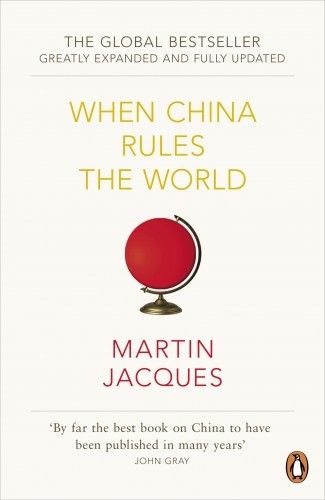
The Communist Party congress opened on Thursday, with Xi Jinping  -  the man most likely to become China’s new president – in attendance. Author Martin Jacques, says that following the financial crisis there was a fundamental power shift that signalled the end of the global dominance of the Western states. In his book, When China Rules the World, he writes:

The 2008 financial crisis marked a fundamental shift in the relationship between China and the United States. Nothing could or would be quite the same again. The management of the US economy was revealed to have been fatally flawed, a lightly regulated financial sector almost allowed to shipwreck the entire economy. In a few short months, the crisis served to undermine a near-universal assumption of American and Western economic competence; in contrast, China’s economic credentials have been considerably burnished.

But this was only the beginning. Immediately after the financial meltdown, the American economy contracted and when it began to grow again, it was at a very slow rate. The Chinese economy, on the other hand, confounded expectations and continued to expand at a barely reduced rate.

Financial crisis

The financial crisis raised the curtain on a new and protracted period of painfully low growth and greatly reduced expectations in the West, with the American economy – like its European counterparts – facing the prospect of years of austerity, with swinging reductions in both government and personal expenditure, combined, for Americans at least, with the urgency of greatly reducing its trade deficit.

Burdened by sovereign debt crisis in Greece, Ireland, Portugal, Spain and Italy, the European integration project threatens to unravel, condemning the euro to oblivion in the process. Meanwhile the Western economies continue to teeter on the brink of another recession, with a further banking crisis and a full-scale slump not to be excluded. In contrast, the Chinese, buoyed by huge foreign exchange reserves, large trade surpluses and a high level of savings, can look forward to many years of fast economic growth. All this adds up to an extraordinary and irreversible shift in power from the West in general and the United States in particular, to China.

Shift in power

Neither the American nor the Chinese government has admitted to this shift in power – on the surface, at least, it has been business as usual. Neither government has come to terms with what that shift might mean. This is understandable. Relations between the United States and China have been so unequal for so long that the idea of the United States being obliged to treat China as an equal is still anathema.

For the Americans, the adjustment will be painful.

But the Western financial crisis has transformed China’s situation and opened up quite new possibilities. There has already been a subtle shift in Chinese policy. The driving force of China’s growing influence as a global power remains its rapid economic expansion. The world has never seen its like before. Alas, much of the world, particularly the developed countries – the United States, certainly Japan, and perhaps above all Europe – find it almost impossible to grasp either the nature of this transformation or its speed.

If the United States was the architect of globalisation in the 1980s and 1990s – since 2008, China has come to assume that role. A new Chinese-driven and Chinese-moulded globalisation is emerging. What are its key characteristics? Undoubtedly the most important is trade. In 2011 it became the world’s top manufacturing country by output, bringing to an end the US’s 110-year reign in that position. China’s financial power, combined with its largesse, is shifting European attitudes. Whereas southern European countries like Spain, Italy, Portugal and Greece had previously been far more concerned than their northern European counterparts about the threat of Chinese competition for their labour-intensive industries, they are now increasingly desperate to attract Chinese investment.

China is alternative to IMF loans

Similarly, central and eastern European nations like Bulgaria and Hungary are becoming more dependent on Chinese funding as previous European sources have tended to dry up; as a result, Chinese loans are now being seen, as in the case of many developing countries, as an alternative to European or IMF loans. China’s new found strength was vividly illustrated in October 2011 when the European Union sought large scale Chinese financial assistance to support its bail-out proposal for the euro. Predictably, these developments are affecting Europe’s ability to speak with a coherent voice on China, with disparate national interests pulling in different and often contradictory directions.

The case of Europe shows how Chinese financial muscle has the potential to influence governments and even shift alignments not only in the developing world but also in the West.

When China Rules the World By Martin Jacques is published by Penguin Press.

Read next:

Comments (32 Comments)

  • Xadovan 09/11/12 #

    @Ian – you mean like how the US sends the 7th fleet into the Taiwan strait whenever the Chinese and Taiwanese kick off? Or how they have military bases directly to the West, South, and East of China?

    Reply
    • Your 7th fleet is there to protect your allies, china like it or not are THE next superpower!!!

      Reply
    • Ian, your comment does not make sense. The rise of the Chinese military is precisely the reason why the US military is over there!
      If the Chinese were to do something would that not make them the bullies?

      Reply
    • Declan: well I think America knows better than anyone about bully’s don’t you!! And about starting wars though you last war in that part of the world didn’t go to well for the u.s

      Reply
    • Xadovan 10/11/12 #

      It went even worse for their opponents. What battle did the US lose?

      Reply
    • Xadovan: are you saying Vietnam was a success?

      Reply
    • Xadovan 10/11/12 #

      The Vietnamese got completely destroyed compared to the Americans and that was with the US military fighting with one hand tied behind their backs because the US politicians were restricting the rules of engagement. Vietnam was lost from the start because their South Vietnamese partners were incompetent and corrupt and did not have the support of the population. The US would destroy China in a conventional war but it is all a moot point because they both have nukes so they will never get into a direct confrontation.

      Reply
    • Xadovan: I think you will find that the Viet kong even though they had very limited armoury defeated the Americans, also your goal of stopping the spread of communism was not reached therefore you lost the war, as for defeating china in a conventional war (depending on your definition) 5 million Chinese soldiers!!! Hardly a walk in the park.

      Reply
    • Xadovan 10/11/12 #

      The only place the Viet Cong defeated the Americans was in the living rooms, streets, and college campuses of America. They won no major battle and were a guerrilla force that hid among civilians and got destroyed anytime they tried to fight conventionally. The Cold War was not black and white because if it was then the US strategy in South America, Afghanistan, Korea, and the Middle East was a big success but everybody knows that in the long run it came back to hurt them. What matters is what is happening now and what is happening now is that Vietnam is turning to the US just over 35 years after the US pulled out of Vietnam. Just like Burma, Taiwan, Singapore, Philippines, Korea, Japan, Thailand, and the rest of China’s neighbors. The Chinese might have troops numbers but they are technologically inferior and it will take them a long time to come anywhere close to matching US military power.

      Reply
    • Talking about rewriting history!
      The US army had a failing strategy and was loosing more men then they’d ever could imagine. The retreat of US troops was a definite defeat and a major blow to the US. It still is a sore spot for many.
      Perhaps it’s time to open a few history books with FACTS, rather then the Hollywood film collection!

      Reply
  • I, for one, welcome our new Chinese overlords

    Reply
  • A very dangerous development for the future of world peace. China is determined to become a leading super power both economically and politically. They are a ruthless regime with an appalling human rights record who will do anything to advance their world standing. They are spending vast sums building up a modern army and will not hesitate to use it particularly against the Japanese who are viewed as long term enemies. What country will have the resources to stand up to them when they start invading neighbouring countries? And no I am not being exaggerative, it’s only a matter of time.

    Reply
    • Prefer an Indian myself.

      Reply
    • Your right, it’s all msg’s with a Chinese! I would rather a Indian curry.

      Reply
    • Thanks for spelling out my own joke.
      And for the ubiquitous “your” right.

      Reply
    • People may try to scoff at and pass the threat of Chinese domination off but when they have control of the world’s economy and perhaps “own” several once independent states around the globe things won’t be so rosy. People enslaved with no human rights and living under totalitarian rule from non democratically elected despots in Beijing.. they will make the Nazis look like pussy cats.

      Reply
    • Tá an ceart agat . Caithfidh gach tír saor an tSín a eisiamh. Níl aon meas ar dínit na daonna acú.

      Reply
    • Yes it would be interesting to see how quick the Americans, try to bully these people.

      Reply
    • I was in a Greek resturant last week,hope they don’t invade us because I couldn’t handle eating that shite all the time.

      Reply
    • frightening how many people red thumbed my comments.. oh let me guess my views are racist or something?

      Reply
    • No Sean, just very OTT.

      Reply
    • Sean, your scare mongering is based on what exactly? Unlike Europe or the US the Chinese have never (even when they were a super power back in the day) have NEVER tried to spread their influence militarily or force their culture on anyone. They will primarily be an economic super power. If they ever do get the modern military to match the US it will purely be to stop the west from attempting to stop their economic growth. In the meantime their army will do what it’s done for years concentrate on it’s internal problems, oppress parts of it’s population and occasionally put an unruly neighbor in it’s place. You forget that they think their ancient culture is the way it should be, they’ve no interest in us round eyed barbarians!

      Reply
    • Gearóid: Occupying Tibet, Occupying East Turkestan, supporting the oppressive North Korean regime to maintain its own interests? Seems as imperial as the US to me.

      Reply
    • Mostly that’s just maintaining their borders. Nothing at all like invading countries thousands of miles away and imposing Their own type of government. And as for Tibet they think it’s theirs, nothing to do with meddling. North Korea is pissing them off nearly as much as it pisses everyone else off. They’ve no interest in western style imperialism. China is thousands of years old and it’s never been their MO. They take their time and do things their own way. They have literally no need to throw their military might around. Before long, if they want a country to do something they’ll just withhold funds, or stop trade, or economic sanctions. I’m not saying they’re not a threat, just not the kind we’re used to. You’re thinking of it in terms of fast moving western greed. That’s simply not how china does things.

      Reply
    • Tibet is a recent acquisition which was quite clearly not ‘their’s’ at the beginning of the century. Although, you are right in saying that Chinese imperialism has different characteristics to imperialism we’ve seen so far. But the PRC is a tyranny and the only hope is that the US and European countries who pontificate about freedom endlessly boycott them economically until human rights improve. If they ‘want to be a world power at any cost’, they’ll pay the cost.

      Reply
    • Colm

      It’s a bit late for boycotts. US & EU corporations have been up to their gilded necks in joint manufacturing in China (mostly for export back) for many years, exploiting cheap race-to-the-bottom labour.

      This whole notion of competing ‘national’ interests is pure BS & has been for much of the last century. It is simply a convenient divide & rule distraction peddled by global elites (& their useful idiots= like Sean) to keep the workers fighting among themselves whilst said elites exploit & loot them.

      Top of the food chain – globally – is the now vast & near purely extractive financial (rigged) casino sector. Next comes the multi-national corporations.

      We all need to realise this & start demanding that democracy actually represents our interests, not those of the elites.

      In any case, as Gearoid suggests, it’s rather laughable to speculate about potential imperial ambitions from China when the US, with a many times larger military budget, already +is+ a de facto empire, & has been for decades. But do realise that there’s always corporate interests behind it.

      Reply
  • One little thing we shouldn’t forget folks. Chinas previous growth and future expansion relies hugely on us in the West remaining prosperous and wealthy. Otherwise who’s gonna be buying those vast amounts of their labour intensive, low value goods that’s currently making a tiny fraction of the Chinese population rich.

    It still takes 10 times longer for an average Chinese worker to generate the same level of profit as his/her western counterpart, such is the low value of their expertise. Chinese labourers, after working so hard (relative to us) only receive a pittance of these profits. The population allow non democracy to dictate politics so long as they feel treated fair. All of the above are major flaws in Chinas “Dominate the world” plan. So long as the populous remains oppressed then the train bludgeons along. As we all know this won’t last forever.

    Reply
  • @ Gearoid – “China has never tried to spread their influence militarily or force their culture on anyone”. Then just exactly what have they been doing in Tibet since 1959?

    Reply

Add New Comment