TheJournal.ie uses cookies. By continuing to browse this site you are agreeing to our use of cookies. Click here to find out more »
Dublin: 12 °C Wednesday 19 June, 2013

Read Me: ‘They wiped up the blood’ – first-hand stories from the battle for independence

Raiding the British barracks, and the brutal killing of prisoners – men recall fighting in the wars that shaped Ireland.

Michael Freeman

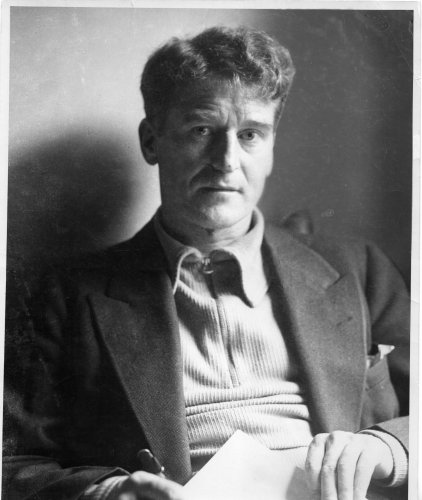
ERNIE O’MALLEY was a senior Republican commander in Co Kerry during the War of Independence, and later the Civil War.

He was also a historian in the making, who interviewed a number of his fellow fighters after the conflict collecting first-hand accounts.

Many Republican survivors of the two successive wars were reluctant to talk openly about their experiences, with many holding secrets even from their own families.

But they were more comfortable talking to O’Malley, who recorded all the interviews in notebooks. His son Cormac O’Malley, along with Tim Horgan, has now collected the interviews for a new book, The Men Will Talk To Me.

Here, two men remember incidents – a raid on a key barracks, and the brutal killing of prisoners – from the fighting in Kerry.

1. Tom McEllistrim

Tom McEllistrim was a farmer in Ballymacelligott who joined the Irish Volunteers in 1915. He led the attack on the Gortatlea RIC Barracks in April 18, and remembers it here. Later a TD, McEllistrim died in 1973.

This was the first real attack. Six of us met in a little hall in Ballymac: Jack Cronin, Maurice Reidy, Tom Mac, John Browne, Richard Laide, John Flynn. We planned to take the barracks by surprise. There were four RIC men in it. We had information that the door would not be locked. We knew that two men went out on patrol. We put one man near to the barracks, right on the railway station to watch the patrol go out; and then he told us when they had gone out.

We waited near the post. It was about 10 o’clock and it was quite dark, so we moved on to the barracks. I walked up to the door. I had a flash lamp and a revolver in my hands. Jack Cronin was behind me and Browne and the others were to follow. When I turned the door handle, I found that it was locked. I knocked and someone inside said ‘Who’s there?’ ‘’Tis me.’ ‘Who are you?’ I said, ‘’Tis alright. Come on and open,’ for the locals often knocked on the door and went in.

And he opened the door. We had masks on us for we were all well known to the police. I was at once to push past and get on in. As soon as he saw the mask, he got startled, but I pushed in past him and the other man in the kitchen made a dart for the room door but I got across into the room and he was trying to close the door against me. I stuck my foot in the door and we had a pushing match at the door for about three seconds. I pushed up the door on him and as I did, the door banged down again and we grappled. He was unarmed and he was an old man. We were tumbling about in the darkness in a very small room and I fell on top of him.

Just as it happened, Cronin burst in the door. He had a double barrelled shotgun and he put it on the RIC man. He put up his hands. I looked into the kitchen and I saw our lads below forcing the other lad to put up his hands and they had. We didn’t want to spill any blood.

ErnieOMalleyAuthorOf'OnAnotherMansWound'&'TheSingingFlame'IRALeaderDuringTheWarOfIndependence&CivilWar

Ernie O’Malley, who interviewed the survivors (Mercier Archive)

The rifles were up on a rack. I lifted down a rifle and put it on a cupboard, when all in a sudden, a shot rang out. I whipped round and I saw Browne wheel around and fall in the kitchen; and in three seconds the floor was covered with blood for he had been shot through the head.‘What was that?’ I said. Moss Carmody and I went down to the kitchen and I saw him putting up his shotgun and he fired at the door.

And as I said, ‘What’s that?’ I saw a police cap at the door but the shotgun missed. As I knocked, the 10 o’clock train steamed in. The station was only 15 yards away and we heard the noise of the engine. ‘Could there have been military on the train,’ we now thought. There were five of us inside the barracks, and what would we do. Our course then was to fight our way out and that was an awful setback for a crowd of young lads. We lifted up Browne and we brought him out with us, and also we brought out a new shotgun with us.

Before we went out, there was whispering and Cronin walked up. ‘We’ll shoot them lads now,’ he said. ‘How can we shoot them,’ I replied, “with their hands up?’ and the RIC were in terrible fear. Browne was dead, but we got out without any shots being fired at us. We got to the railway, threw off out masks and were lifting him when three or four shots were fired. We dropped him and we fired back.

They had seen us getting into the barracks and they had ambushed us from the outside. Laide made an attempt to rush in to tell us they were in the station and Sergeant Boyle shot him in the back with a revolver as he came in. Laide got away and he lived only two or three days for the bullet had gone into his stomach. So we had two dead men.

The two funerals were on the same day, but there was no raid made by the police. The police had made their report to suit themselves. They wiped up the blood from the floor inside. They said that all the shooting had been from the outside by us.

Politics - Michael Collins

Michael Collins (marked with a cross) leaving Dublin Castle with Kevin O’Higgins and WF Cosgrave after the surrender of anti-Treaty forces in 1922 (Tophams/Topham Picturepoint/Press Association Images)

2. John Joe Rice

John Joe Rice was born in Kilmurray and worked on the railways. He joined the Irish Volunteers in Tralee in 1914, and led Republican forces in Kerry during the Civil War. He was later active for Sinn Féin, and died in 1970.

We lasted longer in South Kerry for the Staters had to come at us in big bodies. There were 700 to 800 of our lads in gaol in the end, but there only 70 to 80 active column lads amongst them. We kept the Staters on the go. We got a share of arms from GHQ. GHQ told me that they wanted to help the fellows in the North as the British had the numbers of the rifles which they had handed over to the Provisional Government. I collected 80 or 90 rifles in Killarney to send them on. And the division told me that they had a number of rifles in Mallow for exchange and I got them, but I didn’t give any back for them.

The first Free State army in Kerry were local men. Very few of our lads went F/S and only six or seven of them were of any importance. The best of the men stuck where they were. The Free State garrisoned towns.We got a power of stuff out of Kenmare, a couple of hundred rifles we got.

The brigade was nearly half the county. It extended from Castleisland to Kenmare and it had five battalions. We had very good fighting ground in our area, really impossible to round up in some areas. The Staters landed at Kenmare Pier. They had The Dublin Guards with them and men from the First Northern Division, a fine lot of blackguards they were.

They were getting it tough, and they had no local crowd to hold the area for them. They had bad information, for they jailed men at the beginning who would have been on their side. They came by boat to Kenmare to Fenit. They swarmed in from all sides, for we had a huge coastline to hold. Reen Pier, at Killorglin, at Cahersiveen. Beating of prisoners at first.

Neligan shot John Connor who joined the Free State afterwards. He was a youngster, not of very good class either. Neligan fired a bullet into his chest. It went out and went in through his arm.

Neligan presided at all the beatings and torturings. Hancock in Kenmare did not act like a rational human being. Wilson who was in Kenmare and in Killarney was very bad. Soon the medium changed from beating to shooting.

The blowing up of our men was an organised affair. Stephen Fuller is still alive. Coffey in Killarney survived. There was a coffin handed over to Fuller’s people with his remains for they thought he had also been included in the scraps left of other men. He ran away under machine gun and rifle fire and got over an eight-foot gate. His cap had three bullet holes in it, his coat was holed but he was not wounded, but he had scratches. Fuller was blown over a road into a field and he found a hand tied to him. The men were roped in a circle, a mine was placed in between them, and it was exploded.

The Men Will Talk To Me, edited by Cormac O’Malley and Tim Horgan, is available now from Mercier Press priced €17.99.

  • Share on Facebook
  • Email this article
  •  

Read next:

Comments (31 Comments)

  • Excellent article. I look forward to reading this

    Reply
  • That’s my grandfather in the pic!

    Reply
  • Very interesting piece, would love to get hold of that book as soon as I can!

    Reply
  • ”The men were roped in a circle, a mine was placed in between them, and it was exploded.”

    The awful realities of the inhumanity of man in war.

    My father at 4 yrs of age was hidden in a hay cart under hay with his brother to escape one or other ”faction” during the civil war / war of independence . It is good to have these stories retold , no matter how harrowing . If you you know where you come from , you know where you are going….

    Reply
  • Great men (and women we should not forget also) from an era gone.
    Those now resting in their graves might yet be tempted to turn in them, with their disgust at our continuing present day governments selling Ireland’s inalienable rights to self-government, away to Europe for a price!

    Reply
  • Fair play to the Journal for running this. Reading some of the accounts, they sound so similar to the tactics and fighting that took place during the troubles in the North. It is a refreshing reminder to the FFg/Labour/FF supporters that their background and birth comes from exactly the same place as SF.
    Their party founders and leaders were considered terrorists by the British forces right up until the 26 counties got their freedom.
    But i doubt very much if any of them take pride in the fact that their forefathers were ‘terrorists’. The Sunday Independent called for all the leaders of 1916 to be executed at the time. And yet FF/FFg/Labour are great bed-fellows with that paper now. That same paper was against the peace process in the North and ran many editorials condemning John Hume for negotiating the truce between the IRA and the British Army in the North. Some things and some people never change.

    Reply
    • Sorry, I do not accept the slaughter of innocents in N.I. and the UK on the same scale as our own Civil War. I agree violence played a part in all political parties but no-warning bombs, civilians forced to deliver bombs and the disappeared were a different story altogether.

      Reply
    • David, maybe you should read a little about the war of indepdence from the first hand biographies and then tell me that Collins and his reports didn’t go around summarily executing both Police men, soldiers and suspected informants. Don’t believe me, read about it. But don’t worry, you are not the only one who has the romantic notion that the old IRA fought a symmetrical war, rather than a guerilla war. And by the sam token, the Beritish did the same. They terrorised the Irish. They burned down Cork city centre in a direct response to one of theirs being shot. Never mind the slaughter on Batchelors walk and Croke park.

      Reply
    • Fagan's 01/07/12 #

      The Civil war was many times more brutal than anything in the North and the War of Independence was savage as well. There were no shortage of innocent civilians shot and blown up by both sides.The were many a pub that had a hand grenade rolled in the door at British soldiers drinking there and Collins and co. kept at it, kept doing what had to be done as rough and unfortunate as it was. That was the story in the North as well.

      War is rough and dirty business. As Dan Breen said. Britain dragged our sovereignty in to the mire and we had to go in after them to get it back. There are no nice or clean wars.

      Reply
    • Just pointing out that labour never came from sinn fein. They were set up independently by the trade union movement and were never a banned organisation.

      Reply
    • Wasn’t the independent owned Michael Martin Murphy of the 1913 lockout? He hated Connolly and painted the rising as a socialist rebellion. Most middle classes saw the rebellion as unwelcome as it threatened the status quo and would most likely irritate the British during a time of war.

      Reply
    • David, the so called “old IRA” were just as ruthless as the PIRA. Take Ernie O’Malley, seen as the article is about him, he executed prisoners in retaliation for the British executing imprisoned IRA men. Tom Barry and others burnt the “big houses” in retaliation for the burning of cottages by rampaging crown forces. They were also ruthless when it came to touts and as for the “disappeared” being a “different story all together” that is simply not the case. Mary Lindsay was a tout (responsible for the Dripsey ambush) and she ended up “disappeared” at the hands of the IRA – her body and that of her butler have never been found. It was a hard time and it necessitated hard men and they did what they had to do – we are all the better for it. Distasteful things happen in every war, no matter how just. The Tan war was no different. That doesn’t mean that we shouldn’t remember IRA volunteers such as O’Malley or those he interviewed as heroes, we should, because that is what they were.

      These things need to be remembered properly, people need to see past the propaganda that demonises one incarnation of the IRA and sanctifies another, because, if you praise the”Good old IRA” and decry the “terrorist PIRA” in te same breath you are simply a hypocrite.

      Well done to the Journal for publishing this article, (regular Irish history articles would be very welcome!) I look forward to reading the book.

      Reply
    • Thanks Dave, well said, I agree that war brings out the worst in men and the first casualty in every conflict is always the truth. Terror was used on all sides from 1916 to the Civil War and progressed to the indiscriminate bombing of innocent civilians in the Troubles. What makes the “Troubles” different is they are still “Work in progress” in some people’s minds. Large bombs are still being discovered, Policemen are still seen as legitimate targets and the lessons of Omagh have not been learned. Young men who stand up to or question these people are dealt with accordingly.
      Great article from the Journal and we need to know more from individuals and learn from our past in order to progress.

      Reply
  • Brave men with beautiful stories of heroism for the Ireland. It’s just such a travesty that the dream of the free republic was bastardised by the church and incompetence of our politicians. We are a failed state.

    Reply
  • Great article.

    Reply
  • Great read…!

    Reply
  • Does anybody know if there is an ebook of this?

    Reply
  • The sickening and immoral origins of the free state are ever present up to this day in Leinster house.

    Reply
  • thank god those terrible days are behind us

    Reply
  • Thanks Michael, i updated the iPad app and can view them now.

    Reply
  • Great comments above, for those asking about the eBooks Mercier will have it available in the coming weeks, keep an eye on http://www.mercierpress.ie, Thanks!

    Reply
  • Cannot view comments for this article. Anyone else have this problem?

    Reply
  • Michael, I still cannot view the comments on this particular article on my iPad 2 but I can view them on my desktop PC.

    Reply

Add New Comment