TheJournal.ie uses cookies. By continuing to browse this site you are agreeing to our use of cookies. Click here to find out more »
Dublin: 8 °C Sunday 26 May, 2013

What did the Guinness family ever do for us?

Forget Arthur’s Day – National Philanthropy Day will hear about the real legacy left behind by some members of the brewing family: a cathedral, a library… and bacteria get a look in too.

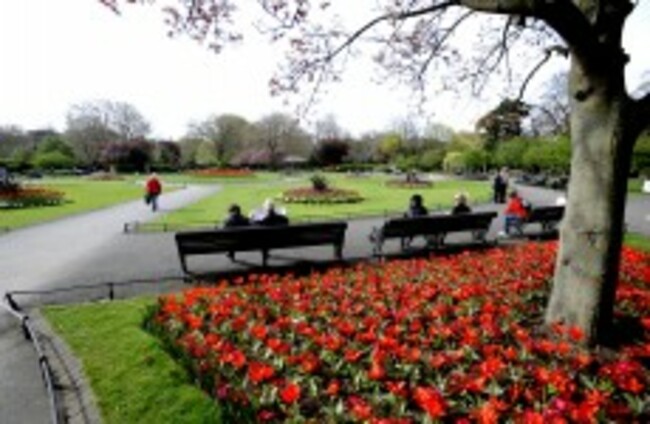
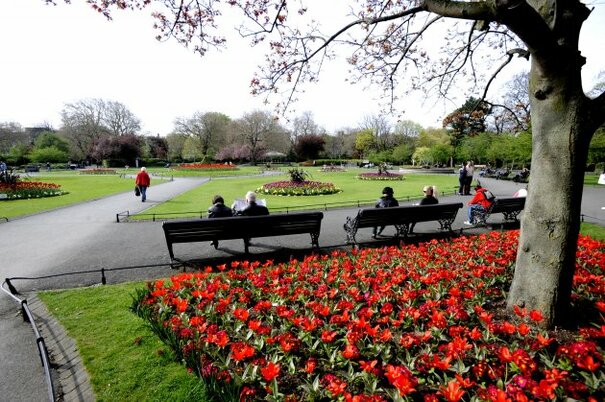
What has St Stephen's Green got to do with the Guinnesses. Quite a lot actually...
Image: Photocall Ireland

ARTHUR’S DAY? Perish the thought. The real legacy of the Guinness family – apart from leading to Ireland being eternally associated with a particular brand of stout – is not a faux-cultural day in September. (Although they should be given credit for the ongoing work of the Guinness Social Entrepreneur Fund)

Among some of the real initiatives taken by Arthur Guinness (grandson of the Arthur who founded St James’s Gate in 1759) in the late 19th and early 20th century included employee welfare schemes and the provision of public recreation areas.

While the brand is now owned by Diageo, the group will remember the Guinness family in a free lecture at the Storehouse next Thursday, which happens to be National Philanthropy Day. (Pre-booking is essential for the one-hour talk – email storehouseeventsadmin@diageo.com).

Evidence of the family’s philanthropic works is still visible around Dublin. The biggest givers were brothers Arthur and Edward Guinness, sons of Benjamin Guinness, and grandsons of the ‘original’ Arthur Guinness who set up the brewery at St James’s Gate in 1759.

Check how many of these you were aware of…

What did the Guinness family ever do for us?
1 / 9
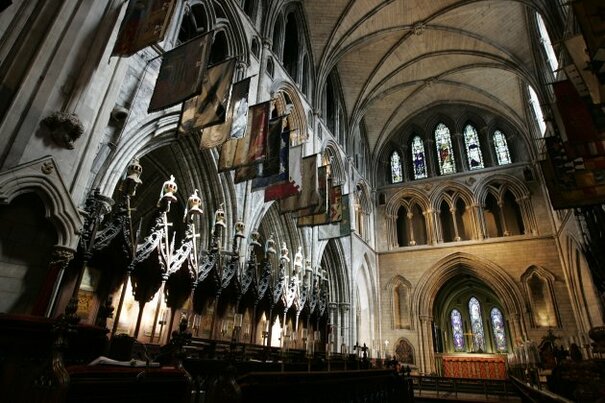
  • Restored St Patrick's Cathedral

    Benjamin Guinness, son of St James's Gate brewery founder Arthur, stumped up £150,000 for the restoration of the cathedral in Dublin between 1860 and 1865. Pic: Mark Stedman/Photocall Ireland
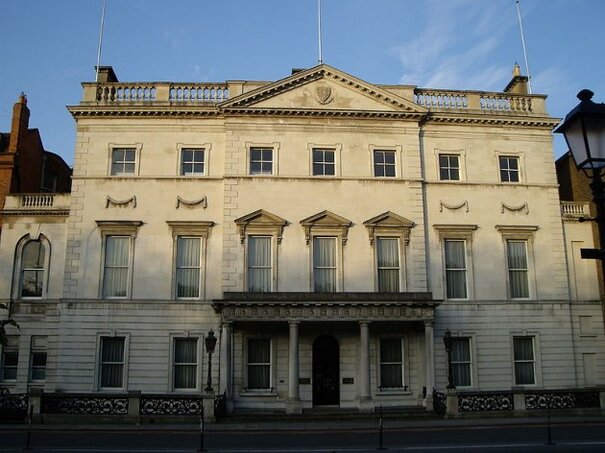
  • Donated Iveagh House to the State

    Rupert Guinness, grandson of Benjamin and son of Edward, gave away what was once Benjamin's home, Iveagh House at 80 St Stephen's Green, to the Government in 1939 - it houses the Department of Foreign Affairs. He gave the 'back garden' - now the Iveagh Gardens off Harcourt Street - to UCD in 1908 and now they are a public park. Pic: Wikicommons
  • Helped set up the Lister Institute for Preventive Medicine

    The same Rupert persuaded his father Edward to give a grant to help set up the Lister Institute for Preventive Medicine in England. Rupert was a politician and agriculturalist who also helped push forward testing of milk and elimination of TB-infected cattle. Image: Alexander Raths/Shutterstock
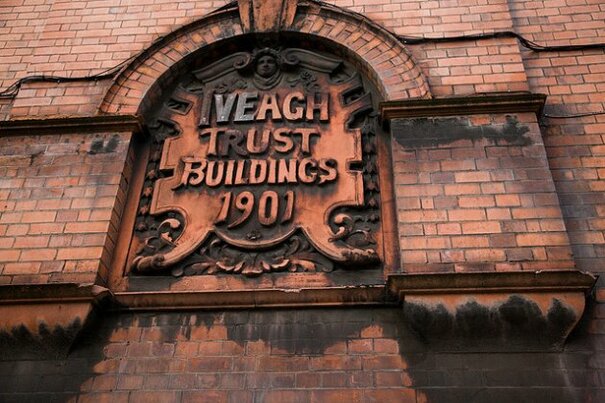
  • Established Iveagh Trust and buildings

    Edward, Rupert's father, was known also as Lord Iveagh - buildings in the centre of Dublin which were built to house poorer residents of the city in more modern accommodation, still bear his name, and the Iveagh Trust still operates today. (It also runs the Iveagh Hostel for homeless men). Pic: William Murphy/Flickr
  • Made St Stephen's Green a public park

    Arthur Guinness, brother of Edward and grandson of 'James's Gate' Arthur, bought St Stephen's Green in 1876, had it landscaped and made it a public park. Pic: Sasko Lazarov/Photocall Ireland
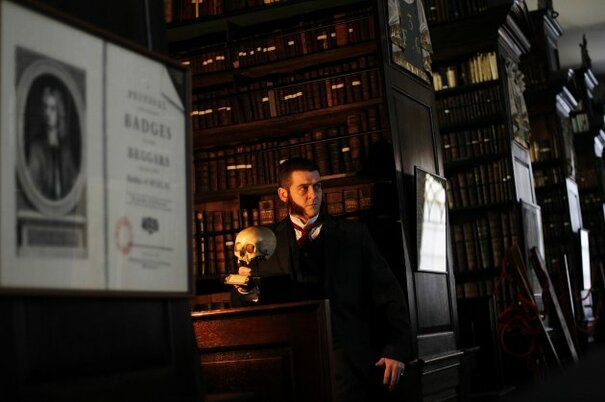
  • Restored Ireland's first public library

    The same Arthur also paid for the restoration of Ireland's first public library, Marsh's Library in St Patrick's Close, which dated back to 1701. Pic: Julien Behal/PA Wire
  • Built extension to Coombe Hospital

    The Coombe maternity hospital in Dublin only moved to its present location in 1967, but its previous incarnation at Long Lane was the beneficiary of Guinness money with which a dispensary block was built. Pic: Nejron Photo/Shutterstock
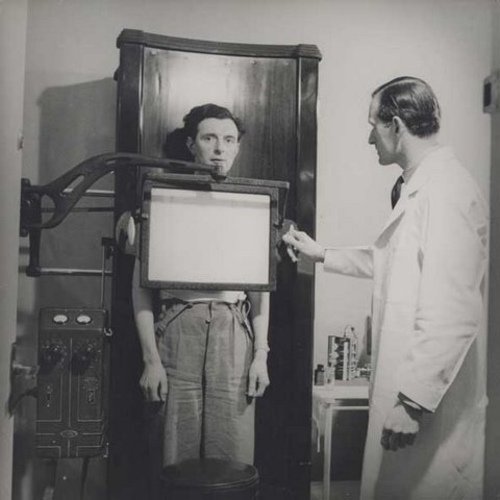
  • Innovating in worker welfare

    A doctor takes an X-ray of a patient in a Guinness employee medical scheme. Employees at the St James's Gate brewery benefited from schemes that were not typical of the time - by the 1920s there were pension schemes, free concerts and sports, education, subsidised meals medical and dental care... and two free pints of Guinness. Pic: Guinness Archive/Diageo Ireland
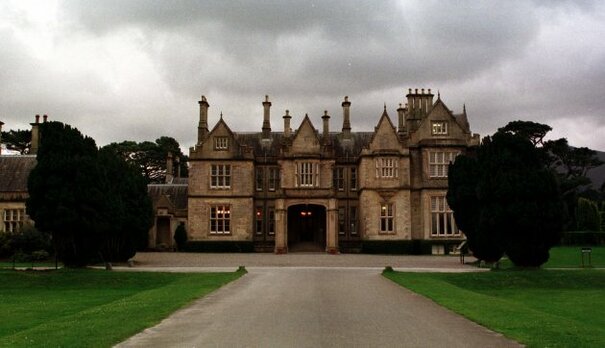
  • Preservation of Muckross House

    When Arthur Guinness (he of Stephen's Green fame) bought Muckross House in Killarney in 1899, he went about preserving the house and protecting the land around it, which would turn out to be a future blessing to tourism in the Kerry area. Pic: Eamonn Farrell/TheJournal.ie

PICS: Arthur Guinness’s low-key final resting place>

Read next:

Comments (36 Comments)

  • Ciara 11/11/12 #

    Pity the modern billionaires in Ireland don’t practice philanthropy

    Reply
  • Hands up whose been to St. Ann’s Park?

    Reply
  • What about St Anne’s Park? A fantastic amenity to north dublin. The red stables have been renovated there’s artists studios and a market there on a Saturday morning… beautiful on a cool/crisp autumn morning for a walk.

    Reply
    • Hi Stephen,
      I had a thought to put in St Anne’s Park (I used to live near there myself and enjoyed it very much!) – I too had always been under the impression that it had been donated by the Guinness family.
      However, when I looked into it further, it appeared that while it had been part of a Guinness family estate, it was actually sold to the council rather than donated. Now that may not be entirely accurate but I couldn’t confirm for sure so I thought I had better leave it out until I can. Hope you understand, Thanks, Susan

      Reply
  • I don’t know how much philanthropy goes on now compared to previous times (I suspect more than we’d think) but it would make an interesting article to try and find out. I do know that the world would be a poorer place without it. Well done Guinness family etc.

    Reply
  • Yes it was sold by Arthur’s guinness’s nephew to the then Dublin Corporation

    Reply
    • Ah yes, I think that’s what I had concluded too. (You mean the second Arthur, ie, Lord Ardilaun, right?) Anyway, I was trying to stick to those things that they donated or which showed a particularly philanthropic reason.
      I really want to find out more about that sale though, because it is possible that he handed it over for a nominal fee, in which case, it should indeed be added in.
      Thanks again, Susan

      Reply
  • Just been to ashford castle which was Guinness holiday home which I never knew.
    2 weeks in summer and 2weeks in winter…….350 staff….and they must have had a ball when Lord Ardilaun left ……he took the name from one of the islands on Lough Corrib

    Reply
  • Many’s the time I watched a play or concert in the Rupert Guinness hall.
    The spur line of the Grand Canal from Davitt road to the old Jame’s harbour (now the dart line) was created to bring Guinness from Jame’s harbour all over Ireland was cut and paved by the Guinness family.
    They were also the main users of the Royal & Grand canals (I have lots of pics of the old working harbour and the “M” boats ,many of which are still in use as leisure boats”
    There was also a swimming pool in James street that we used to bunk into as kids.

    Reply
  • Yes Lord Ardilaun. Yes he definitely sold it rather than donating it as he could look after such a vast estate. Not sure of the amount though. The estate was bigger than the current park as st annes housing estate was part of the family estate. Love to have seen the original estate say it was fantastic.

    Reply
  • To Arthur !!!

    Reply
  • He didn’t leave us a cathedral. Paying for a restoration is different. There’s been a cathedral there for hundreds of years prior to the 19th century.

    Their employee housing and health schemes were very commendable though.

    Reply
  • My family’s famine shame By JASMINE GUINNESS. See where this lead takes you. One couldn’t make it up.

    Reply
    • “I guess I was always brought up to know about philanthropy and to look after people, but the only thing I really know about Guinness in the 1850s is that they did have the brewery then.”

      But the Guinness family showed little of their famed philanthropy during the Famine years.

      As millions of people starved, Guinness maintained an iron grip on the country’s barley production – harvesting it not for food but to brew it into stout for the English market.

      The starving would look on in despair as barges packed with precious grain sailed along the canals towards Dublin’s St James’s Gate, where the brewery even had its own canal basin.

      As the full horrors of the Famine first began take hold in the first nine months of the year now known as “Black ’47″, Guinness exported nearly 300,000 GALLONS of their famous stout to Britain.

      They also claimed a large share of the nearly 900,000 gallons of porter that were shipped to England in the same nine months.

      The beer, along with exports of bacon, ham, livestock, barley and wheat, was shipped under armed guard to British ports such as Bristol, Glasgow, Liverpool and London, even as the people who produced the food starved to death.

      The money the Guinness clan received from these massive sales helped the family to take advantage of less well-off landowners.

      As peasants died from hunger or fled from the country, many landlords suddenly found themselves owning large tracts of unfarmed and useless land. Soon they themselves were in financial difficulties, and the Guinnesses used their wealth to buy up a series of family estates in Ireland and England during the Famine and its aftermath.

      In the show, Jasmine is read a letter written by Benjamin’s father Arthur, who spent the Famine years in London.

      Technically, brewery owner Arthur – son of company founder Arthur who died in 1803 – had moved to Britain leaving the business under his Benjamin’s control.

      In the letter, Arthur does express some concern at the conditions in Ireland, but Benjamin subscribed to the official British “laissez- faire” policy, which meant not directly intervening to alleviate the horrors of the starving millions.

      Jasmine defends her ancestors on the grounds that they did contribute to Famine relief funds, even though they did not make any charitable donations.

      “This is the thing… the Irish have always been very proud and I don’t think you’d want hand-outs if you were a very proud person,” she said.

      Reply
    • Jeasus Larry,that is some story.
      I honestly never knew of the history of the family.

      Reply
  • Gave me the thoughts that come about when the mind is relaxed after three pints of the black stuff (it’s actually ruby)

    Reply
  • Arthur Guinness supported catholic emancipation. But judging by some comments here sick Ireland is alive and well.

    Reply
  • One sad reminder of Wealthy families in Ireland you do the odd nutjobs as, Diana Guinness married Mosley

    Reply
  • Our modern day potential philanthropists as busy paying their taxes abroad while their families live here. Is it that we don’t pay homage and make it tax effective to be generous to the state. Did the Guiness empire get an incentive in their day or was it guilt that thousands of children went hungry while their fathers indulged in the black stuff. I bet it was the tax benefits and other gifts that ensued.

    Reply
  • i believe they were superior to the working class like most of you guys writing here
    and they did too,although it becomes me the black stuff,

    Reply
  • What was wrong with my contribution? It was completely factual.

    What’s the deal with people trying to sweep the fact that Arthur Guinness hated Catholics under the rug?

    Reply
  • Was there a connection with the Hennessy family and st. Anne’s? Could be wrong but I taught they owed it at one stage.

    Reply

Add New Comment