TheJournal.ie uses cookies. By continuing to browse this site you are agreeing to our use of cookies. Click here to find out more »
Dublin: 11 °C Monday 20 May, 2013

Report questions if Direct Provision conditions ‘amount to child abuse’

Poverty, malnutrition, inadequate heating, overcrowding and poor insulation are all impacting on children’s health in Direct Provision, the report says.

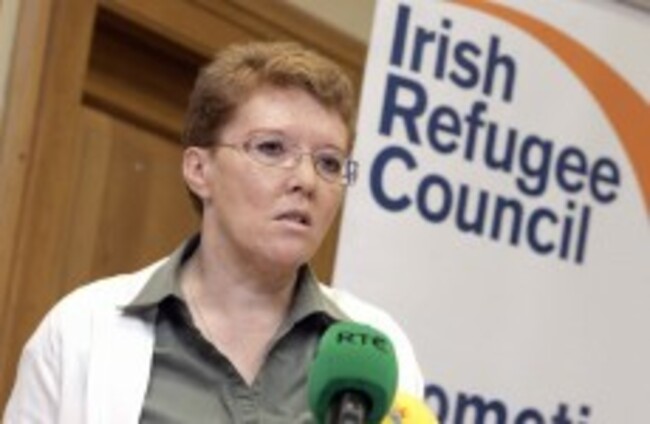
Sue Conlan, CEO Irish Refugee Council. The Irish Refugee Council, at the launch of the report today

CHILDREN IN THE Direct Provision system are experiencing a lack of space, problems with food, poverty and other conditions which could have an impact on their wellbeing, the Irish Refugee Council has indicated in a new report today.

The report, State Sanctioned Child Poverty and Exclusion, looks at the impact on children of state accommodation for asylum seekers.

In the report, the IRC asks:

However, the question remains: does the sustained and prolonged restriction of human rights and civil liberties inherent in the Direct Provision system amount to child abuse?

Direct Provision

The report looks at the system of Direct Provision, as well as complaints and concerns about now-closed hostels, overcrowding and family life, children and poverty, food and malnutrition and more.

Initially the system of Direct Provision was only intended to house applicants for six months, but the average stay today is four years.

  • One third (1,789) of the 5,098 residents in Direct Provision are children.
  • Those within Direct Provision have an income of an allowance of €19.10 per week for an adult and €9.60 for a child.
  • A considerable amount of children living in Direct Provision are Irish citizens having been born in Ireland, said the report.

Family environment

According to the report, parents in Direct Provision “are unable to care for or govern the rules and customs of their family and the upbringing of their children due to the restrictions of living in centres”.

[It is] an unnatural family environment that is not conducive to positive development in children.

In its executive summary, the report said that Direct Provision “has not only bred discrimination, social exclusion, enforced poverty and neglect, but has placed children at a real risk”.

Issues

The report highlights many issues, including:

  • Hostel closures resulting in overcrowding in other centres
  • Children’s play areas being worn down from overuse or from other residents and accommodation centres getting older.
  • The Irish Refugee Council regularly receives complaints regarding physical conditions ranging from cleanliness to safety
  • Complaints about inadequate heating and poor insulation
  • Children being the victims of damaged property and aggression from other residents
  • Parents not being provided with the support needed “to adequately protect their children from the dangers of the environment around them”.
  • Families have very little control over the physical condition of the room that they share and don’t have any control over the condition of the centre itself

The report notes that a Kerry-based doctor based found that ‘rates of depression and anxiety among the town’s asylum-seekers are ‘much higher’ compared with native locals’.

In 2011, the IRC received correspondence from a family’s GP saying that three children were sharing one bed in one room with their parents in a separate bed.  The family requested a transfer or adjoining room.

The IRC “was assured that the family was provided with an additional cot and that the room met the relevant codes and requirements”.  The family remains in one room.

Malnutrition

The IRC said that some families have been affected by the inadequate provision of food, which led to:

instances of malnutrition among children and expectant mothers, ill-health related to diet among babies and young children, weight loss among children, hunger among adults (as a result of family rationing) and chronic gastric illness among children of all ages

A study undertaken in 2004 found that 92 per cent of respondents had to supplement the meals provided with their social welfare payments.

Social development

The report said the main barriers for young people accessing mainstream youth services were:

  • The family’s financial situation (not having pocket money to go along on free trips or money for sports equipment)
  • Lack of transportation between Direct Provision centres and town centres.

When it comes to school, transportation “has been a recurring issue”, while other centres don’t have room for children to do their homework. “Parents have noted that they must pay for work-books for their children out of their €19.10,” said the report.

Recommendations

The report makes a number of recommendations, and is also asking for a review of the Direct Provision system in line with Fine Gael and Labour commitments.

It is also calling for the establishment of an independent inquiry to investigate child protection concerns and grievances of these families.

Read: Closure of asylum seekers’ centre shows “disregard” for rights>

Read next:

Comments (15 Comments)

  • it’s practically impossible to be a legitimate refugee in Ireland. The rules state that you apply for refugee status in the first EU country you land in. Ireland couldn’t be further away from EU borders so where are all these refugees coming from?

    Reply
    • No, it doesn’t, necessarily. You can apply in other countries for valid reasons (in fact, of the 5 factors determining which state you apply in, where you entered is either 3 or 4 on the list). I would also argue most refugees aren’t up to date on the Dublin Convention (as even you aren’t aware of the priority scale) and the appropriate response is to return them to the appropriate member state, not penalise the refugees.

      Reply
  • Accommodation, food and an allowance is provided while they are being assessed for residency.

    They are guests of the nation and experience has shown (in Ireland and many other countries) that the reasons for their applications have been found to be suspect and in some cases bogus.

    I have never been in agreement in accepting refugees/asylum seekers into Ireland as clearly we only became a country of choice when there was more wealth in the country than previous.

    Some will argue that they are entitled to a better life…..perhaps, but then they are not refugees/asylum seekers.

    Some will argue they are fleeing persecution…..perhaps, but logically one would flee to the nearest point of relief, not (if in Nigeria) overly 5 countries and then make your way to Ireland.

    It is time to call a halt to this and return all aplicants to their home countries at least until things improve in Ireland

    Reply
    • Some would also argue that they are children, and deserve to be protected, as they are here in this country, no matter how their parents got here.

      Reply
    • For centuries we have suffered the horror of emigration and yet so many of us seem incapable of relating to the plight of others in the same situation.
      The Irish were always an illegal immigrant race and our Governments consistently campaigned to legitimise our illegals in the US.
      Are we really so hard hearted and hypocritical as we sometimes appear?

      Reply
    • The irish were NOT always an illegal immigrant race! Dont be ridiculous! I have no issue with illegal irish being deported from anywhere. We have enough illegals here and its time they were deported. Those 30,000 illegals who were marching on the streets a few months ago should have been rounded up and sent home. I know people working in cafes here who asked Alan Shatter if they could stay as they are here a certain number of years and hes looking into it! Seriously! Cafe workers! We need an immigration system like the US, Canada, Aus and NZ. Skilled migrants only.

      Reply
    • @Donnacha
      Ahh… Children. The ultimate emotional weapon in a debate.

      Quite a few of these children were conceived and born here.

      Is that what a responsible parent would do if conditions were so bad?

      Or is that what a parent would do if they thought it would strengthen their case for residency ?

      Reply
    • @Donnacha
      Ahh…Children – The ultimate emotional weapon in a debate.

      Quite a few of these children were conceived and born here.

      Is that what a responsible parent would do if conditions were so bad?

      Or is that what a parent would do if they thought it would strengthen their case for residency ?

      Reply
    • I don’t know Jim etc, but the reality is that most of these children will be staying in Ireland, so the State should at least complete the asylum process for their parents, or ensure the children receive adequate supports while they are in limbo. My fear is that in 20 years time we will have more hand wringing in relation to the care of these children, and more compensation to be paid due to short sighted policies.

      Reply
  • If all of that is child abuse, maybe they had it better at home after all?

    Reply
  • Jim, Sean & Tommy: What are your views on the Children’s Rights referendum?

    Reply
    • Tommy C 19/09/12 #

      As an adopted person, Im very keen to see childrens rights brought to our attention. however, kids from other countries are not our responsibility. Id like to see more foster parents being given the right to properly adopt the kids in their care. The best place to kids is not always with their biological parents.

      Reply
    • Tommy C 19/09/12 #

      We have nearly 5000 Irish kids in care. its time we looked after those kids before kids from other countries. we already provide millions in aid to other countries. We cannot afford to provide for everyone else. Time to apply the Dublin convention and send these people back to the first country they land in. Those who are found to be genuine need our help but then they need to stand on their own 2 feet and look after themselves and provide for their own families. Same goes for cradle to grave irish welfare recipients. If youve never contributed, theres no way those who work all their lives should be paying for someone not to work. Those who shouldnt be here, need to leave. How much do we spend on Roma gypsies for example? Enough is enough.

      Reply
  • No system can be made foolproof there are always going to be people who are not genuine, but in modern times everyone should be entitled to a better quality of life. I agree that Irish children should be looked after, but so should children from other countries, no matter how bad things get here we are still a long way from conditions in many developing countries. I understand the frustrations of people like you Tommy, because it does often seem that when it comes to entitlements and benefits that people from other countries get more and get it faster because people fear being called racist if they do so. This should not be the case either. There should be equal treatment for everyone and no matter how bad things are here in Ireland, nobody should be sleeping without a proper roof over their head with all the properties owned by Nama and no child should be going to bed hungry. I personally do support acceptance and inclusion of people, just because some people take advantage is not enough reason to throw everybody out. It is the adults not the children who are at fault. I know that Roma gypsies get a lot of bad press but we certainly dont want to end up like the situation in Italy where two Roma gypsy girls drowned at a beach and their bodies lay covered on the beach for ours while the sunbathers and swimmers carry on regardless. I am not religious but I do believe that we should treat others humanely at all times.

    Reply

Add New Comment