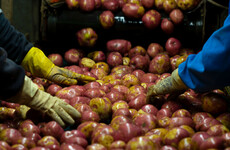
Oxfam Ireland chief executive Jim Clarken said that the price of wheat and maize could rise by 120 per cent and 177 per cent respectively if nothing is done.
Dr Oliver Moore travelled to the Latin American country with Trócaire to see local communities becoming empowered to fight for a clean environment, and for sustainable development.

Conservatives will win again, writes John McGuirk – but first they must stop allowing themselves to be seen as anti-women, anti-science and anti-rights.

The Minister of State for Trade and Development is in Ethiopia today to offer his condolences to the late Prime Minister who had been in power for nearly two decades before he died last month.
Catastrophic events like Hurricane Isaac highlight the reality of climate change – those that believe it is fictional are in denial, writes Gavin Harte.
The changing patterns of climate and other factors have caused chaos in the developing world, writes Concern’s CEO Tom Arnold. This week’s Earth Summit is a chance to prioritise solutions.
The ESRI has said that a new action plan needs to be devised for Ireland, while Food Harvest 2020 should be re-assessed for its impact on greenhouse gas emissions.
Hundreds of world landmarks from Berlin’s Brandenburg Gate to the Great Wall of China went dark Saturday, as part of a global effort to highlight climate change.
Scientific discoveries constantly make us revise what we know about the world – so why do some people still stick to dodgy dogma when climate change is a fact, asks John Gibbons.
A DEEP DIVIDE has been revealed among the leaders at the G8 summit over how to deal with the ongoing conflict in Syria.
The US has indicated it wants to arm Syria’s rebels, while Russia remains in staunch opposition to the plan. Others, including Britain and France, are reluctant to make a decision just yet. However, President Francois Hollande asked:
How can you allow Russia to continue to send weapons to the regime of Bashar al-Assad while the opposition gets so few weapons?
At least 93,000 people have been killed in the two-year civil war as rebels struggle to overtake Bashar Assad’s forces who are strengthened by support from Hezbollah, Iran and Russia.
On Sunday, Putin argued his position: “One hardly should back those who kill their enemies and, you know, eat their organs,” referencing a video purportedly showing a rebel commander committing an act of cannibalism. “Do we want to support these people? Do we want to supply arms to these people?”
Today we ask: Should international powers arm Syria’s rebels?