TheJournal.ie uses cookies. By continuing to browse this site you are agreeing to our use of cookies. Click here to find out more »
Dublin: 8 °C Tuesday 21 May, 2013

No plans to discontinue use of anti-malarial Lariam in Defence Forces

A small group of Irish soldiers are holding protests and bringing legal action over the use of Lariam in the Defence Forces. TheJournal.ie investigates.

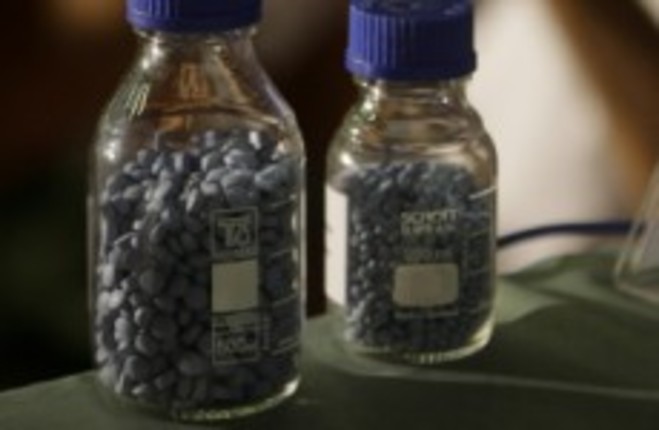
File photo
File photo
Image: Ricardo Moraes/AP/Press Association Images

THERE ARE NO plans to discontinue the use of Lariam as an anti-malarial within the Defence Forces despite protests and legal action by a group of soldiers who blame it for their ongoing mental health problems.

An action group of about 20 former soldiers protested against the historic use of the drug within the Defence Forces on Thursday, a number of who have already started legal proceedings against the State regarding the use of Lariam. That matter is being dealt with by the State Claims Agency.

The chemoprophylactic agent remains the medication of choice for the Defence Forces’ overseas mission to certain malarious areas. However, pre-screening now takes place to ensure the personnel are suitable to take it before it is prescribed.

In a statement to TheJournal.ie, the Defence Department said:

It is the policy of the Defence Forces Medical Corps that personnel are screened both before and after deployments and all necessary actions are taken to ensure that those with contraindications to Lariam use are deemed unsuitable for overseas service and are not prescribed the medication.

Currently, there is no data available about how many people within the Defence Forces have taken Lariam but Minister Alan Shatter is looking for these figures to be compiled.

The Department of Defence says it also does not identify those ruled out of overseas trips because they are unsuitable for the prescribing of Lariam.

Shatter has met with Lariam Action Group on two separate occasion but no further plans have been made about a third meeting. He said he expects each case to be examined based on its merits and that individual medial reports will be requested.

The matter will be dealt with in a manner that is in the interests of the State and also in the interests of ensuring that the truth of the claims made is known. It will be dealt with in an appropriate manner based on due consideration of the background circumstances.

Is the drug a bad one?

Since Lariam was first authorised in 1989, a total of 73 suspected adverse drug reactions reports have been received by the Irish Medicines Board. The complaints include headache, gastrointestinal disturbances and fatigue. More serious effects, including abnormal dreams, depression, suicidal behaviour and anxiety, have also been reported

The IMB told TheJournal.ie that medical professionals are given specific information on how to use the medicine safely and effectively. They are also given details of patient populations in which the product should not be used.

The board said it is important to note that the number of reports received cannot be used as a basis for determining the incidence of suspected adverse reactions as neither the total number of reactions or patients using the drug is known.

The IMB highlighted the risk of neuropsychiatric side effects associated with the use of Lariam in its drug safety newsletter in May 1996. It was examined again in 2003 when the IMB indicated its view that the benefit/risk profile for the product remained acceptable. Information leaflets were also updated with details of reported suicide and suicide ideation related to the use of the medication.

The actual decision to prescribe Lariam falls outside the remit of the IMB so the healthcare professional in question needs to take account of the destination and travel abroad, as well as the assessment of the patient’s overall condition, medical history and other medication.

A health travel expert told TheJournal.ie that he believes the drug is “very effective”, particularly for long-term use in Africa. However, it must be used carefully and it should never be used by people with a family history of depression, “up and down” emotional spells, seizures and epilepsy.

A three-week trial while still in the country of origin should unmask any further problems, he said.

The drug has a fierce reputation among some people but once candidates are pre-selected for it and it is used carefully, it is a brilliant medication.

Although most doctors will carry out such tests, there are no formal rules for them to do so. The alternative medications can be very expensive (Malarone is €4 a day), while others have side effects of their own or lose effectiveness quite quickly.

One doctor admitted that patients who require anti-malarials are often “stuck between a rock and a hard place” so they are really choosing the “least worst option”.

No choice for a career soldier?

Although, Action Lariam for Irish Soldiers will listen to these claims, it is the use of the drug as the only option for career soldiers which causes them the most concern.

Not being suitable for Lariam can rule a member of the Defence Forces out of any overseas trips, putting them well behind their counterparts in terms of promotion and other prospects.

The group held a protest last Thursday outside a travel medicines forum at a Dublin hotel. One of the members Anthony Moore said the protest was well received by members of the conference, many of whom showed disbelief that the drug was still being prescribed. A number of “new victims” also got in touch with them after the event.

One of the demands of Dave O’Shea and his group is for the establishment of a confidential helpline for serving soldiers, specifically for those who are suffering side-effects from Lariam. They believe serving soldiers are currently finding it difficult to speak out about the use of Lariam within the Defence Forces. In a response to TheJournal.ie, the Department said that there is a listening service run by the Belfast Trust within the Defence Forces since 2003 which provides counselling on a wide range of issues.

O’Shea first took Lariam while in Liberia with the Defence Forces in 2003. Just two weeks later he started getting side effects, which included memory loss, insomnia, lumps on his skin and mood swings.

He recalls a number of incidences where he “wasn’t himself”. There was that one time he jumped through a pane of glass and blacked out.

I started to think something was wrong. I went to the medical officer, asking to be taken off the drug. But he told me that I wouldn’t get away again if I did that. I was a career solider who didn’t know about the disastrous side effects.

The suicidal thoughts followed soon after and he describes his life since then as being on a “descending scale”. He has aches and pains 24-hours-a-day and his roller-coaster of emotions makes it hard to maintain relationships.

The Action Group also claims it can link up to 15 suicides with the use of Lariam among soldiers. Moore believes that these deaths were not reported to the IMB as they should have been.

“This isn’t a crusade,” explains O’Shea. “It has affected our lives. I’ve had three close misses of suicide ideation. I’ve been in a very dark place. Something has to be done.”

O’Shea has decided to take legal action but his challenge is still in its infancy. Minister Shatter has confirmed that there are four separate cases being taken against the State.

One of O’Shea’s main demands is for protection to be offered to those members of the Defence Forces who are still serving but fear for their jobs because they are “ticking time-bombs”.

Many, he says, have been suicidal, others have gotten into trouble for fighting or other inappropriate behaviour. A number have been ousted from the army or ruled out of overseas missions.

O’Shea calls himself ‘Larry’ after a particularly bad incident.

Over the past nine years, he has been locked up by police in both Germany and New York for events he cannot remember but involved him lashing out at innocent bystanders. He also went missing for two days in Hamburg. Other soldiers quip about their ‘Lariam heads’ if they forget to do something during or after a trip away.

O’Shea insists that the litigation procedures are not about money. “There certainly won’t be a gravy train,” he says.

He wants the situation highlighted and proper medical care promised to him and his colleagues who have also been affected by adverse reactions to Lariam. “We need to be assured that medication will be paid for if we require it. We need to get appropriate treatment.”

I will never work again – there’s no use lying about that. I will need money for medical expenses and if I need to convalesce somewhere. I’ve already been to four different psychiatrists.

A more effective pre-screening test that will actually weed out unsuitable candidates but not affect their suitability for travel has also been called for.

Read next:

Comments (37 Comments)

  • I’ve never heard of this drug, but then I’ve never had need to. Seems a bit of a disgrace to me that, as a nation we don’t care for our Peace Keepers, if they came back in pieces, whether literally or mentally then we should be doing more to look after them. If they had come back in coffins politicians would be quick to make long speeches and be seen getting “photo opportunities”. You or me might never have met these men, you might not care either,but Ireland inc. sent them to these places and gave them this medication, if it caused this then Ireland inc. is to blame and has a duty of care to these men. Pay up.

    Reply
  • It’s hardly a big problem to offer an alternative? Doxycycline?

    Reply
    • One of the main benefits with Lariam is that it only has to be taken once weekly – meaning compliance is a lot better. Doxycycline can also cause photosensitivity reactions, so can be problematic if serving in hot sunny conditions. But yeah,even though serious side effects are fairly rare, you would think prescribing an alternative wouldn’t be a huge problem.

      Reply
  • “The matter will be dealt in a matter that is in the interests of the State” says Alan Shatter. Nothing about the interests of the troops being prescibed the drug. Is Shatter aware that as Minister of Defence the welfare of the troops is his responsibility?

    Reply
    • What should I avoid while taking Lariam?

      Avoid activities such as driving a car or using heavy machinery or other activities needing alertness and careful movements (fine motor coordination) until you know how Lariam affects you. You may feel dizzy or lose your balance. This could happen for months after you stop taking Lariam. (from official FDA Information)

      Reply
    • This tablet have help millions of people if not billions,and not every tablet is good for everyone but the soildiers were only been protected from a deadly disease….

      Reply
    • 12 million people worldwide according to Charles Alfaro, a spokesman for Roche (manufacturer)

      Reply
    • Truth is Lariam is a cheap and nasty drug with lots of side effects, the good drugs, the Artemisinin compounds such as Coartem are expensive but that would mean the government having to spend a little more on it’s banker money on our defense forces and they don’t give a sh*t about our soldiers, particularly Fine Gael, the IBEC party.

      Reply
    • Severe neuropsychiatric disorders have been reported occasionally with mefloquine, (Lariam) including sensory and motor neuropathies (paresthesia, tremor, ataxia), seizures, agitation or restlessness, anxiety, depression, mood changes, panic attacks, forgetfulness, confusion, hallucinations, aggression, psychotic or paranoid reactions, and encephalopathy. In some patients, these symptoms have been reported to continue long after mefloquine was discontinued.

      Although a causal relationship has not been established, there have been rare cases of suicidal ideation and suicide in patients receiving mefloquine.1

      To minimize risk of psychiatric symptoms, use of mefloquine for prevention of malaria is contraindicated in patients with active depression, a recent history of depression, generalized anxiety disorder, psychosis, or schizophrenia or other major psychiatric disorders.1 In addition, use with caution in individuals with a previous history of depression.1

      In patients receiving mefloquine for prevention of malaria, if neuropsychiatric manifestations (e.g., acute anxiety, depression, restlessness, confusion) occur, they may be considered prodromal for a serious psychiatric event and mefloquine should be discontinued and an alternative drug substituted.1

      Mefloquine is a myocardial depressant, and mefloquine-induced changes in several cardiac parameters have been described. Bradycardia, extrasystoles, reversible sinus arrhythmia, aberrant cardiac conduction, first degree AV-block, hypotension, hypertension, flushing, and syncope have been reported.

      http://www.drugs.com/monograph/lariam.html

      Reply
    • those drugs you refer to arent licenced in some countries due to lack of clinical trials
      while the BNF doesnt include it as a recommended drug for prophylaxis

      Reply
    • Sadly Benn the minister led me not a false sense trust, he knows about the amount of suicides and he marriage break ups, I have told him there are soldiers armed overseas with severe depression. What more can I do??? I just don’t want to utter the words ” I told you so”

      Reply
    • Well Sean Walsh perhaps you ought to take up your issue with their clinical efficacy with the Lasker Foundation who awarded the clinical medical research award last year for their discovery. As for prophylaxis atovaquone/proguanil can be used without the neurological side effects. Bottom line is this incompetent government don’t give a sht, rank and file soldiers are way down the priority list.

      Reply
    • *Apologies Sean, I should explain the Lasker Awards are a highly respected prize for scientific achievement not dissimilar to the Nobel Prize, but perhaps the Irish Medicines board know better and are refusing to licence the drug here.

      Reply
  • DubDon 09/06/12 #

    The problem with the pre screening is that many of these soldiers are career soldiers. If they report side affects their mission deployment is over and quite possibly their selection for further missions. This pushes them down the ladder for promotion and course selection. The Defence Forces are no longer deployed in large numbers to high risk malaria regions so there won’t be a huge influx of claims.

    Reply
  • Malerone has been the drug of choice for years… I’m surprised that the army can’t have it prescribed in place of Larium which has hallucinogenic/psychosis effects.

    Reply
    • The cost of malarone is prohibitive, and it needs to be taken daily which is not ideal for soldiers on duty. The majority of side effects from Lariam are mild, and the incidence of severe side effects is quite low – and can be made lower still by short periods of trial dosing in patients. Those patients who appear susceptible to adverse effects can be screened out.

      Reply
    • Doxycycline is ineffective in large areas of the world…

      Malerone is approx €1.66 a day… that’s not ‘prohibitive’ in terms of drug cost just a cheap value on the life of someone serving their country

      Reply
    • multiply that by let’s say 1000 soldiers, and you’re talking a grand and a half per day. still not a huge amount of money, but when you compare it to the price of lariam, which would get you around seven days supply for the same cost, anyone making budget related decisions will go with the seven times more cost effective solution.

      Reply
  • Risk of permanent effects cited

    U.S. army doctor Maj. Remington Nevin, who first gained experience with mefloquine during his deployment in Afghanistan in 2007, says that “there are a certain group of users in whom … these symptoms, the anxiety, the difficulty sleeping, the mood changes, these could be an indication, an early warning sign of a developing, more serious brain condition… a toxicity caused by rising levels of the drug.

    “The worst-case scenario is that a soldier that suffers toxicity from mefloquine is left with permanent brain-stem injury.”

    Personality changes in returning soldiers have been noted by their close family members.

    “It’s been very easy to attribute this personality change to some experience during deployment, perhaps some combat experience,” says Nevin, “but when we see this in individuals that deployed but never had any traumatic exposures and who had an otherwise unremarkable time overseas, I think it becomes increasingly clear that it was the drug that’s responsible for these effects.”

    The U.S. Centres for Disease Control recommended this year in its Yellow Book travel advisory that mefloquine not be considered the drug of choice for military deployments, given that “neuropsychiatric side-effects may confound the diagnosis and management of post-traumatic stress disorder and traumatic brain injury.”

    Alternative treatments include doxycycline and atovaquone-proguanil (Malarone), which Nevin says are effective and more predictable.

    The possibility that mefloquine may have been prescribed to U.S. Staff Sgt. Robert Bales, who has been charged with 17 counts of murder in the death of Afghan civilians, has been raised by retired army psychiatrist Elspeth Cameron Ritchie. The U.S. Defence Department has refused to confirm or deny that Bales took mefloquine, citing medical privacy.

    Reply
  • The majority of people I know who have taken Larium suffer from short term memory loss and had problems with aggression during its us. It’s caused relationship problems at home. Some still have the effects of memory loss years later. Larium is the cheap option and as no one gives two shits about the defend forces in this country It may possibly come back to bite the state in the ass again as they fail to provide a duty of care to service men and women lije they did when they did bother supplying hearing protection.Also a little point there is no screening done for Larium it’s a liver function test because seemingly it can also cause live problems and those that have to come off Larium overseas are pretty much band from serving over seas if they don’t us Larium that’s really fair you have a reaction to a medication and no alternative is supplied.

    Reply
  • People in this country don’t care about the side effects of medication, including the side effects on mental health, which can seriously affect a person’s future. Be it an “anti-depressant”/SSRI (where negative trials have been hidden and where there can be an increased risk of suicide, violence or mania) or an “anti-psychotic” (which is in fact a tranquilliser) where there can be lawsuits against the drug for weight gain, increased risk of diabetes etc. It’s a case of get them into you.

    Never stop medication without consulting a doctor (due to withdrawal symptoms). Refer to the work of Professor of Psychiatry David Healy or Dr Peter Breggin regarding what I wrote about “anti-depressants”.

    Reply
    • Not to mention the quality of the food given to our soldiers. I did a suicide intervention course in an army barracks (ASSIST) and the food is not the healthiest. Not to mention some things I heard about the food given to them when they go abroad.

      Reply
  • i used lariam on three tours in africa ive had alot of the problems associated with it and i know its a major factor in how i am today

    Reply
  • Mick Walsh Fri, 11:29 AM #

    As an ex member of the Defence Forces, I was never screened, I know people who took lariam and I have seen people change because of it and change in a scary way. Can we really trust this Minister to do the right thing by our Defence Forces, there is no point in having an expensive tribunal in 20 years time and giving the sufferers an apology. We need positive action now. We should all thank Tony Moore ,Dave O Shea and the others in the group for having the courage and dignity to bring this out in the open and having to face fools who spout shite at them. You will find that they didnt start this for themselves but rather to protect and help others who may be adversely given Lariam. And that’s the role of a true Irish Soldier-Protect and help others.

    Reply
  • Phil G 09/06/12 #

    Larium is used by all western defense forces … It’s approved by the FDA and the IMB… There is always going to be a small minority who react to any medication. Over reaction I’d say..

    Reply
    • Yes, but why be rational and look at the evidence? Best to throw caution to the wind and stir up an outrage!! ;)

      Reply
    • Except the US military who withdrew it from general use in 2009

      Reply
    • Do our homework comeback and tell me where lariam is the drug of choice, Roche are washing their ands of it… Go to ” veterans against lariam ” on Facebook, might enlighten you before you make silly comments.

      Reply
    • Maybe before you make a comment you would like to read up on Lariam. look up Dr Remington Nevin US Army. He is the expert on the drug, you can even go into Action Lariam on FB and you will see what he has to say. People like you phil wont have a problem with this drug but I bet you will think twice before you allow a doctor give this to your family if going to a malaria country. Phil can you tell all of us why with the US army that developing the drug will no longer give it to there troops. Like I say phil research the articles UPI INVESTIGATION Lariam.

      Reply
  • Pat Coffey 9 hours ago #

    its twelve years for me now since lariam destroyed my health and career i strongly urge that nobody under any circumstance should touch this poison i cannot stress strongly enough how dangerous this crap is and how unacceptable the fact that it is still being prescribed.

    Reply
  • All of the measures Dave O’Shea asks for are in place ok the Defence Forces today. Lariam is pre screened to all soldiers going to Malaria missions, prior to departure. If they had a bad reaction, then other anti malaria drugs are prescribed. ALL drugs have side effects. Perhaps people should be aware of the side effects Lariam be with alcohol. This may explain the bad side effects.

    Reply
    • @tom thumb – You’re bloody wrong!
      No soldier is screened before or after in any sense of psychotherapy way!
      The only screening is the ultra sound on return in order to make sure you’ve no unwanted parasites in your gut area!
      I know this as I’ve served in Africa with the army on 3 occasions.

      So don’t be waffling on about things that Do NOT happen on Pre deployment or return (not since 2009 anyways!)
      I am sure it’s in writing on some fat cats desk, but has NEVER been practiced!
      The Defence forces would board you in front of a medical team if you had so much as Asthma – let alone a ‘Mental Instability’

      Stop the crap! Heads must roll! And not those of veterans who served their country with pride!

      Reply
    • Forget about the screening of soldiers with this drug, because I can prove with a 100% they did not screen us, but with some people it take’s a lot to get through to them. This is every bar of the church abuse it never happen unstill it was proving people never believe them, Are you one of them Tom. This is what we have to do with this drug and the army. Now TOM I would like you to go and look-up Dail Questions on Lariam, the minister states that Lariam is there only Anti-malaria drug and the army backs it up with any one taken any other anti malaria drug will be discipline.

      You can Google the link below Tom and it just might help you think before you talk, Or maybe you where on lariam and you can’t think.
      World Lariam Support Group Website:
      http://www.lariaminfo.org/

      In one study for UPI, PharmaGenesis determined people taking Lariam were five times more likely to have reported mental problems that could lead to suicide than people taking doxycycline. In the other, Fibonacci examined the FDA data and calculated the rate of side effects per prescription. It found a 150 times greater rate of depression and a 40 times greater rate of suicide attempts among Lariam users compared with doxycycline users.The studies did not find a single successful suicide associated with doxycycline in the past four years, even though doxycycline, an antibiotic, is prescribed 25 times more often than Lariam, which is used only for treatment and prevention of malaria. Lariam is prescribed some 350,000 times a year, doxycycline is prescribed 9 million times a year for a variety of medical reasons, according to data from IMS Health, a healthcare information company.

      Reply
    • i was never pre-screened and if i was i can’t remember so the propbally screen now because the know that its going to be a very big problem for defence forces

      Reply
    • Mick Walsh Fri, 11:16 AM #

      How do you know this Tom?

      Reply
  • Well the soldiers had squeezed all they could from deafness claims

    Reply
    • Innishvilla grow up this is not just about soldiers this is also to do with civilians. The reason why it has never come out is becuse as civilian you would never make the link with another civilian, because the army is all one they can link the problem easier. This will help every one to be on alert if your doctor try to give you this drug. Now maybe you can go to the families that lost a love one to suicide after being on lariam, why dont you not squeeze a bit more out of there lives from your crying.

      Reply

Add New Comment