Sign in. It’s quick, free and it’s up to you.
An account is an optional way to support the work we do. Find out more.
Sign in. It’s quick, free and it’s up to you.
An account is an optional way to support the work we do. Find out more.
NOW THAT THE Dáil has risen for its summer recess, TDs have time to reflect.
Between government formation talks and the speaking rights row, it was a Dáil term that was slow to take off.
But for the 60-plus TDs who were elected to Dáil Éireann for the first time after last year’s general election, it was a term that saw them get to grips with a job like no other in Ireland.
Over the coming weeks, The Journal will be catching up with some of these novice TDs to learn more about how they are adjusting to life in Leinster House.
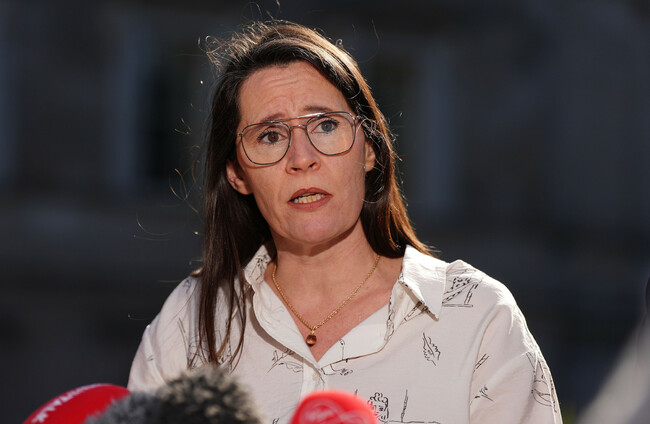
First up on the roster is Social Democrats TD for Dublin Rathdown, Sinéad Gibney.
“Yes and no, I was smart enough not to have too many expectations. It’s the kind of role where you don’t know until you get in. It’s an incredibly demanding job. I’ve had lots of different jobs, but just in terms of hours alone, it’s very intense.
“It’s such a unique place to work, it’s really just so exciting. I know we bandy around the word privilege a lot, but to get to be one of the 174 TDs in the country it really is.”
One of the things Gibney cited as being tricky to adapt to is keeping positive when the numbers are against you as an opposition TD.
“Whether it’s a private members’ motions or amendments to legislation, ultimately, you know everything you put forward as default will be voted down by this government.
“As an opposition TD, it’s important not to let that overshadow things,” she said.
Gibney also said she has been surprised by what she described as the level of “cynicism” in politics.
“There’s a spin on things that the government put out obviously, but the difference in the demeanour of government TDs in the chamber and on media is quite breathtaking,” she said.
She cited Taoiseach Micheál Martin’s repeated refrain that the Social Democrats and Labour had the opportunity to be in Government but “didn’t take it” as an example.
“They use that to dismiss us as a party,” she said, adding that it was Fianna Fáil and Fine Gael who went through the charade of continuing government formation talks with the Social Democrats after the deal was done with the Regional Independents.
For Gibney, the highlight of her time in Leinster House so far has been the work she has done campaigning for health labelling on alcohol bottles.
Labels highlighting the health risks associated with alcohol were due to come into force from 22 May 2026, but concern over US tariffs and the uncertain trade environment have led the government to defer their introduction until 2029.
In late June, when Enterprise Minister Peter Burke was asked in the Dáil about the labels, Gibney took the opportunity to intervene to express her opposition to their deferment and went on to disclose her own relationship with alcohol.
She told the Dáil she hasn’t had a drink in over 13 years.
Reflecting on this, Gibney told The Journal: “Alcohol and its negative impacts have played a huge part in my life.
“It does so much damage to families and communities, and we don’t look at it the same way as other drugs.”
Despite the deferment going ahead, Gibney said: “It felt good to force their hand a little on that. And get a bit of scrutiny on that decision.”
The Dublin Rathdown TD added that taking questions from the media on the plinth has been another highlight of the job, “a natural high” she joked.
The plinth is a double-edged sword, though, and it was here that one of Gibney’s low points also occurred.
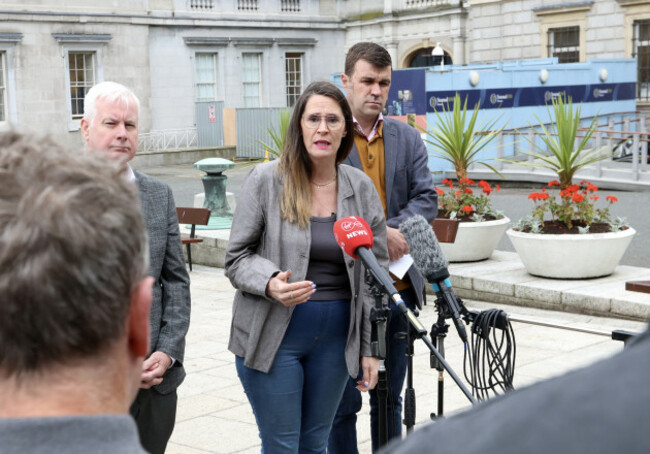
Gibney, who previously served as head of the Irish Human Rights Commission, was no stranger to online negativity before becoming a TD, but she admits it is now more personalised.
Every Tuesday (when the Dáil is in session), opposition parties book slots on the plinth to speak to reporters. The slots generally last between 15 and 30 minutes and will typically see two or three TDs from each party lay out the issues they will be focusing on for the week before taking questions from reporters.
The questions can be broad and vary by publication. Given the unpredictability of what can be asked, parties often view the plinth as a useful testing ground for new politicians to get used to dealing with the media.
In May, Gibney, as her party’s foreign affairs spokesperson, was asked by Gript if she had any concerns about the conflict between India and Pakistan. In response, she said: “To be honest, I’ve not had enough chance to read up on it today so I’d probably hold back from commenting. I saw there was a travel warning issued, I’ll be keeping a close eye on it.”
The clip ran by Gript included earlier remarks made by Gibney about her getting her nails painted with the Palestinian flag, comments she was heavily ridiculed for online.
In Gibney’s view, the clip was unfair and didn’t give the full context of her comments.
“I received two death threats in emails after that,” she said.
Asked what the lowlight of her time in office has been so far, Gibney said: “Probably those couple of weeks.”
“One of the things people might be surprised by is that people are much nicer in the members’ bar than they are in the chamber,” she said.
“I don’t know if the public realise quite how much you are a team of three, you’re nothing without your two staff.”

To embed this post, copy the code below on your site








have your say