We need your help now

Support from readers like you keeps The Journal open.

You are visiting us because we have something you value. Independent, unbiased news that tells the truth. Advertising revenue goes some way to support our mission, but this year it has not been enough.

If you've seen value in our reporting, please contribute what you can, so we can continue to produce accurate and meaningful journalism. For everyone who needs it.

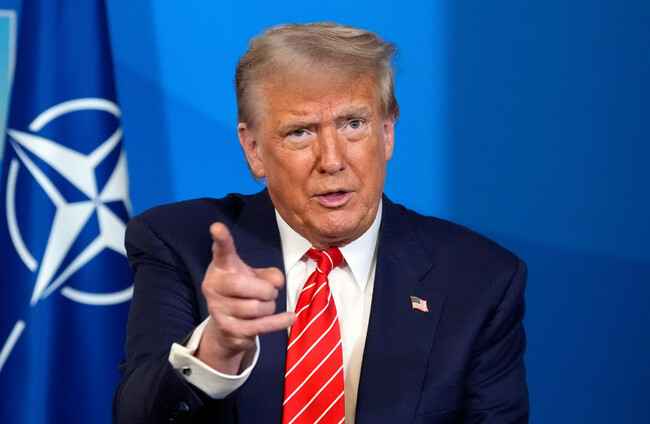
US President Donald Trump speaking during a meeting with Nato Secretary General Mark Rutte at the Natosummit in The Hague. Alamy Stock Photo

'This ended the war': Trump likens US strikes on Iran to bombing of Hiroshima

The US President rejected a leaked intelligence report that said the strikes only set Iran’s nuclear programme back months.

DONALD TRUMP HAS compared the US strikes on Iran during the weekend to the atomic bombing of Hiroshima during the second world war, insisting that they “ended the war” between Israel and Iran. 

It comes after he insisted that the strikes led to the “total obliteration” of Iran’s nuclear capabilities and set the country’s atomic programme back “decades”, despite a leaked US intelligence report suggesting otherwise. 

The early intelligence assessment found that the strikes on three of Iran’s nuclear facilities last weekend did not destroy the core components of Tehran’s nuclear programme, and likely only set it back by months.

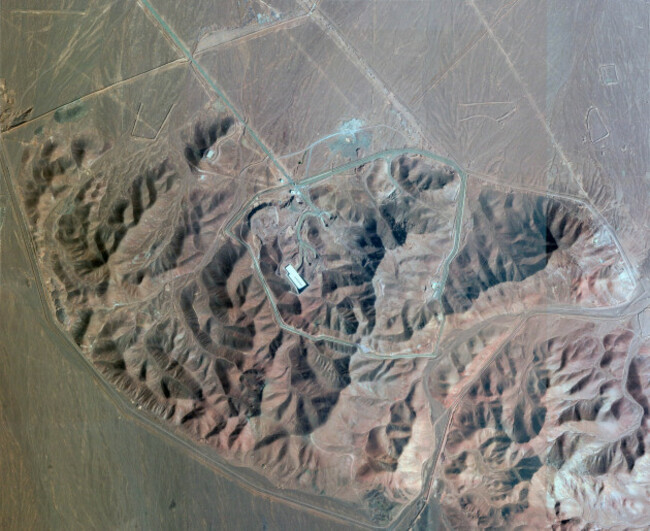
While over a dozen bombs were dropped on two of the nuclear facilities, the Fordo Fuel Enrichment plant and the Natanz Enrichment Complex, they did not fully eliminate the sites’ centrifuges and highly enriched uranium, CNN reported.

The strikes sealed off entrances to some facilities without destroying underground buildings, according to the report.

The assessment was produced by the Defence Intelligence Agency – the Pentagon’s intelligence arm – and is based on a battle damage assessment conducted by the US Central Command after the US strikes.

The report by the Defence Intelligence Agency estimated that the programme was delayed less than six months, the New York Times said in another report.

Trump has rejected this.

Speaking at a Nato summit in The Hague today, he said Iran “went through hell” as a result of the US strikes.

“That hit ended the war. I don’t want to use an example of Hiroshima. I don’t want to use an example of Nagasaki. But that was essentially the same thing. That ended that war. This ended the war. If we didn’t take that out, they’d be fighting right now.”

The Republican leader added that Iran are not going to be building bombs “for a long time”, insisting that the strikes had set back the programme by “decades”. 

He also said the Iran-Israel ceasefire was going “very well” and said the US was “actually getting along with [Iran] very well right now”. 

In an earlier post on Truth Social, Trump wrote: “THE NUCLEAR SITES IN IRAN ARE COMPLETELY DESTROYED!”. 

“I believe we have delivered a significant hit to the nuclear programme, and I can also say that we have delayed it by several years,” said Israeli military spokesman Brigadier General Effie Defrin.

The head of Israel’s military, Eyal Zamir, on Tuesday said Israel and the United States had set back Iran’s nuclear programme “by years”.

Israel had said its bombing campaign, which began on 13 June, was aimed at preventing Iran from acquiring a nuclear weapon, an ambition Tehran has consistently denied.

featureimage Iran’s underground nuclear enrichment site at Fordo. PA PA

Earlier, Israel’s military said it was “still early” to assess the damage caused to Iran’s nuclear programme.

Israeli Prime Minister Benjamin Netanyahu, in an address to the nation after the ceasefire, announced that “we have thwarted Iran’s nuclear project”.

“And if anyone in Iran tries to rebuild it, we will act with the same determination, with the same intensity, to foil any attempt,” he said.

‘Legitimate rights’

Iranian lawmakers today voted in favour of suspending cooperation with the United Nations’ nuclear watchdog, according to state TV.

“The International Atomic Energy Agency, which refused to even marginally condemn the attack on Iran’s nuclear facilities, put its international credibility up for auction,” parliament speaker Mohammad Bagher Ghalibaf said, according to the broadcaster.

The decision to suspend cooperation with the IAEA still requires the approval of the Guardian Council, a body empowered to vet legislation.

Iranian President Masoud Pezeshkian said his country was willing to return to negotiations over its nuclear programme, but that it would continue to “assert its legitimate rights” to the peaceful use of atomic energy.

In an interview with the Al Araby Al Jadeed news outlet, Iranian Foreign Minister Abbas Araghchi said attacks on Iran’s nuclear facilities would have “serious and profound repercussions” on the country’s future.

He said Iran remained committed to the Non-Proliferation Treaty but that it had failed “protect us or our nuclear programme”, adding that Iran’s approach towards the non-proliferation regime “will undergo changes”, without elaborating.

Shadow war

While Iran and Israel have been locked in a shadow war for decades, their 12-day conflict was by far the most destructive confrontation between them.

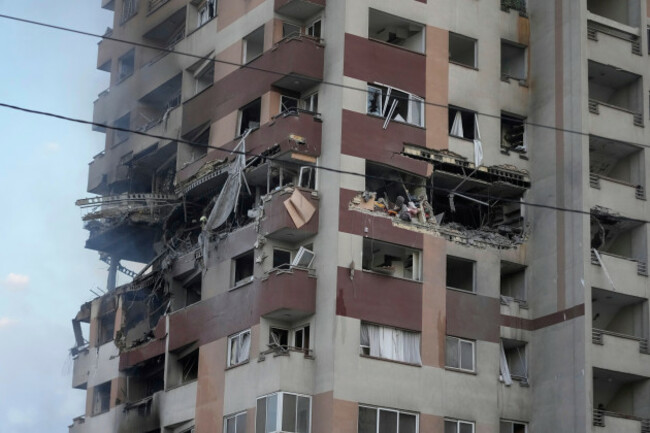
damage-is-seen-to-an-apartment-building-after-israeli-attacks-in-tehran-friday-june-13-2025-ap-photovahid-salemi A damaged apartment in Tehran, Iran. Alamy Stock Photo Alamy Stock Photo

Some Israelis welcomed the truce.

“Finally, we can sleep peacefully. We feel better, less worried, for the kids, for the family. And I hope it stays that way. That’s the most important,” Yossi Bin, a 45-year-old engineer in Tel Aviv, told AFP.

Tel Aviv resident Tammy Shel said:”Everyone is tired. We just want to have some peace of mind. For us, for the Iranian people, for the Palestinians, for everyone in the region.”

In Iran, people remained uncertain whether the peace would hold.

Amir, 28, fled from Tehran to the Caspian Sea coast and told AFP by phone, “I really don’t know… about the ceasefire but honestly, I don’t think things will return to normal.”

Israeli strikes on Iran killed at least 610 civilians and wounded more than 4,700, according to the health ministry.

Iran’s attacks on Israel have killed 28 people, according to official figures and rescuers.

The international community reacted with cautious optimism to the truce.

Saudi Arabia and the European Union welcomed Trump’s announcement, while Kremlin spokesman Dmitry Peskov said Russia hoped “that this will be a sustainable ceasefire”.

But French President Emmanuel Macron warned there was an “increased” risk that Iran would attempt to enrich uranium secretly following the strikes on its nuclear sites.

After the truce was announced, Israel’s military chief Eyal Zamir said Israel’s focus would now shift back to Gaza.

The Israeli opposition, the Palestinian Authority and the main group representing the families of Israeli hostages all called for a Gaza truce to complement the Iran ceasefire.

With reporting from Andrew Walsh

Readers like you are keeping these stories free for everyone...
A mix of advertising and supporting contributions helps keep paywalls away from valuable information like this article. Over 5,000 readers like you have already stepped up and support us with a monthly payment or a once-off donation.

Close
54 Comments
This is YOUR comments community. Stay civil, stay constructive, stay on topic. Please familiarise yourself with our comments policy here before taking part.
Leave a Comment
    Submit a report
    Please help us understand how this comment violates our community guidelines.
    Thank you for the feedback
    Your feedback has been sent to our team for review.

    Leave a commentcancel

     
    JournalTv
    News in 60 seconds