TheJournal.ie uses cookies. By continuing to browse this site you are agreeing to our use of cookies. Click here to find out more »
Dublin: 8 °C Sunday 26 May, 2013

Tunnel vision: Going underground at the Casino Marino

Eight underground tunnels leading out from Dublin’s 18th century Casino Marino… what are they there for?

Image: Paul Hyland/TheJournal.ie

IT HAS BEEN established that there are eight underground tunnels leading out from Dublin’s 18th century Casino Marino…

What is less clear is the purpose of the underground passageways.

Built from the year 1759 by James Caulfeild (1728 – 1799) the 1st Earl of Charlemont, the Casino was an homage to Caulfeild’s nine-year Grand Tour – a common trip taken by the young men of Europe’s upper-class – to Italy, Greece, Turkey and Egypt before he returned (a little grudgingly) to Ireland to carry out his lordly duties.

The Casino (meaning ‘little house’  in Italian), which was intended to be a reflection of the Italian lifestyle that Caulfeild loved, was built as a pleasure house for the gardens of the estate’s main house, Marino, and shared the sprawling gardens with horned sheep and pineapple trees.

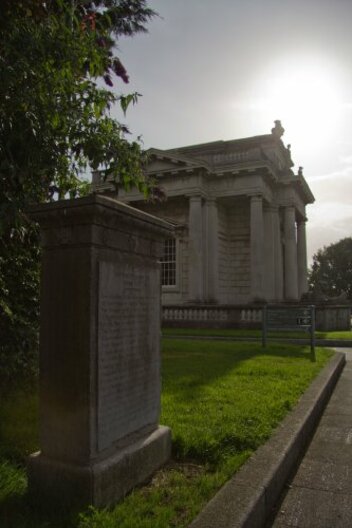
Architect Sir William Chambers, who designed much of Dublin, was in charge of the project – which is now hailed as one of the finest 18th century neo-classical buildings in Europe.

What were the tunnels used for?

The Casino’s tunnels, like the house itself, are approximately 250 years old – but they have never been the subject of an archaeological excavation, guide Rose Anne White told TheJournal.ie.

While some of the spaces would probably have been used for storing fuel or foodstuffs, White explains, the main house of the Marino estate already had ample storage space – so the reason behind the garden’s small pleasure house having eight tunnels has never been satisfactorily explained.

Neither has the reason why they vary so much in structure.

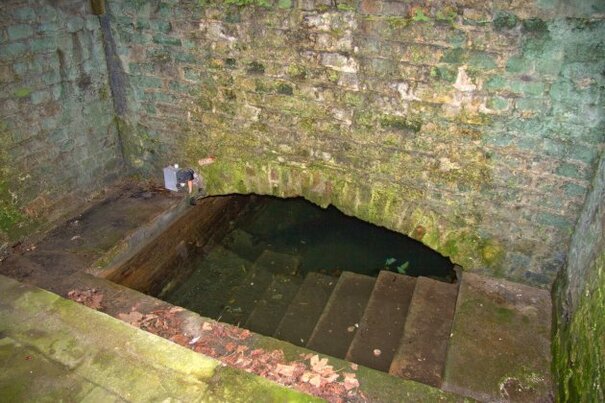
The passageways are not uniform in size or supposed purpose; varying in length from between 10 and 20 ft. Some have steps that lead down to natural springs, while others have several mysterious alcoves carved into their walls.

Tunnel vision: Going underground at the Casino Marino
1 / 17
  • Stone lion

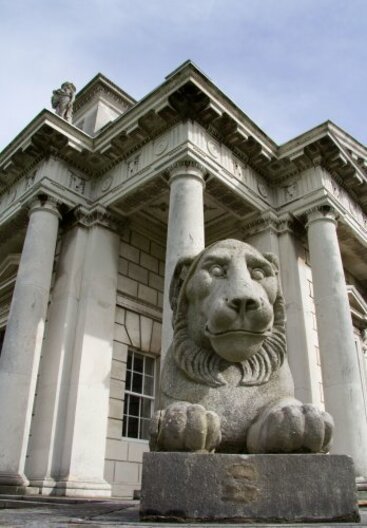
    Two stone lions guard the entrance to the Casino. Photo: Paul Hyland/TheJournal.ie
  • "The temple"

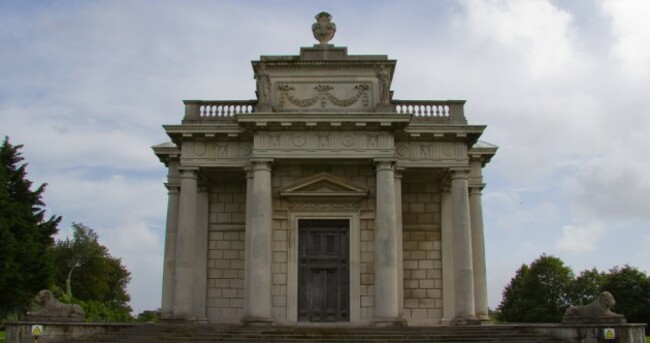
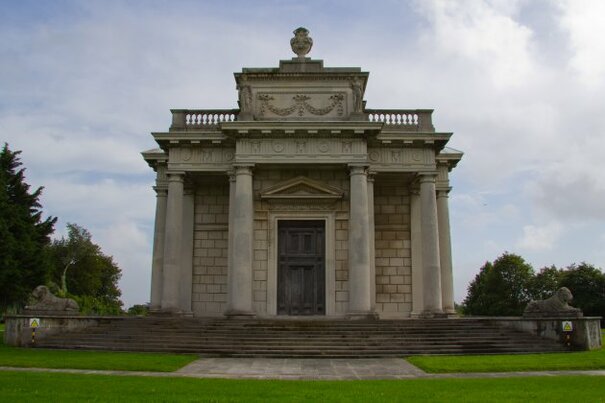
    The Casino earned the nickname of 'the temple' due to its (deliberate) resemblance to a Roman temple. Although it appears to be a single-roomed structure, as a real temple would have been, the impression is a trick of perspective - the building actually contains 16 rooms spread out over three floors. Photo: Paul Hyland/TheJournal.ie
  • Let there be light

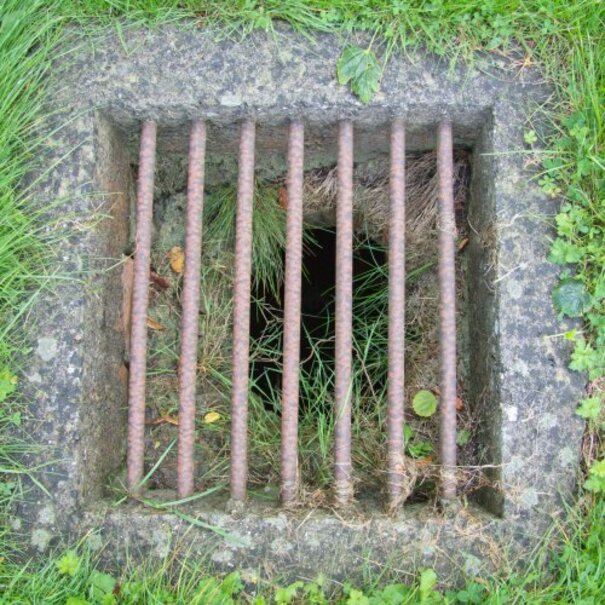
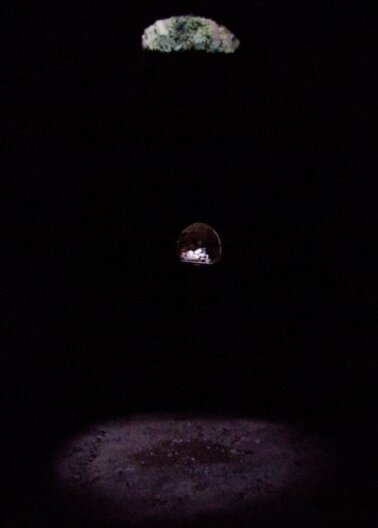
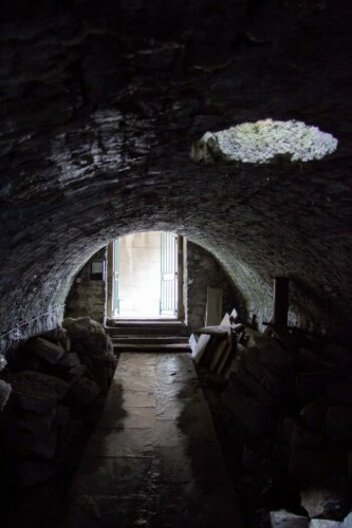
    One of several grates used to provide light and air to the long tunnel. Photo: Paul Hyland/TheJournal.ie
  • Natural spring

    Experts aren't sure why steps lead down into this spring. Photo: Paul Hyland/TheJournal.ie
  • Tunnel vision

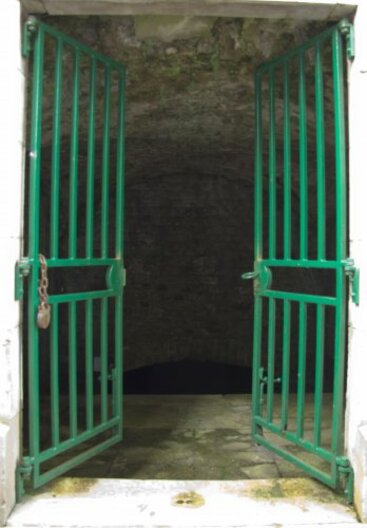
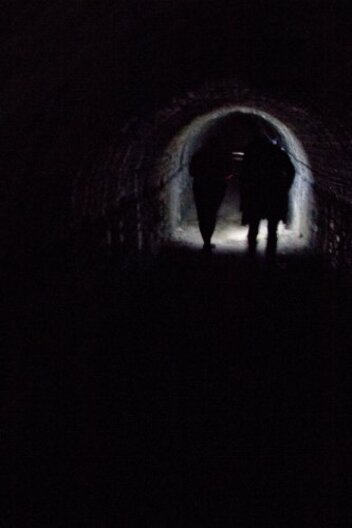
    Public access to the tunnels is not currently permitted. Photo: Paul Hyland/TheJournal.ie
  • Deep water

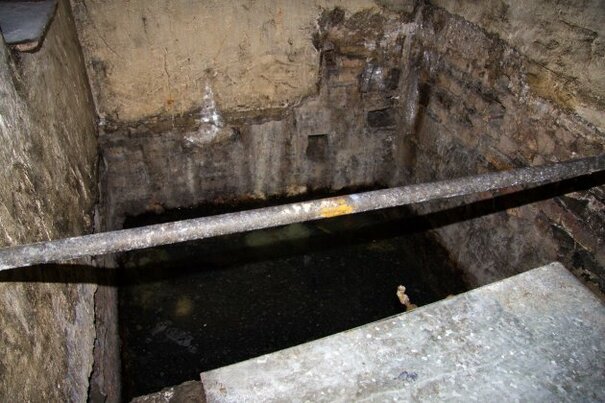
    This deep spring now holds stagnant water but would have provided a fresh supply to the Casino in the 18th century. Photo: Paul Hyland/TheJournal.ie
  • Knock, knock

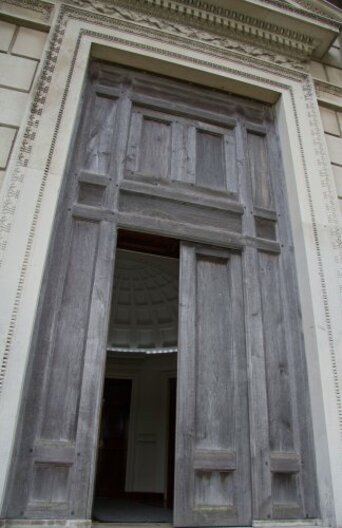
    The main entrance to the Casino plays with perceptive to make the door appear larger than it really is. Photo: Paul Hyland/TheJournal.ie
  • The long tunnel

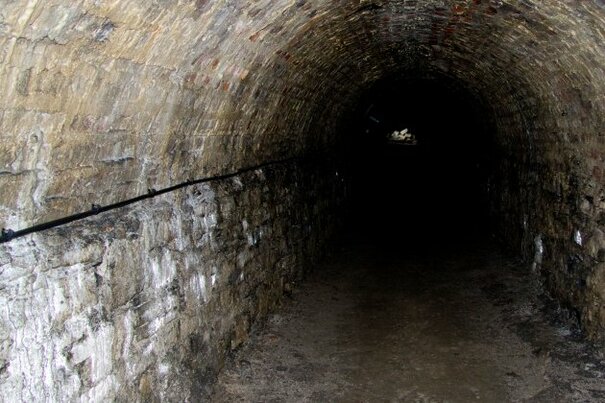
    More than two centuries of rising dirt has made is necessary to stoop in the tunnels. Photo: Paul Hyland/TheJournal.ie
  • Fresh air

    People using the tunnels had access to fresh air and light (and, let's face it, probably rain) through holes in the ceiling. Photo: Paul Hyland/TheJournal.ie
  • Tunnel

    The original stonework of the tunnels remains intact. Photo: Paul Hyland/TheJournal.ie
  • Light at the end of the tunnel

    View of the entrance to the long tunnel. Photo: Paul Hyland/TheJournal.ie
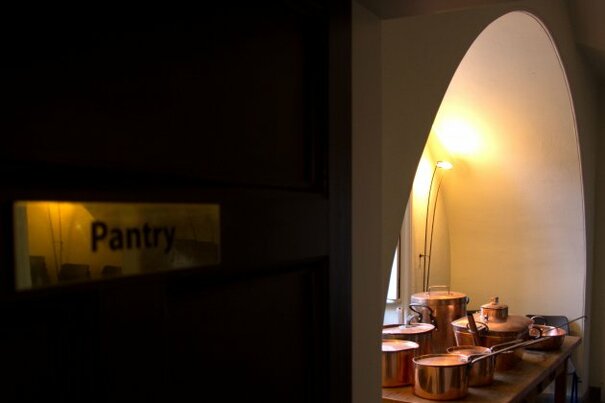
  • The pantry

    The Casino had its own kitchen and pantry. Photo: Paul Hyland/TheJournal.ie
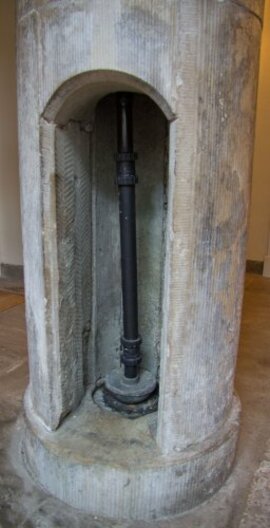
  • Pipe dreams

    In the 18th century, a chain was used to guide rainwater from the roof through the pillar (a method used in China that prevented pipes from blocking). Now a more modern pipe deals with excess water. Photo: Paul Hyland/TheJournal.ie
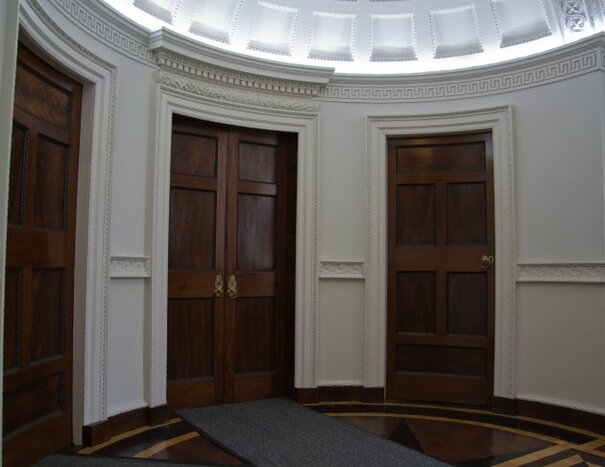
  • Entrance hall

    In the interests of symmetry, one of these doors is a fake. Can you guess which one? Photo: Paul Hyland/TheJournal.ie
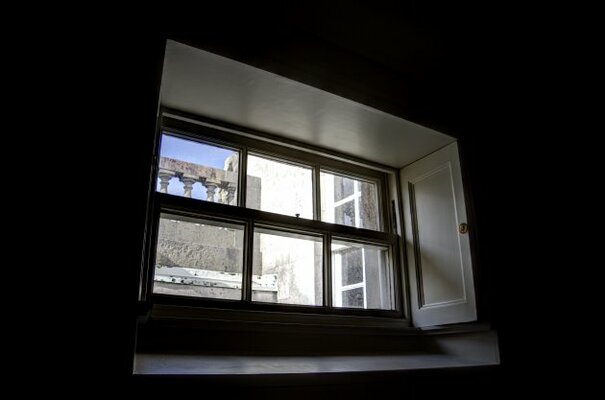
  • Servants quarters

    Detail of a window in the a servant's room. Photo: Paul Hyland/TheJournal.ie Servants' quarters in the 18th century were mostly coloured with pink or yellow washes, while masters' rooms were painted in deep greens and blues - which required more expensive pigments.
  • Rooftop view

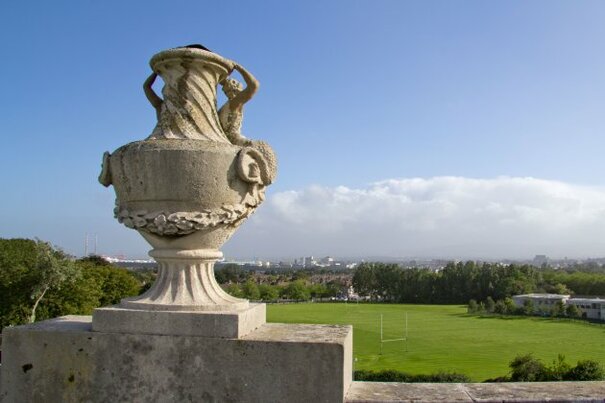
    A view from the Casino's roof, which the 1st Earl of Charlemont and his friends would use to paint, eat and take in the beautiful grounds. Photo: Paul Hyland/TheJournal.ie
  • To the memory of poor Nep

    Nep was the beloved pet dog of James Caulfeild's wife. It is rumoured that the pooch passed away during a visit by Lord Byron, a friend of the lady of the house, and that the great poet himself penned the epitaph for the lucky animal. It's a dog's life - and death. Photo: Paul Hyland/TheJournal.ie

The longest tunnel was originally linked to main house, which was demolished in 1920s to make way for Ireland’s first affordable housing project. And, to provide light and air to those travelling along the passageway, a number of grates where dug from the ceiling. White says this passage was most likely used by servants moving between the main house and the Casino – and by the master of the estate last at night (probably after an ale or two).

Tucked into the left side of this tunnel are two large rooms with curved ceilings and - seemingly useless – inner window spaces. A supposed second passageway – now blocked off – veers to the right of the main route. It is believed that the second passage, along with the main tunnel to Marino House, were blocked by the Christian Brothers when they took over the estate. However, White points out, without a proper excavation, details are frustratingly hazy.

The rumour mill

However, the lack of hard facts hasn’t stopped the rumour mill from spinning over the last century or so, and local stories paint a very colourful picture of life underground at Marino – complete with whispers of Masonic meetings and freedom fighters on the run.

One of the most popular stories claims that the first machine gun in Ireland was fired in the long tunnel during the War of Independence, as the underground passageway could muffle the sounds of target practice. White says that historic documents indicate guns were hidden at a location in or around Marino – which was an area sympathetic to the Republican cause – but unfortunately, the exact place is unknown. Rumours that Michael Collins was hidden from the British authorities in the passageway have also still to be proven.

Inside the temple

Inside the Casino itself are several signs that have given rise to speculation the house was a Masonic lodge – not least of all a huge blazing star set into wooden floor of the entrance hall. However, White explains that Lord Caulfeild, as many of his time, was deeply interested in astrology, symbolism and the occult as well as – quite frankly – showing off: the plethora of symbolic imagery at the Casino include goat’s heads, signs of the Zodiac and stone lions – and demonstrated his sophistication to guests. The house itself, nicknamed “the temple”, was built in the shape of a Greek cross.

Unfortunately for Caulfeild, his decades-long obsession with the Casino eventually bankrupted him and, after his death, his son was forced to sell most of the cultural treasures he amassed over his lifetime. Fortunately for us, the restored and wonderfully maintained building remains one of the accomplished examples of neo-classical architecture in Ireland and one of the finest garden temples in Europe.

The Casino is located at Marino, just off the Malahide Road and only three miles north of the centre of Dublin.

More from TheJournal.ie’s Hidden Ireland series…

In pics: Hidden Ireland – Dublin’s pawnbrokers>

Read: What has happened to Ireland’s workhouses?

Read next:

Comments (31 Comments)

  • Very good article Jennifer, thanks for this it reminded me that I must visit there soon. I read recently it’s closed to the public a lot of the time

    Reply
  • There’s a handful of tunnels under Malahide castle too which as I kid I used to explore! Never got anymore then a few metres down cos I started to crap myself but they were ancient! One end of was over near the pitch and putt course and then there was the stepped well at the side of the gardens. Apparently one of the tunnels ran all the way from the castle to the ancient well behind the church in Malahide town but was cut off after the built the railway back in the 1840s!
    Would love to know more about them but I think most of the entrances have been blocked up cos of kids like me wrecking it for everyone else! Lol

    Reply
  • Will definitely be paying a visit soon. A lot more to it than I imagined. I remember hearing years ago that one of the tunnels emerged in Clontarf. Probably another rumour but there really are some fantastic stories linked lo these landmarks.

    Reply
  • Amazing building and well worth a visit

    Reply
  • I have passes this building nearly every day for the past 20 years and had no idea what it was, now I do, thanks.

    Reply
  • An incredible building. So many rooms, yet just one big window and plenty of natural light inside. Amazing design. Even more fascinating is that the crescent in fairview was built by caulfields nemesis to block his view of the sea from the casino. Tut tut. ( so, in a strange twist of fate, the world wouldn’t have Dracula only for the casino…..)

    Reply
  • Visited there a few weeks ago. Had never heard of it before a friend working in the OPW saw it on the brochure. Was an amazing place to see. Needs to be signposted better. Took a while to find it but was worth it. Great guides too-really knew their stuff.

    Reply
  • Wouldn’t be surprised if the steps leading to the stream wasn’t used for a bit of skinny dipping.

    Reply
  • Ciara 26/08/12 #

    Fascinating article.

    Also, badly carved 18th century lion statues ftw. They are all over Europe – the poor stonemasons who carved them must never have seen a lion. It’s questionable if the lords who commissioned them had either…

    Reply
  • OOOOOOOhhhhh scary Occult and Freemasonry , who really gives a rats arse …… yes pineapples are very symbolic in freemasonry but still this made me laugh my ass off !!! NWO FTW :)

    Reply
  • This was a mason lodge, the lions are sneering at people mocking them about the goings on inside the lodge. The tour guides are full of crap inside there, leaving you with more questions than answers, for example they say the servants room was beside Caulfields room that would never happen in that time, no photos are allowed and when asked why they say at the end of the tour they say oh you can take photos just no flash. This place stinks of a mason lodge, and the tour guides like to pass Caulfield off as a nice guy. This guy planned the occult grid of Dublin with fellow mason Chambers as architect. All this was paid for on the backs of the Irish people in the ulster plantation and it was said that the builders took extra care not to damage stone carvings because if they did another village up north would be sold off to pay for it. Well worth a visit but don’t listen to the tour guides make up your own mind about its function. Also had pineapples on reception when questioned about it they say oh the lord loved pineapples BS pineapples are very symbolic in freemasonry and when you quiz them about it they laugh it off.

    Reply
    • I just have a passing interest in Freemasonry. Always wondered who built the obelisk up on Killiney hill and the ones on the pier in Dun Loaghaire and why. The closing ceremony of the Olympics contained multiple references too.

      Reply
    • On the topic of pineapples, they don’t grow on trees. Pineapples grow in the middle of a small plant with long leaves.

      Reply
    • “Always wondered who built the obelisk up on Killiney hill and the ones on the pier in Dun Loaghaire and why.”I always thought the obelisk on Killiney Hill was built to commemorate Queen Victoria’s visit to Dublin.

      Reply
    • But it appears I’m wrong, a quick search reveals that the obelisk has an inscription dated 1742 on it.

      Reply
    • Will Derham Wed, 1:06 PM #

      “This guy planned the occult grid of Dublin with fellow mason Chambers as architect.”

      Proof please? Even an image of the supposed masonic grid would be nice.

      William Chambers never came to Ireland, and Dublin most certainly was not planned and laid out in a grid. It’s probably one of the most organically laid out cities in Europe, reflecting the many centuries and layers of its occupation. Its history is littered with silly disputes between developing land-owners making any kind of contrived “plan” all but impossible.

      Reply
  • Spelling is terrible in that article! Apart from that very good. I’ve been reading a bit about the occult in Dublin. Very interesting. The Casino comes up a lot. Anybody interested should read Freemasonry in Ireland and the Dublin occult grid by Jeremy James on Scribd.

    Reply
  • One of our best buildings in the country and indeed the UK. It is a true treasure and yet again our planners and city councillors demolished an historic building to build 3 bed semis – will we ever learn?
    Now SIPTU want to build a monstrosity in place of Liberty hall. Corruption is alive and well in our city council. I bet Oisin Quinn will vote for the Liberty Hall project to go ahead.

    Reply
  • If anyone is of the mind that Freemasonry and occult societies aren’t as powerful now as they were in those late days of the 18th century they would be advised to look up the Blackfriars Bridge hanging of Vatican banker Roberto Calvi in 1982. It is very much alive and well and at the heart of goings on in governments and religion the world over. These guys have their HQ on Molesworth Street a stones throw from The Dail, Davey Stockbrokers and much of the British establishment in Dublin. The motto I’ve heard most attributed to the Mason’s has been, “Hidden in the shadow of the light”, next time you’re taking a stroll down Molesworth Street at night take a look at their building, the level and square are hidden by the shadow of the light. Also the building is huge and must be worth a fortune. Even weirder is that the Masonic Orphanage is attached to it…

    Reply
  • The tunnels were also said to be used for bringing prostitutes in and out of the house.

    Also the wood used on the floors are from trees, which are now extinct,

    Reply
  • Really interesting article! See this and all of Dublin’s other esoteric monuments and buildings in the feature documentary, Symbols in Stone.

    Symbols in Stone explores the untold history of Freemasonry in Ireland, and the critical impact that the secret society has had in shaping the nation’s history and architecture

    See the HD trailer for Symbols in Stone: An Untold History of Ireland here:
    http://www.youtube.com/watch?v=GkjrZWSsw-A

    Reply
  • Should anyone with a genuine interest in this want to discuss further email me on irelandforchange2012@gmail.com

    Reply

Add New Comment