Sign in. It’s quick, free and it’s up to you.
An account is an optional way to support the work we do. Find out more.
Sign in. It’s quick, free and it’s up to you.
An account is an optional way to support the work we do. Find out more.
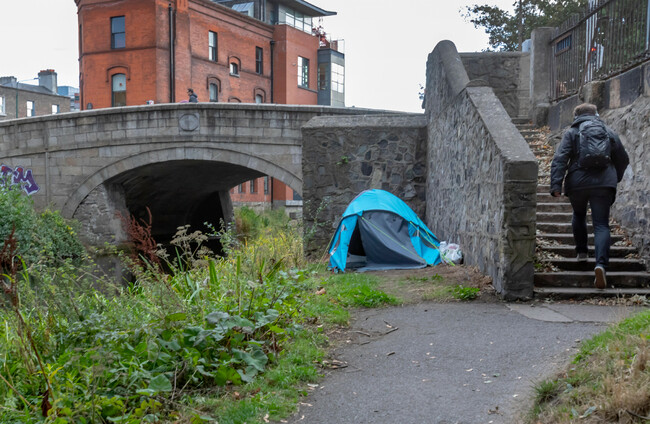
AN AVERAGE OF seven people experiencing homelessness died each month during 2019, with 60% of the 84 deaths happening in Dublin.
A report by the Health Research Board (HRB), titled Deaths among people who were homeless at time of death in Ireland, 2019, recorded that 7% of deaths took place in Cork and the remaining 33% were at other locations in the country.
81% of deaths were men, with most deaths occurring either in public (40%) or in emergency accommodation (32%).
The report was commissioned by the Department of Health in order to improve understanding of premature mortality among homeless people and to inform healthcare policy and services.
93% of those who died had a history of drug and alcohol use, and 55% of deaths were primarily the result of poisoning caused by drugs.
The median age of those who died was 40 years old, and coroner’s reports found that epilepsy was present in 7% of deaths, a high prevalence when compared to the general population.
Noting the report, Minister of State with responsibility for Public Health, Well Being and the National Drugs Strategy Hildegarde Naughton said:
“This report makes for very difficult reading. It is a desperately sad state of affairs that vulnerable people have died in such circumstances, and my thoughts are with their families and friends.”
“Government is working hard to assist people in vulnerable situations and this important work is a priority. I am very conscious that behind every statistic is a human story.”
“I am however hopeful that as these figures reflect the situation pre COVID-19, the follow-up study will reflect the impact of the enhanced public health measures that have been implemented since the onset of the pandemic.”
The Department of Health noted that since the data was recorded in 2019 there have been “extensive advancements in healthcare services for people who are homeless”.
A funding increase of €26 million was provided in addition to the recurring fund of €40 million in supports for people addicted to drugs between 2021 and 2023.
Almost two fifths (38%) of the overall group had a mental health issue, notably higher among women (75%).
Women were proportionally more likely than men to have a mood disorder and 63% of women were in contact with medical services compared to 33% of men.
Opioids were linked to 37 deaths, while just over half (51%) of the people who died of a poisoning death involving opioids were not alone at the time of the incident that led to their death.
Lead author of the report and senior researcher at the HRB, Dr Ena Lynn, said:
“Two important insights from this data are the role of substance use and the high levels of mental health and medical issues among those who died, showing that this is a vulnerable population with complex needs.”
“There is no one single solution to these challenges, but our findings can help shape holistic responses across healthcare services: for example, strengthening mental health supports; enhancing harm reduction strategies related to the provision of first aid, which would include provision and administering of naloxone; and addressing barriers to access and retention in treatment services.”

To embed this post, copy the code below on your site










have your say