Sign in. It’s quick, free and it’s up to you.
An account is an optional way to support the work we do. Find out more.
Sign in. It’s quick, free and it’s up to you.
An account is an optional way to support the work we do. Find out more.
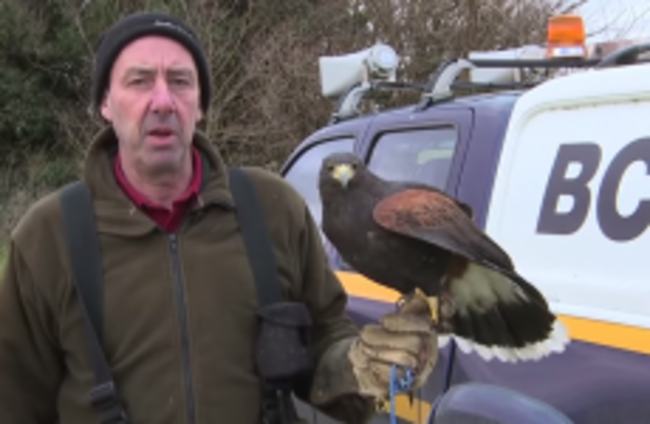
WHY WOULD THE Irish military need to hire a bird of prey?
Have we quietly declared war on a tiny nation of rodents?
As it happens — no… no we haven’t.
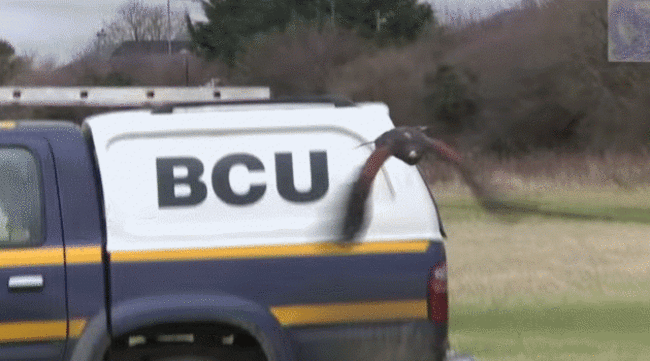
Working birds like ‘Samson’ the falcon and ‘Rihanna’ the hawk are employed by the Air Corps to keep the airspace at Casement free of pigeons, seagulls and other lower-down-the-foodchain feathered creatures.
The Defence Forces has produced an interesting little package on what they get up to at the Co Dublin air base — introducing us to their handler, Neil, and showing the team in action in all their airborne glory.
Got two minutes to spare?…
The air traffic service at Casement handled over 20,000 air movements last year, according to the Defence Forces.
In addition to its four runways, there’s also a military camp within the base’s 750 acres, and the aerodrome effectively has its own eco-system, with marching hares and smaller animals, in addition to a diverse collection of wild birds.
“Unfortunately in aviation this amount of wildlife can pose particular threat to aircraft, with the possibility of serious airframe damage, smashed cockpit windows or even engine failure when the two meet,” the introduction to the Defence Forces video notes.
Think of the damage a sluggish wild pigeon can cause to the windscreen of a slow moving car and increase the destruction proportionally to the high speed of the military aircraft!
As you might imagine — bird control operations are an important aspect of any airport’s operation.
We took a look at the measures in place in Dublin Airport in this article… Airport authorities carried out around 48,000 ‘bird scaring actions’ in a single year — firing handmade cartridges which emit a loud bang, followed by smoke.

To embed this post, copy the code below on your site












have your say