Sign in. It’s quick, free and it’s up to you.
An account is an optional way to support the work we do. Find out more.
Sign in. It’s quick, free and it’s up to you.
An account is an optional way to support the work we do. Find out more.
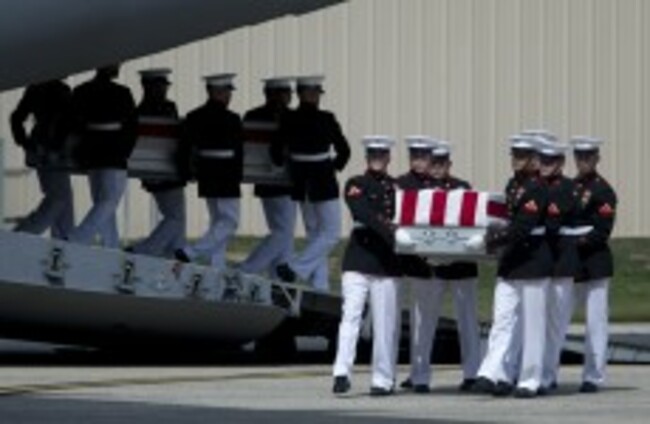
THE SCANDAL OVER the Benghazi attack has increased in the United States as a top State Department official resigned and three others were suspended when a probe uncovered major security failures and mismanagement.
The news came amid a clamor of calls for Secretary of State Hillary Clinton to testify to US lawmakers about the attack on the US consulate in Benghazi, Libya, after ill-health forced her to pull out of this week’s hearings.
Assistant Secretary Eric Boswell, head of the bureau of diplomatic security, had resigned after the release of the scathing report into the 11 September assault in which four Americans, including ambassador Chris Stevens, died.
The Accountability Review Board (ARB) had fingered four individuals for their “performance,” State Department spokeswoman Victoria Nuland said in a statement.
Clinton “has accepted Eric Boswell’s decision to resign as assistant secretary for diplomatic security, effective immediately,” she said.
“The other three individuals have been relieved of their current duties. All four individuals have been placed on administrative leave pending further action.”
She would not identify the three other State Department staff citing “personnel policies.” But US television networks had earlier named one as Charlene Lamb, deputy assistant secretary for international programs.
“We have learned some very hard and painful lessons in Benghazi,” said Deputy Secretary Bill Burns. He and Deputy Secretary Tom Nides are due to appear at public congressional hearings on Thursday.
The four were killed when dozens of Al-Qaeda linked armed militants stormed the consulate and attacked a nearby annex in an eight-hour fierce firefight.
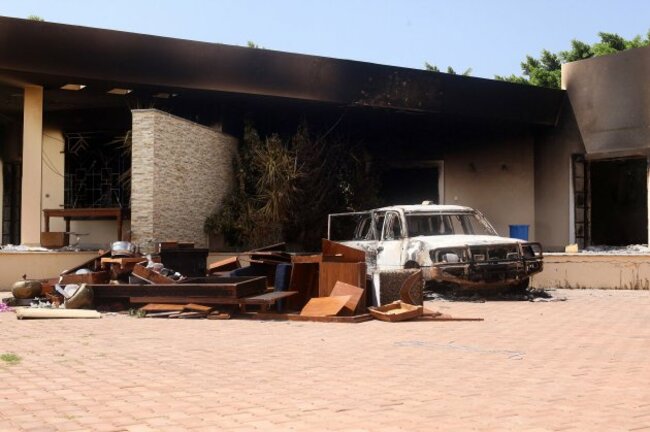
A burnt-out car seen after the attack on the US Consulate in Libya (AP Photo/Ibrahim Alaguri)
The report revealed that repeated requests for increased security had been denied by staff in Washington and when the attack came they were overwhelmed.
“They did their best that they possibly could with what they had, but what they had was not enough,” said ARB chairman veteran diplomat Thomas Pickering, praising US security staff in Benghazi for “their heroic efforts” that night.
Burns said the department accepted all 29 recommendations in the 39-page report and admitted the investigation had taken “a clear-eyed look at serious, systemic problems, which are unacceptable.”
Criticisms
But top Republican lawmaker Ileana Ros-Lehtinen said the panel made it clear that a lack of leadership and management “is to blame for the series of errors that resulted in the loss of life.”
“The administration must continue to be held accountable,” said Ros-Lehtinen, chairwoman of the House foreign affairs committee, insisting Clinton must “answer for these failures.”
The report made public late on Tuesday blamed “systemic failures and leadership and management deficiencies at senior levels” in the bureaus of diplomatic security and Near Eastern affairs for “grossly inadequate” security in Benghazi.
“Frankly, the State Department had not given Benghazi the security, both physical and personnel, resources it needed,” Pickering told reporters, after briefing lawmakers early Wednesday on a classified section of the report.
The Benghazi attack also complicated President Barack Obama’s plans for his second term cabinet, as his rumored top favorite to replace Clinton, the US envoy to the United Nations, Susan Rice, was forced to drop out of the running.
Rice had come under relentless Republican fire for saying, days after the assault, that, according to the best intelligence the available, it was triggered by a “spontaneous” protest outside the mission.
The ARB panel confirmed there had been no protest prior to the September 11 attack, nor was there any intelligence of a threat of any kind.

To embed this post, copy the code below on your site










have your say